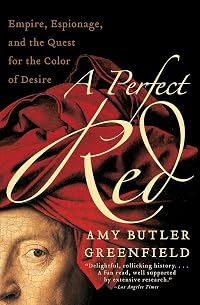
A Perfect Red: Empire, Espionage, and the Quest for the Color of Desire
by Amy Butler Greenfield
On This Page
Description
A Perfect Red recounts the colorful history of cochineal, a legendary red dye that was once one of the world's most precious commodities. Treasured by the ancient Mexicans, cochineal was sold in the great Aztec marketplaces, where it attracted the attention of the Spanish conquistadors in 1519. Shipped to Europe, the dye created a sensation, producing the brightest, strongest red the world had ever seen. Soon Spain's cochineal monopoly was worth a fortune. Desperate to find their own sources show more of the elusive dye, the English, French, Dutch, and other Europeans tried to crack the enigma of cochineal. Did it come from a worm, a berry, a seed? Could it be stolen from Mexico and transplanted to their own colonies? Pirates, explorers, alchemists, scientists, and spies -- all joined the chase for cochineal, a chase that lasted more than three centuries. A Perfect Red tells their stories -- true-life tales of mystery, empire, and adventure, in pursuit of the most desirable color on earth. show lessTags
Recommendations



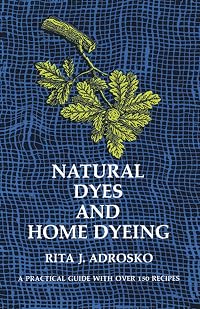

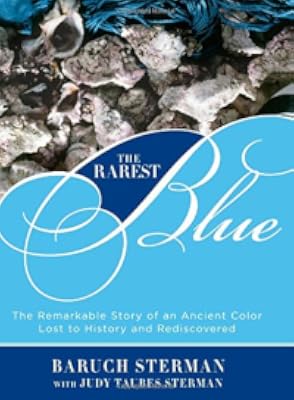

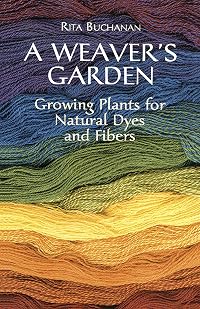








Member Recommendations
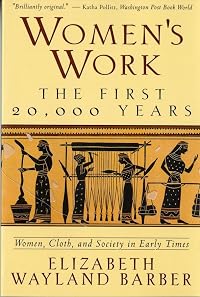
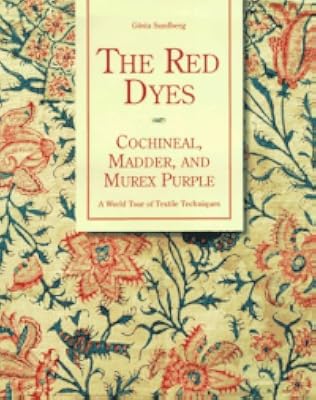
alco261 A Perfect Red provides additional details for the section of the Postrel's book on dye and conversely.
For All the Tea in China: How England Stole the World's Favorite Drink and Changed History by Sarah Rose
EveleenM If you enjoyed reading about the pursuit of cochineal red, you may also enjoy reading about the pursuit of high-quality tea for the British Empire.
Member Reviews
This book reminds me of an optical illusion that looks like one thing when you look at it one way, but looks like something totally different when viewed another way – think of the ubiquitous Escher posters... Viewed from one perspective, A Perfect Red is a quirky and witty, albeit highly selective, history of Western Civilization from 1500 to the present, with a special emphasis on the Spanish Empire. From another perspective, it is a 261-page history of the trade in a particular commodity that has no economic significance today but was marginally important 200 to 400 years ago.
The commodity in question is cochineal (Dactylopius coccus), a red dye prepared from the bodies of a kind of insect that attacks and lives in and on prickly show more pear cacti pads that grow in Mexico and the American Southwest. The Spanish conquistadors discovered that native Mexicans could dye clothing a brighter, more vivid red than any available in Europe. The dye was prepared by a painstaking labor-intensive process of scraping the bodies of the insects off the cacti. Cochineal became a valuable export for the Spanish Empire because other Europeans could not duplicate the intense red color it produced.
The insect that produces the dye is so small that in the days before good microscopes, Europeans (including the Spaniards) had no idea of the nature of the dye. Most of them thought it was a form of inorganic matter. The finished product was quite valuable and easy to transport, so it attracted many pirates. However, it was extremely difficult to produce anywhere but Mexico because the prickly pear cacti did not thrive in many other places and the live insects were very sensitive to cold. The Spanish maintained tight security on the production of the product and enforced severe penalties on anyone who attempted to break the crown’s monopoly.
The story of how the Spanish maintained their monopoly and how other Europeans tried to discover the secret of the dye is an interesting one that stretches from the 16th to the 18th centuries. In the process of telling a little story (the dye trade), the author's “back story” account encompasses the reigns and characters of Charles V and Phillip II, the Hapsburg Empire, the conquests of Mexico and Peru, and the continuing rivalries of Spain, England, Holland, and France. In this respect, the dye trade acts as a microcosm of a much broader European history, a conceit that Greenfield handles deftly.
However, the author’s technique of filtering the history of Western Europe through the lens of the red dye trade breaks down in the 19th century. Spain’s monopoly in cochineal persisted, but by then the country had declined significantly as it gradually lost its overseas empire and faced bankruptcy. Moreover, the German chemical industry developed synthetic dyes of comparable quality. I think Greenfield overstates her case when she attributes the rise of the whole German chemical industry to efforts to find a substitute for cochineal. And when she traces those efforts to the development of poisonous gas for World War I, the chain of causation is too diffuse to be credible.
So back to the optical illusion. When the book is viewed as political history seen as a partial function of the cochineal trade, it works pretty well from 1500 to about 1830, but then has nothing worthwhile to say. If viewed as merely a history of the trade in a particular red dye, it is no more significant than a history of the trade in copra or jute.
Evaluation: This is a good book for those who like niche knowledge, or who prefer history in more entertaining forms.
(JAB) show less
The commodity in question is cochineal (Dactylopius coccus), a red dye prepared from the bodies of a kind of insect that attacks and lives in and on prickly show more pear cacti pads that grow in Mexico and the American Southwest. The Spanish conquistadors discovered that native Mexicans could dye clothing a brighter, more vivid red than any available in Europe. The dye was prepared by a painstaking labor-intensive process of scraping the bodies of the insects off the cacti. Cochineal became a valuable export for the Spanish Empire because other Europeans could not duplicate the intense red color it produced.
The insect that produces the dye is so small that in the days before good microscopes, Europeans (including the Spaniards) had no idea of the nature of the dye. Most of them thought it was a form of inorganic matter. The finished product was quite valuable and easy to transport, so it attracted many pirates. However, it was extremely difficult to produce anywhere but Mexico because the prickly pear cacti did not thrive in many other places and the live insects were very sensitive to cold. The Spanish maintained tight security on the production of the product and enforced severe penalties on anyone who attempted to break the crown’s monopoly.
The story of how the Spanish maintained their monopoly and how other Europeans tried to discover the secret of the dye is an interesting one that stretches from the 16th to the 18th centuries. In the process of telling a little story (the dye trade), the author's “back story” account encompasses the reigns and characters of Charles V and Phillip II, the Hapsburg Empire, the conquests of Mexico and Peru, and the continuing rivalries of Spain, England, Holland, and France. In this respect, the dye trade acts as a microcosm of a much broader European history, a conceit that Greenfield handles deftly.
However, the author’s technique of filtering the history of Western Europe through the lens of the red dye trade breaks down in the 19th century. Spain’s monopoly in cochineal persisted, but by then the country had declined significantly as it gradually lost its overseas empire and faced bankruptcy. Moreover, the German chemical industry developed synthetic dyes of comparable quality. I think Greenfield overstates her case when she attributes the rise of the whole German chemical industry to efforts to find a substitute for cochineal. And when she traces those efforts to the development of poisonous gas for World War I, the chain of causation is too diffuse to be credible.
So back to the optical illusion. When the book is viewed as political history seen as a partial function of the cochineal trade, it works pretty well from 1500 to about 1830, but then has nothing worthwhile to say. If viewed as merely a history of the trade in a particular red dye, it is no more significant than a history of the trade in copra or jute.
Evaluation: This is a good book for those who like niche knowledge, or who prefer history in more entertaining forms.
(JAB) show less
This was a fasctinating book - so much information that I knew the top layer of, but had no idea all the history that lurked beneath! I love reading about how some tiny event, object or person can shift the entire world history ... and this book is full of those lovely gems. A more in-depth look at the entire timeline would take many many books, as this covers everything from ancient red dyes through Cortez and Spanish rule of the Americas, and on into 20th century chemical dye creations. So while the author basically paddled through the shallow end of the history swimming pool, she did it very well. I never felt like asking the book "but wait! what about that thing you mentioned earlier?" - all loose ends are tied up. A very show more well-written book - I don't think I ran across a single sentence that made me wince and think "needs an editor!" or "where was the proof-reader when this sentence was approved?". Very good work - direct, detailed, yet also gives a big-picture view of the history of not just red dye, but dye in general.
The one quibble I have with the book is with the figures (illustrations/photos). The text references the photos by figure number ("see fig 2") - but the figures themselves ARE NOT LABELED THAT WAY. Gah! You have to physically count 1, 2, 3 etc in order to make sure you're looking at the correct figure. And there's no actual photograph of the item that has a starring role in the book, nor is there a photograph of the plant it lives on. Nor is there a photo of the dried, powdered dyestuff. But there is a scientific drawing in the figures that isn't even labeled or described on the photo page! Very very frustrating. Hundreds of pages in the book about this ingredient, and no photos of it.
So while the writing gets 5 stars, the lack of photo labelling and lack of wanted photos takes it down to 3 stars - so averaged at 4. show less
The one quibble I have with the book is with the figures (illustrations/photos). The text references the photos by figure number ("see fig 2") - but the figures themselves ARE NOT LABELED THAT WAY. Gah! You have to physically count 1, 2, 3 etc in order to make sure you're looking at the correct figure. And there's no actual photograph of the item that has a starring role in the book, nor is there a photograph of the plant it lives on. Nor is there a photo of the dried, powdered dyestuff. But there is a scientific drawing in the figures that isn't even labeled or described on the photo page! Very very frustrating. Hundreds of pages in the book about this ingredient, and no photos of it.
So while the writing gets 5 stars, the lack of photo labelling and lack of wanted photos takes it down to 3 stars - so averaged at 4. show less
An amazing account of the origin of the highly sought after red dye. I admit I had to read this for a class, but this book wasn't specifically assigned to me; I chose to read this for a book report because I saw the word "red" in it, and I didn't care what it was about as long it was about red (which is my favorite color if I didn't make it obvious). Anyway, I don't regret my decision one bit. My only regret is not buying a copy of the book (I borrowed the book from my university library) because it's just one of those books I want to pick up from my shelf and refer back to it. Plus, this book encourages interaction. Let me explain. The author does well in having the reader think about each chapter because she ends each one with show more questions. I often found myself grabbing my pencil to write some notes on my book (which I often do) but had to restrain myself this time because the copy I was reading wasn't mine.
The only qualms I have about this book is I felt like the author jumped around a lot, and I sometimes felt confused about the time period she was referring to, but that didn't detract from the book's enjoyment, so it's not a big deal. All in all, this is a highly interesting non-fiction book to read. I'm usually not into the non-fiction genre, but I sometimes felt like this particular book read like a novel at times because the author was not only giving a detailed account of the facts, but telling a story of many characters who were involved in the search for the perfect red. So what are you waiting for? Discover the origins of the color for yourself! show less
The only qualms I have about this book is I felt like the author jumped around a lot, and I sometimes felt confused about the time period she was referring to, but that didn't detract from the book's enjoyment, so it's not a big deal. All in all, this is a highly interesting non-fiction book to read. I'm usually not into the non-fiction genre, but I sometimes felt like this particular book read like a novel at times because the author was not only giving a detailed account of the facts, but telling a story of many characters who were involved in the search for the perfect red. So what are you waiting for? Discover the origins of the color for yourself! show less
Greenfield’s history of the color red is about as thorough as one can get. She starts with a history of dyeing, then moves into the discovery of the cochineal, its proliferation and biology, and finally into a quick look into fashion and status. There are times when she seems unfocused and the chronology is disjointed, but each facet of this history has its own slant and requires a different timeline. This book has a little bit of everything—history, biology, chemistry, sociology. A quick and interesting read.
A fascinating history of cochineal cultivation and use, including the various schools of thought on its origins during the period of Spanish monopoly. For a book of this type (popular history of commodity X), this is very well done indeed.
Enthralling look at the cochineal bug which makes red dye. Interesting for everyone not just those interested in natural dyes. People fought and died for this stuff. A good read and a fine example of the micro history trend.
This is a fabulous history of cochineal and its importance in the dye world and as a valuable trade commodity before the invention of synthetic dyes.
Members
- Recently Added By
Author Information

7 Works 1,275 Members
Some Editions
Awards and Honors
Common Knowledge
- Original publication date
- 2005
- People/Characters
- Charles V, Holy Roman Emperor; Elizabeth I, Queen of England; Isaac Newton; William Henry Perkin; Philip II, King of Spain
- Important places
- Mexico
- Dedication
- For my family, at home and abroad
- First words
- Humans see the world in a cascade of colors, with eyes that can distinguish any single shade from more than a million others. (Prologue)
Forty miles west of Florence, in a fertile Tuscan valley not far from the Mediterranean Sea, lies the serene and sunlit city of Lucca. - Last words
- (Click to show. Warning: May contain spoilers.)Red speeds our heartbeat and quickens our breath -- visceral proof that even in though the era of cochineal has ended, red remains in our blood.
- Original language
- English
Classifications
Statistics
- Members
- 818
- Popularity
- 33,739
- Reviews
- 15
- Rating
- (3.69)
- Languages
- Dutch, English, French
- Media
- Paper, Audiobook, Ebook
- ISBNs
- 10
- ASINs
- 3