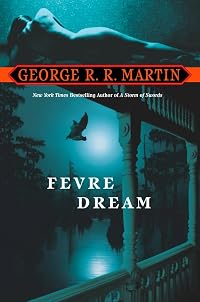
Fevre Dream
by George R. R. Martin
On This Page
Description
A THRILLING REINVENTION OF THE VAMPIRE NOVEL BY THE MASTER OF MODERN FANTASY, GEORGE R. R. MARTINAbner Marsh, a struggling riverboat captain, suspects that something’s amiss when he is approached by a wealthy aristocrat with a lucrative offer. The hauntingly pale, steely-eyed Joshua York doesn’t care that the icy winter of 1857 has wiped out all but one of Marsh’s dilapidated fleet; nor does he care that he won’t earn back his investment in a decade. York’s reasons for show more traversing the powerful Mississippi are to be none of Marsh’s concern—no matter how bizarre, arbitrary, or capricious York’s actions may prove. Not until the maiden voyage of Fevre Dream does Marsh realize that he has joined a mission both more sinister, and perhaps more noble, than his most fantastic nightmare—and humankind’s most impossible dream. show less
Tags
Recommendations











Member Recommendations

Member Reviews
When it comes to horror stories I've always preferred zombies over vampires, but damn if there's a zombie story even half as good as George R. R. Martin's vampire novel Fevre Dream, I'm yet to hear of it. The thrills, characterisation and storytelling rhythm are all top-notch, and the atmospheric 1850s Louisiana setting allies with Martin's evocative writing to create a gloomy and malevolent setting for the vampires to roam.
The vampire mythology is quite conventional – exposure to sunlight, drinking blood, etc. – but Martin provides his own refreshing spin on it. It's like if Stephen King re-wrote Huckleberry Finn. Martin also traces a compelling – if underutilised – link between vampirism and the slave trade; when one vampire show more challenges our protagonist that "only a handful have died… More slaves die every day in New Orleans, yet you do not work against slavery" (pg. 293), we see some of the grey morality that Martin would go on to use to stunning effect in A Game of Thrones. From the first meeting of minds at the start of the book to the tombstone epitaph at the very end, Fevre Dream is an enchanting piece of storytelling. Just as one character on page 179 is surprised at how the magnificent steamboat – named the Fevre Dream – could be borne out of such horror, so do I find it remarkable that Fevre Dream, the book, manages to be as beautiful as it is amidst the blood. show less
The vampire mythology is quite conventional – exposure to sunlight, drinking blood, etc. – but Martin provides his own refreshing spin on it. It's like if Stephen King re-wrote Huckleberry Finn. Martin also traces a compelling – if underutilised – link between vampirism and the slave trade; when one vampire show more challenges our protagonist that "only a handful have died… More slaves die every day in New Orleans, yet you do not work against slavery" (pg. 293), we see some of the grey morality that Martin would go on to use to stunning effect in A Game of Thrones. From the first meeting of minds at the start of the book to the tombstone epitaph at the very end, Fevre Dream is an enchanting piece of storytelling. Just as one character on page 179 is surprised at how the magnificent steamboat – named the Fevre Dream – could be borne out of such horror, so do I find it remarkable that Fevre Dream, the book, manages to be as beautiful as it is amidst the blood. show less
Publicada en 1982, 'Sueño del Fevre' fue un soplo de aire fresco en el manido subgénero de terror dedicado a los vampiros. George R.R. Martin tiene mucho oficio y eso se nota. Además, es uno de los escritores que mejor caracterizan a sus personajes. En sus historias los personajes son la clave, y ahí está la magistral saga de Canción de hielo y fuego para ratificarlo.
En 'Sueño del Fevre', pese a ser muy anterior, no podía ser menos, y Martin nos da a conocer a un personaje que atrapa desde su primera aparición. Se trata de Abner Marsh, capitán y dueño de una empresa de transportes de barcos de vapor que transita por aguas del Mississippi. Rudo, malhablado y leal a partes iguales, Abner constituye todo un hallazgo. Pero tal show more vez el verdadero protagonista de la novela sea ese gran barco, el Sueño del Fevre, todo un sueño en sí mismo, como su nombre indica, construido para convertirse en leyenda.
La historia comienza en San Luis, en 1857. Abner Marsh es un marinero al que la suerte no acompaña, ya que ha perdido gran parte de su flota de vapores. Hasta que se cruza en su vida un extraño personaje, Joshua York, con una proposición: ser su socio, y construir un gran vapor con el que surcar el Mississippi, transportando pasajeros y mercancías. York pondría el capital y Marsh su experiencia en el negocio. La única condición que pone York, es que Marsh se abstenga de hacer ningún tipo de pregunta, aunque observe que su comportamiento no sea el habitual. Marsh es un hombre del río y esta oferta resulta demasiado jugosa para rechazarla. Además, lleva años navegando el río y ha visto de todo en su vida.
Por otra parte, también conoceremos a Sour Billy, el otro narrador de la historia. A través de él, sabremos de Damon Julian y del siniestro grupo de seres que le acompañan, que se dedican a diezmar las tierras en las que habitan. Sour Billy es traidor y pendenciero, todo un villano, dedicado a servir a Damon Julian en busca de su propio sueño y recompensa por sus servicios. Estos vampiros no son los típicos engendros sobrenaturales de los que hablan las leyendas, y poco a poco se van desvelando sus orígenes. Decir únicamente que se nota en donde puede que Anne Rice se inspirase para la creación de su saga vampírica.
En cuanto a la ambientación, Martin disfruta con los detalles y nos sumerge en una época donde la esclavitud todavía persistía. Las descripciones de los vapores y su funcionamiento son perfectas. Resultan particularmente memorables las carreras a las que eran aficionados los diferentes barcos por alzarse con el título de vapor más rápido.
'Sueño del Fevre' nos arrastra a través de venganzas, traiciones, resentimientos y aventuras, en una historia que no da respiro al lector. Martin es un consumado narrador, y ya se notaba desde estos sus inicios. Imprescindible para los fans del género de vampiros. Todo un clásico. show less
En 'Sueño del Fevre', pese a ser muy anterior, no podía ser menos, y Martin nos da a conocer a un personaje que atrapa desde su primera aparición. Se trata de Abner Marsh, capitán y dueño de una empresa de transportes de barcos de vapor que transita por aguas del Mississippi. Rudo, malhablado y leal a partes iguales, Abner constituye todo un hallazgo. Pero tal show more vez el verdadero protagonista de la novela sea ese gran barco, el Sueño del Fevre, todo un sueño en sí mismo, como su nombre indica, construido para convertirse en leyenda.
La historia comienza en San Luis, en 1857. Abner Marsh es un marinero al que la suerte no acompaña, ya que ha perdido gran parte de su flota de vapores. Hasta que se cruza en su vida un extraño personaje, Joshua York, con una proposición: ser su socio, y construir un gran vapor con el que surcar el Mississippi, transportando pasajeros y mercancías. York pondría el capital y Marsh su experiencia en el negocio. La única condición que pone York, es que Marsh se abstenga de hacer ningún tipo de pregunta, aunque observe que su comportamiento no sea el habitual. Marsh es un hombre del río y esta oferta resulta demasiado jugosa para rechazarla. Además, lleva años navegando el río y ha visto de todo en su vida.
Por otra parte, también conoceremos a Sour Billy, el otro narrador de la historia. A través de él, sabremos de Damon Julian y del siniestro grupo de seres que le acompañan, que se dedican a diezmar las tierras en las que habitan. Sour Billy es traidor y pendenciero, todo un villano, dedicado a servir a Damon Julian en busca de su propio sueño y recompensa por sus servicios. Estos vampiros no son los típicos engendros sobrenaturales de los que hablan las leyendas, y poco a poco se van desvelando sus orígenes. Decir únicamente que se nota en donde puede que Anne Rice se inspirase para la creación de su saga vampírica.
En cuanto a la ambientación, Martin disfruta con los detalles y nos sumerge en una época donde la esclavitud todavía persistía. Las descripciones de los vapores y su funcionamiento son perfectas. Resultan particularmente memorables las carreras a las que eran aficionados los diferentes barcos por alzarse con el título de vapor más rápido.
'Sueño del Fevre' nos arrastra a través de venganzas, traiciones, resentimientos y aventuras, en una historia que no da respiro al lector. Martin es un consumado narrador, y ya se notaba desde estos sus inicios. Imprescindible para los fans del género de vampiros. Todo un clásico. show less
Fevre Dream by George. R. R. Martin
This book is almost as old as I am, so it seems almost silly to review it. However, I do have thoughts, so here goes.
This is a story of vampires of a sort - ageless blood drinking creatures who seem to have evolved independently of humanity, but not the traditionally supernatural type - and a riverboat captain's complicated relationship with them around the time of the American Civil War.
It is the kind of complex story you might expect from Martin, although it does bear some signs of immaturity of thought (for example, it's made clear that the vampires require human blood to function fully, but it also says that they evolved long before humans did. So... What did they eat?) but what really strikes me show more is the way it so evokes the time and place of its setting.
It is set in the American south, in the 1850s, and it confronts the evils of slavery in a way that I find somewhat uncomfortable. The parallels between vampiric preying on humanity in general, and the way a slave society preys upon the enslaved, are hammered home almost too bluntly. And there is that scene, that brutal, almost unforgivable scene, that I think might not be publishable in today's world. I wonder about this. I wonder if perhaps the wrapping of unnatural vampirism around this story is almost a cop-out. Because I think a story that deals with slavery needs more focus on the purely human evils of that institution, instead of muddying them with the inhuman evils of Julian Damon and is ilk.
I'm not sure. I'm really not. There is no veiled whitewashing of the institution, at all, but this kind of muddy presentation of the brutal viciousness of slavery, and the inhumanity it tries to force on the enslaved, reaches deep into places that many people don't want to reach, while at the same time giving readers an out, a chance to focus on the viciousness of the inhuman characters and ignore the evils of the human society around them.
It's a book worth reading, and thinking critically about, at any rate. show less
This book is almost as old as I am, so it seems almost silly to review it. However, I do have thoughts, so here goes.
This is a story of vampires of a sort - ageless blood drinking creatures who seem to have evolved independently of humanity, but not the traditionally supernatural type - and a riverboat captain's complicated relationship with them around the time of the American Civil War.
It is the kind of complex story you might expect from Martin, although it does bear some signs of immaturity of thought (for example, it's made clear that the vampires require human blood to function fully, but it also says that they evolved long before humans did. So... What did they eat?) but what really strikes me show more is the way it so evokes the time and place of its setting.
It is set in the American south, in the 1850s, and it confronts the evils of slavery in a way that I find somewhat uncomfortable. The parallels between vampiric preying on humanity in general, and the way a slave society preys upon the enslaved, are hammered home almost too bluntly. And there is that scene, that brutal, almost unforgivable scene, that I think might not be publishable in today's world. I wonder about this. I wonder if perhaps the wrapping of unnatural vampirism around this story is almost a cop-out. Because I think a story that deals with slavery needs more focus on the purely human evils of that institution, instead of muddying them with the inhuman evils of Julian Damon and is ilk.
I'm not sure. I'm really not. There is no veiled whitewashing of the institution, at all, but this kind of muddy presentation of the brutal viciousness of slavery, and the inhumanity it tries to force on the enslaved, reaches deep into places that many people don't want to reach, while at the same time giving readers an out, a chance to focus on the viciousness of the inhuman characters and ignore the evils of the human society around them.
It's a book worth reading, and thinking critically about, at any rate. show less
I have never been a fan of vampire books, but every so often I still pick up one and enjoy the read. That was certainly the case with Martin's Fevre Dream, a book about which I have heard only praise. It's worthy of the buzz. Foremost, it's darn good historical fiction set right on the eve of the Civil War. It uses the stench, the language, the tension of that setting in a vivid, visceral way. Marsh is a flawed yet sympathetic man, a fellow who passionately loves the river and his boats. Every character is well done, and Martin displays his usual ruthlessness as the Fevre Dream makes its way through the Mississippi and its bayous. Martin's take on vampires uses the traditional mythology--no sparkles here--with several fresh twists. I show more found this to be a more cohesive and enjoyable book than any in the Song of Ice and Fire. show less
One of the best written vampire novels I have read. A real pleasure after having waded through so much tripe elsewhere.
GRRM knows how to write, and how to plot.
The main character in this book isn't really a person at all... it's a steamboat, the Fevre Dream. It is built by a Captain, and his strangely pale partner. Together they take to the river, getting involved in trying to set fast times and race other steamers.
Things hot up when it becomes obvious that the pale partner has night-time interests. He is hunting for others of his kind. And when he finds them, we get to some of the most vicious vamps in literature, along with their equally vicious human "pet"
The characters are all vividly drawn, especially Abner, the steamboat show more captain who just wants to be on the river, in a big boat.
And GRRM has enough twists and turns in the plot to keep the reader intersted through until the end, which comes with a perfect grace note. There won't be a dry eye in the house.
They really should make this into a movie... just to show what "Interview with The Vampire" COULD have been. show less
GRRM knows how to write, and how to plot.
The main character in this book isn't really a person at all... it's a steamboat, the Fevre Dream. It is built by a Captain, and his strangely pale partner. Together they take to the river, getting involved in trying to set fast times and race other steamers.
Things hot up when it becomes obvious that the pale partner has night-time interests. He is hunting for others of his kind. And when he finds them, we get to some of the most vicious vamps in literature, along with their equally vicious human "pet"
The characters are all vividly drawn, especially Abner, the steamboat show more captain who just wants to be on the river, in a big boat.
And GRRM has enough twists and turns in the plot to keep the reader intersted through until the end, which comes with a perfect grace note. There won't be a dry eye in the house.
They really should make this into a movie... just to show what "Interview with The Vampire" COULD have been. show less
Many of you know George R.R. Martin through his fabulous epic fantasy The Song of Ice and Fire. Some of you may even remember him from a little shared universe series called Wildcards, which was a lot of fun. But y’all may not know that Martin wrote one of the coolest vampire books around: Fevre Dream. Not only did Martin re-imagine the biology and evolution and history of the vampire, but he also gave his book one of the most unique settings in horror lit—a Mississippi riverboat during the Mark Twain era. The story of the struggle between Joshua and Julian for control of a small band of vampires is well thought-out and executed, but the heart of the novel is the blunt and stubborn riverboat captain Abner Marsh and his loyalty to show more his friends and to his beloved riverboat. It’s not a happy book, but it’s an honest one, and more folks should be aware of it. show less
The year is 1982 and while there have been a ton of traditional vampire novels floating about, the big twist in the vampire industry hasn't quite come about yet with Interview... or has it? Enter Fevre Dream, taking this our darkest mirror to our humanity and turning him into something tragic and noble and throwing him into a Mark Twain novel.
What? Mark Twain? Oh yeah, steamboats, 1857, we've got 15 mile an hour races and chases and deeply disturbing looks at what makes men monsters and what makes monsters into men. Hate being a cow or a slave? Hate being a slave to your baser instincts, and have you decided never to simply give into them, unlike so many others? How heroic. :) Of course, this came out a good deal before our current glut show more and, at least to me, it marks a sudden and fantastic development in the whole field.
Sure, we might have had some sympathy for the original Dracula, just as we have sympathy for the Devil, but the heroes were much more often outside of the curse. And up till now, Vampires were still just the expression of truly base humanity, not worth much redeeming.
So this human aspect is truly excellent in the tale, but don't let me downplay the real gem here: steamboats. Total immersion in the world. Totally cool. I never guessed that chugging along at 8 miles per hour could be so exciting! But of course, that's all due to a master storyteller. :) GRRM has been around for a long, long time, practicing a very fine craft. We really shouldn't forget that. :) show less
What? Mark Twain? Oh yeah, steamboats, 1857, we've got 15 mile an hour races and chases and deeply disturbing looks at what makes men monsters and what makes monsters into men. Hate being a cow or a slave? Hate being a slave to your baser instincts, and have you decided never to simply give into them, unlike so many others? How heroic. :) Of course, this came out a good deal before our current glut show more and, at least to me, it marks a sudden and fantastic development in the whole field.
Sure, we might have had some sympathy for the original Dracula, just as we have sympathy for the Devil, but the heroes were much more often outside of the curse. And up till now, Vampires were still just the expression of truly base humanity, not worth much redeeming.
So this human aspect is truly excellent in the tale, but don't let me downplay the real gem here: steamboats. Total immersion in the world. Totally cool. I never guessed that chugging along at 8 miles per hour could be so exciting! But of course, that's all due to a master storyteller. :) GRRM has been around for a long, long time, practicing a very fine craft. We really shouldn't forget that. :) show less
Members
- Recently Added By
Lists

Bloody Good Vampire Books
394 works; 28 members

Survey of Classic Fantastic Fiction
36 works; 9 members

Fantasy Masterworks
66 works; 5 members

Mythical Monsters of the World
199 works; 79 members

Deep South
1 work; 2 members

1980s
356 works; 23 members

100 Hemskaste
81 works; 1 member
Best Vampire & Werewolf Fiction
221 works; 146 members

Horror: Creature Features
70 works; 9 members

BlackDog's Complete Paperbacks From Hell List
639 works; 3 members

Books Read in 2024
4,623 works; 126 members

Paperbacks from Hell
382 works; 9 members

To Read (Prospector)
86 works; 1 member

Jones & Newman: Best Horror Books Further Recommended Reading
577 works; 4 members

Genre Benders: Dark Fantasy
52 works; 4 members

Books Read in 2006
421 works; 8 members

Books Read in 2026
1,930 works; 66 members
Author Information

721+ Works 243,826 Members
George R. R. Martin was born on September 20, 1948 in Bayonne, New Jersey. He began writing at an early age, selling monster stories for pennies to neighborhood children. He received B.S. and M.S. degrees in Journalism from Northwestern University. In 1986, he worked as a story editor for the CBS series The Twilight Zone. He was also an executive show more story consultant, producer and co-supervising producer for CBS's Beauty and the Beast. In 1970, he sold the story The Hero to Galaxy magazine. Since becoming a full-time writer in 1979, he has written many novels, stories, and series including A Song for Lya, Portraits of His Children, The Pear-Shaped Man, and the Song of Ice and Fire series. He has won numerous awards including five Locus Awards, three Hugo Awards and two Nebula awards. In 2013 he made The New York Times Best Seller List with his titles A Dance with Dragons and A Game of Thrones: a Clash of Kings, a Storm of Swords, a Feast for Crows. His title's Rogues and The Ice Dragon made the New York Times List in 2014. Martin's title, A Knight of Seven Kingdoms, A Song of Fire and Ice novel, made the New York Times bestseller list in 2015. He is number 4 on the Hollywood Reporter's '25 Most Powerful Authors' 2016 list. (Bowker Author Biography) show less
Some Editions
Awards and Honors
Awards
Series
Belongs to Publisher Series
Work Relationships
Is contained in
Has the adaptation
Common Knowledge
- Canonical title
- Fevre Dream
- Original title
- Fevre Dream
- Original publication date
- 1982
- People/Characters
- Abner Marsh; Joshua York; Damon Julian; Sour Billy Tipton; Toby Lanyard; Valerie Mersault (show all 13); Hairy Mike Dunne; Jonathon Jeffers; Raymond Ortega; Karl Framm; Dan Albright; Cat Grove; Captain Yoerger
- Important places
- Mississippi River, USA; St. Louis, Missouri, USA; New Orleans, Louisiana, USA; New Albany, Indiana, USA; Ohio River, USA; Natchez, Mississippi, USA
- Dedication
- For Howard Waldrop, a helluva writer, a helluva friend, and a fevered dreamer if ever there was one.
- First words
- Abner Marsh rapped the head of his hickory walking stick smartly on the hotel desk to get the clerk's attention.
- Quotations
- So we'll go no more a-roving, So late into the night.
- Last words
- (Click to show. Warning: May contain spoilers.)Oddly enough, he always comes by night.
- Blurbers
- Zelazny, Roger; Ellison, Harlan
- Original language
- English
Classifications
Statistics
- Members
- 3,186
- Popularity
- 5,428
- Reviews
- 106
- Rating
- (3.84)
- Languages
- 16 — Chinese, Czech, Danish, Dutch, English, Estonian, French, German, Hebrew, Hungarian, Italian, Polish, Portuguese, Croatian, Spanish, Swedish
- Media
- Paper, Audiobook, Ebook
- ISBNs
- 50
- ASINs
- 22