
On This Page
Description
Wilhelm Meister's Apprenticeship, a novel of self-realization greatly admired by the Romantics, has been called the first Bildungsroman and has had a tremendous influence on the history of the German novel. The story centers on Wilhelm, a young man living in the mid-1700s who strives to break free from the restrictive world of economics and seeks fulfillment as an actor and playwright. Along with Eric Blackall's fresh translation of the work, this edition contains notes and an afterword by show more the translator that aims to put this novel into historical and artistic perspective for twentieth-century readers while showing how it defies categorization. show lessTags
Recommendations

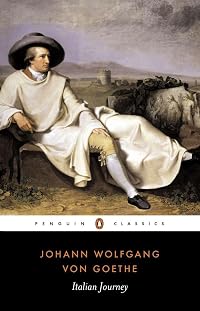
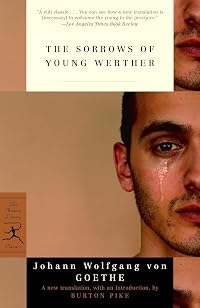









Member Recommendations

Cecrow Wilhelm Meister appears in 'Werther'.
Member Reviews
To which degree does Goethe’s Wilhelm Meisters Lehrjahre, the prototypical Bildungsroman, speak to us today? Maybe first of all as a counterweight to the fragmented “postmodern condition”. Though I started reading this work mostly as a sort of historical document, I found that it has more to offer than just that. It’s a fairly easy read; I never quite got used to the stylized and archaic language though – and especially in those parts that focuses on the inner state of the protagonist. On the other hand, Goethe’s descriptions of the theatre and individual actors actually sometimes have an almost contemporary feel – and so does his great wit and irony whenever it shines through. Other parts of the book can be more show more longwinded, particularly those dealing with e.g. the ideals of pietism, but even here the characters have some interesting traits and it also serves as an efficient contrast to the more lighthearted life in the theatre group. The sections and layers of the book that are influenced by freemasonry are a lot more intriguing. Throughout the book, Goethe moves effortlessly from the subjective to the objective; the individual versus the world; the young Wilhelm comes crashing into a world he doesn’t quite understand, with high hopes for himself and with boundless naiveté, yet manages to learn from his many strange encounters and to build character and integrity, slowly becoming his own person – almost in spite of himself it would seem, but still because of his innate character traits and the interaction with the outside world.
The novel can easily be seen as an expression of Goethe’s Ganzheitsdenken, and as for the development of the protagonist, there is little of what can be characterized as idealistic loftiness to it (as opposed to that of the protagonist himself), but rather a gradual insight gained through his encounters with the various other characters -- and through his work, Goethe aims to educate his reader as well as young Wilhelm. While, in the end, Wilhelm Meister successfully concludes his apprenticeship, I suppose it can be said that it is up to the individual reader to make a similar achievement.
This work is licensed under a Creative Commons Attribution-NonCommercial-ShareAlike 3.0 Unported License. show less
The novel can easily be seen as an expression of Goethe’s Ganzheitsdenken, and as for the development of the protagonist, there is little of what can be characterized as idealistic loftiness to it (as opposed to that of the protagonist himself), but rather a gradual insight gained through his encounters with the various other characters -- and through his work, Goethe aims to educate his reader as well as young Wilhelm. While, in the end, Wilhelm Meister successfully concludes his apprenticeship, I suppose it can be said that it is up to the individual reader to make a similar achievement.
This work is licensed under a Creative Commons Attribution-NonCommercial-ShareAlike 3.0 Unported License. show less
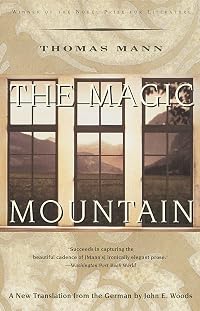
A rather odd offering from Goethe. This novel perplexed me when I first read it, and in many ways it continues to do so. For a book which is often considered the original Bildungsroman -- a genre I associate with something like Thomas Mann's Magic Mountain, with its focus on the protagonist's cultural mileau and its influence on his personal development -- Wilhelm Meister seems oddly disjointed and unteleological, and the characterization of Wilhelm remains incoherent. The novel makes the most sense if it is read as an exercise in style, since each of the books can be seen as experimenting with a different genre, but it is definitely not what I was expecting.
In spite of these concerns (some apparently shared by Goethe's contemporaries, show more whose critical reactions were mixed), Goethe remains a wonderful raconteur, and his writing is always a pleasure to read. This may actually be part of what makes the book so frustrating -- with a lesser writer it would be easy to dismiss the difficulties of the work as a lack of skill in developing plots, but Goethe has amply shown what he is capable of, so we keep looking for other explanations to understand what he is doing. Experimenting with realism, perhaps, with the artificiality of generic conventions. show less
In spite of these concerns (some apparently shared by Goethe's contemporaries, show more whose critical reactions were mixed), Goethe remains a wonderful raconteur, and his writing is always a pleasure to read. This may actually be part of what makes the book so frustrating -- with a lesser writer it would be easy to dismiss the difficulties of the work as a lack of skill in developing plots, but Goethe has amply shown what he is capable of, so we keep looking for other explanations to understand what he is doing. Experimenting with realism, perhaps, with the artificiality of generic conventions. show less
A few years I was reading on my lunch hour The Sorrows of Young Werther when a co-worker noticed what I was doing. He was a young German graduate student here in Michigan working on a an advanced degree. That's when I learned that every German reads Werther in high school. It functions like To Kill a Mockingbird does in the U.S., a chance to discuss big existential questions in small bites, a chapter at a time. I could see how Werther would serve that role. I was hooked on Goethe. I had never heard of Wilhelm Meister's Apprenticeship when my Classics book club made it our monthly selection. It felt like the club was achieving the goal I have for it which is to push me out of my comfort zone. Faustus would have been a natural choice but show more Apprenticeship was pushing me where I wanted to go. Unfortunately I could not be more disappointed.
I struggled to get through this book. Once I start a book I rarely abandon it, in for a dime, in for a dollar. I always think this has to get better. Unfortunately this book never did. Perhaps my expectations were too high. I expected more lyricism. Yes there was some poetry and song. Weak at best. I expected big issues. This never got past the personal. I also expected a big shift in the narrative. Never came. I focused on the word in the title – apprenticeship. Most apprenticeships involve the learning of a trade, plumber, electrician, painter, accountant, lawyer. Since Wilhelm came from a merchant family I kept on thinking he'll give up acting and go into some business. Never happened. I began to wonder if Germans mean something different by apprenticeship. Here it looked like Wilhelm was searching for what he wanted to do in life. While Wilhelm does learn that acting is probably not a good choice it never became clear where his true talents lay.
The most interesting feature of this book was the replaying over and over of scenes from Shakespeare's Hamlet. Goethe clearly saw Shakespeare's genius and gave us several variations of the underlying themes. That was worthwhile reading. It was fascinating how the same scene could be given alternate presentations. Eventually we see that Wilhelm was not really acting, just being himself. That was popular but not a basis for a career.
The most perturbing aspect I cannot blame on Goethe. There was a publisher's note at the very beginning which was ominous -
"The book descriptions we ask booksellers to display prominently warn that the book may have numerous typos, missing text, images and indexes. We scanned this book using character recognition software that includes an automated spell check. Our software is 99 percent accurate if the book is in good condition."
If the online seller I purchased this book from displayed the warning I never saw it. There were thousands, yes thousands, of typos. Even simple words like 'he' was printed as 'ho'. Fortunately context was enough to figure out what was meant. Adding to this they printed the book in a three column per page format and a small type font. While this did get the book down to 200 pages it was a constant slog. I can't recommend this book and especially cannot recommend this edition – ISBN 9781230304984. Caveat Emptor. show less
I struggled to get through this book. Once I start a book I rarely abandon it, in for a dime, in for a dollar. I always think this has to get better. Unfortunately this book never did. Perhaps my expectations were too high. I expected more lyricism. Yes there was some poetry and song. Weak at best. I expected big issues. This never got past the personal. I also expected a big shift in the narrative. Never came. I focused on the word in the title – apprenticeship. Most apprenticeships involve the learning of a trade, plumber, electrician, painter, accountant, lawyer. Since Wilhelm came from a merchant family I kept on thinking he'll give up acting and go into some business. Never happened. I began to wonder if Germans mean something different by apprenticeship. Here it looked like Wilhelm was searching for what he wanted to do in life. While Wilhelm does learn that acting is probably not a good choice it never became clear where his true talents lay.
The most interesting feature of this book was the replaying over and over of scenes from Shakespeare's Hamlet. Goethe clearly saw Shakespeare's genius and gave us several variations of the underlying themes. That was worthwhile reading. It was fascinating how the same scene could be given alternate presentations. Eventually we see that Wilhelm was not really acting, just being himself. That was popular but not a basis for a career.
The most perturbing aspect I cannot blame on Goethe. There was a publisher's note at the very beginning which was ominous -
"The book descriptions we ask booksellers to display prominently warn that the book may have numerous typos, missing text, images and indexes. We scanned this book using character recognition software that includes an automated spell check. Our software is 99 percent accurate if the book is in good condition."
If the online seller I purchased this book from displayed the warning I never saw it. There were thousands, yes thousands, of typos. Even simple words like 'he' was printed as 'ho'. Fortunately context was enough to figure out what was meant. Adding to this they printed the book in a three column per page format and a small type font. While this did get the book down to 200 pages it was a constant slog. I can't recommend this book and especially cannot recommend this edition – ISBN 9781230304984. Caveat Emptor. show less
[From Books and You, Doubleday, Doran & Co., 1940, p. 51-54:]
Now I want to leap across a couple of centuries and try to persuade you to read a book which most people will tell you, if they have ever heard of it, is unreadable. This is Goethe’s Wilhelm Meister, and it was very conscientiously translated by Carlyle. Goethe is under a cloud in Germany just now; he aimed at being a citizen of the world rather than a citizen of the state, and that is an attitude which finds small favour with the present rulers of his country; but even before they attained power Wilhelm Meister was little read even in Germany. […] My opinion is that it is a very interesting and significant work. It is the last of the eighteenth-century novels of show more sentiment, it is the first of the romantic novels of the nineteenth-century, and it is the forerunner of the autobiographical novels of which there has been in our own day such a plentiful crop. The hero is as colourless as are the heroes of most autobiographical novels. I do not quite know why this should be. Perhaps it is because when we write about ourselves we are disconcerted by the contrast between our aims and our achievements, and insensibly dwell on the disappointment we feel with ourselves for having made so much less of our opportunities than we had hoped to, and thus present the reader with a frustrated, rather than with a fulfilled, character. Perhaps it is that, just as when we walk down the street all the exciting things seem to happen on the other side, our own experiences appear so commonplace to us that we cannot describe them without making ourselves commonplace too; and it is only the experiences of others that have the thrilling quality of what is strange and romantic. But on the thread of this feckless creature Goethe has strung a great number of curious incidents; he has surrounded him with unusual, varied and fantastic persons, and he has used him as a mouthpiece for his own ideas on all manner of subjects. Wilhelm Meister’s Apprenticeship – I cannot recommend the Travels, which are intolerable – is at once poetical, absurd, profound and dull. Well, the dull parts you can skip. Carlyle said that he had not got so many ideas out of any book that he had read for six years, but it is only honest to add that he said also: “Goethe is the greatest genius that has lived for a century and the greatest ass that has lived for three.”
[From Points of View, Vintage Classics, 2000 [1958], “Three Novels of a Poet”, pp. 2, 54-55:]
I suppose few people in England read it now, unless for scholastic reasons they are obliged to, and I don't know why anyone should – except that it is lively and amusing, both romantic and realistic; except that the characters are curious and unusual, very much alive and presented with vigour; except that there are scenes of great variety, vividly and admirably described, and at least two of high comedy, a rarity in Goethe's works; except that interspersed in it are lyrics as beautiful and touching as any that he ever wrote; except that there is a disquisition on Hamlet which many eminent critics have agreed is a subtle analysis of the Dane's ambiguous character; and above all, except that its theme is of singular interest. If, with all these merits, the novel on the whole is a failure, it is because Goethe, for all his genius, for all his intellectual powers, for all his knowledge of life, lacked the specific gift which would have made him a great novelist as well as a great poet.
If anyone were to ask me what this specific gift is, I should not know how to answer. It is evident that the novelist must be something of an extrovert, since otherwise he will not have the urge to express himself; but he can make with no more intelligence than is needed for a man to be a good lawyer or a good doctor. He must be able to tell such story as he has to tell effectively so that he may hold his readers' attention. He need not love his fellow-creatures (that would be asking too much) but he must be profoundly interested in them; and he must have the gift of empathy which enables him to step into their shoes, think their thoughts and feel their feelings. Perhaps Goethe, terrific egoist as he was, failed as a novelist because he lacked just that.
[…]
Once upon a time, when they were all young and wild and gay, the Duke had built a hunting lodge on the summit of a mountain peak, and on the wall Goethe had written a verse in pencil.
Ueber allen Gipfeln
Ist Ruh
In allen Wipfeln
Spürest du
Kaum einen Hauch
Die Vögelein schweigen im Walde;
Warte nur, balde
Ruhest du auch.
During the last year of his life, he visited the spot again, and read the lines he had written hard on half a century before. He wept. What makes old age hard to bear is not the failing of one's faculties, mental and physical, but the burden of one's memories.
[From Cakes and Ale, Heinemann/Doubleday, 1930, chapter 2:]
"I think the instinctive judgments I formed when I was a boy were right. They told me Carlyle was a great writer and I was ashamed that I found the French Revolution and Sartor Resartus unreadable. Can anyone read them now? I thought the opinions of others must be better than mine and I persuaded myself that I thought George Meredith magnificent. In my heart I found him affected, verbose, and insincere. A good many people think so too now. Because they told me that to admire Walter Pater was to prove myself a cultured young man, I admired Walter Pater, but heavens how Marius bored me!"
"Oh, well, I don't suppose anyone reads Pater now, and of course Meredith has gone all to pot and Carlyle was a pretentious windbag."
"You don't know how secure of immortality they all looked thirty years ago."
"And have you never made mistakes?"
"One or two. I didn't think half as much of Newman as I do now, and I thought a great deal more of the tinkling quatrains of Fitzgerald. I could not read Goethe's Wilhelm Meister; now I think it his masterpiece." show less
Now I want to leap across a couple of centuries and try to persuade you to read a book which most people will tell you, if they have ever heard of it, is unreadable. This is Goethe’s Wilhelm Meister, and it was very conscientiously translated by Carlyle. Goethe is under a cloud in Germany just now; he aimed at being a citizen of the world rather than a citizen of the state, and that is an attitude which finds small favour with the present rulers of his country; but even before they attained power Wilhelm Meister was little read even in Germany. […] My opinion is that it is a very interesting and significant work. It is the last of the eighteenth-century novels of show more sentiment, it is the first of the romantic novels of the nineteenth-century, and it is the forerunner of the autobiographical novels of which there has been in our own day such a plentiful crop. The hero is as colourless as are the heroes of most autobiographical novels. I do not quite know why this should be. Perhaps it is because when we write about ourselves we are disconcerted by the contrast between our aims and our achievements, and insensibly dwell on the disappointment we feel with ourselves for having made so much less of our opportunities than we had hoped to, and thus present the reader with a frustrated, rather than with a fulfilled, character. Perhaps it is that, just as when we walk down the street all the exciting things seem to happen on the other side, our own experiences appear so commonplace to us that we cannot describe them without making ourselves commonplace too; and it is only the experiences of others that have the thrilling quality of what is strange and romantic. But on the thread of this feckless creature Goethe has strung a great number of curious incidents; he has surrounded him with unusual, varied and fantastic persons, and he has used him as a mouthpiece for his own ideas on all manner of subjects. Wilhelm Meister’s Apprenticeship – I cannot recommend the Travels, which are intolerable – is at once poetical, absurd, profound and dull. Well, the dull parts you can skip. Carlyle said that he had not got so many ideas out of any book that he had read for six years, but it is only honest to add that he said also: “Goethe is the greatest genius that has lived for a century and the greatest ass that has lived for three.”
[From Points of View, Vintage Classics, 2000 [1958], “Three Novels of a Poet”, pp. 2, 54-55:]
I suppose few people in England read it now, unless for scholastic reasons they are obliged to, and I don't know why anyone should – except that it is lively and amusing, both romantic and realistic; except that the characters are curious and unusual, very much alive and presented with vigour; except that there are scenes of great variety, vividly and admirably described, and at least two of high comedy, a rarity in Goethe's works; except that interspersed in it are lyrics as beautiful and touching as any that he ever wrote; except that there is a disquisition on Hamlet which many eminent critics have agreed is a subtle analysis of the Dane's ambiguous character; and above all, except that its theme is of singular interest. If, with all these merits, the novel on the whole is a failure, it is because Goethe, for all his genius, for all his intellectual powers, for all his knowledge of life, lacked the specific gift which would have made him a great novelist as well as a great poet.
If anyone were to ask me what this specific gift is, I should not know how to answer. It is evident that the novelist must be something of an extrovert, since otherwise he will not have the urge to express himself; but he can make with no more intelligence than is needed for a man to be a good lawyer or a good doctor. He must be able to tell such story as he has to tell effectively so that he may hold his readers' attention. He need not love his fellow-creatures (that would be asking too much) but he must be profoundly interested in them; and he must have the gift of empathy which enables him to step into their shoes, think their thoughts and feel their feelings. Perhaps Goethe, terrific egoist as he was, failed as a novelist because he lacked just that.
[…]
Once upon a time, when they were all young and wild and gay, the Duke had built a hunting lodge on the summit of a mountain peak, and on the wall Goethe had written a verse in pencil.
Ueber allen Gipfeln
Ist Ruh
In allen Wipfeln
Spürest du
Kaum einen Hauch
Die Vögelein schweigen im Walde;
Warte nur, balde
Ruhest du auch.
During the last year of his life, he visited the spot again, and read the lines he had written hard on half a century before. He wept. What makes old age hard to bear is not the failing of one's faculties, mental and physical, but the burden of one's memories.
[From Cakes and Ale, Heinemann/Doubleday, 1930, chapter 2:]
"I think the instinctive judgments I formed when I was a boy were right. They told me Carlyle was a great writer and I was ashamed that I found the French Revolution and Sartor Resartus unreadable. Can anyone read them now? I thought the opinions of others must be better than mine and I persuaded myself that I thought George Meredith magnificent. In my heart I found him affected, verbose, and insincere. A good many people think so too now. Because they told me that to admire Walter Pater was to prove myself a cultured young man, I admired Walter Pater, but heavens how Marius bored me!"
"Oh, well, I don't suppose anyone reads Pater now, and of course Meredith has gone all to pot and Carlyle was a pretentious windbag."
"You don't know how secure of immortality they all looked thirty years ago."
"And have you never made mistakes?"
"One or two. I didn't think half as much of Newman as I do now, and I thought a great deal more of the tinkling quatrains of Fitzgerald. I could not read Goethe's Wilhelm Meister; now I think it his masterpiece." show less
Reason read: June 2023, botm Reading 1001
This is my first Goethe though he wrote so much and so much variety, maybe I’ve been exposed but unaware that I had. I listened to the audio which was updated version, Read by Leighton Pugh. This was Goethe's second novel, published in 1795/6. One could say this was a coming of age story It is also considered a precursor to the Bildungsroman. It is considered an influential novel of the 19th century so therefore I guess it belongs on the 1001 list. This was a revision of Thomas Carlyle’s translation to improve on the archaic style.
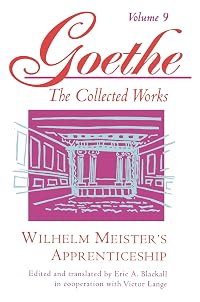
I also have a book from the collected works, volume 9. This was translated by Eric A. Blackall and is slightly different from the audio version.
After reading the show more German novels or German based novels that we read recently, I was a bit dreading it but this turned out to be very readable. I thought is a bit long and at times it didn’t flow well for me but at least it had a plot however full of coincidences.
The key points seem to me to be theater, especially Shakespeare. It also included exploration of social class structure or social integration. And about finding one’s way in life.
There is quite a bit about architecture which I paid little attention to until I read that Goethe had a keen sense of architecture and could describe it such that the reader could actually picture it. Lotherio’s Estate; a nobleman’s home is suppose to show us that his home wasn’t that pretentious. It also had a secret side where a secret society met. The Hall of the Past featured art and music. I am not sure about the others.
Problems with the book for me is the disunity. Thus my question on Book 6. Here’s what my afterword has on book 6. “Where does Book Six fit in? Can it be conceived as a transition to the last two books: if so, in what sense? And those last two books; predominately concerned with ideas and debates about ideas, and yet shot through with elements that seem to fit uneasily into a novel on the ideational plane…” The novel was written at two different periods of Goethe’s life.
While this book had a plot it is one full of coincidences.
So the book is not a true Bildungsroman nor is it a book about Culture. It is about finding oneself (apprenticeship) — like Saul son of Kish who goes out looking for his father’s asses and ends up with a kingdom.
My summary “German finds Shakespeare” show less
This is my first Goethe though he wrote so much and so much variety, maybe I’ve been exposed but unaware that I had. I listened to the audio which was updated version, Read by Leighton Pugh. This was Goethe's second novel, published in 1795/6. One could say this was a coming of age story It is also considered a precursor to the Bildungsroman. It is considered an influential novel of the 19th century so therefore I guess it belongs on the 1001 list. This was a revision of Thomas Carlyle’s translation to improve on the archaic style.
I also have a book from the collected works, volume 9. This was translated by Eric A. Blackall and is slightly different from the audio version.
After reading the show more German novels or German based novels that we read recently, I was a bit dreading it but this turned out to be very readable. I thought is a bit long and at times it didn’t flow well for me but at least it had a plot however full of coincidences.
The key points seem to me to be theater, especially Shakespeare. It also included exploration of social class structure or social integration. And about finding one’s way in life.
There is quite a bit about architecture which I paid little attention to until I read that Goethe had a keen sense of architecture and could describe it such that the reader could actually picture it. Lotherio’s Estate; a nobleman’s home is suppose to show us that his home wasn’t that pretentious. It also had a secret side where a secret society met. The Hall of the Past featured art and music. I am not sure about the others.
Problems with the book for me is the disunity. Thus my question on Book 6. Here’s what my afterword has on book 6. “Where does Book Six fit in? Can it be conceived as a transition to the last two books: if so, in what sense? And those last two books; predominately concerned with ideas and debates about ideas, and yet shot through with elements that seem to fit uneasily into a novel on the ideational plane…” The novel was written at two different periods of Goethe’s life.
While this book had a plot it is one full of coincidences.
So the book is not a true Bildungsroman nor is it a book about Culture. It is about finding oneself (apprenticeship) — like Saul son of Kish who goes out looking for his father’s asses and ends up with a kingdom.
My summary “German finds Shakespeare” show less
This was a great read. It is no wonder why Goethe is considered to be one of the greatest writers of all time in Germany and abroad. It is a classic tale that allows one to get into the sensibilities of the setting it was in while looking out at the greater world, towards freedom and self-discovery. This Bildungsroman is one that is definitely worth reading. Sections of the writing are simply brilliant and the story courses forward, like a current towards an endless ocean, in its graceful meaning.
5 stars. EXCELLENT!
5 stars. EXCELLENT!
It may be difficult nowadays to awaken a youngster’s interest for Goethe’s William. However, if an adolescent feels being artistically talented, he should be sure to remember William’s quotation: « ... mich selbst, ganz wie ich da bin, auszubilden, das war dunkel von Jugend auf mein Wunsch und meine Absicht ». (…to represent myself exactly as I am, that was my unconscious desire and intention up from youth.) (Sorry, own translation, certainly capable of improvement!) The point of the matter is the deep need of self-portrayal, which marks the difference between an artist and a common man.
Members
- Recently Added By
Lists

1001 Books You Must Read Before You Die
1,448 works; 1,130 members

1898 C.K. Shorter List of Best 100 Novels
100 works; 34 members

Philosophical Fiction
97 works; 27 members

German Literature
518 works; 50 members

Favorite Coming of Age Novels.
164 works; 51 members

Western World's Greatest Books - Project Gutenberg
295 works; 15 members

Harold Bloom - The Western Canon: B. The Aristocratic Age
231 works; 13 members

1,001 BYMRBYD Concensus
723 works; 27 members

W. S. Maugham's Reading Suggestions for Spiritual Enrichment: Continental
19 works; 3 members
Lamont's Hundred Best Novels (1947)
100 works; 4 members
F. B. Perkins' List of 100 Best Fiction
100 works; 5 members

My TBR
371 works; 3 members

Books Read in 2019
4,052 works; 108 members

Greatest Books, allegedly
484 works; 9 members

DigitalDreamDoor top 300
300 works; 4 members
Author Information

3,041+ Works 51,421 Members
Johann Wolfgang von Goethe, 1749-1832 Johann Wolfgang von Goethe was born in Frankfurt am Main. He was greatly influenced by his mother, who encouraged his literary aspirations. After troubles at school, he was taught at home and gained an exceptionally wide education. At the age of 16, Goethe began to study law at Leipzig University from 1765 to show more 1768, and he also studied drawing with Adam Oeser. After a period of illness, he resumed his studies in Strasbourg from 1770 to 1771. Goethe practiced law in Frankfurt for two years and in Wetzlar for a year. He contributed to the Frankfurter Gelehrte Anzeigen from 1772 to 1773, and in 1774 he published his first novel, self-revelatory Die Leiden des Jungen Werthers. In 1775 he was welcomed by Duke Karl August into the small court of Weimar, where he worked in several governmental offices. He was a council member and member of the war commission, director of roads and services, and managed the financial affairs of the court. Goethe was released from day-to-day governmental duties to concentrate on writing, although he was still general supervisor for arts and sciences, and director of the court theatres. In the 1790s Goethe contributed to Friedrich von Schiller´s journal Die Horen, published Wilhelm Meister's Apprenticeship, and continued his writings on the ideals of arts and literature in his own journal, Propyläen. The first part of his masterwork, Faust, appeared in 1808, and the second part in 1832. Goethe had worked for most of his life on this drama, and was based on Christopher Marlowe's Faust. From 1791 to 1817, Goethe was the director of the court theatres. He advised Duke Carl August on mining and Jena University, which for a short time attracted the most prominent figures in German philosophy. He edited Kunst and Altertum and Zur Naturwissenschaft. Goethe died in Weimar on March 22, 1832. He and Duke Schiller are buried together, in a mausoleum in the ducal cemetery. (Bowker Author Biography) show less
Some Editions
Awards and Honors
Notable Lists
Series

Belongs to Publisher Series
Goethe: The Collected Works (volume 9)
Letras Universales (313)
Limited Editions Club (S:27.05)
Prisma Klassieken (56)
insel taschenbuch (0475 / 3550)
Reclams Universal-Bibliothek (14182)
Everyman's Library (599)
Work Relationships
Is contained in
Contains
Is an adaptation of
Has the adaptation
Has as a commentary on the text
Has as a student's study guide
Common Knowledge
- Canonical title
- Wilhelm Meister's Apprenticeship
- Original title
- Wilhelm Meister's Lehrjahre
- Alternate titles
- Romane und Novellen II [Hamburger Ausg. Bd. 7]; Wilhelm Meister's Years Of Apprenticeship
- Original publication date
- 1795 (Part 1) (Part 1); 1796 (Part II) (Part II)
- People/Characters
- Wilhelm Meister; Mariane; Felix; Baron Lothario; Mignon; Natalie (show all 13); Augustin; Marchese Cipriani; Friedrich; Jarno; Philine; Laertes; Serlo
- Important events
- 18th century; Enlightenment
- Related movies
- Falsche Bewegung (1975 | IMDb)
- First words
- Das Schauspiel dauerte sehr lange.
- Quotations*
- Kennst du das Land, wo die Zitronen blühn,/Im dunkeln Laub die Goldorangen glühn,/Ein sanfter Wind vom blauen Himmel weht,/Die Myrte still und hoch der Lorbeer steht?/Kennst du es wohl? Dahin!/Dahin möcht' ich mit dir,/O m... (show all)ein Geliebter, ziehn.
Wer nie sein Brot mit Tränen aß,/Wer nie die kummervollen Nächte/Auf seinem Bette weinend saß,/Der kennt euch nicht, ihr himmlischen Mächte./Ihr führt ins Leben uns hinein,/Ihr lasst den Armen schuldig werden,/Dann übe... (show all)rlasst ihr ihn der Pein,/Denn alle Schuld rächt sich auf Erden. - Last words*
- (Click to show. Warning: May contain spoilers.)"Ich kenne den Wert eines Königreichs nicht", versetzte Wilhelm, "aber ich weiß, dass ich ein Glück erlangt habe, das ich nicht verdiene und das ich mit nichts in der Welt vertauschen möchte."
- Original language
- German
- Disambiguation notice
- 3150078261 Reclam UB 2012
3150141826 Reclam UB 2021
3458352503 2009 softcover German insel taschenbuch 3550, Das blaue insel taschenbuch
Please note that the 7th volume of the "Hamburger Ausgabe", though titled "... (show all)Romane und Novellen", contains "Wilhelm Meisters Lehrjahre" only and is therefore correctly combined!
*Some information comes from Common Knowledge in other languages. Click "Edit" for more information.
Classifications
- Genres
- Fiction and Literature, General Fiction
- DDC/MDS
- 833.6 — Literature & rhetoric German & related literatures German fiction 1750-1832 : 18th century, classical period, romantic period
- LCC
- PT2027 .W5 .C31 — Language and Literature German, Dutch and Scandinavian literatures German literature Individual authors or works 1700-ca. 1860/70 Goethe Translations
- BISAC
Statistics
- Members
- 1,055
- Popularity
- 24,310
- Reviews
- 16
- Rating
- (3.68)
- Languages
- 20 — Catalan, Czech, Danish, Dutch, English, Estonian, Finnish, French, German, Hebrew, Hungarian, Italian, Norwegian (Bokmål), Norwegian, Polish, Portuguese, Russian, Serbian, Slovenian, Spanish
- Media
- Paper, Audiobook, Ebook
- ISBNs
- 89
- UPCs
- 1
- ASINs
- 49