
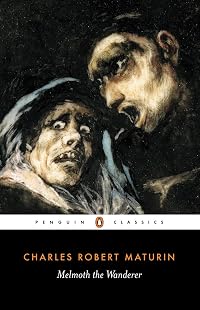
Melmoth the Wanderer
by Charles Maturin
There is 1 current discussion about this work.
On This Page
Description
"Melmoth the Wanderer" is an 1820 Gothic novel by Irish playwright, novelist and clergyman Charles Maturin. The novel's title character is a scholar who sold his soul to the devil in exchange for 150 extra years of life, and searches the world for someone who will take over the pact for him, in a manner reminiscent of the Wandering Jew. The novel is composed of a series of nested stories-within-stories, gradually revealing the story of Melmoth's life. The novel offers social commentary on show more early-19th-century England, and denounces Roman Catholicism in favour of the virtues of Protestantism. show lessTags
Recommendations
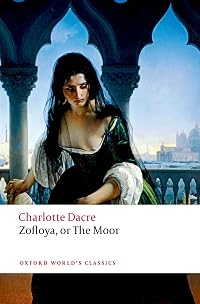
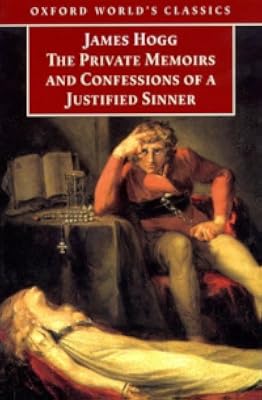
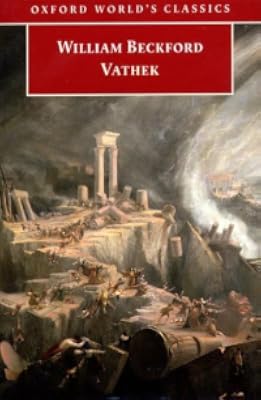

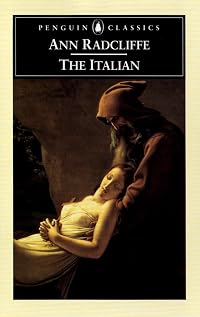








Member Recommendations
Member Reviews
“Miserable wretch that I am! At this moment, a voice from the bottom of my heart asks me ‘Whom hast thou loved so much? Was it man or God, that thou darest to compare thyself with her who knelt, and wept—not before a mortal idol, but at the feet of an incarnate divinity?’”
—Melmoth the Wanderer by Charles Maturin
What a great beginning, dripping in all the best gothic goo and sticking to the back of the brain. Hidden portraits with hidden histories in houses of decrepitude and ancient sins. Torture, bloody death under trampling hooves, breaking spirits on wheels and in dungeons and looming over cliffs toward hell-tossed oceans. I wanted to love this book. And the neck had been so damn snug in that lunette. What happened? Well, show more while the blade went singing to that doomed soul kneeling in puddles of blood, the narrative had been hijacked and hijacked again and hijacked once more. Hi-hi-high treasonous prose! Not remaining faithful to the set-up, playing Russian nesting dolls with the plot, whisking away the cobwebs only to find that behind that rusting and molding door is another goddamn door. Goddamn! That’s right, Melmoth sold his soul to the Devil and searched the world for a sucker to take his dark mantle from off his shoulders—kind of a reverse of Diogenes with demon’s blood in the lamp instead of light. So, like many other Gothic tales of its time, I was disappointed. Yet, in awe when some powerful passage would clout me at the base of the nose when nearly nodding off. Did he just . . . ?
It would take the likes of Poe to distill this kind of story into a truly affecting work. And since I’m a condenser by nature, a writer who cuts and squeezes until all the infection is out, to the detriment of the body, maybe, I couldn’t help but wish this thing move along a bit more briskly. Let the bloodletting commence! But without this kind of work, with its kind of unique power and sutured narrative to one hundred and fifty-year-old flesh, there would never have been a tradition of dark yet metaphysical literature to challenge readers and lovers of the macabre. Not all vampires are sparkly. Not all depictions of the Devil are devilish. (“The Brothers Karamazov” attests to the truth of that.) Not all narratives need be straight-forward—bent by scabrous fingers on dark designs. I just wish “Melmoth the Wanderer” hadn’t wandered so much. show less
—Melmoth the Wanderer by Charles Maturin
What a great beginning, dripping in all the best gothic goo and sticking to the back of the brain. Hidden portraits with hidden histories in houses of decrepitude and ancient sins. Torture, bloody death under trampling hooves, breaking spirits on wheels and in dungeons and looming over cliffs toward hell-tossed oceans. I wanted to love this book. And the neck had been so damn snug in that lunette. What happened? Well, show more while the blade went singing to that doomed soul kneeling in puddles of blood, the narrative had been hijacked and hijacked again and hijacked once more. Hi-hi-high treasonous prose! Not remaining faithful to the set-up, playing Russian nesting dolls with the plot, whisking away the cobwebs only to find that behind that rusting and molding door is another goddamn door. Goddamn! That’s right, Melmoth sold his soul to the Devil and searched the world for a sucker to take his dark mantle from off his shoulders—kind of a reverse of Diogenes with demon’s blood in the lamp instead of light. So, like many other Gothic tales of its time, I was disappointed. Yet, in awe when some powerful passage would clout me at the base of the nose when nearly nodding off. Did he just . . . ?
It would take the likes of Poe to distill this kind of story into a truly affecting work. And since I’m a condenser by nature, a writer who cuts and squeezes until all the infection is out, to the detriment of the body, maybe, I couldn’t help but wish this thing move along a bit more briskly. Let the bloodletting commence! But without this kind of work, with its kind of unique power and sutured narrative to one hundred and fifty-year-old flesh, there would never have been a tradition of dark yet metaphysical literature to challenge readers and lovers of the macabre. Not all vampires are sparkly. Not all depictions of the Devil are devilish. (“The Brothers Karamazov” attests to the truth of that.) Not all narratives need be straight-forward—bent by scabrous fingers on dark designs. I just wish “Melmoth the Wanderer” hadn’t wandered so much. show less
There are Faustian stories about the Devil and Faustian stories about Faust, but Melmoth the Wanderer transcends the conventions (and the trappings) of both.
Nested narratives that nearly defy our ability to maintain just who is speaking and who is listening spiral out of each other like smoke rising from a censer and coalescing with dreamy fog. This is the story of a man who sells his soul for a little extra time—of a man who currently has one-hundred-and-fifty years to prey on the helpless, the innocent, the guilty, the tortured, the desperate, the insane; to win them by hook or by crook into trading places with him and taking over his ultimate damnation. In Melmoth the Wanderer we are presented at times with stories within stories show more within stories within stories within stories: each detailing the sufferings of a mankind determined, apparently, to keep on suffering. And through it all—glimmering like a jewel in a pile of spent ashes, brooding in feverish gloom against the epic tempest of his agonies, tying together the helpless and essentially unrelated skeins of a persecuted humanity throughout the centuries of his eerie, tormented existence—is Melmoth the Wanderer.
Drawing heavily on the dizzy bombast of the Gothic tomes that came before him, Charles Maturin took the languid, peregrine prose of Mrs. Radcliffe and tempered it with the vicious cruelties of the Lewis set, the political musings of Godwin, and the pathos of Godwin’s daughter, Mary Shelley. It is both indebted to the whole of the Gothic tradition, and hence considered the last of the great Gothic novels, and yet also an incredibly inventive and original piece of writing that is less the ‘last great Gothic novel’ and more the first in a new school that would eventually include such luminaries as Poe, Stoker, and even H. P. Lovecraft. It is also very much concerned with itself as a text, and its embedded narratives have impacted the whole of literature, whether through Maturin’s imitators or those who imitated his imitators. In fact, his format has to be read to be believed—it is a brave and eccentric way to tell a brave and eccentric story.
Maturin’s Gothicism is high on theatrics and delirium, but also on subtle and often overwhelmingly personal philosophy. A Protestant clergyman who moonlit as a writer of sensationalistic and sometimes overtly anti-religious fiction and drama, Maturin lived a life of contradictions. And above all, Melmoth the Wanderer explores the nature of religion in its rawest and ugliest of dimensions: seemingly a strictly anti-Catholic text, Melmoth reveals itself to have a beef with nearly every major religion, including Protestantism. And though, in his dubious and distracting ‘footnotes,’ Maturin insinuates that the things coming out of his characters’ mouths (particularly the Wanderer’s) should not be taken for his own opinions, he has loaded his text with so many of these caustic observations that one cannot help but conclude that, even if he doesn’t agree with what he’s saying, it can hardly matter: his words stand alone. Whether Maturin intended his text to work on the levels that it does or not, Melmoth the Wanderer is a deeply antagonistic, even cynical, novel: and not just in regard to religion, but in regard to nearly the entire range of human history, development, and thought. And—the contradiction to crown them all—it is also a book that revels in the beauty of religion and humanity at their purest: a kind of poisoned love-letter to the possibilities of justice in a world gone mad.
Writers as diverse as Balzac, Baudelaire, Oscar Wilde, and Vladimir Nabokov have referenced and admired Melmoth the Wanderer for its troubling, deeply romantic themes and its central character, who embodies them in the most hallucinatory and disturbing of ways. Melmoth, then, and Melmoth the Wanderer as a whole, serve as a mouthpiece for the rationalizations and, occasionally, the ravings of a man of uncommon considerations. It is a novel that out-Herods Herod at every available opportunity and also a novel of rare and almost incapacitating power. If a modern reader can manage to get along with its bizarre and maddening format of stories within stories, he will be rewarded with an experience that simply cannot be put out of mind: Melmoth is the stuff of nightmares, sure, but also of dreams—and visions. show less
Nested narratives that nearly defy our ability to maintain just who is speaking and who is listening spiral out of each other like smoke rising from a censer and coalescing with dreamy fog. This is the story of a man who sells his soul for a little extra time—of a man who currently has one-hundred-and-fifty years to prey on the helpless, the innocent, the guilty, the tortured, the desperate, the insane; to win them by hook or by crook into trading places with him and taking over his ultimate damnation. In Melmoth the Wanderer we are presented at times with stories within stories show more within stories within stories within stories: each detailing the sufferings of a mankind determined, apparently, to keep on suffering. And through it all—glimmering like a jewel in a pile of spent ashes, brooding in feverish gloom against the epic tempest of his agonies, tying together the helpless and essentially unrelated skeins of a persecuted humanity throughout the centuries of his eerie, tormented existence—is Melmoth the Wanderer.
Drawing heavily on the dizzy bombast of the Gothic tomes that came before him, Charles Maturin took the languid, peregrine prose of Mrs. Radcliffe and tempered it with the vicious cruelties of the Lewis set, the political musings of Godwin, and the pathos of Godwin’s daughter, Mary Shelley. It is both indebted to the whole of the Gothic tradition, and hence considered the last of the great Gothic novels, and yet also an incredibly inventive and original piece of writing that is less the ‘last great Gothic novel’ and more the first in a new school that would eventually include such luminaries as Poe, Stoker, and even H. P. Lovecraft. It is also very much concerned with itself as a text, and its embedded narratives have impacted the whole of literature, whether through Maturin’s imitators or those who imitated his imitators. In fact, his format has to be read to be believed—it is a brave and eccentric way to tell a brave and eccentric story.
Maturin’s Gothicism is high on theatrics and delirium, but also on subtle and often overwhelmingly personal philosophy. A Protestant clergyman who moonlit as a writer of sensationalistic and sometimes overtly anti-religious fiction and drama, Maturin lived a life of contradictions. And above all, Melmoth the Wanderer explores the nature of religion in its rawest and ugliest of dimensions: seemingly a strictly anti-Catholic text, Melmoth reveals itself to have a beef with nearly every major religion, including Protestantism. And though, in his dubious and distracting ‘footnotes,’ Maturin insinuates that the things coming out of his characters’ mouths (particularly the Wanderer’s) should not be taken for his own opinions, he has loaded his text with so many of these caustic observations that one cannot help but conclude that, even if he doesn’t agree with what he’s saying, it can hardly matter: his words stand alone. Whether Maturin intended his text to work on the levels that it does or not, Melmoth the Wanderer is a deeply antagonistic, even cynical, novel: and not just in regard to religion, but in regard to nearly the entire range of human history, development, and thought. And—the contradiction to crown them all—it is also a book that revels in the beauty of religion and humanity at their purest: a kind of poisoned love-letter to the possibilities of justice in a world gone mad.
Writers as diverse as Balzac, Baudelaire, Oscar Wilde, and Vladimir Nabokov have referenced and admired Melmoth the Wanderer for its troubling, deeply romantic themes and its central character, who embodies them in the most hallucinatory and disturbing of ways. Melmoth, then, and Melmoth the Wanderer as a whole, serve as a mouthpiece for the rationalizations and, occasionally, the ravings of a man of uncommon considerations. It is a novel that out-Herods Herod at every available opportunity and also a novel of rare and almost incapacitating power. If a modern reader can manage to get along with its bizarre and maddening format of stories within stories, he will be rewarded with an experience that simply cannot be put out of mind: Melmoth is the stuff of nightmares, sure, but also of dreams—and visions. show less
I shouldn't put down a review -- I'm only 50 pages in -- but I'm compelled to initiate this for two reasons: 1) this novel is already such delirious fun, and 2) I want to warn readers off Chris Baldick's Introduction -- it's of the "here are some facts about the novel you're about to read, which after all isn't very good" variety. Lordy. Why write an intro at all, dear Chris, if you don't like the goddamned book? Even from my meager accomplishment of 50 pages I feel like Baldick must have missed the point badly: his intro would have been less boring if he'd HATED Melmoth. Read it after the novel if you must.
You will want the notes in the Oxford edition, and you should repair to them when lost because they enrich the experience.
Good show more lord, the storminess of this! And it's FUNNY (and on purpose, I think).
UPDATE: I need to temper my initial take somewhat. I still think Baldick makes a bad case for bothering to read the book at all ... but maybe he's not that far off!
I'm having less fun with the novel, now. Uncharacteristically for me, I suppose, the main beef I'm having with the novel is that it DOES go on, and WILL go on -- at great length. I typically appreciate ... length, being a fan of Victorian fiction from way back. I think the real problem is that Maturin goes on at great length at a high pitch of intensity ... which teaches you that unrelieved intensity winds up being not really intense at all, but kind of boring. I am reminded of the old review of the acting of Edmund Kean that said it was "like reading Shakespeare by flashes of lightning." The issue is that if there's nothing but lightning for a while, you won't be able to see very well. Yes ... I'm stretching my metaphor(s).
This is especially a problem when the Wanderer himself is on stage. He is a melodramatic figure if anything, and a lot of him standing there melodrama-ing is ... really. A. Lot. Mwah-hah-hah, I say with sulphurously burning eyes! (lightning flash)
"Less is more" is both typically true and a cliche, and the same is true, I guess, for "more is less." show less
You will want the notes in the Oxford edition, and you should repair to them when lost because they enrich the experience.
Good show more lord, the storminess of this! And it's FUNNY (and on purpose, I think).
UPDATE: I need to temper my initial take somewhat. I still think Baldick makes a bad case for bothering to read the book at all ... but maybe he's not that far off!
I'm having less fun with the novel, now. Uncharacteristically for me, I suppose, the main beef I'm having with the novel is that it DOES go on, and WILL go on -- at great length. I typically appreciate ... length, being a fan of Victorian fiction from way back. I think the real problem is that Maturin goes on at great length at a high pitch of intensity ... which teaches you that unrelieved intensity winds up being not really intense at all, but kind of boring. I am reminded of the old review of the acting of Edmund Kean that said it was "like reading Shakespeare by flashes of lightning." The issue is that if there's nothing but lightning for a while, you won't be able to see very well. Yes ... I'm stretching my metaphor(s).
This is especially a problem when the Wanderer himself is on stage. He is a melodramatic figure if anything, and a lot of him standing there melodrama-ing is ... really. A. Lot. Mwah-hah-hah, I say with sulphurously burning eyes! (lightning flash)
"Less is more" is both typically true and a cliche, and the same is true, I guess, for "more is less." show less
"..starting from the doze in which he had frequently indulged during this long narrative.
'But hear the result' said the pertinacious narrator."
Well i can certainly see why people might have issues with this book but there's lot of good with the bad. The main plot actually takes up about the first 10%, the 45-60% area and the last 10%. The rest are various other tales which are very tenuously connected.
It opens in ireland and is both very Gothic and very funny, in fact Maturin's sense of humour makes sporadic and odd appearances throughout the book.
After the opening and a short tale to add some more atmosphere we jump into 'The Spaniards' story and this is the low point and longest point of the whole thing. Those two appellations are show more probably not coincidental ;) .
Its a man-vs-institution story and whether its a monastery/convent, mad house, prison, boarding school, police state etc these tales don't have lot of variety to them at least in the broad strokes.
However Maturin is very good at psychology and emotional reactions. Unfortunately this tale is severely undermined by 2 factors. One is that its told by the Spaniard himself, rather eliminating the sense of danger since we know he at least survived, and two its placement.
We know its part of a larger whole and so it takes great focus to stop the 'are we there yet' voice in your head which is waiting for this to intersect the overarching storyline.
The middle section of the book is part of the main plot as i mentioned earlier and this is also one of the most floridly written segments its really good. Then we have two more tales almost back to back.
The 'Gusmans' is a social collapse tale somewhat like Zola's the 'Dram Shop' and 'Elinors' tale or whatever that one was called, is a Gothic romance.
Both of these latter stories are at least a lot shorter than the 'Spaniards' but you might still need to be able to stay in the moment to enjoy them.
Before we finally get back to the main plot for the finish.
Maturins best elements as a writer are his realistic psychology as mentioned before and also his speeches, there are some great speeches by various characters in this. So powerful in fact that Maturin felt the need to add a special disclaimer to say that the opinions expressed by his evil characters where not those of the author :) .
As you can tell it can get very nested, in fact it goes total 'Inception' at times, at one point we have the irish guy listening to the spaniard tell of a story, in which a man is listening to a story about a woman listening to story... how many levels is that :lol . Just hold tight to your totem and lets hope you don't end up in Limbo :) .
I heard once that this was virtually unreadable, glad to say i can disagree. A lot of good parts if not perhaps a great whole. show less
'But hear the result' said the pertinacious narrator."
Well i can certainly see why people might have issues with this book but there's lot of good with the bad. The main plot actually takes up about the first 10%, the 45-60% area and the last 10%. The rest are various other tales which are very tenuously connected.
It opens in ireland and is both very Gothic and very funny, in fact Maturin's sense of humour makes sporadic and odd appearances throughout the book.
After the opening and a short tale to add some more atmosphere we jump into 'The Spaniards' story and this is the low point and longest point of the whole thing. Those two appellations are show more probably not coincidental ;) .
Its a man-vs-institution story and whether its a monastery/convent, mad house, prison, boarding school, police state etc these tales don't have lot of variety to them at least in the broad strokes.
However Maturin is very good at psychology and emotional reactions. Unfortunately this tale is severely undermined by 2 factors. One is that its told by the Spaniard himself, rather eliminating the sense of danger since we know he at least survived, and two its placement.
We know its part of a larger whole and so it takes great focus to stop the 'are we there yet' voice in your head which is waiting for this to intersect the overarching storyline.
The middle section of the book is part of the main plot as i mentioned earlier and this is also one of the most floridly written segments its really good. Then we have two more tales almost back to back.
The 'Gusmans' is a social collapse tale somewhat like Zola's the 'Dram Shop' and 'Elinors' tale or whatever that one was called, is a Gothic romance.
Both of these latter stories are at least a lot shorter than the 'Spaniards' but you might still need to be able to stay in the moment to enjoy them.
Before we finally get back to the main plot for the finish.
Maturins best elements as a writer are his realistic psychology as mentioned before and also his speeches, there are some great speeches by various characters in this. So powerful in fact that Maturin felt the need to add a special disclaimer to say that the opinions expressed by his evil characters where not those of the author :) .
As you can tell it can get very nested, in fact it goes total 'Inception' at times, at one point we have the irish guy listening to the spaniard tell of a story, in which a man is listening to a story about a woman listening to story... how many levels is that :lol . Just hold tight to your totem and lets hope you don't end up in Limbo :) .
I heard once that this was virtually unreadable, glad to say i can disagree. A lot of good parts if not perhaps a great whole. show less
One of the deepest novels ever written. It was long, tedious and a Chinese puzzle box full of wonder. You have to really stay on your toes to understand this story but when it is all done and you have wiped the blood from your eyes you will thank yourself. Finishing it is a major achievement for anyone who reads on a regular basis. I wonder what this would have been like if Umberto Eco had penned it. It takes real stamina. This is a novel in which the writing style truly parallels the content of the story. It goes on and on and on. But that is ok. Whether this is what the author intended or not is beside the point. Considering that he was a literate man with considerable intelligence the length is probably due to him being a clergy. show more However, he creates one of the most despicable and tortured souls in literature. Considering the genre of this material, when it was written and its length I feel it is a masterpiece. It stands out head and shoulders above much of the fiction of the time. show less
Melmoth the Wanderer was a prominent ripple in the Romantic Era's flood of supernatural fiction. Devoured by schoolboys throughout the 19th Century, it gained a following abroad, too, most notably in France.
Much though it appealed to the likes of Dante Gabriel Rosetti, Victor Hugo and Oscar Wilde, Melmoth has aged poorly. Today's reader is likely to find it slow-moving and prolix, as well as preachy to the point of self-parody. The author, the Rev. Charles Maturin, supplemented his meager clerical income by writing plays and novels. He feared, though, that such work would blight his career in the Church of England. That may be why he attached to this, his most popular, production an optimistic and unlikely moral. He took it from one of show more his own sermons, which he quotes in the novel's preface:
"At this moment is there one of us present, however we may have departed from the Lord, disobeyed his will, and disregarded his word - is there one of us who would, at this moment, accept all that man could bestow, or earth afford, to resign the hope of his salvation? - No, there is not one - not such a fool on earth, were the enemy of mankind to traverse it with the offer!"
The Wanderer, searching for a soul to accept that bargain, stalks through a series of nested tales, a longaevus with supernatural powers and human passions. His failures in his quest are mostly unbelievable, and there is much else to disparage: The prose, consistently overwritten, sometimes blots out the sense. Many of the characters are flat stereotypes. The author's smug anti-Catholicism grates. And the narrative stumbles to an unsatisfying stop, as if has filled its requisite number of pages and need not go on.
Nonetheless, Baudelaire admired Maturin, and Honoré de Balzac called this book "the greatest creation of one of the greatest geniuses of Europe". If one makes the mental effort, it is possible to glimpse why.
The title character, when not smothered in rhetorical excess, is a compelling figure: a Romantic anti-hero whose immense power is linked to despair. He has chosen to become an agent of evil, yet he retains a nostalgic sympathy for the mortals he is trying to entice into Hell. In the end, he cannot avoid falling in love, abandoning a nearly caught prey to Heaven, and yielding to old age and dissolution.
Also, while much too lavish with words, Maturin is economical of special effects. He offers no profusion of horrors. Melmoth, the only supernatural being on stage, violates the laws of nature only infrequently and mostly between chapters. The dread that pervades the book rises from within the characters' minds rather than from without, and what they dread is what the young Romantics dreaded: monotony, conventionality and subordination, more than things that go bump in the night. Compared to the typical 19th Century Gothic, or 21st Century horror, novel, Melmoth is surprisingly sophisticated and subtle.
So, while I cannot commend it with Balzac's enthusiasm, its appeal, though much faded, is not entirely gone. show less
Much though it appealed to the likes of Dante Gabriel Rosetti, Victor Hugo and Oscar Wilde, Melmoth has aged poorly. Today's reader is likely to find it slow-moving and prolix, as well as preachy to the point of self-parody. The author, the Rev. Charles Maturin, supplemented his meager clerical income by writing plays and novels. He feared, though, that such work would blight his career in the Church of England. That may be why he attached to this, his most popular, production an optimistic and unlikely moral. He took it from one of show more his own sermons, which he quotes in the novel's preface:
"At this moment is there one of us present, however we may have departed from the Lord, disobeyed his will, and disregarded his word - is there one of us who would, at this moment, accept all that man could bestow, or earth afford, to resign the hope of his salvation? - No, there is not one - not such a fool on earth, were the enemy of mankind to traverse it with the offer!"
The Wanderer, searching for a soul to accept that bargain, stalks through a series of nested tales, a longaevus with supernatural powers and human passions. His failures in his quest are mostly unbelievable, and there is much else to disparage: The prose, consistently overwritten, sometimes blots out the sense. Many of the characters are flat stereotypes. The author's smug anti-Catholicism grates. And the narrative stumbles to an unsatisfying stop, as if has filled its requisite number of pages and need not go on.
Nonetheless, Baudelaire admired Maturin, and Honoré de Balzac called this book "the greatest creation of one of the greatest geniuses of Europe". If one makes the mental effort, it is possible to glimpse why.
The title character, when not smothered in rhetorical excess, is a compelling figure: a Romantic anti-hero whose immense power is linked to despair. He has chosen to become an agent of evil, yet he retains a nostalgic sympathy for the mortals he is trying to entice into Hell. In the end, he cannot avoid falling in love, abandoning a nearly caught prey to Heaven, and yielding to old age and dissolution.
Also, while much too lavish with words, Maturin is economical of special effects. He offers no profusion of horrors. Melmoth, the only supernatural being on stage, violates the laws of nature only infrequently and mostly between chapters. The dread that pervades the book rises from within the characters' minds rather than from without, and what they dread is what the young Romantics dreaded: monotony, conventionality and subordination, more than things that go bump in the night. Compared to the typical 19th Century Gothic, or 21st Century horror, novel, Melmoth is surprisingly sophisticated and subtle.
So, while I cannot commend it with Balzac's enthusiasm, its appeal, though much faded, is not entirely gone. show less
Wonderfully atmospheric and gloomy with some splendidly misanthropist screeds, this novel is the apotheosis of the Romantic horror novel. The structure is contrived, with its stories nested like a set of matryoshka dolls, and the relentless anti-Catholicism is heavy handed. Still, the highlights are worth the slogs through the languors, and if this sort of thing is your cup of tea, then there's a whole Brown Betty potful of Gothic delights to be savored here.
Members
- Recently Added By
Lists

The Guardian's 1000 Novels Everyone Must Read
1,005 works; 547 members

Best Gothic Fiction
110 works; 31 members

Gothicissisme I : Classics
24 works; 3 members
Lovecraft's 'Supernatural Horror in Literature' Reading List
216 works; 8 members

Cawthorn and Moorcock's Fantasy: The 100 Best Books
110 works; 7 members

Mentioned by H.P. Lovecraft
11 works; 1 member

1,001 BYMRBYD Concensus
723 works; 27 members

1820s
8 works; 1 member

The Immortal Wanderer
23 works; 1 member

Best Horror Mega-List
342 works; 6 members

Harold Bloom - The Western Canon: C. The Democratic Age
336 works; 15 members

Jones and Newman's Horror: The 100 Best Books
100 works; 4 members

Best of Irish Literature
37 works; 7 members

Haunted Britain and Ireland
51 works; 7 members

Found manuscripts
35 works; 2 members

Books in The Club Dumas
72 works; 1 member

To Read (Prospector)
86 works; 1 member

Reading LIst
648 works; 1 member

el
1,139 works; 1 member

.
396 works; 1 member
Talk Discussions
Current Discussions
Melmoth the Wanderer in Gothic Literature (January 13)
Past Discussions
Group Read, October 2023: Melmoth the Wanderer in 1001 Books to read before you die (October 2023)
Author Information

36+ Works 2,063 Members
Some Editions
Awards and Honors
Notable Lists
Series
Belongs to Publisher Series
Work Relationships
Is contained in
Contains
Is abridged in
Inspired
Common Knowledge
- Canonical title
- Melmoth the Wanderer
- Original title
- Melmoth the Wanderer
- Original publication date
- 1820
- People/Characters
- John Melmoth; Sebastian Melmoth; Juan Moncada; Alonzo Moncada; Isidora di Aliaga
- First words
- In the autumn of 1816, John Melmoth, a student in Trinity College, Dublin, quitted it to attend a dying uncle on whom his hopes for independence chiefly rested.
- Quotations
- Had I been told such a story of another, I would have denounced him as the most reckless and desperate being on earth - yet I was the man. p.212
- Last words
- (Click to show. Warning: May contain spoilers.)Melmoth and Moncada exchanged looks of silent and unutterable horror, and returned slowly home.
- Original language
- English
- Canonical DDC/MDS
- 823.08731
Classifications
- Genres
- Fiction and Literature, General Fiction, Horror, Fantasy
- DDC/MDS
- 823.08731 — Literature & rhetoric English & Old English literatures English fiction By type Genre fiction Adventure fiction Horror and ghost fiction Gothic fiction
- LCC
- PR4987 .M7 .M42 — Language and Literature English English Literature 19th century , 1770/1800-1890/1900
- BISAC
Statistics
- Members
- 1,851
- Popularity
- 11,648
- Reviews
- 35
- Rating
- (3.72)
- Languages
- 11 — Czech, Dutch, English, French, German, Greek, Italian, Russian, Slovak, Spanish, Swedish
- Media
- Paper, Audiobook, Ebook
- ISBNs
- 71
- ASINs
- 36