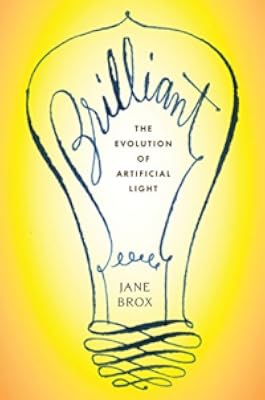
Brilliant
by Jane Brox
On This Page
Description
Documents the role of light in history, tracing how the development of specific innovations had a pivotal influence on social and cultural evolution.Tags
Recommendations







Member Reviews
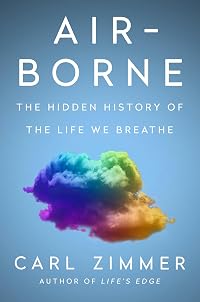
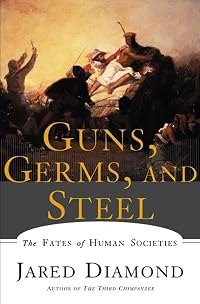
‘Brilliant’ is a pleasing accompaniment to [b:At Day's Close: Night in Times Past|722892|At Day's Close Night in Times Past|A. Roger Ekirch|https://images.gr-assets.com/books/1348957892s/722892.jpg|4067791], [b:The Prize: The Epic Quest for Oil, Money, and Power|169354|The Prize The Epic Quest for Oil, Money, and Power|Daniel Yergin|https://images.gr-assets.com/books/1403025725s/169354.jpg|163531], and [b:Why We Sleep: The New Science of Sleep and Dreams|36234689|Why We Sleep The New Science of Sleep and Dreams|Matthew Walker|https://images.gr-assets.com/books/1505329976s/36234689.jpg|55587034], popular histories of nighttime, oil, and sleep respectively. Brox turns the focus instead to unnatural light over the centuries in show more engaging, episodic fashion. It’s hard to grasp the full import of the changes that artificial light has wrought, and I’m not sure such a short book could ever do so. Although Brox’s perspective is largely US-centric, the book creditably addresses racial and geographical inequalities in access to light. It’s difficult to build a wholly coherent narrative from such a broad global transformation, so the memorable highlights of the book are somewhat scattered. I especially appreciated learning about the history of lighthouses, the first house to have electric lights requiring a coal boiler in the basement, the revolting process of rendering whale oil, and the World’s Columbian Exposition. Brox marshals an impressive range of sources and some lovely quotes, such as this on the 1965 New York blackout:
Indeed, by the end of the book I felt a little ambivalent about artificial light. A chapter on the Lascaux caves and another on light pollution are reminders of how costly our profligacy with light can be. Not that I don’t rely upon it to read past midnight, of course, and am certainly not about to give it up. Still, I loved Brox’s description of the Soft House idea:
The chapters on slow-paced rural electrification are less interesting, as to the European reader they merely demonstrate the baffling American reluctance to intervene in manifestly dysfunctional free markets. Otherwise, though, this is a fascinating compendium of light-related social insights. show less
The moonlight lay on the streets like thick snow, and we had a curious, persistent feeling that we were leaving footprints in it. Something was odd about buildings and corners in this beautiful light. The city presented a tilted aspect, and ever our fellow pedestrians, chattering with implacable cheerfulness, appeared foreshortened as they passed; they made us think of people running downhill. It was a bloc more before we understood: The shadows, for once, all fell in the same direction - away from the easterly, all-illuminating moon… We were in a night forest and for a change, home lay not merely uptown but north.
Indeed, by the end of the book I felt a little ambivalent about artificial light. A chapter on the Lascaux caves and another on light pollution are reminders of how costly our profligacy with light can be. Not that I don’t rely upon it to read past midnight, of course, and am certainly not about to give it up. Still, I loved Brox’s description of the Soft House idea:
A flexible network made of multiple, adaptable, and co-operative light-emitting textiles that can be touched, held, and used by homeowners, according to their needs. [...] Translucent moveable curtains along the perimeter convert sunlight into energy during the day, shading the house in summer and creating an insulating air layer in winter. Folded downward, a central curtain establishes a habitable off-the-grid energy harvesting room. Folded upward, this luminous curtain becomes a suspended soft chandelier.
The chapters on slow-paced rural electrification are less interesting, as to the European reader they merely demonstrate the baffling American reluctance to intervene in manifestly dysfunctional free markets. Otherwise, though, this is a fascinating compendium of light-related social insights. show less
Interesting and comprehensive. It dragged in portions, loaded down with information, lumbering along. I learned a lot though. My favorite parts were the ancient times, the TVA electrification and the future of lighting. Some of it was familiar already- the disaster that lighting has caused among migratory birds, nesting turtles and astronomers- but the new information was fascinating.
Like the folks who got electrical lines in their homes in the 30s and 40s I still don't know exactly what electricity is. But I used it to read this book and enjoyed the different perspectives Brox explores.
I enjoyed this and it was very thorough if a bit preachy
I found this book interesting and engaging....it also made me want to turn out all of my lights and sit in the dark.
Given where I work, quite an interesting book. Very American centrict though
Ratings
Members
- Recently Added By
Published Reviews
ThingScore 100
I had worried that once Brox's story got to the invention of the electric light bulb, things would become rather more plain sailing, and the story a little boring. But no. When we consider the electric light bulb, romantic notions we might have had about candles or lamps will be tested. I had once, in a mood of wistful primitivism, entertained the idea of using an oil lamp to read by, but now show more I know how dangerous they are, and how much of an immense faff it is to clean them, I have dropped the notion for ever. And candles aren't what they used to be: they're much, much better, and for most of their life most were difficult to make, and stank. The upside was that if, like the builders of the first Eddystone lighthouse, you got trapped for days in a storm, you could eat them. show less
added by wandering_star
Lists

Books in the Bibliography of The Alchemy of Us by Ainissa Ramirez
181 works; 1 member
Author Information

8+ Works 564 Members
Awards and Honors
Notable Lists
Common Knowledge
- Canonical title
- Brilliant
- Original publication date
- 2010-07-08
- People/Characters
- François-Ami Pierre Argand; Gaston Bachelard; Charles Brush; Jimmy Carter; Charles Dickens; Thomas Edison (show all 16); A. Robert Ekirch; Benjamin Franklin; E. Newton Harvey; Herman Melville; Louis-Sébastian Mercier; Franklin Delano Roosevelt; Wolfgang Schivelbush; Robert Louis Stevenson; Nikola Tesla; George Westinghouse
- Important places
- Lascaux cave, France
- Dedication
- For
DEANNE URMY
and for
JOHN BISBEE - First words
- Five hundred years ago, if you could have seen the earth from above, cities, towns, and villages would have appeared nearly as dark as oak forests. (Prologue)
Although fire has blazed in hearths and flared from pine torches for half a million years, the earliest known stone lamps – fashioned by Ice Age humans during the Pleistocene – are no more than forty thousand years old. - Last words
- (Click to show. Warning: May contain spoilers.)And it's not too much to imagine a night with room for more than mere brilliance will allow: the flowering of cockleburs and the warmth of cafés in the evening; the safe passage of loggerhead turtles and skyscrapers figured anew; the stars above “more brilliantly, more sparklingly gemlike . . . opals you might call them, emeralds, lapis lazuli, rubies, sapphires” and our own long-storied selves intimately at home in immensity.
(Click to show. Warning: May contain spoilers.)Look yet again, and the countless lights seem to take on unwitting shapes: see the way the crowded headlands of the eastern seaboard make the shape of a head with an outstretched neck, the peninsula of Florida the forelegs, and the Pacific Coast the agile back legs of a fleet stag gathering speed as it rushes headlong into the black Atlantic. (Epilogue) - Original language
- English
- Canonical DDC/MDS
- 621.3209
- Canonical LCC
- TH7900
Classifications
Statistics
- Members
- 255
- Popularity
- 127,436
- Reviews
- 6
- Rating
- (3.71)
- Languages
- English
- Media
- Paper, Audiobook, Ebook
- ISBNs
- 7
- ASINs
- 7