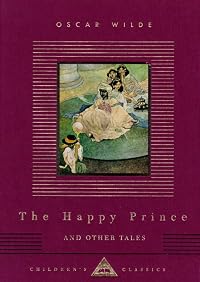
The Happy Prince and Other Tales
by Oscar Wilde  , Orhan Duz
The Happy Prince and Other Tales (Collections and Selections — 1-5)
On This Page
Description
A beautiful, golden, jewel-studded statue and a little swallow give all they have to help the poor.Tags
Recommendations


















Member Reviews
I've read all these stories a long time ago and recall enjoying them, but somehow this time I found them too spiritual, too devout and decidedly harrowing. It appears a young person can appreciate stories of sacrifice and pathos more than a pragmatic adult. I always found the story of the nightingale the most heartbreaking, even more so than the others. However, Wilde is without question a superb writer and while I recognize that, I would hesitate presenting these traumatic stories to a child.
Sadly I was never given this delightful little book to read as a child, and it was not until Rhinoa bought me a copy that I finally had the chance to experience the fairy tales of the infamous Oscar Wilde. Tales in this collection include The Devoted Friend, The Remarkable Rocket and The Selfish Giant, but I will briefly mention my two favourite stories.
The Happy Prince is the heartbreakingly beautiful tale of a golden and jewelled statue of a prince overlooking a city, where he mourns the injustice and poverty he sees before him. He is befriended by a swallow who has delayed his migration (because he fell in love with a reed!) and persuades the bird to distribute his jewels and gold to the poor and needy. The swallow grows to love the show more Prince but realises that he must leave before the winter grows too cold. I cannot describe how much I loved this story. I won't reveal the ending to those who do not already know it, but needless to say, I shed more than one tear (while reading the book in the bath!).
The Nightingale and the Rose is the story of a nightingale who overhears a student saddened because he is unable to give a red rose to his beloved, to win a dance with her. The nightingale searches for such a red rose, but discovers that the only way to produce one is if she is prepared to sing the sweetest song all night and impale herself on the rose-tree's thorn staining it with her heart's blood.
Wilde's fairy tales are far darker than I imagined, but I have seldom read such beautiful writing. I highly recommend this collection for anyone who enjoys fairy tales, and will definitely be reading it to my baby cousin in a few years. Thanks Rhinoa! show less
The Happy Prince is the heartbreakingly beautiful tale of a golden and jewelled statue of a prince overlooking a city, where he mourns the injustice and poverty he sees before him. He is befriended by a swallow who has delayed his migration (because he fell in love with a reed!) and persuades the bird to distribute his jewels and gold to the poor and needy. The swallow grows to love the show more Prince but realises that he must leave before the winter grows too cold. I cannot describe how much I loved this story. I won't reveal the ending to those who do not already know it, but needless to say, I shed more than one tear (while reading the book in the bath!).
The Nightingale and the Rose is the story of a nightingale who overhears a student saddened because he is unable to give a red rose to his beloved, to win a dance with her. The nightingale searches for such a red rose, but discovers that the only way to produce one is if she is prepared to sing the sweetest song all night and impale herself on the rose-tree's thorn staining it with her heart's blood.
Wilde's fairy tales are far darker than I imagined, but I have seldom read such beautiful writing. I highly recommend this collection for anyone who enjoys fairy tales, and will definitely be reading it to my baby cousin in a few years. Thanks Rhinoa! show less
Oscar Wilde does fairy tales--a kind of strange mixture.
The title story, The Happy Prince, and its successor, The Nightingale and the Rose, are a bit sorrowful and bleak. I dare say the main takeaway might be that love brings death and is much unappreciated. The Selfish Giant is an almost religious tale in which an act of kindness is rewarded...the sort of tale in which the main character does not realize who he is aiding but proves his worth by his unselfish act.
The fourth story was my favorite. The Devoted Friend is a story of exploitation in the name of friendship and hypocrisy. I could imagine Wilde basing it on his on personal experience.
The final story seemed to be a study in pomposity, another subject Wilde knew a bit about.
His show more signature wit surfaced from time to time.
After the seven years were over he had said all that he had to say, for his conversation was limited.
And
’What is a sensitive person?’ said the Cracker to the Roman Candle. ‘A person who, because he has corns himself, always treads on other people’s toes,’ answered the Roman Candle in a low whisper…
The stories are cynical, with Wilde poking fun at himself, society, and possibly Aesop’s Fables. I doubt he would have enjoyed his current reputation if this had been all he had written, but as an addition to his works, they are interesting enough. show less
The title story, The Happy Prince, and its successor, The Nightingale and the Rose, are a bit sorrowful and bleak. I dare say the main takeaway might be that love brings death and is much unappreciated. The Selfish Giant is an almost religious tale in which an act of kindness is rewarded...the sort of tale in which the main character does not realize who he is aiding but proves his worth by his unselfish act.
The fourth story was my favorite. The Devoted Friend is a story of exploitation in the name of friendship and hypocrisy. I could imagine Wilde basing it on his on personal experience.
The final story seemed to be a study in pomposity, another subject Wilde knew a bit about.
His show more signature wit surfaced from time to time.
After the seven years were over he had said all that he had to say, for his conversation was limited.
And
’What is a sensitive person?’ said the Cracker to the Roman Candle. ‘A person who, because he has corns himself, always treads on other people’s toes,’ answered the Roman Candle in a low whisper…
The stories are cynical, with Wilde poking fun at himself, society, and possibly Aesop’s Fables. I doubt he would have enjoyed his current reputation if this had been all he had written, but as an addition to his works, they are interesting enough. show less
Wilde may be know more for his novel the Story of Dorian Gray and a bevy of socially critical plays, but there's something about his small collection of fairytales that's intrinsically charming. Playing on hte previous success of collections of traditional folk and fairytales by the Brothers Grimm and Charles Perrault, Wilde turns the genre aside by creating his own stories in the same vein. While Wilde eschews the inspiration of stories of the people he employs the same structured narrative tone, similar moralistic themes, and almost recognizable characters, landing himself solidly within the genre. Unfortunately, this separation from the old tales did not do him any favours in the long run, as his stories were not taken up as instant show more classics or embedded into the nursery rhyme cachet that children throughout the Western world are familiar with. None the less, I enjoyed reading this small collection of tales. show less
Wilde blends his witty humor and insight with a keen observation of human behavior and ideals. Some tales entertain with whole sections you want to underline and share with others. A few of the stories are just simply beautiful with moral character that shines through. These are stories to be read and returned to when in need of laughter or smiles.
If this book doesn't make you want to curl up with a nice hot cup of arsenic and maybe some razor blades, you read a different edition than I did. Apparently Wilde read Hans Christian Anderson and thought, "Dang nab it, I can write way way depressing fairy tales, too!"
Not saying it's not pretty. Just saying.
Not saying it's not pretty. Just saying.
Oscar Wilde was wide-ranging in the literary forms he engaged and I've enjoyed many of his other works, but his fairy tales don't strike me as being one of his strengths. He was no Hans Anderson, not even J.K. Rowling (see: Beedle). But if you're looking for a purely Christian slant in classics for children, you can't do better than this.
(4/5) The Happy Prince - A golden statue has opportunity to help his city with a bird's assistance. It's all about charity. Saw the 1974 animation as a kid, so the nostalgia won it some points.
(3.5/5) The Nightingale and the Rose - A nightingale selflessly assists a young wooer. Love isn't love unless you're willing to die for it. Most kids won't grasp this without assistance.
(3.5/5) The Selfish Giant show more - spring won't return to the giant's garden after he ejects a bunch of hooligans. Embrace Christianity for everlasting life. Made little impression on me when I was young, and none at all now.
(3/5) The Devoted Friend - A tale about give-and-take that's entirely open to misinterpretation, thus the awkward framing story about the water rat.
(3.5/5) The Remarkable Rocket - A supremely self-centered firecracker leaves no impression on anyone. A strange note to end on, but there it is. show less
(4/5) The Happy Prince - A golden statue has opportunity to help his city with a bird's assistance. It's all about charity. Saw the 1974 animation as a kid, so the nostalgia won it some points.
(3.5/5) The Nightingale and the Rose - A nightingale selflessly assists a young wooer. Love isn't love unless you're willing to die for it. Most kids won't grasp this without assistance.
(3.5/5) The Selfish Giant show more - spring won't return to the giant's garden after he ejects a bunch of hooligans. Embrace Christianity for everlasting life. Made little impression on me when I was young, and none at all now.
(3/5) The Devoted Friend - A tale about give-and-take that's entirely open to misinterpretation, thus the awkward framing story about the water rat.
(3.5/5) The Remarkable Rocket - A supremely self-centered firecracker leaves no impression on anyone. A strange note to end on, but there it is. show less
Members
- Recently Added By
Lists

501 Must-Read Books
529 works; 72 members

Favourite 19th century fiction
257 works; 62 members

CCE 1000 Good Books List
1,033 works; 12 members

19th Century
190 works; 16 members

Children's Books by Adult Authors
26 works; 2 members

Nice Anthologies for Kids
66 works; 3 members

Favourite Books
1,820 works; 316 members

Books Read in 2017
4,249 works; 130 members

Short Story Collections and Anthologies
261 works; 42 members
Author Information

1,789+ Works 121,474 Members
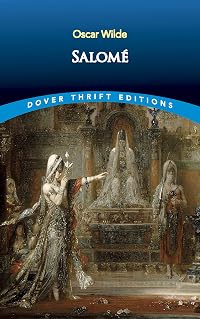
Flamboyant man-about-town, Oscar Wilde had a reputation that preceded him, especially in his early career. He was born to a middle-class Irish family (his father was a surgeon) and was trained as a scholarship boy at Trinity College, Dublin. He subsequently won a scholarship to Magdalen College, Oxford, where he was heavily influenced by John show more Ruskin and Walter Pater, whose aestheticism was taken to its radical extreme in Wilde's work. By 1879 he was already known as a wit and a dandy; soon after, in fact, he was satirized in Gilbert and Sullivan's Patience. Largely on the strength of his public persona, Wilde undertook a lecture tour to the United States in 1882, where he saw his play Vera open---unsuccessfully---in New York. His first published volume, Poems, which met with some degree of approbation, appeared at this time. In 1884 he married Constance Lloyd, the daughter of an Irish lawyer, and within two years they had two sons. During this period he wrote, among others, The Picture of Dorian Gray (1891), his only novel, which scandalized many readers and was widely denounced as immoral. Wilde simultaneously dismissed and encouraged such criticism with his statement in the preface, "There is no such thing as a moral or an immoral book. Books are well written or badly written. That is all." In 1891 Wilde published A House of Pomegranates, a collection of fantasy tales, and in 1892 gained commercial and critical success with his play, Lady Windermere's Fan He followed this comedy with A Woman of No Importance (1893), An Ideal Husband (1895), and his most famous play, The Importance of Being Earnest (1895). During this period he also wrote Salome, in French, but was unable to obtain a license for it in England. Performed in Paris in 1896, the play was translated and published in England in 1894 by Lord Alfred Douglas and was illustrated by Aubrey Beardsley. Lord Alfred was the son of the Marquess of Queensbury, who objected to his son's spending so much time with Wilde because of Wilde's flamboyant behavior and homosexual relationships. In 1895, after being publicly insulted by the marquess, Wilde brought an unsuccessful slander suit against the peer. The result of his inability to prove slander was his own trial on charges of sodomy, of which he was found guilty and sentenced to two years of hard labor. During his time in prison, he wrote a scathing rebuke to Lord Alfred, published in 1905 as De Profundis. In it he argues that his conduct was a result of his standing "in symbolic relations to the art and culture" of his time. After his release, Wilde left England for Paris, where he wrote what may be his most famous poem, The Ballad of Reading Gaol (1898), drawn from his prison experiences. Among his other notable writing is The Soul of Man under Socialism (1891), which argues for individualism and freedom of artistic expression. There has been a revived interest in Wilde's work; among the best recent volumes are Richard Ellmann's, Oscar Wilde and Regenia Gagnier's Idylls of the Marketplace , two works that vary widely in their critical assumptions and approach to Wilde but that offer rich insights into his complex character. (Bowker Author Biography) show less
Oscar Wilde has a Legacy Library. Legacy libraries are the personal libraries of famous readers, entered by LibraryThing members from the Legacy Libraries group.
1 Work 1,519 Members
Some Editions
Awards and Honors
Notable Lists
Series

Belongs to Publisher Series
Γράμματα / Λογοτεχνία (179)
Work Relationships
Is contained in
Common Knowledge
- Canonical title
- The Happy Prince and Other Tales
- Original title
- Collected Works
- Alternate titles
- The Happy Prince and Other Stories
- Original publication date
- 1888
- People/Characters
- Happy Prince; Nightingale; Selfish Giant; Devoted Friend; Remarkable Rocket
- Dedication
- TO CARLOS BLACKER
- First words
- High above the city on a tall column stood the statue of the Happy Prince.
- Last words
- (Click to show. Warning: May contain spoilers.)'I knew I should create a great sensations,' gasped the Rocket, and he went out.
- Original language
- English
- Disambiguation notice
- This is the original story collection from Mr. Wilde, including five stories:
* The Happy Prince
* The Nightingale and the Rose
* The Selfish Giant
* The Devoted Friend
* The Remarka... (show all)ble Rocket
Please do not combine with other story collections that contain different stories.
Classifications
Statistics
- Members
- 1,519
- Popularity
- 15,228
- Reviews
- 28
- Rating
- (4.03)
- Languages
- 17 — Chinese, Czech, Dutch, English, Finnish, French, German, Greek, Hungarian, Italian, Japanese, Lithuanian, Polish, Serbian, Spanish, Turkish, Portuguese (Portugal)
- Media
- Paper, Audiobook, Ebook
- ISBNs
- 242
- UPCs
- 1
- ASINs
- 69
