
James P. Womack
Author of Lean Thinking: Banish Waste and Create Wealth in Your Corporation
About the Author
James Womack is founder and president of the Lean Enterprise Institute (www.lean.org), a nonprofit education and research organization based in Brookline, Massachusetts, dedicated to the spread of lean thinking.
Image credit: © Copyright 2000-2016 Lean Enterprise Institute, Inc. All rights reserved.
Works by James P. Womack
Lean Solutions: How Companies and Customers Can Create Value and Wealth Together (2005) 128 copies, 1 review
Seeing the Whole: Mapping the Extended Value Stream (Lean Enterprise Institute) (2002) — Author — 33 copies, 1 review
Associated Works
Learning to See: Value Stream Mapping to Add Value and Eliminate MUDA (1999) — Foreword — 114 copies, 1 review
Getting the Right Things Done: A Leader's Guide to Planning and Execution (2006) — Foreword — 69 copies
Making Materials Flow: A Lean Material-Handling Guide for Operations, Production-Control, and Engineering Professionals (2003) — Foreword — 14 copies
Tagged
Common Knowledge
- Legal name
- Womack, James P.
- Gender
- male
Members
Reviews
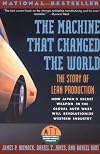
The Machine That Changed the World is a landmark study of Japanese automobile manufacturing that has not aged well, and if it is what passes for groundbreaking research in management, is even more evidence that the MBA is a massive scam.
The automobile the most complex consumer good around, requiring complex and highly capitalized entities to build. In the early 1980s, Japanese automakers began comprehensively beating the US based Big Three. A group of scholars centered around the MIT Sloan show more business school conducted a comprehensive global review of auto manufacturing, which revealed a phenomena they called Lean Manufacturing, an extension of Taiichi Ohno's Toyota Production System.
TPS reports from Office Space.
Look what MBAs demand our respect for. They have played us for absolute fools.
Mass production is defined by efficiency through scale. By making millions of the same thing, you drive costs per unit. Human skill is removed as much as possible to keep labor costs low. The downside of mass production is an alienated labor force that doesn't care about their jobs or the final product, adversarial relationships with customers and suppliers, immense overhead in inventory, quality assurance and rework, immense capital tied up in inventory of parts and final product, and an overall system that turns like an oil tanker, taking decades to bring a product to market.
By comparison, lean production focuses on reducing waste, variability, and overhead. Frontline workers are empowered to find solutions and encouraged to stop the line rather than let a mistake persist. The whole apparatus is configured for flexibility, with die changes (switching out the expensive metal press forms) taking minutes rather than days and inventory of parts kept to an absolute minimum. A pace which maximizes long term output is found by mixing runs of more-and-less complex cars, rather than stocking massive inventories of unwanted models. Part suppliers are brought into the design and production process to find continual improvements, rather than kept in the dark via least-cost bids and components to spec diagrams. And finally, product development teams are considered a priority, with a single leader organizing the design of a new car from start to finish, with true authority over his technical specialists, rather the GM model of a weak project coordinator trying to form consensus among an ever shifting group of people who regard their true home as whatever department they were drawn from.
It all makes sense. Get good people and trust them to do their jobs. Eliminate errors, friction, and waste. Invest in producers and not overhead. Stay close to your customers and innovate frequently. And if you need a multiyear global study to figure this out, I am legitimately concerned about your brain function. Is management some kind of debilitating brain fungus?
While lean manufacturing is all well and good, there are some obvious vulnerabilities. It requires a trusted and capable workforce, not one metrified into paralysis. There has to be a distinction between discipline worthy human errors and patchable system errors. And lean benefits from short, local, and distributed supply chains. It is supremely vulnerable to single sources of origin and long supply chains, as we all found during the Pandemic. Modern logistics systems are so potent that letting an item bounce halfway around the world for months is cheaper than just doing it locally. And as someone who's been the only developer on a project with a manager, two project managers, a systems architect, a QA tester, and partial involvement of numerous other people, corporations are addicted to useless overhead.
In a further bit of hilarity, this book was written at the peak of Japanese prosperity, and while it isn't quite Yellow Peril, it is very optimistic when in reality Japan almost immediately entered a Lost Decade that has stretched into a Lost 30 Years. Toyota engineer Taiichi Ohno is a primary protagonist, yet the authors fumbled elementary elements of his biography, though he was alive and presumably available for interviews when the book was written. show less
The automobile the most complex consumer good around, requiring complex and highly capitalized entities to build. In the early 1980s, Japanese automakers began comprehensively beating the US based Big Three. A group of scholars centered around the MIT Sloan show more business school conducted a comprehensive global review of auto manufacturing, which revealed a phenomena they called Lean Manufacturing, an extension of Taiichi Ohno's Toyota Production System.
TPS reports from Office Space.
Look what MBAs demand our respect for. They have played us for absolute fools.
Mass production is defined by efficiency through scale. By making millions of the same thing, you drive costs per unit. Human skill is removed as much as possible to keep labor costs low. The downside of mass production is an alienated labor force that doesn't care about their jobs or the final product, adversarial relationships with customers and suppliers, immense overhead in inventory, quality assurance and rework, immense capital tied up in inventory of parts and final product, and an overall system that turns like an oil tanker, taking decades to bring a product to market.
By comparison, lean production focuses on reducing waste, variability, and overhead. Frontline workers are empowered to find solutions and encouraged to stop the line rather than let a mistake persist. The whole apparatus is configured for flexibility, with die changes (switching out the expensive metal press forms) taking minutes rather than days and inventory of parts kept to an absolute minimum. A pace which maximizes long term output is found by mixing runs of more-and-less complex cars, rather than stocking massive inventories of unwanted models. Part suppliers are brought into the design and production process to find continual improvements, rather than kept in the dark via least-cost bids and components to spec diagrams. And finally, product development teams are considered a priority, with a single leader organizing the design of a new car from start to finish, with true authority over his technical specialists, rather the GM model of a weak project coordinator trying to form consensus among an ever shifting group of people who regard their true home as whatever department they were drawn from.
It all makes sense. Get good people and trust them to do their jobs. Eliminate errors, friction, and waste. Invest in producers and not overhead. Stay close to your customers and innovate frequently. And if you need a multiyear global study to figure this out, I am legitimately concerned about your brain function. Is management some kind of debilitating brain fungus?
While lean manufacturing is all well and good, there are some obvious vulnerabilities. It requires a trusted and capable workforce, not one metrified into paralysis. There has to be a distinction between discipline worthy human errors and patchable system errors. And lean benefits from short, local, and distributed supply chains. It is supremely vulnerable to single sources of origin and long supply chains, as we all found during the Pandemic. Modern logistics systems are so potent that letting an item bounce halfway around the world for months is cheaper than just doing it locally. And as someone who's been the only developer on a project with a manager, two project managers, a systems architect, a QA tester, and partial involvement of numerous other people, corporations are addicted to useless overhead.
In a further bit of hilarity, this book was written at the peak of Japanese prosperity, and while it isn't quite Yellow Peril, it is very optimistic when in reality Japan almost immediately entered a Lost Decade that has stretched into a Lost 30 Years. Toyota engineer Taiichi Ohno is a primary protagonist, yet the authors fumbled elementary elements of his biography, though he was alive and presumably available for interviews when the book was written. show less
The Machine That Changed the World: The Story of Lean Production-- Toyota's Secret Weapon in the Global Car Wars That Is Now Revolutionizing World Industry by James P. Womack
The purpose of this book is to introduce the idea of “Lean Manufacturing” by showing how it was developed in the automotive industry. Thus it is a book about the history of automobile manufacturing, and how that industry revolutionized most other industries all over the world in the 20th century. The subject may seem relevant mostly to auto enthusiasts, business people, and engineers. However, the book does not demand great business or technical background to be understood. And since the show more automobile has had a great impact on society, and so has the manufacturing and marketing of the car, the book should be of interest to many people.
The authors divide industrial production into three types or stages. It is implied that these are usually developed sequentially: (1) craft production, (2) mass production, and (3) “Lean” production.
When Henry Ford developed his assembly line method, interchangeable parts, and other improvements in efficiency, mass production replaced craft production for auto manufacturing. The result was a dramatic increase in material gain for society, but with a well recognized diminishment in the quality and satisfaction of work for workers on the assembly line. Several decades later, Japanese auto companies developed new methods that solved some problems of mass production and which also were better suited for the smaller Japanese auto market and for Japanese labor regulations. A prime example of this new approach was the “Toyota Production Method”. The authors write that they coined the term “Lean” to describe these innovations of the Japanese automotive industry over the existing mass production methods. Some readers may recognize the term “Lean” as a corporate buzzword lacking any concrete definition. However, when illustrated by the examples in this book, the concept does gain some credibility.
The charts and tables are easily understood and useful. Clearly a great deal of good research (and data reduction) was done in order to write this book. The book has three authors and credit is also given to several more researchers for some chapters. They tend to brim with self-confidence. For example, about Henry Ford: “Ford himself had absolutely no idea how to organize a global business except by centralizing all decision-making in the one person at the top ...”. Perhaps Ford did have some other ideas, but organizing a global business in the first half of the 20th century may have been a very difficult task. But this attitude is redeemed by the Epilogue in the 2007 edition in which errors or misunderstandings of the first 1990 edition are acknowledged. show less
The authors divide industrial production into three types or stages. It is implied that these are usually developed sequentially: (1) craft production, (2) mass production, and (3) “Lean” production.
When Henry Ford developed his assembly line method, interchangeable parts, and other improvements in efficiency, mass production replaced craft production for auto manufacturing. The result was a dramatic increase in material gain for society, but with a well recognized diminishment in the quality and satisfaction of work for workers on the assembly line. Several decades later, Japanese auto companies developed new methods that solved some problems of mass production and which also were better suited for the smaller Japanese auto market and for Japanese labor regulations. A prime example of this new approach was the “Toyota Production Method”. The authors write that they coined the term “Lean” to describe these innovations of the Japanese automotive industry over the existing mass production methods. Some readers may recognize the term “Lean” as a corporate buzzword lacking any concrete definition. However, when illustrated by the examples in this book, the concept does gain some credibility.
The charts and tables are easily understood and useful. Clearly a great deal of good research (and data reduction) was done in order to write this book. The book has three authors and credit is also given to several more researchers for some chapters. They tend to brim with self-confidence. For example, about Henry Ford: “Ford himself had absolutely no idea how to organize a global business except by centralizing all decision-making in the one person at the top ...”. Perhaps Ford did have some other ideas, but organizing a global business in the first half of the 20th century may have been a very difficult task. But this attitude is redeemed by the Epilogue in the 2007 edition in which errors or misunderstandings of the first 1990 edition are acknowledged. show less
The Machine That Changed the World: The Story of Lean Production-- Toyota's Secret Weapon in the Global Car Wars That Is Now Revolutionizing World Industry by James P. Womack
Listened to just over four hours of this (~37%). I enjoyed the authors discussing the beginnings of car production through the craftsmanship in the 1880s, the move to mass production in ~1915, and eventually the evolution to lean in the last few decades. The authors really try to make the point that lean production is a 'step function', similar to how radically mass production changed things versus craft production, but they didn't fully convince me. The book itself mentions that the ROIs show more that Ford saw from his change in production techniques were so insane that he could afford to easily raise wages and still remain enormously profitable. We haven't seen anything similar for lean production, and although there is plenty of data provided in the book to show that lean can do much better than high-inventory mass-production, it's not the orders-of-magnitude improvements that were found in the early 1900s at Ford.
The parts of this book focusing on lowered inventories and JIT delivery reminded me of [b:The Phoenix Project: A Novel About IT, DevOps, and Helping Your Business Win|17255186|The Phoenix Project A Novel About IT, DevOps, and Helping Your Business Win|Gene Kim|https://i.gr-assets.com/images/S/compressed.photo.goodreads.com/books/1361113128l/17255186._SX50_.jpg|23848838], and helped underscore to me the idea that minimizing WIP and excess inventory is generally a good thing. But the book never really had good pacing and after a few hours I felt like I was just hearing more about specifics of different factories in Europe vs. US vs. Japan, which couldn't hold my attention as someone only somewhat interested in the automotive industry. Overall, not a bad use of time and probably a good read for someone with a higher interest level. show less
The parts of this book focusing on lowered inventories and JIT delivery reminded me of [b:The Phoenix Project: A Novel About IT, DevOps, and Helping Your Business Win|17255186|The Phoenix Project A Novel About IT, DevOps, and Helping Your Business Win|Gene Kim|https://i.gr-assets.com/images/S/compressed.photo.goodreads.com/books/1361113128l/17255186._SX50_.jpg|23848838], and helped underscore to me the idea that minimizing WIP and excess inventory is generally a good thing. But the book never really had good pacing and after a few hours I felt like I was just hearing more about specifics of different factories in Europe vs. US vs. Japan, which couldn't hold my attention as someone only somewhat interested in the automotive industry. Overall, not a bad use of time and probably a good read for someone with a higher interest level. show less
The Machine That Changed the World: The Story of Lean Production -- Toyota's Secret Weapon in the Global Car Wars That Is Revolutionizing World Industry by James P. Womack
Covers the history of automobile manufacturing in the US, Europe and Japan from the early 1900s to 1990. It particularly focuses on the culture and organization of Japanese companies like Toyota where long-term commitment to employees and product quality helped them attain market leadership around the world.
It includes a study of over 80 assembly plants of different companies in each region assessed.
The afterward, written in 2007 is also a great self-review and clarification in the twenty show more years since the book was written. However, not being so recent it did miss out on some interesting changes like the collapse of Daewoo or the massive success of Hyundai in the last ten years. show less
It includes a study of over 80 assembly plants of different companies in each region assessed.
The afterward, written in 2007 is also a great self-review and clarification in the twenty show more years since the book was written. However, not being so recent it did miss out on some interesting changes like the collapse of Daewoo or the massive success of Hyundai in the last ten years. show less
Awards
You May Also Like


Associated Authors
Statistics
- Works
- 11
- Also by
- 3
- Members
- 1,654
- Popularity
- #15,535
- Rating
- 3.7
- Reviews
- 10
- ISBNs
- 68
- Languages
- 9