
Jeffrey Liker
Author of The Toyota Way: 14 Management Principles from the World's Greatest Manufacturer
About the Author
Works by Jeffrey Liker
The Toyota Way: 14 Management Principles from the World's Greatest Manufacturer (2004) 939 copies, 12 reviews
The Toyota Way Fieldbook: A Practical Guide for Implementing Toyota's 4Ps (2005) 208 copies, 1 review
The Toyota Way to Lean Leadership: Achieving and Sustaining Excellence through Leadership Development (2011) 85 copies, 2 reviews
The Toyota Way to Continuous Improvement: Linking Strategy and Operational Excellence to Achieve Superior Performance (2011) 38 copies
Remade in America: Transplanting and Transforming Japanese Management Systems (1999) — Editor — 11 copies
Tagged
Common Knowledge
Members
Reviews
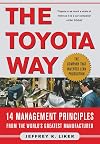
The Toyota Manufacturing process is absolutely brilliant. Sadly, many companies fail because of it. They take the pieces that they think will best suit them while disregarding the rest. The Toyota Way is meant to be used as one, large, cohesive philosophy. You cannot pick and choose in order to get it to work.
The Toyota Way to Lean Leadership: Achieving and Sustaining Excellence Through Leadership Development by Jeffrey Liker
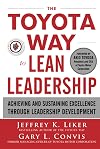
I grew up through the 80s when Japanese domination through leading quality seemed complete. When I myself worked at GM in the 90s on collaborations with Isuzu I saw the quality-centric approaches like poka-yoke and genchi genbutsu ("Go to the source to find the facts to make correct decisions"). In the next decade starting in software engineering, I saw the pollination via "extreme programming", etc. of Toyota Production System concepts like Just In Time, etc. This book is a historical show more overview of the company and its enlightened management style. This includes an analysis of the Toyota Recall Crisis. This is largely through the lens of the management career of Gary L. Convis over forty-four years in the automotive industry employed by General Motors, Ford, Toyota, and eventually CEO of Dana Corporation. He is well known for his “lean” thinking management style. show less
The Toyota Way to Lean Leadership: Achieving and Sustaining Excellence through Leadership Development by Jeffrey Liker
Interesting introduction to the world of Toyota production but the book is mostly focused on describing what works from the inside, and mot enough work is done to try to bring you into this world.
It is clear that Toyota has invented something important in manufacturing and even beyond, but this book goes to reenforce the idea that you could only learn what it has done by doing, and therefore don’t bother reading the book?
It is clear that Toyota has invented something important in manufacturing and even beyond, but this book goes to reenforce the idea that you could only learn what it has done by doing, and therefore don’t bother reading the book?
This book reads like a true text book. It is crammed with detailed information about TPS and Lean. The manufacturing principles that has made Toyota what it is today. This is a must read for anyone wanting to implement lean in their own organization. In fact, lean is no longer confined to manufacturing, it's principles are being adopted in very diverse industries including Software and Services Organizations.
The author explains in detail with examples the core principles of TPS such as show more Genchi Genbutsu (Go see for yourself), management spends a significant amount of time walking the floor, talking to shop floor workers and if there is a problem, rushing to the site to see what the issue is. Even their offices are located close to the assembly line.
Other principles like Heijunka, Jidoka, the 5 why system where you ask the question why to get to the root of the problem. show less
The author explains in detail with examples the core principles of TPS such as show more Genchi Genbutsu (Go see for yourself), management spends a significant amount of time walking the floor, talking to shop floor workers and if there is a problem, rushing to the site to see what the issue is. Even their offices are located close to the assembly line.
Other principles like Heijunka, Jidoka, the 5 why system where you ask the question why to get to the root of the problem. show less
Awards


You May Also Like


Associated Authors
Statistics
- Works
- 20
- Members
- 1,653
- Popularity
- #15,542
- Rating
- 3.9
- Reviews
- 15
- ISBNs
- 91
- Languages
- 12
- Favorited
- 2