
Herbert Benson (1935–2022)
Author of The Relaxation Response
About the Author
Works by Herbert Benson
The Wellness Book: The Comprehensive Guide to Maintaining Health and Treating Stress-Related Illness (1992) 100 copies, 1 review
The Breakout Principle: How to Activate the Natural Trigger That Maximizes Creativity, Athletic Performance, Productivity, and Personal Well-Being (2003) 92 copies, 3 reviews
Mind Your Heart: A Mind/Body Approach to Stress Management, Exercise, and Nutrition for Heart Health (2004) — Author — 22 copies
Relaxation Revolution 1 copy
Associated Works
Say Good Night to Insomnia: The Six-Week, Drug-Free Program Developed At Harvard Medical School (1998) — Foreword, some editions; Foreword, some editions — 188 copies, 3 reviews
Tagged
Common Knowledge
- Birthdate
- 1935-04-24
- Date of death
- 2022-02-03
- Gender
- male
- Education
- Wesleyan University
Harvard University (MD) - Occupations
- professor
physician - Organizations
- Harvard University
- Cause of death
- heart disease
kidney failure - Nationality
- USA
- Birthplace
- Yonkers, New York, USA
- Places of residence
- Boston, Massachusetts, USA
- Place of death
- Boston, Massachusetts, USA
- Associated Place (for map)
- Massachusetts, USA
Members
Reviews
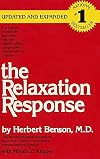
The first have was very bland (all this stuff about blood pressure and how high blood pressure happens...not at all the reason I'm interested in the topic), but the section about meditation practices in world religions was very interesting, as was the section on how to elicit the Relaxation Response. So, three stars rather than the two I would have given it had I stopped with the blood presure stuff.
The Breakout Principle: How to Activate the Natural Trigger That Maximizes Creativity, Athletic Performance, Productivity and Personal Well-Being by Herbert Benson
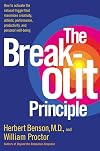
Benson and Proctor apply science to what many of us have discovered quite by accident without the help of books. For me, the "break-out" moments often occur during a long and brisk walk in a park across the street from my house. Or during a kayak adventure on a lake or river near my cottage. The authors explore how biological triggers can help spur creativity and problem-solving. In my estimation, the book dwells just a bit too much on the "inside baseball" scientific/biological principles. show more And I must confess that I didn't quite make it to the end when "transcendence" and the "power of intrinsic belief" were explored. In all candor, I believe these chapters would have lost me. But I do think "The Break-Out Principle" broaches -- or at least reinforces -- some helpful strategies for fostering creativity and problem-solving. show less
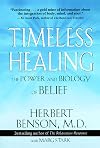
Very well written book! Engaging, personable, and applicable to everyone, regardless of religious or secular belief. To oversimplify its message, I would say that the book offers additional proof that one's beliefs shape ones brain, mind, and physical health.
Believing, in particular, in some "Infinite Absolute" is particularly beneficial, whether that takes form in a particular religious or secular style.
Furthermore, the "relaxation response", which can be used to enhance one's experience show more of belief is not at all unlike "mindfulness meditation" or "Buddhist-style" meditation which have been shown in other books and studies to enhance one's mental and physical health.
When one is able to believe positively in one's health and ability to heal, with or without the help of an "Infinite Absolute", one is able to positively affect one's health. Conversely, negative beliefs affect the body negatively, even in some cases leading to death.
Given a choice, as we all are, which way (positively or negatively) would YOU believe, or not at all ? show less
Believing, in particular, in some "Infinite Absolute" is particularly beneficial, whether that takes form in a particular religious or secular style.
Furthermore, the "relaxation response", which can be used to enhance one's experience show more of belief is not at all unlike "mindfulness meditation" or "Buddhist-style" meditation which have been shown in other books and studies to enhance one's mental and physical health.
When one is able to believe positively in one's health and ability to heal, with or without the help of an "Infinite Absolute", one is able to positively affect one's health. Conversely, negative beliefs affect the body negatively, even in some cases leading to death.
Given a choice, as we all are, which way (positively or negatively) would YOU believe, or not at all ? show less
Breaks down meditation and possible benefits, trading in vaguely spiritual trappings for good old fashion science. Author, being of the academic tradition, cites quality sources and demonstrates rigourous methodologies. If you want to know about the measured physiological affects of popular meditation techniques, skipping on the anecdotal evidence usually found in books on the topic, this is a great place to start.
Lists
Awards

You May Also Like


Associated Authors
Statistics
- Works
- 29
- Also by
- 3
- Members
- 1,460
- Popularity
- #17,596
- Rating
- 3.6
- Reviews
- 20
- ISBNs
- 70
- Languages
- 9