
Norman Cousins (1915–1990)
Author of Anatomy of an Illness as Perceived by the Patient
About the Author
Norman Cousins (1912-1990) was a longtime editor of the Saturday Review and the author of eleven books on health and healing, among other works
Works by Norman Cousins
Conversations with Wallace Stegner on Western History and Literature (1960) — Foreword, some editions — 211 copies, 3 reviews
The Celebration of Life: A Dialogue on Hope, Spirit, and the Immortality of the Soul (1974) 110 copies, 1 review
Nobel Prize Conversations: With Sir John Eccles, Roger Sperry, Ilya Prigogine, Brian Josephson (Isthmus conversations) (1985) 15 copies
The Republic of Reason: The Personal Philosophies of the Founding Fathers (1988) — Editor — 14 copies
Writing for love or money : thirty-five essays reprinted from the Saturday Review of Literature (1977) 3 copies
The Representation of Reason 1 copy
Saturday Review of Literature, Vol XXV, No. 31 (August 1, 1942) — Editor — 1 copy
Disarmo e distruzione 1 copy
Letter to Helen Fay 1 copy
Associated Works
Persuasion and Healing: A Comparative Study of Psychotherapy (1961) — Foreword, some editions — 159 copies, 1 review
Tagged
Common Knowledge
- Birthdate
- 1915-06-24
- Date of death
- 1990-11-30
- Gender
- male
- Education
- Theodore Roosevelt High School
Columbia University (Teachers College) - Occupations
- journalist
- Organizations
- New York Post
Current History
Saturday Review - Awards and honors
- Albert Schweitzer Prize for Humanitarianism (1990)
- Nationality
- USA
- Birthplace
- Union City, New Jersey, USA
- Burial location
- Hollywood Forever, Los Angeles, California, USA
- Associated Place (for map)
- USA
Members
Reviews
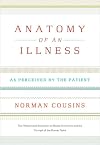
Anatomy of an Illness as Perceived by the Patient: Reflections on Healing and Regeneration by Norman Cousins
It has Stood the test of Time
Despite enormous changes in medicine and medical technology in the lat 50 years, this book is still relevant.
Up front he says that he didn’t know if or how much effect the vitamin C made. Science seems to have concluded that in most cases it is not beneficial. Still, there are many who still advocate it.
The most valuable contribution is that patient attitude makes a huge difference. For him laughter played a big role. He was also fortunate to have a doctor who show more supported his effort to recover from the death sentence of his illness.
“Physicians must resist the idea that technology will some day abolish disease. As long as humans feel threatened and helpless, they will seek the sanctuary that illness provides.” (Chapter 6) show less
Despite enormous changes in medicine and medical technology in the lat 50 years, this book is still relevant.
Up front he says that he didn’t know if or how much effect the vitamin C made. Science seems to have concluded that in most cases it is not beneficial. Still, there are many who still advocate it.
The most valuable contribution is that patient attitude makes a huge difference. For him laughter played a big role. He was also fortunate to have a doctor who show more supported his effort to recover from the death sentence of his illness.
“Physicians must resist the idea that technology will some day abolish disease. As long as humans feel threatened and helpless, they will seek the sanctuary that illness provides.” (Chapter 6) show less

Norman Cousins' collection of Schweitzer’s sayings is slender but powerful. I got a very good sense of the cause and life of Schweitzer. His overwhelming motive was to engage with life with purpose, morality, and joy. He wanted nothing else but to make a positive impact on the world and enjoy the positive impact the world had on him.
http://lifelongdewey.wordpress.com/2012/08/19/083-the-words-of-albert-schweitzer...
http://lifelongdewey.wordpress.com/2012/08/19/083-the-words-of-albert-schweitzer...
Anatomy of an Illness: As Perceived by the Patient (Twentieth Anniversary Edition) by Norman Cousins
I heard more than five decades ago about a blockbuster book that titillated my interest. Only recently did I get around to reading it. It relates to medicine and healing. Now that I'm tagged as being in the “senior citizen” category, it seemed high time to absorb this work by the late political journalist Norman Cousins.
This man created quite a stir back in the day with his book, Anatomy of an Illness: As Perceived by the Patient. It advocates self-healing through laughter. In 1964, show more Cousins had suffered from a not very well known debilitating disease called ankylosing spondylitis. This condition brings on inflammation, and can result in the fusing of small bones in the spine. It's very painful and is widely regarded having no cure.
His doctor was impressed with Cousins' will to live. The patient took great interest in his own condition. He thought deeply about what he was facing, and kept the doctor informed of those thoughts. This was certainly not the typical patient who either blindly obeys medical orders or is not so good at obeying what the doctor advises. The author came to a self-discovery that laughing has a therapeutic effect. He found that watching comedy movies that were very funny caused him to engage in deep belly laughter, and that in turn the laughing made him feel better.
That wasn't all Cousins learned while being treated. He took a serious look at the benefits of ascorbic acid, the substance more commonly known as vitamin C. The patient took large quantities of the vitamin after learning it was found to have increased lifespans of cancer patients by weeks and even months. He became personally involved in discussions with a young cancer patient who was terminal, but lived months longer than expected after taking ascorbic acid.
The book gives indications of how self-determination can play an important part in recovery from illness. The patient learned that extraordinary challenges can result in positive outcomes after the mind and body summon their innermost resources. The author's own body went far beyond the point where medical experts anticipated. I searched online and found that Cousins lived to the age of 75, his demise being the result of a heart attack. He lived a considerably longer life than what would have been expected, given the condition that compelled him to look into ways to improve his own health fortunes.
The book meets up to the hype that I had heard back in the 1960's. It is definitely worth the most stars it can be given. show less
This man created quite a stir back in the day with his book, Anatomy of an Illness: As Perceived by the Patient. It advocates self-healing through laughter. In 1964, show more Cousins had suffered from a not very well known debilitating disease called ankylosing spondylitis. This condition brings on inflammation, and can result in the fusing of small bones in the spine. It's very painful and is widely regarded having no cure.
His doctor was impressed with Cousins' will to live. The patient took great interest in his own condition. He thought deeply about what he was facing, and kept the doctor informed of those thoughts. This was certainly not the typical patient who either blindly obeys medical orders or is not so good at obeying what the doctor advises. The author came to a self-discovery that laughing has a therapeutic effect. He found that watching comedy movies that were very funny caused him to engage in deep belly laughter, and that in turn the laughing made him feel better.
That wasn't all Cousins learned while being treated. He took a serious look at the benefits of ascorbic acid, the substance more commonly known as vitamin C. The patient took large quantities of the vitamin after learning it was found to have increased lifespans of cancer patients by weeks and even months. He became personally involved in discussions with a young cancer patient who was terminal, but lived months longer than expected after taking ascorbic acid.
The book gives indications of how self-determination can play an important part in recovery from illness. The patient learned that extraordinary challenges can result in positive outcomes after the mind and body summon their innermost resources. The author's own body went far beyond the point where medical experts anticipated. I searched online and found that Cousins lived to the age of 75, his demise being the result of a heart attack. He lived a considerably longer life than what would have been expected, given the condition that compelled him to look into ways to improve his own health fortunes.
The book meets up to the hype that I had heard back in the 1960's. It is definitely worth the most stars it can be given. show less
# Anatomy of an Illness
“The basic theme of this book is that every person must accept a certain measure of responsibility for his or her own recovery from disease or disability.”
Accepting my disability and my illness does not mean that I have to be defined by it. I can use the skills that I learn through private research and implementation to better myself mentally and neurologically so that I am not just a statistic. But an over comer with a powerful story and a motivational and show more inspirational message of hope and deliverance.
I want to help myself get better mentally and neurologically by reading and writing and following protocols that are recommended and doing proper grieving over my illness and figuring out a way to live a full life without letting my life be determined by a label or circumstance or person.
What I learned from this book was that in order for an individual to get better they have to take charge and be the doctor and parent of their own condition, life, and journey to recovery and full return to health while minimizing the use of medications if applicable.
What I mean by that is that you have to do research to figure out everything to know about your diagnosis. Read the research. Then formulate a plan of achievement in monthly goals on what you are going to focus on for that month. Some illnesses-like mine-are aggravated by the Internet browsing too much so I limit Internet use to only the essentials and that is it. Essentials for me are book reviews or writing. I limit my Internet usage to one hour per day. And that is it.
Figure out what foods you can eat. Or what drinks you can drink. And what you can avoid or bypass. Like a doctor you have to have a treatment plan that you follow and update yourself once a year.
Like a parent you must have boundaries and limitations that you do not cross for yourself concerning your illness and do not even think about even doing it. Because you know the adverse effects of doing so would not be beneficial for you. At all.
Lastly exercise outside daily. And keep your body active as much as you can by moving around and sitting down only when strictly necessary.
Quote in Summary:
“Your health and your body are up to you and in your control. So treat both well and you will reap the rewards and have a long life. Treat it miserably and you will reap the fallout of not caring for your body and health. It’s your choice. So choose wisely. Before someone chooses for you.* show less
“The basic theme of this book is that every person must accept a certain measure of responsibility for his or her own recovery from disease or disability.”
Accepting my disability and my illness does not mean that I have to be defined by it. I can use the skills that I learn through private research and implementation to better myself mentally and neurologically so that I am not just a statistic. But an over comer with a powerful story and a motivational and show more inspirational message of hope and deliverance.
I want to help myself get better mentally and neurologically by reading and writing and following protocols that are recommended and doing proper grieving over my illness and figuring out a way to live a full life without letting my life be determined by a label or circumstance or person.
What I learned from this book was that in order for an individual to get better they have to take charge and be the doctor and parent of their own condition, life, and journey to recovery and full return to health while minimizing the use of medications if applicable.
What I mean by that is that you have to do research to figure out everything to know about your diagnosis. Read the research. Then formulate a plan of achievement in monthly goals on what you are going to focus on for that month. Some illnesses-like mine-are aggravated by the Internet browsing too much so I limit Internet use to only the essentials and that is it. Essentials for me are book reviews or writing. I limit my Internet usage to one hour per day. And that is it.
Figure out what foods you can eat. Or what drinks you can drink. And what you can avoid or bypass. Like a doctor you have to have a treatment plan that you follow and update yourself once a year.
Like a parent you must have boundaries and limitations that you do not cross for yourself concerning your illness and do not even think about even doing it. Because you know the adverse effects of doing so would not be beneficial for you. At all.
Lastly exercise outside daily. And keep your body active as much as you can by moving around and sitting down only when strictly necessary.
Quote in Summary:
“Your health and your body are up to you and in your control. So treat both well and you will reap the rewards and have a long life. Treat it miserably and you will reap the fallout of not caring for your body and health. It’s your choice. So choose wisely. Before someone chooses for you.* show less
Awards


You May Also Like


Associated Authors
Statistics
- Works
- 39
- Also by
- 5
- Members
- 2,344
- Popularity
- #10,935
- Rating
- 4.0
- Reviews
- 27
- ISBNs
- 103
- Languages
- 5
- Favorited
- 3
