
Victor del Arbol
Author of The Sadness of the Samurai
About the Author
Image credit: www.victordelarbol.com/es/index.html
Works by Victor del Arbol
Tres relatos en negro 2 copies
Тагата на самурајот 1 copy
Tagged
Common Knowledge
- Birthdate
- 1968
- Gender
- male
- Education
- University of Barcelona
- Occupations
- police officer
- Nationality
- Spain (birth)
- Birthplace
- Barcelona, Catalonia, Spain
- Places of residence
- Barcelona, Spain
- Map Location
- Spain
Members
Reviews
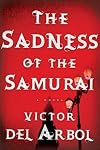
Page turning plot involves converging generational stories of ambition, love, betrayal and circumstance. Female lawyer and her one-time Fascist father and misogynistic husband cross destinies with ne’er-do-well Spanish politicians and their low-life sociopath cronies, lovelorn teachers and jailed police investigators. Yes, this unlikely crew of characters surprisingly weaves together into smooth reading that has a satisfying and strong sense of place. The novel takes the reader from 30s show more pre-Franco Spain to the WW2 Russian front and prison camp in Siberia, to beachfront condo in Barcelona in the 80s, a hospital cancer ward, and a few places in between, including a treatise on Japanese Samurai and seppuku. The language is both beautiful and brutal: a real treat to read such unusual, unexpected nuggets of words. For instance, “..a gust of unpleasant wind dragged drizzle along with it”; “her gaze was like boiling water being poured on his beard, which for the last four days had been frozen”; and “she devotedly wrote in her diary as if she were tattooing each word on the skin of her beloved.” A warning: at times the descriptions are graphic and violent, as in the case of a woman chained up in a dark house who is servant and sexual slave to a emotionally crippled man whose face and torso were charred in an insane asylum fire. in fact all the women in the novel are abused ( beaten, raped, beheaded) and the main woman character abuses herself with non-stop smoking, eventually suffering the consequences.
The novel’s message is about justice, forgiveness and hope. We all bleed; some wounds heal; others remain. Humans can’t really forget .In the silence of the forgetting we can still hear screams of victims and the hatred and pain that never goes away.
A wonderful, large read with many dark corners. show less
The novel’s message is about justice, forgiveness and hope. We all bleed; some wounds heal; others remain. Humans can’t really forget .In the silence of the forgetting we can still hear screams of victims and the hatred and pain that never goes away.
A wonderful, large read with many dark corners. show less
 This review was written for LibraryThing Early Reviewers.
Del Árbol’s first novel to be translated into English, The Sadness of the Samurai, is a gripping thriller of a book. Set over three generations, the book keeps you guessing right up to the messy end. And the book is messy, in the grisly murder and innocent victim kind of way. Even though not really my usual genre these days, I found it hard to put down, powering through it on a couple of plane rides and when I probably should have been working.
The setting is Catalonia starting at the show more beginning of the Second World War and going up through the aborted coup of the early 1980’s. Del Árbol holds a degree in history from the University of Barcelona and worked in the police force for many years, so he definitely has the background to weave his fictional characters into the history of Spain and Europe in that period and to create some realistic (and scary) crime and prison scenes. And I learned a lot about events in Spain during the period of the novel that I’d like to understand more.
I was getting a little annoyed with the mistakes in the text before I remembered that I was reading an ARC, so I assume all those issues are cleaned up in the final product. Even so, if you like a good crime thriller, you should check out this book. You won’t be sorry.
On a side note, some of the torture scenes made me a bit queasy, not really because of the stark way they are portrayed but more from a general disgust and revulsion with torture and violence. It doesn’t help that as I read this book, we were weeks away from a presidential election here in the United States, and that both of the parties that are slowly strangling democracy here seem to have no problem with state-sanctioned torture.
This book was reviewed for LibraryThing’s Early Reviewer’s Program. Thanks to Henry Holt & Company for providing me with a review copy of the book. show less
The setting is Catalonia starting at the show more beginning of the Second World War and going up through the aborted coup of the early 1980’s. Del Árbol holds a degree in history from the University of Barcelona and worked in the police force for many years, so he definitely has the background to weave his fictional characters into the history of Spain and Europe in that period and to create some realistic (and scary) crime and prison scenes. And I learned a lot about events in Spain during the period of the novel that I’d like to understand more.
I was getting a little annoyed with the mistakes in the text before I remembered that I was reading an ARC, so I assume all those issues are cleaned up in the final product. Even so, if you like a good crime thriller, you should check out this book. You won’t be sorry.
On a side note, some of the torture scenes made me a bit queasy, not really because of the stark way they are portrayed but more from a general disgust and revulsion with torture and violence. It doesn’t help that as I read this book, we were weeks away from a presidential election here in the United States, and that both of the parties that are slowly strangling democracy here seem to have no problem with state-sanctioned torture.
This book was reviewed for LibraryThing’s Early Reviewer’s Program. Thanks to Henry Holt & Company for providing me with a review copy of the book. show less
This review was written for LibraryThing Early Reviewers.
The Sadness of the Samurai is a thriller with a Shakespearean bent, a comedy of errors replete with mistaken identities and family feuds which leaves a lot of dead bodies on the page by the time the last page is turned. The catalyst is the murder of Isabel Mola some four odd decades before the novel begins in 1981. In the decades following her death the three families most affected by her murder live in their own dedicated purgatory in which they are forced again and again to face and betray show more each other across decades and generations.
The title comes from a passage in the book about the sword of a particularly cruel and bloodthirsty samurai in 17th century Japan, one who hated war and feared death and, defeated by the dichotomy of his own nature, committed ritual suicide. As he lay dying in agony a friend beheaded him (as was apparently the custom, but I know nothing of samurai culture) with his own sword. A copy of the sword is given to Andres, the mad son of Isabel Mola, who might have been spared the worst of his madness had she lived. In fact, this is a novel where most of the mothers have met violent ends, sometimes at their own hands, because of someone they loved. Even the one female protagonist, Maria Bengoechea, is herself the victim of domestic violence and is pulled into the whirlpool left in the wake of Isabel's death, by another victim domestic violence and when the novel opens she too is dying, having sacrificed her health, if only by neglect, to rectify her own contributions to the cycle of death and retribution. Love death are inseparable in this book.
The book goes back and forth in time from Maria's present (1981) to Isabel and slowly the flashbacks catch up to the present. I had known next to nothing of Franco when I started reading the book and had never even heard of the Falangists. The Spanish fascists were, like most fascists I suppose, a brutal lot and their main representative is a character named Publio, who is pulling the strings behind the scenes during the the entire book. His is a pragmatic brand of evil and his relentless pursuit of power is chilling.
Some readers might not enjoy the rather unlikely coincidences that keep the characters all tied to each other, but for me it felt almost like a play, with its circumscribed list of characters, and it kept the tension and emotional stakes built up in way that a larger cast might not have. Many more readers, especially fans of thrillers, historical fiction, and political fiction, will enjoy this novel. show less
The title comes from a passage in the book about the sword of a particularly cruel and bloodthirsty samurai in 17th century Japan, one who hated war and feared death and, defeated by the dichotomy of his own nature, committed ritual suicide. As he lay dying in agony a friend beheaded him (as was apparently the custom, but I know nothing of samurai culture) with his own sword. A copy of the sword is given to Andres, the mad son of Isabel Mola, who might have been spared the worst of his madness had she lived. In fact, this is a novel where most of the mothers have met violent ends, sometimes at their own hands, because of someone they loved. Even the one female protagonist, Maria Bengoechea, is herself the victim of domestic violence and is pulled into the whirlpool left in the wake of Isabel's death, by another victim domestic violence and when the novel opens she too is dying, having sacrificed her health, if only by neglect, to rectify her own contributions to the cycle of death and retribution. Love death are inseparable in this book.
The book goes back and forth in time from Maria's present (1981) to Isabel and slowly the flashbacks catch up to the present. I had known next to nothing of Franco when I started reading the book and had never even heard of the Falangists. The Spanish fascists were, like most fascists I suppose, a brutal lot and their main representative is a character named Publio, who is pulling the strings behind the scenes during the the entire book. His is a pragmatic brand of evil and his relentless pursuit of power is chilling.
Some readers might not enjoy the rather unlikely coincidences that keep the characters all tied to each other, but for me it felt almost like a play, with its circumscribed list of characters, and it kept the tension and emotional stakes built up in way that a larger cast might not have. Many more readers, especially fans of thrillers, historical fiction, and political fiction, will enjoy this novel. show less
This review was written for LibraryThing Early Reviewers.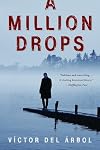
A Million Drops tells the stories of three generations whose lives have been shaped by history. In the first generation, there is Elías Gil, a committed young Communist from Spain who traveled to the Soviet Union to study. When he and three fellow scholarship students he befriended on the train to Moscow are forced to confess to crimes against the state and sentenced to Siberia, he meets and falls in love with Irina and her daughter Anna. He also meets Igor Stern an implacable enemy whose show more life and his twist and turn around each other for over thirty years.
The next generation includes Anna, whom Elías tried to save, but failed, trading her for his life to Igor Stern. There’s also Elías’ children, Gonzalo and Laura. The story opens with two men murdering Laura’s son. She soon commits suicide and is suspected of torturing and murdering the man who killed her son. Gonzalo resolves to understand what happened, certain that she did not commit these acts.
The youngest generation includes Anna’s daughter Tania and Gonzalo’s son Joaquin. Gonzalo is falling for Tania and Joaquin is in a dangerous relationship with a grifter.
Laura was investigating a Russian mafia called the Matryoshka, like the nesting dolls. And like the nesting dolls, every layer of this mystery that is uncovered leads back again and again to Siberia and Gil’s desperate escape with Irina and Anna.
A Million Drops opens with the murder of a child. That should have warned me off from the beginning but I wrongly assumed the worst was over. The story if filled with horrors, torture, deprivation, and murder. Jumping back and forth from Gonzalo in the present and Elías in the past, we are given a world tour of depravity and cruelty. In case we were running short, there is Siaka whose was sold by his father to an Angolan warlord and forced to fight and was repeatedly raped. He might be one of the forces of good in this book, though he witnessed the murder of Laura’s son. If there is a theme, it is that everyone is compromised, everyone has a price, and everyone is corruptible from the ubiquitous Alcázar, the police officer to Elías to Gonzalo. Oh, and let’s not forget a wife-beating thug determined to wreak revenge on his wife and on Gonzalo, her lawyer, just in case taking on the Russian mob were not enough peril.
I did not like this book for many reasons. I wish I had quit reading it, but by the time I realized how awful it really was, I was so far in I wanted to see how it resolved. That was a mistake. The resolution is as disappointing as the story, a model of anticlimactic wrapping it up and the final scene with Gil was gratuitous and stupid, the author saying “No, you can’t have nice things.”
There’s too much coincidence, too much of people meeting each other again and again and again and again whether in Siberia, France, or Spain. There’s far too heavy foreshadowing so that by the time the “secret” is dropped, it’s long past known and no surprise. If you have not figured out what happened to Elías in 1967 long before Gonzalo finds out, you weren’t paying attention. Every revelation was boring because it was already obvious from the foreshadowing. The only real surprise in the book is that final scene with Gonzalo, with a character and storyline the book would have been stronger without.
This book is needlessly long, overwritten and overplotted. It had such an interesting hook in focusing on the Spanish leftists who trained in the USSR, fled to France as refugeees and who came to be known as war heroes and how the strains of that war flow on into the next generation, but it went too far into exploring how corrupt and depraved people can become in extremis, it left us with nothing.
I received an e-galley of A Million Drops from the publisher through Edelweiss.
A Million Drops at Other Press
Víctor del Árbol author site
https://tonstantweaderreviews.wordpress.com/2018/05/26/9781590518458/ show less
The next generation includes Anna, whom Elías tried to save, but failed, trading her for his life to Igor Stern. There’s also Elías’ children, Gonzalo and Laura. The story opens with two men murdering Laura’s son. She soon commits suicide and is suspected of torturing and murdering the man who killed her son. Gonzalo resolves to understand what happened, certain that she did not commit these acts.
The youngest generation includes Anna’s daughter Tania and Gonzalo’s son Joaquin. Gonzalo is falling for Tania and Joaquin is in a dangerous relationship with a grifter.
Laura was investigating a Russian mafia called the Matryoshka, like the nesting dolls. And like the nesting dolls, every layer of this mystery that is uncovered leads back again and again to Siberia and Gil’s desperate escape with Irina and Anna.
A Million Drops opens with the murder of a child. That should have warned me off from the beginning but I wrongly assumed the worst was over. The story if filled with horrors, torture, deprivation, and murder. Jumping back and forth from Gonzalo in the present and Elías in the past, we are given a world tour of depravity and cruelty. In case we were running short, there is Siaka whose was sold by his father to an Angolan warlord and forced to fight and was repeatedly raped. He might be one of the forces of good in this book, though he witnessed the murder of Laura’s son. If there is a theme, it is that everyone is compromised, everyone has a price, and everyone is corruptible from the ubiquitous Alcázar, the police officer to Elías to Gonzalo. Oh, and let’s not forget a wife-beating thug determined to wreak revenge on his wife and on Gonzalo, her lawyer, just in case taking on the Russian mob were not enough peril.
I did not like this book for many reasons. I wish I had quit reading it, but by the time I realized how awful it really was, I was so far in I wanted to see how it resolved. That was a mistake. The resolution is as disappointing as the story, a model of anticlimactic wrapping it up and the final scene with Gil was gratuitous and stupid, the author saying “No, you can’t have nice things.”
There’s too much coincidence, too much of people meeting each other again and again and again and again whether in Siberia, France, or Spain. There’s far too heavy foreshadowing so that by the time the “secret” is dropped, it’s long past known and no surprise. If you have not figured out what happened to Elías in 1967 long before Gonzalo finds out, you weren’t paying attention. Every revelation was boring because it was already obvious from the foreshadowing. The only real surprise in the book is that final scene with Gonzalo, with a character and storyline the book would have been stronger without.
This book is needlessly long, overwritten and overplotted. It had such an interesting hook in focusing on the Spanish leftists who trained in the USSR, fled to France as refugeees and who came to be known as war heroes and how the strains of that war flow on into the next generation, but it went too far into exploring how corrupt and depraved people can become in extremis, it left us with nothing.
I received an e-galley of A Million Drops from the publisher through Edelweiss.
A Million Drops at Other Press
Víctor del Árbol author site
https://tonstantweaderreviews.wordpress.com/2018/05/26/9781590518458/ show less
Lists
Awards


You May Also Like


Associated Authors
Statistics
- Works
- 16
- Members
- 608
- Popularity
- #41,353
- Rating
- 3.6
- Reviews
- 48
- ISBNs
- 88
- Languages
- 6
