
Geoffrey Robertson
Author of Crimes Against Humanity: The Struggle for Global Justice
About the Author
Geoffrey Robertson QC deplore this hypocrisy and, in An Inconvenient Genocides, the renowned human right lawyer proves beyond reasonable doubt that the horrific avents in the Ottoman Empire in 1915 constitute the crime against humanity that is today known as genocide. His justly celebrated powers show more of advocacy are on full display as he condemns all those who try to justify the mass murder of children and civilians in the name of military necessity or religious fervour. show less
Image credit: Photo © Jane Bown
Works by Geoffrey Robertson
The Tyrannicide Brief: The Story of the Man Who Sent Charles I to the Scaffold (2005) 398 copies, 12 reviews
Who Owns History?: Elgin's Loot and the Case for Returning Plundered Treasure (2019) 43 copies, 1 review
Geoff Robertsons Hypotheticals: Dramatisations of the Moral Dilemmas of the 80s (1986) 30 copies, 1 review
Obscenity : an account of censorship laws and their enforcement in England and Wales (1979) 5 copies
The Massacre of Political Prisoners in Iran, 1988: Report of an Inquiry Conducted by Geoffrey Robertson QC (2011) 2 copies
The Justice System 1 copy
Associated Works
Tagged
Common Knowledge
- Canonical name
- Robertson, Geoffrey
- Legal name
- Robertson, Geoffrey Ronald
- Other names
- Robertson, Geoff
Robertson, G. R. - Birthdate
- 1946-09-30
- Gender
- male
- Education
- University of Sydney (BA, LLB Hons)
University of Oxford
University of Sydney
Epping Boys' High School - Occupations
- human rights lawyer
judge
academic
author
broadcaster - Awards and honors
- Queen's Counsel (1988)
- Relationships
- Lette, Kathy (wife)
- Short biography
- Geoffrey Ronald Robertson QC (born 30 September 1946) is a human rights barrister, academic, author and broadcaster. He holds dual Australian and British citizenship.
- Nationality
- Australia (birth)
UK - Birthplace
- Sydney, New South Wales, Australia
- Places of residence
- London, England, UK
- Map Location
- Australia
UK
Members
Reviews

The Profumo Affair is generally known as a scandal involving sex and spies from the "swinging sixties". But, in this meticulously researched book, human rights lawyer Geoffrey Robertson shows that it also involved a gross miscarriage of justice.
The "scandal" blew up in 1963 and arose from the fact that the Secretary of State for War, John Profumo, had been having an affair with Christine Keeler at the same time as she had been seeing Yevgeny Ivanov, who was a naval attaché at the Russian show more Embassy in London and probably a spy. This was claimed to pose a security risk.
Profumo ended up having to resign, and the scandal contributed to the fall of Prime Minister Harold Macmillan and to the Conservatives losing the election the following year.
A section of the ruling class wanted a scapegoat and they picked on Stephen Ward. Ward was an osteopath to the rich and famous who had introduced the protagonists to each other and who led what was considered an "immoral" life.
Home Secretary Sir Henry Brooke summoned the head of MI5 and the Police Commissioner from Scotland Yard to a meeting and told them to find a way of fixing Ward. The police manufactured evidence, and Ward was charged with living off the immoral earnings of Christine Keeler and Mandy Rice-Davies.
It was a fit-up. Robertson shows that there is no evidence that he was guilty of the charges. But Ward's friends in the "Establishment" deserted him, and he committed suicide when he saw how the trial was going to end, following the judge's biased summing up.
Robertson compares the case to other miscarriages of justice such as the Birmingham Six and the Guildford Four. This seems to be going a bit far. Even if Ward had lived to be sentenced, he wouldn't have spent anywhere near as long in prison as the innocent people imprisoned in those two cases.
Also, Ward is not a sympathetic figure. Not because of his morals, but because he happily rubbed shoulders with hypocritical members of the ruling class and Tory government and with obnoxious characters such as the notorious slum landlord Peter Rachman and the crooked businessman Emil Savundra.
Nevertheless, Robertson is right to draw attention to this injustice. The way that Ward was victimised shows how far the "powers that be" are prepared to go in fitting up somebody who was not guilty of any actual crimes.
When Mandy Rice-Davies was in the witness box at the trial, and she was told that Lord Astor had denied having an affair with her, she famously replied, "He would, wouldn't he?" This cynical attitude could equally be applied to all the rich and powerful liars involved. show less
The "scandal" blew up in 1963 and arose from the fact that the Secretary of State for War, John Profumo, had been having an affair with Christine Keeler at the same time as she had been seeing Yevgeny Ivanov, who was a naval attaché at the Russian show more Embassy in London and probably a spy. This was claimed to pose a security risk.
Profumo ended up having to resign, and the scandal contributed to the fall of Prime Minister Harold Macmillan and to the Conservatives losing the election the following year.
A section of the ruling class wanted a scapegoat and they picked on Stephen Ward. Ward was an osteopath to the rich and famous who had introduced the protagonists to each other and who led what was considered an "immoral" life.
Home Secretary Sir Henry Brooke summoned the head of MI5 and the Police Commissioner from Scotland Yard to a meeting and told them to find a way of fixing Ward. The police manufactured evidence, and Ward was charged with living off the immoral earnings of Christine Keeler and Mandy Rice-Davies.
It was a fit-up. Robertson shows that there is no evidence that he was guilty of the charges. But Ward's friends in the "Establishment" deserted him, and he committed suicide when he saw how the trial was going to end, following the judge's biased summing up.
Robertson compares the case to other miscarriages of justice such as the Birmingham Six and the Guildford Four. This seems to be going a bit far. Even if Ward had lived to be sentenced, he wouldn't have spent anywhere near as long in prison as the innocent people imprisoned in those two cases.
Also, Ward is not a sympathetic figure. Not because of his morals, but because he happily rubbed shoulders with hypocritical members of the ruling class and Tory government and with obnoxious characters such as the notorious slum landlord Peter Rachman and the crooked businessman Emil Savundra.
Nevertheless, Robertson is right to draw attention to this injustice. The way that Ward was victimised shows how far the "powers that be" are prepared to go in fitting up somebody who was not guilty of any actual crimes.
When Mandy Rice-Davies was in the witness box at the trial, and she was told that Lord Astor had denied having an affair with her, she famously replied, "He would, wouldn't he?" This cynical attitude could equally be applied to all the rich and powerful liars involved. show less
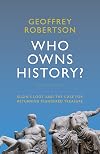
Robertson is of course an Australian great and it's nice to see him lending his powerful, eloquent voice to this debate. Robertson sets out an ordered argument for a new global compact on returning artifacts to their country of origin. For this theoretical tribunal, he lists a series of criteria, largely focusing around whether a work was stolen (implicitly or explicitly) and situations in which, even if a work was given legitimately many moons ago, it may have greater historical resonance show more in its homeland. He also includes the arguments that should sometimes prevent works from being returned, primarily if the country of origin does not have the facilities to care for it, or in situations where countries' human rights record does not merit rewarding them. This is a barrister's argument, as Robertson admits, and is couched in such terms.
This is an issue on which I have always been biased, despite my best efforts. I will never forget my 7th grade Latin teacher telling us (impartially) the Elgin Marbles situation; even then it seemed to me that any British argument to keep the Marbles rested solely on their claims that it was legitimately taken. Even if these were true - which is much debated - it didn't seem to me then, nor does it now, to outpace the broader ethical arguments in favour of sending them home.
On the surface, then, this book is fighting an obvious cause. As is so often the case, the argument for keeping artifacts (which is the still the world's status-quo) rests on two planks: first, that of power, namely that wealthy institutions backed by polities with an obvious interest continue to champion retention, and second, that it appeals to an arguably misplaced patriotism. No-one wants to believe that their country stole anything; no-one wants to believe that another country can better care for the world's treasures; no-one, even if they accept items were stolen, wants to upset the status-quo if it is working in their favour. (It's worth noting this isn't just a discussion to be had between countries; this is also sometimes an issue within a country, either between its states or between its governing power and the local Indigenous people.)
Yet there are complexities to the narrative which other reviewers have noted. For example, Robertson's argument is an idealistic one rather than one of pragmatism. Such a mythical tribunal would have to tell certain countries that they don't deserve their treasures back because of human rights abuses - which they may well dispute and which sometimes are in the eye of the beholder (some would argue that the US' treatment of many of its citizens is not far off) - or an inability to care for items, which automatically prioritises wealthier nations. Linked to that is the idea that some works have more global importance than others. No doubt this is true, but it's difficult to imagine any of us making that decision without implicit biases, Robertson no less than the rest.
There are some evident flaws in this book but, to be honest, the debate needs some idealists alongside the pragmatists. Right now, we are entering a period of reckoning with how we view the past. When that is done, even if it isn't until much later in the century, we must then deal with how we handle what the past has left behind. show less
This is an issue on which I have always been biased, despite my best efforts. I will never forget my 7th grade Latin teacher telling us (impartially) the Elgin Marbles situation; even then it seemed to me that any British argument to keep the Marbles rested solely on their claims that it was legitimately taken. Even if these were true - which is much debated - it didn't seem to me then, nor does it now, to outpace the broader ethical arguments in favour of sending them home.
On the surface, then, this book is fighting an obvious cause. As is so often the case, the argument for keeping artifacts (which is the still the world's status-quo) rests on two planks: first, that of power, namely that wealthy institutions backed by polities with an obvious interest continue to champion retention, and second, that it appeals to an arguably misplaced patriotism. No-one wants to believe that their country stole anything; no-one wants to believe that another country can better care for the world's treasures; no-one, even if they accept items were stolen, wants to upset the status-quo if it is working in their favour. (It's worth noting this isn't just a discussion to be had between countries; this is also sometimes an issue within a country, either between its states or between its governing power and the local Indigenous people.)
Yet there are complexities to the narrative which other reviewers have noted. For example, Robertson's argument is an idealistic one rather than one of pragmatism. Such a mythical tribunal would have to tell certain countries that they don't deserve their treasures back because of human rights abuses - which they may well dispute and which sometimes are in the eye of the beholder (some would argue that the US' treatment of many of its citizens is not far off) - or an inability to care for items, which automatically prioritises wealthier nations. Linked to that is the idea that some works have more global importance than others. No doubt this is true, but it's difficult to imagine any of us making that decision without implicit biases, Robertson no less than the rest.
There are some evident flaws in this book but, to be honest, the debate needs some idealists alongside the pragmatists. Right now, we are entering a period of reckoning with how we view the past. When that is done, even if it isn't until much later in the century, we must then deal with how we handle what the past has left behind. show less

This is a book that succeeds very well in giving us a lawyer's-eye-view of both the trial of Charles I and the "regicide trials" after the Restoration. This is something that most books on the period tend to skirt around rather: with his expert knowledge and his forensic way of presenting a case, Robertson makes the intricacies of 17th century court procedure very clear. Moreover, he does a pretty good job of demonstrating to the reader what an interesting figure John Cooke must have been. show more
Anyone who was previously unfamiliar with the details of "hanging, drawing and quartering" will be happy to know that Robertson explains this gruesome punishment in detail at least four times in the course of the book: the rest of us might wish to skip those passages...
Where it doesn't quite achieve its goal is in its attempt to convince us that Cooke and the prosecution of Charles I laid the foundations for the modern concept of "crimes against humanity". Robertson does show that arguments, e.g. of head-of-state immunity and refusal to acknowledge the jurisdiction of the court, that were discussed in 1649 were also relevant to (say) the prosecutions of Milosevic and Saddam Hussein, but he doesn't really explain how we got from 1649 to 1945. Whilst the lawyers preparing the Nuremberg trials must have been glad to find precedents in the trial of Charles I, that doesn't mean that the one was a prerequisite for the other.
I thought Robertson rather oversold Cooke, as well. He's clearly very interesting in many ways: his unsuccessful schemes for law reform, for example, and his equally unsuccessful attempt to defend himself in the regicide trial with the classic (but then new) argument that a barrister has a duty to accept any client, no matter how distasteful. However, his role as prosecutor in the 1649 trial clearly wasn't as pivotal as Robertson would have liked it to be: since Charles's refusal to enter a plea had to be considered, according to the practice of the time, as a confession, there was no case for the prosecutor to prove, and the trial was a bit of a damp squib, completely eclipsed by Charles's virtuoso performance as "royal martyr" at his execution. show less
Anyone who was previously unfamiliar with the details of "hanging, drawing and quartering" will be happy to know that Robertson explains this gruesome punishment in detail at least four times in the course of the book: the rest of us might wish to skip those passages...
Where it doesn't quite achieve its goal is in its attempt to convince us that Cooke and the prosecution of Charles I laid the foundations for the modern concept of "crimes against humanity". Robertson does show that arguments, e.g. of head-of-state immunity and refusal to acknowledge the jurisdiction of the court, that were discussed in 1649 were also relevant to (say) the prosecutions of Milosevic and Saddam Hussein, but he doesn't really explain how we got from 1649 to 1945. Whilst the lawyers preparing the Nuremberg trials must have been glad to find precedents in the trial of Charles I, that doesn't mean that the one was a prerequisite for the other.
I thought Robertson rather oversold Cooke, as well. He's clearly very interesting in many ways: his unsuccessful schemes for law reform, for example, and his equally unsuccessful attempt to defend himself in the regicide trial with the classic (but then new) argument that a barrister has a duty to accept any client, no matter how distasteful. However, his role as prosecutor in the 1649 trial clearly wasn't as pivotal as Robertson would have liked it to be: since Charles's refusal to enter a plea had to be considered, according to the practice of the time, as a confession, there was no case for the prosecutor to prove, and the trial was a bit of a damp squib, completely eclipsed by Charles's virtuoso performance as "royal martyr" at his execution. show less
The Tyrannicide Brief: The Story of the Man Who Sent Charles I to the Scaffold by Geoffrey Robertson
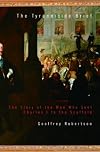
Geoffrey Robertson very ably recounts the trial of Charles I and the subsequent trials of the regicides, using as his centerpiece John Cooke, the lawyer assigned to prosecute the king (who later paid for his efforts with his own life). While Cooke certainly seems like a fascinating character, it seems like his actual role as a regicide was a bit overblown, given that he never actually got to make his case in open court given that Charles refused to plead.
The bits of this book where Robertson show more is delving into the details of the legal intricacies of the case against the king, and then the differences in procedure between that trial and the proceedings against the regicide are riveting. The parts where he attempts to link these events to the late-twentieth-century trials for crimes against humanity felt less successful, and Robertson's very strong inclination to the republican side makes his criticisms of previous historical and legal treatments of the events he covers lose a bit of their punch. show less
The bits of this book where Robertson show more is delving into the details of the legal intricacies of the case against the king, and then the differences in procedure between that trial and the proceedings against the regicide are riveting. The parts where he attempts to link these events to the late-twentieth-century trials for crimes against humanity felt less successful, and Robertson's very strong inclination to the republican side makes his criticisms of previous historical and legal treatments of the events he covers lose a bit of their punch. show less
Lists
Legal Stories (2)
Awards


You May Also Like


Associated Authors
Statistics
- Works
- 30
- Also by
- 3
- Members
- 1,532
- Popularity
- #16,794
- Rating
- 3.5
- Reviews
- 26
- ISBNs
- 90
- Languages
- 4
- Favorited
- 3