
Joseph P. Laycock
Author of Speak of the Devil: How The Satanic Temple is Changing the Way We Talk about Religion
About the Author
Joseph P. Laycock is Associate Profess or of Religious Studies at Texas State University, USA.
Works by Joseph P. Laycock
Speak of the Devil: How The Satanic Temple is Changing the Way We Talk about Religion (2020) 107 copies, 3 reviews
Dangerous Games: What the Moral Panic over Role-Playing Games Says about Play, Religion, and Imagined Worlds (2015) 75 copies, 1 review
Tagged
Common Knowledge
- Canonical name
- Laycock, Joseph P.
- Birthdate
- 1980
- Gender
- male
- Nationality
- USA
- Associated Place (for map)
- USA
Members
Reviews

As a companion piece to the excellent Penguin Book of Demons which I reviewed last month, this historical and anthropological set of texts on exorcism exceeds even the high standards set by its sister tome. Joseph Laycock of Texas State University is an academic to watch.
Laycock does not dumb down. As with Scott Bruce's book on demons, he is quite prepared to offer us very lengthy and full accounts of exorcism with clear and well written introductions that place each in its context with show more careful due given to academic research by others.
There is enough material here not to suggest that demons exist as 'real' entities but to raise very interesting questions about human psychology arising in many different social settings. Similar responses to personal crisis suggest patterns of behaviour that are intrinsic to many of our species.
Nor are there any easy pat answers both to why events are interpreted as possession or are or are not managed effectively through exorcism as 'cures'. Something is going on here in the transference of experience between persons in a community that deserves more investigation.
Perhaps the most useful section in this respect is a clinical psychologist's sensitive handling of possession in a Yakoma indigenous American context in the 1970s at that point when an entire culture was in transition from the 'old ways' to the new.
The solution to the possession (which is actually a solution coming from the community using Christianity as a transitional tool) is creative. It works so that we cannot dismiss possession as merely an example of mental illness. It is rather something expressive of shifting personal or social realities.
If there is one section to read it would be this twentieth century account but there are many more highly suggestive examples of possession and exorcism offering many different possible interpretations of what is going on. Certainly some sort of respect for belief is wise here.
There are clues to some of the drivers of crisis although Laycock is careful not to put forward his own interpretation of events or impose any grand theory. The dynamics of gender are important. There are cases where sexual abuse is clearly in play. Sexuality in repressed societies often a factor.
The confused male observation of female 'hysterias', expressed as possession, where the observer is clearly no more rational than the possessed, is another repeated pattern. There are few cases of deliberate malice and only some of deliberate fraud though these latter are instructive.
Laycock gives us good examples as well of what might be called the sociology of possession. There is useful material on the Grandier scandal (the basis for Huxley's 'The Devils of Loudon' (1952)) and we have St. Anthony, of course, but the famous cases are only part of a whole.
There is a fascinating case of fraudulent possession linked to the war for hearts and minds that took place in the struggle between Huguenots and Catholics during the latter stages of the French Wars of Religion. Carmelite manipulation was set as much against royal authority as their ideological enemy.
This last case is interesting because it reminds us, on the evidence of witch trials, how rational and educated magistrates were often trying to find ways to restore order in populations being manipulated by ideologues. Plus ca change. It is still happening today.
Other examples of possession as tool in a game of persuasion come from cases that become just aspects of a war between sensible rational men and, say, early Methodist enthusiasts or as part of the process by which new religions like Mormonism establish themselves in the world.
Laycock covers many periods and cultures from the Ancient World across to East Asian fox spirits. The examples are far too numerous to detail here. Some of the most enlightening come from British imperial adventures where once again rational administrators are trying to deal with alien minds.
A case from late imperial Sudan is a sad and sordid affair involving the death of young woman from an exorcism that seems to have triggered the sadistic impulses of a low class exorcist but the judicial proceedings are a fascinating insight into how tribal minds worked.
Again, a common pattern - closely-knit localised communities trying to make sense of the world, only having tools like possession available to explain aspects of their condition because they had no other explanation and then constructing techniques of exorcism to solve very particular problems.
Literate reportage of possession whether by Christians trying to crush pagans or in the wars for primacy between Christianities or as reports from modern administrators and professionals tend to shows us the strains in the system rather than the successes.
The common denominators seem to be moments when cultures are in transition. Literate observers are often there to report on that transition whether sympathetically or otherwise. Exactly how systems operate when there are no literate observers around is, of course, an interesting question.
Laycock makes the point early that possession and exorcism have not gone away but have increased in force in recent years after their temporary reduction in salience during a period in which culture was dominated by rational administration. Perhaps we can offer a model of why that is.
As society globalises, it would seem to atomise and create tensions where the answers given by rationalists may no longer be adequate. They may simply not work where the system is breaking down. Old methods of coping, perhaps intrinsic to humans left to themselves, reappear.
On the one hand, there is a good account of a Filipino example from the 1950s that could almost be a type-case. A girl from the underclass, probably abused, is 'possessed'. Catholics are less interested in this than an Evangelical Pastor who finds that his 'cure' builds his church amongst the poor.
There is no reason to doubt his belief or integrity, Biblical possession becomes a cultural ready-made to deploy against the 'devil'. His 'target market' is hungry for an explanation that relates directly to their own experience of crisis. The media then advertises the solution and it goes global.
On the other hand, the Catholic Church, still always very circumspect, has been changing its tune on exorcism, slowly but steadily accepting the language of possible demonic possession when rational psychology breaks down and fails to deliver someone from suffering.
One key event, rather exceptional at the time and dubious in intent perhaps, was that which took place in New Jersey in the first half of the last century and influenced Blatty's seminal (in the horror genre) 'The Exorcist' which, as a film, spread the idea of exorcism around the world in lurid terms.
The possibility of demonic possession moved from fiction to fact after the 1970s and 'evidence' of it started to appear. No doubt the arrival of possession in hispanic Catholic heartlands concentrated minds. The question was how to accommodate the new reality while retaining control.
The Catholic Church has actually been institutionally highly responsible in this area with very strict rules on its clerics engaging in exorcisms. The process is highly confidential but Laycock has managed to get permission to publish a redacted letter requesting exorcism from a priest to his Bishop.
This remarkable document is intelligent and measured. It matches the tone and approach of the clinical psychologist mentioned earlier. Faced with a real community demand amongst the wretched of the earth (to use Fanon's phrase), a 'professional' approach has emerged.
Exorcism under these conditions might reasonably be considered a last ditch tool of defence against something unclear and unknown. A compromise, probably healthy, has taken place between Thomist Reason and the less rational beliefs of the population when faced by the inexplicable.
All in all, although the casual reader will find the texts cited by Laycock to be quite demanding, this book is highly recommended if only to make one stop and think about the limits of administrative and professional rationalism in dealing with the crooked timber of humanity. show less
Laycock does not dumb down. As with Scott Bruce's book on demons, he is quite prepared to offer us very lengthy and full accounts of exorcism with clear and well written introductions that place each in its context with show more careful due given to academic research by others.
There is enough material here not to suggest that demons exist as 'real' entities but to raise very interesting questions about human psychology arising in many different social settings. Similar responses to personal crisis suggest patterns of behaviour that are intrinsic to many of our species.
Nor are there any easy pat answers both to why events are interpreted as possession or are or are not managed effectively through exorcism as 'cures'. Something is going on here in the transference of experience between persons in a community that deserves more investigation.
Perhaps the most useful section in this respect is a clinical psychologist's sensitive handling of possession in a Yakoma indigenous American context in the 1970s at that point when an entire culture was in transition from the 'old ways' to the new.
The solution to the possession (which is actually a solution coming from the community using Christianity as a transitional tool) is creative. It works so that we cannot dismiss possession as merely an example of mental illness. It is rather something expressive of shifting personal or social realities.
If there is one section to read it would be this twentieth century account but there are many more highly suggestive examples of possession and exorcism offering many different possible interpretations of what is going on. Certainly some sort of respect for belief is wise here.
There are clues to some of the drivers of crisis although Laycock is careful not to put forward his own interpretation of events or impose any grand theory. The dynamics of gender are important. There are cases where sexual abuse is clearly in play. Sexuality in repressed societies often a factor.
The confused male observation of female 'hysterias', expressed as possession, where the observer is clearly no more rational than the possessed, is another repeated pattern. There are few cases of deliberate malice and only some of deliberate fraud though these latter are instructive.
Laycock gives us good examples as well of what might be called the sociology of possession. There is useful material on the Grandier scandal (the basis for Huxley's 'The Devils of Loudon' (1952)) and we have St. Anthony, of course, but the famous cases are only part of a whole.
There is a fascinating case of fraudulent possession linked to the war for hearts and minds that took place in the struggle between Huguenots and Catholics during the latter stages of the French Wars of Religion. Carmelite manipulation was set as much against royal authority as their ideological enemy.
This last case is interesting because it reminds us, on the evidence of witch trials, how rational and educated magistrates were often trying to find ways to restore order in populations being manipulated by ideologues. Plus ca change. It is still happening today.
Other examples of possession as tool in a game of persuasion come from cases that become just aspects of a war between sensible rational men and, say, early Methodist enthusiasts or as part of the process by which new religions like Mormonism establish themselves in the world.
Laycock covers many periods and cultures from the Ancient World across to East Asian fox spirits. The examples are far too numerous to detail here. Some of the most enlightening come from British imperial adventures where once again rational administrators are trying to deal with alien minds.
A case from late imperial Sudan is a sad and sordid affair involving the death of young woman from an exorcism that seems to have triggered the sadistic impulses of a low class exorcist but the judicial proceedings are a fascinating insight into how tribal minds worked.
Again, a common pattern - closely-knit localised communities trying to make sense of the world, only having tools like possession available to explain aspects of their condition because they had no other explanation and then constructing techniques of exorcism to solve very particular problems.
Literate reportage of possession whether by Christians trying to crush pagans or in the wars for primacy between Christianities or as reports from modern administrators and professionals tend to shows us the strains in the system rather than the successes.
The common denominators seem to be moments when cultures are in transition. Literate observers are often there to report on that transition whether sympathetically or otherwise. Exactly how systems operate when there are no literate observers around is, of course, an interesting question.
Laycock makes the point early that possession and exorcism have not gone away but have increased in force in recent years after their temporary reduction in salience during a period in which culture was dominated by rational administration. Perhaps we can offer a model of why that is.
As society globalises, it would seem to atomise and create tensions where the answers given by rationalists may no longer be adequate. They may simply not work where the system is breaking down. Old methods of coping, perhaps intrinsic to humans left to themselves, reappear.
On the one hand, there is a good account of a Filipino example from the 1950s that could almost be a type-case. A girl from the underclass, probably abused, is 'possessed'. Catholics are less interested in this than an Evangelical Pastor who finds that his 'cure' builds his church amongst the poor.
There is no reason to doubt his belief or integrity, Biblical possession becomes a cultural ready-made to deploy against the 'devil'. His 'target market' is hungry for an explanation that relates directly to their own experience of crisis. The media then advertises the solution and it goes global.
On the other hand, the Catholic Church, still always very circumspect, has been changing its tune on exorcism, slowly but steadily accepting the language of possible demonic possession when rational psychology breaks down and fails to deliver someone from suffering.
One key event, rather exceptional at the time and dubious in intent perhaps, was that which took place in New Jersey in the first half of the last century and influenced Blatty's seminal (in the horror genre) 'The Exorcist' which, as a film, spread the idea of exorcism around the world in lurid terms.
The possibility of demonic possession moved from fiction to fact after the 1970s and 'evidence' of it started to appear. No doubt the arrival of possession in hispanic Catholic heartlands concentrated minds. The question was how to accommodate the new reality while retaining control.
The Catholic Church has actually been institutionally highly responsible in this area with very strict rules on its clerics engaging in exorcisms. The process is highly confidential but Laycock has managed to get permission to publish a redacted letter requesting exorcism from a priest to his Bishop.
This remarkable document is intelligent and measured. It matches the tone and approach of the clinical psychologist mentioned earlier. Faced with a real community demand amongst the wretched of the earth (to use Fanon's phrase), a 'professional' approach has emerged.
Exorcism under these conditions might reasonably be considered a last ditch tool of defence against something unclear and unknown. A compromise, probably healthy, has taken place between Thomist Reason and the less rational beliefs of the population when faced by the inexplicable.
All in all, although the casual reader will find the texts cited by Laycock to be quite demanding, this book is highly recommended if only to make one stop and think about the limits of administrative and professional rationalism in dealing with the crooked timber of humanity. show less
Dangerous Games: What the Moral Panic over Role-Playing Games Says about Play, Religion, and Imagined Worlds by Joseph P. Laycock
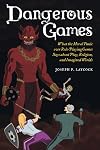
In Dangerous Games: What the Moral Panic over Role-Playing Games Says about Play, Religion, and Imagined Worlds, Joseph P. Laycock argues, “Much of the energy that evangelicals put into framing fantasy role-playing games as either madness or a heretical religion was actually a defense mechanism to assuage their own doubts. The realization that a game of imagination can resemble a religion naturally leads to the suspicion that one’s religion could likewise be a game of imagination” (pg. show more 24-25). These evangelicals worked with others in the New Christian Right, law enforcement, and parents groups to act as moral entrepreneurs in the panic. Laycock writes of intergenerational differences, “Fantasy role-playing games were linked to fears of a generation that would rise up and kill its parents. While the imagined forces corrupting young people changed from decade to decade, the subversion narratives were always closely tied to fears of the religious and moral other. In this sense, the history of the panic over fantasy role-playing games is really a history of far darker fantasies that haunted the American psyche” (pg. 6).
Addressing the historical context, Laycock writes, “The panic over cults in the 1970s combined religious fears of the heretical other with medicalized notions of brainwashing and mental illness. This constellation of anxieties formed the context through which critics understood D&D” (pg. 77). later, “In the 1980s, moral entrepreneurs continued to frame their attack on role-playing games in both religious terms as a ‘cult’ and in medicalized terms as a form of brainwashing. But a new claim came to dominate discourse about fantasy role-playing games: that these games were actually designed to promote criminal behavior and suicide because they had been crated by an invisible network of criminal Satanists” (pg. 102). These linked role-playing games with the ongoing Satanic Panic. Groups like Bothered About Dungeons & Dragons (BADD) furthered the connection of D&D with murder and suicide (pg. 119).
Examining the Satanic Panic, Laycock writes, “[David] Bromley attempts to make sense of the panic by suggesting that claims about Satanists abducting and abusing children were an attempt to articulate social concerns and frustrations that could not be expressed otherwise. The real threat, he argues, was that a changing economy in which both parents frequently worked required Americans to rely increasingly on strangers to care for and raise their children. The covenantal sphere of family life was being compromised by the contractual sphere of the market, and parents felt helpless to halt this process” (pgs. 106-107). Laycock argues that darker, edgier content from the late 1980s and 1990s sought to provide outlets targeted to Generation X just as D&D had for Baby Boomers. He writes, “For Generation X, dark, atmosphere-heavy role-playing games were not just an escape into a fantasy world: they were a medium through which players and storytellers could explore their doubts and frustrations by creating stories that articulated the world’s flaws by casting them into relief” (pg. 140). This darker context added further fuel to moral entrepreneurs’ fire. Amid fears of superpredators and newspaper articles about privileged, white killers, moral entrepreneurs seized on the tropes of role-playing games to “frame white murders as ‘goths’ or otherwise part of some strange subculture that made them fundamentally different from their white, suburban peers” (pg. 163).
Laycock links the focus on the imaginary with its perceived threat to cultural hegemony. He writes, “In this sense, fantasy role-playing games, along with novels, film, and other imaginary worlds, provide mental agency. Moral entrepreneurs interpreted this agency as subversion and a deliberate attempt to undermine traditional values” (pg. 215). He continues, “To regard the demonic as fantasy casts doubt on all religious truth claims, at least where the supernatural is concerned… This fear, [he argues], is the primary reason why some Christians found fantasy role-playing games so intolerable. If players can construct a shared fantasy complete with gods and demons, what assurance is there that Christianity is not itself a kind of game?” (pg. 233)
Laycock concludes, “Censorship allows authorities to restrict what we say, but controlling the frames of metacommunication allows authorities to restrict the kind of meanings we convey. The panic over fantasy role-playing games and the imagination reflects an attempt to secure hegemony by reordering these frames of meaning” (pgs. 279-280). show less
Addressing the historical context, Laycock writes, “The panic over cults in the 1970s combined religious fears of the heretical other with medicalized notions of brainwashing and mental illness. This constellation of anxieties formed the context through which critics understood D&D” (pg. 77). later, “In the 1980s, moral entrepreneurs continued to frame their attack on role-playing games in both religious terms as a ‘cult’ and in medicalized terms as a form of brainwashing. But a new claim came to dominate discourse about fantasy role-playing games: that these games were actually designed to promote criminal behavior and suicide because they had been crated by an invisible network of criminal Satanists” (pg. 102). These linked role-playing games with the ongoing Satanic Panic. Groups like Bothered About Dungeons & Dragons (BADD) furthered the connection of D&D with murder and suicide (pg. 119).
Examining the Satanic Panic, Laycock writes, “[David] Bromley attempts to make sense of the panic by suggesting that claims about Satanists abducting and abusing children were an attempt to articulate social concerns and frustrations that could not be expressed otherwise. The real threat, he argues, was that a changing economy in which both parents frequently worked required Americans to rely increasingly on strangers to care for and raise their children. The covenantal sphere of family life was being compromised by the contractual sphere of the market, and parents felt helpless to halt this process” (pgs. 106-107). Laycock argues that darker, edgier content from the late 1980s and 1990s sought to provide outlets targeted to Generation X just as D&D had for Baby Boomers. He writes, “For Generation X, dark, atmosphere-heavy role-playing games were not just an escape into a fantasy world: they were a medium through which players and storytellers could explore their doubts and frustrations by creating stories that articulated the world’s flaws by casting them into relief” (pg. 140). This darker context added further fuel to moral entrepreneurs’ fire. Amid fears of superpredators and newspaper articles about privileged, white killers, moral entrepreneurs seized on the tropes of role-playing games to “frame white murders as ‘goths’ or otherwise part of some strange subculture that made them fundamentally different from their white, suburban peers” (pg. 163).
Laycock links the focus on the imaginary with its perceived threat to cultural hegemony. He writes, “In this sense, fantasy role-playing games, along with novels, film, and other imaginary worlds, provide mental agency. Moral entrepreneurs interpreted this agency as subversion and a deliberate attempt to undermine traditional values” (pg. 215). He continues, “To regard the demonic as fantasy casts doubt on all religious truth claims, at least where the supernatural is concerned… This fear, [he argues], is the primary reason why some Christians found fantasy role-playing games so intolerable. If players can construct a shared fantasy complete with gods and demons, what assurance is there that Christianity is not itself a kind of game?” (pg. 233)
Laycock concludes, “Censorship allows authorities to restrict what we say, but controlling the frames of metacommunication allows authorities to restrict the kind of meanings we convey. The panic over fantasy role-playing games and the imagination reflects an attempt to secure hegemony by reordering these frames of meaning” (pgs. 279-280). show less
Speak of the Devil: How The Satanic Temple is Changing the Way We Talk about Religion by Joseph P. Laycock
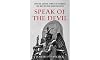
Let us stand now, unbowed and unfettered by arcane doctrines born of fearful minds in darkened times. Let us embrace the Luciferian impulse to eat of the Tree of Knowledge and dissipate our blissful and comforting delusions of old. Let us demand that individuals be judged for their concrete actions, not their fealty to arbitrary social norms and illusory categorizations. Let us reason our solutions with agnosticism in all things, holding fast only to that which is demonstrably true. Let usshow more
stand firm against any and all arbitrary authority that threatens the personal sovereignty of One or All. That which will not bend must break, and that which can be destroyed by truth should never be blobkquote its demise. It is Done.
Fascinating book. It is a scholarly work, so it has that tone, but Laycock selects examples and quotes that just killed me, particularly when talking about the attempted black mass at Harvard. It is hilarious and unbearable to see quotes from Catholics protesting against the mass as hate speech against Catholicism. As if any single ceremony could be worse than years of protecting priests who abused their own flock over entire lifetimes. It's demoralizing to see quotes spouting nonsense about evil and curses and sacrifices over a request to give an invocation before a public meeting.
We should all be so evil: respecting the constitution, donating tampons and pads to shelters, which are always in need (diapers, too), cleaning up roadsides. I thought atheists were unfairly reviled.
Library copy show less
Speak of the Devil: How The Satanic Temple is Changing the Way We Talk about Religion by Joseph P. Laycock
Majority rule with minority rights. Separation of church and state. Religious freedom. All key principles of the United States government. But when the Satanic Temple comes along and tries to put these principles into action, we find that the majority religion in the US doesn't really practice what they preach.
When I saw the documentary about the TST and read articles about them I assumed that they were just some atheists trying to stir things up and make sure that Christians were following show more the rules. But after reading this book I see that many of them have made a real faith of Satanism. And contrary to popular belief it's not about eating babies and dragging souls down to hell. It's more about respecting individuality and personal freedom.
The story of Satan is nuanced, and many Americans don't have time for details. They'd rather picture a Halloween/horror movie monster than angel who "fell from grace" after fighting a battle he believed in.
Anyway, the book was great if maybe a little repetitive. It really did unveil how minorities in this country get the short end of the stick. The TST had to result to lawsuits to attempt to get the same rights as Christians. Rights that are guaranteed by current laws. If they wanted to say a prayer before a government meeting where Christians usually said a prayer, they were blocked at every turn. New laws were written to prevent them from speaking or sometimes all types of prayer were removed. When Christians wanted to promote their religion in schools the Satanists tried to do the same thing and again, were prevented from it and had to file lawsuits. Etc. etc...
So hopefully they'll keep going and bringing to light this prejudice. show less
When I saw the documentary about the TST and read articles about them I assumed that they were just some atheists trying to stir things up and make sure that Christians were following show more the rules. But after reading this book I see that many of them have made a real faith of Satanism. And contrary to popular belief it's not about eating babies and dragging souls down to hell. It's more about respecting individuality and personal freedom.
The story of Satan is nuanced, and many Americans don't have time for details. They'd rather picture a Halloween/horror movie monster than angel who "fell from grace" after fighting a battle he believed in.
Anyway, the book was great if maybe a little repetitive. It really did unveil how minorities in this country get the short end of the stick. The TST had to result to lawsuits to attempt to get the same rights as Christians. Rights that are guaranteed by current laws. If they wanted to say a prayer before a government meeting where Christians usually said a prayer, they were blocked at every turn. New laws were written to prevent them from speaking or sometimes all types of prayer were removed. When Christians wanted to promote their religion in schools the Satanists tried to do the same thing and again, were prevented from it and had to file lawsuits. Etc. etc...
So hopefully they'll keep going and bringing to light this prejudice. show less
Lists
Reading LIst (1)
el (1)
You May Also Like


Associated Authors
Statistics
- Works
- 12
- Members
- 390
- Popularity
- #62,075
- Rating
- 4.2
- Reviews
- 6
- ISBNs
- 31