
C. FitzSimons Allison
Author of The Cruelty of Heresy: An Affirmation of Christian Orthodoxy
About the Author
Works by C. FitzSimons Allison
The Rise of Moralism: The Proclamation of the Gospel from Hooker to Baxter (1966) 87 copies, 2 reviews
Associated Works
By Faith Alone: Answering the Challenges to the Doctrine of Justification (2007) — Contributor — 217 copies, 2 reviews
By Faith Alone: Essays on Justification in Honor of Gerhard O. Forde (2004) — Contributor — 22 copies
Tagged
Common Knowledge
- Legal name
- Allison, Christopher FitzSimons
- Birthdate
- 1927-03-05
- Gender
- male
- Education
- University of the South (BA)
Virginia Theological Seminary (BD)
University of Oxford (Christ Church, DPhil) - Occupations
- rector
professor - Organizations
- American Church History Society
South Carolina Historical Society - Nationality
- USA
- Birthplace
- Columbia, South Carolina, USA
- Places of residence
- Sewanee, Tennessee, USA
- Associated Place (for map)
- USA
Members
Reviews
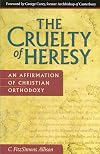
This slim work by an Anglican (or possibly Episcopalian?) bishop discusses the heresies of early Christianity and the four great ecumenical councils from Nicaea (A.D. 325) to Chalcedon (A.D. 451). Allison views the conclusions of these four councils as Christian orthodoxy, and he defends it against the various heresies that have arisen both in the early Church and in the modern world. He divides the major historical heresies into two basic groups, those that deny Jesus’ divinity and those show more that deny His humanity, and explains why each group denies essential facts about human (as well as divine) nature.
For anyone who knows a little bit about early Christianity and who wants to learn more, I think this book would be a very good resource. Allison presents the four ecumenical councils in their historical and theological context, and he explains the major heresies in an accessible way. However, it’s definitely not a work for a serious scholar, either of history or theology; there are no endnotes except for direct quotations, and I was left thinking “Hmm…” in a few places. I also don’t think the title of the book is entirely accurate. Although Allison attempts to show how each of the heresies does a disservice to humanity, he doesn’t always make the connection clearly enough. Overall, I think this is a good book if you want a little more information about early Christianity, but it’s not an in-depth or scholarly work. show less
For anyone who knows a little bit about early Christianity and who wants to learn more, I think this book would be a very good resource. Allison presents the four ecumenical councils in their historical and theological context, and he explains the major heresies in an accessible way. However, it’s definitely not a work for a serious scholar, either of history or theology; there are no endnotes except for direct quotations, and I was left thinking “Hmm…” in a few places. I also don’t think the title of the book is entirely accurate. Although Allison attempts to show how each of the heresies does a disservice to humanity, he doesn’t always make the connection clearly enough. Overall, I think this is a good book if you want a little more information about early Christianity, but it’s not an in-depth or scholarly work. show less
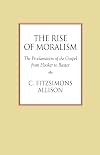
This is an excellent history of the movement in theology from grace to law in the 16th to the 18th centuries.
This book shows why heresy matters and why it cannot be ignored by the theologian or pastor. Combined with JND Kelly's "Early christian Doctrines," the scope of orthodoxy is better understood.

Lists
You May Also Like


Associated Authors
Statistics
- Works
- 8
- Also by
- 2
- Members
- 530
- Popularity
- #46,960
- Rating
- 4.1
- Reviews
- 7
- ISBNs
- 18
- Favorited
- 1