
Jan Ellison
Author of A Small Indiscretion
About the Author
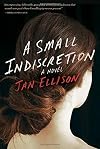
Jan Ellison graduated from Stanford University and San Francisco State University's MFA Program. She has published short fiction and received the 2007 O. Henry Prize for her first story to appear in print. Her first novel, A Small Indiscretion, was published in 2015. (Bowker Author Biography)
Works by Jan Ellison
Associated Works
Tagged
Common Knowledge
- Canonical name
- Ellison, Jan
- Gender
- female
- Education
- Stanford University
San Francisco State -- MFA - Nationality
- USA
- Places of residence
- Tujunga, California, USA
San Francisco Bay Area, California, USA - Associated Place (for map)
- California, USA
Members
Reviews
A curious title for a book in which bold decisions reverberate across the years, affecting our protagonist, Annie Black, and those she loves most. I struggled early on with this story, trying to keep up with the fluctuating timeline and when key events took place in relation to each other. I also found the second-person narrative a bit distracting, as I often had to remind myself who "you" was in this story. However, when we finally settled into the backstory of Annie's youth in London, I show more found I couldn't pull myself away. Effortless writing and a slowly unfolding mystery kept me hooked and I couldn't help but gasp with the final twist. Annie's story evokes both sympathy and distaste, but ultimately it is forgiveness which is what she seeks, from those she has hurt and from herself. show less
 This review was written for LibraryThing Early Reviewers.
A fantastic first novel. Can't wait to see what Ellison does next.
This story talks about how youthful negligence can catch up with us all 20 years later. I can't help but see that the problem happened not by what Annie did, so much as by her permissiveness to let things happen to her. Yes, she is young, & inexperienced, & very much alone in the world. Yet she knows the situation she's landed in is not a tenable one.
We always know, don't we? Sure, it's more likely that we can keep such show more indiscretions to ourselves. But that doesn't mean we haven't done damage to our souls & psyches along the way. And when the damage is inflicted on our future loves & lives in ways that can't be swept under the rug, the desperation, remorse, & obsession over the long-buried misdeed plays out much as Ellison illustrates here.
We see Annie as a young girl; we like her gumption for striking out on her own in a bold, even reckless, way; we easily understand how she got caught up in the muddled mess of Malcolm, Louise, & Patrick. But we also see the innocence of those who are hurt by the mis-steps of her 20 year-old self, & we just want to pick her up & out of it. Of course, we can't. This is a car crash in slo-mo for 20 years.
Ellison increases the weight & tension of the story with every chapter. But inside of each revelation, the real story is love, in all its forms. We see Annie in her roles as daughter, sister, mistress, lover, partner. & mother, & how she grows with each one. And despite her indiscretions, we come to love her in all these ways. show less
This story talks about how youthful negligence can catch up with us all 20 years later. I can't help but see that the problem happened not by what Annie did, so much as by her permissiveness to let things happen to her. Yes, she is young, & inexperienced, & very much alone in the world. Yet she knows the situation she's landed in is not a tenable one.
We always know, don't we? Sure, it's more likely that we can keep such show more indiscretions to ourselves. But that doesn't mean we haven't done damage to our souls & psyches along the way. And when the damage is inflicted on our future loves & lives in ways that can't be swept under the rug, the desperation, remorse, & obsession over the long-buried misdeed plays out much as Ellison illustrates here.
We see Annie as a young girl; we like her gumption for striking out on her own in a bold, even reckless, way; we easily understand how she got caught up in the muddled mess of Malcolm, Louise, & Patrick. But we also see the innocence of those who are hurt by the mis-steps of her 20 year-old self, & we just want to pick her up & out of it. Of course, we can't. This is a car crash in slo-mo for 20 years.
Ellison increases the weight & tension of the story with every chapter. But inside of each revelation, the real story is love, in all its forms. We see Annie in her roles as daughter, sister, mistress, lover, partner. & mother, & how she grows with each one. And despite her indiscretions, we come to love her in all these ways. show less
How long does the past haunt us? How long does it have the power to hurt us? How long must we pay for mistakes we made so long ago? And who determines when the debt is paid? Jan Ellison's tautly paced debut novel, A Small Indiscretion, asks these questions and more.
In Annie Black's current life, she is a married mother of three in the Bay Area who owns a light fixture store, crafting unique fixtures from recycled materials and found objects. In her complicated and youthful past, she lived show more and worked in London. When a solarized photograph from that time arrives in her mailbox without a return address, she is thrust back into the memories of that time, never guessing how it will ultimately impact her present. But when her nineteen year old son is left in a coma after a terrible car accident, Annie starts writing a confessional letter to her son, teasing out the ways in which her past and present have twined together in him and the unthinkable situation their family now faces.
Told in the second person narration of an intimate letter to son Robbie, Annie recounts the story of her older, married boss cum lover Malcolm, his wife Louise, and Patrick, the photographer artist with whom both she and Louise have a relationship. The telling jumps back and forth in time from this distant past, when Annie had a rather reckless disregard for consequences and other people, and the present in which her long-time marriage to husband Jonathan is fraying at the seams thanks, in no small part, to the unrevealed past she has unthinkingly kept from him. As Annie tells her story, trying to figure out how this past can still be extracting payment in her present, her recounting is sometimes emotionally distant, as if she has any deep feelings on a very tight rein, unwilling to allow them full expression and giving the narration a sort of repressed feel. Annie as a character is sometimes frustratingly passive and her narration can be disjointed, as would any mother's given the harrowing pressure and uncertainty under which she is living. She is the center of every piece of the story leaving the secondary characters to be just that, secondary. The rising sense of impending disaster and complete discovery is masterfully done, even if the denouement is ultimately predictable for careful readers. For those who don't guess the truth because they are barreling through the pages, there is a slow reveal as Annie's lies of omission come to light. The writing is smooth and the story is a gripping one tinged throughout with the mildly disturbing feeling of things hidden and menacing. Ellison has created a tense tale of obsession, forgiveness, secrets, and consequences that will haunt the reader long after the last paged is turned just as Annie's past haunts her. show less
In Annie Black's current life, she is a married mother of three in the Bay Area who owns a light fixture store, crafting unique fixtures from recycled materials and found objects. In her complicated and youthful past, she lived show more and worked in London. When a solarized photograph from that time arrives in her mailbox without a return address, she is thrust back into the memories of that time, never guessing how it will ultimately impact her present. But when her nineteen year old son is left in a coma after a terrible car accident, Annie starts writing a confessional letter to her son, teasing out the ways in which her past and present have twined together in him and the unthinkable situation their family now faces.
Told in the second person narration of an intimate letter to son Robbie, Annie recounts the story of her older, married boss cum lover Malcolm, his wife Louise, and Patrick, the photographer artist with whom both she and Louise have a relationship. The telling jumps back and forth in time from this distant past, when Annie had a rather reckless disregard for consequences and other people, and the present in which her long-time marriage to husband Jonathan is fraying at the seams thanks, in no small part, to the unrevealed past she has unthinkingly kept from him. As Annie tells her story, trying to figure out how this past can still be extracting payment in her present, her recounting is sometimes emotionally distant, as if she has any deep feelings on a very tight rein, unwilling to allow them full expression and giving the narration a sort of repressed feel. Annie as a character is sometimes frustratingly passive and her narration can be disjointed, as would any mother's given the harrowing pressure and uncertainty under which she is living. She is the center of every piece of the story leaving the secondary characters to be just that, secondary. The rising sense of impending disaster and complete discovery is masterfully done, even if the denouement is ultimately predictable for careful readers. For those who don't guess the truth because they are barreling through the pages, there is a slow reveal as Annie's lies of omission come to light. The writing is smooth and the story is a gripping one tinged throughout with the mildly disturbing feeling of things hidden and menacing. Ellison has created a tense tale of obsession, forgiveness, secrets, and consequences that will haunt the reader long after the last paged is turned just as Annie's past haunts her. show less
Written as a letter to her son, Robbie, this novel tells the story of Annie Black whose seemingly idyllic life with her husband and three children is disrupted when a photo from her past arrives in the mail. It isn't the photo itself that outlines any possible transgression, but rather the events that surround it. It is the beginning of the unraveling of her life, and Annie is forced to reflect on her past and the choices she has made.
There were very few surprises in A Small Indiscretion. show more From what that "small indiscretion" could be (it's pretty obvious almost right away) to the role various characters played in the story and the actions they would take. Still, I was never exactly sure of Robbie's fate or what direction the author would take the story, especially in the end. There's the unhappily married couple, Malcolm and Louise, the mysterious and somewhat charming Patrick, Annie's ever reliable husband Jonathan, their best friend Mitch, and Emme, the wayward stranger turned employee.
The biggest draw for me to the book was not just the beautiful writing, which I found compelling and thought provoking, but also the characters themselves. I felt a certain disconnect with all the characters in the novel, but I am not sure that is a bad thing in this case. As Annie recalls the events from her past and ties them to what is going on in her life in the present, she is trying to be as objective as possible in terms of laying out her memories of what happened, why she made the choices she did, and the consequences that came after. She holds nothing back, not even in taking blame for her own actions.
I liked that that the author brings into question the validity of memories. This was a more minor point really, given the circumstances, but one can't help but wonder how reliable are memories really? The author brings this point up late in the novel, which at first I thought wasn't really fair as I would like to have seen that side of the story explored more. And yet, the more I thought about it, the more I thought perhaps it was well-placed, this doubt the author suddenly had thrown my way. It gave me a chance to reflect on what had happened up to that point and re-evaluate my assessment of Annie.
I admit that Annie Black did not endear herself to me, not as a young woman trying to find her path in life nor really the more mature family oriented version of herself--and yet I was fascinated by her and could not help but feel pulled into her story. She was at times reckless and selfish (but aren't we all selfish to some degree?). I could understand why Annie made the choices she made even if I didn't always agree with them. I came to care about her as time went on. I saw a young woman, trying to make her way in the world on her own, but getting lost in loneliness and insecurities. She used alcohol as a balm. It was easy to see how she could get caught up with Malcolm and Louise and Patrick: Louise and Malcolm with their broken marriage, both of them pathetic and sad, really; and Patrick who seemed less a mystery artist type and more of a poser to me.
In the present, Annie is married to Jonathan, a doctor and loving husband. She feels as if she should be happy. She has a thriving business of her own, and yet there are moments when she feels restless and cannot help but wonder what might have been. When the photo arrives in her mailbox it brings it all back full force, however. It seems to be the domino that sets the other dominoes falling. She is forced to face secrets she has long kept hidden. Annie feels helpless and alone with the life she's built falling apart around her.
Jan Ellison does an amazing job of bringing out the inner turmoil Annie was and is feeling as well as giving us a good idea of what the other characters must have been going through too. Even Jonathan, who seemed more like a victim in all of this, isn't perfect by far. There is a scene near the end in which it becomes even more clear how the pieces of Annie's past fall into place--and I couldn't help but think of Jonathan's own past and how little we know about that and yet how he, like Annie, has his own ghosts, even if maybe not quite as prominent. It's another reminder of how the choices we make early on in our lives can impact us--as well as others--years later.
A Small Indiscretion hit two of my buttons in terms of topics that make me uncomfortable to read about because I have such strong opinions on them, one of which I suspected but decided to take the plunge anyway. I like to avoid those topics generally, but occasionally I think it's good to take them on, not just to challenge myself but also to take in a different perspective.
I had mixed feelings about the novel when I finished it. I loved the writing, but the novel left me in a dark place. At the risk of spoiling the end, it wasn't a particularly sad ending. It was more promising and hopeful than not. Still, I couldn't help but feel sad and a bit hollow as I finished reading it. Maybe even exhausted. I carried Annie and Jonathan and Robbie with me even after I finished the last page. Annie may have frustrated me more often than not, but Jan Ellison's novel was quite compelling and thought provoking. Most of all, what I took away from this novel is about the role forgiveness can ultimately plays in our lives. Not just forgiveness of those we love, but also of ourselves. show less
There were very few surprises in A Small Indiscretion. show more From what that "small indiscretion" could be (it's pretty obvious almost right away) to the role various characters played in the story and the actions they would take. Still, I was never exactly sure of Robbie's fate or what direction the author would take the story, especially in the end. There's the unhappily married couple, Malcolm and Louise, the mysterious and somewhat charming Patrick, Annie's ever reliable husband Jonathan, their best friend Mitch, and Emme, the wayward stranger turned employee.
The biggest draw for me to the book was not just the beautiful writing, which I found compelling and thought provoking, but also the characters themselves. I felt a certain disconnect with all the characters in the novel, but I am not sure that is a bad thing in this case. As Annie recalls the events from her past and ties them to what is going on in her life in the present, she is trying to be as objective as possible in terms of laying out her memories of what happened, why she made the choices she did, and the consequences that came after. She holds nothing back, not even in taking blame for her own actions.
I liked that that the author brings into question the validity of memories. This was a more minor point really, given the circumstances, but one can't help but wonder how reliable are memories really? The author brings this point up late in the novel, which at first I thought wasn't really fair as I would like to have seen that side of the story explored more. And yet, the more I thought about it, the more I thought perhaps it was well-placed, this doubt the author suddenly had thrown my way. It gave me a chance to reflect on what had happened up to that point and re-evaluate my assessment of Annie.
I admit that Annie Black did not endear herself to me, not as a young woman trying to find her path in life nor really the more mature family oriented version of herself--and yet I was fascinated by her and could not help but feel pulled into her story. She was at times reckless and selfish (but aren't we all selfish to some degree?). I could understand why Annie made the choices she made even if I didn't always agree with them. I came to care about her as time went on. I saw a young woman, trying to make her way in the world on her own, but getting lost in loneliness and insecurities. She used alcohol as a balm. It was easy to see how she could get caught up with Malcolm and Louise and Patrick: Louise and Malcolm with their broken marriage, both of them pathetic and sad, really; and Patrick who seemed less a mystery artist type and more of a poser to me.
In the present, Annie is married to Jonathan, a doctor and loving husband. She feels as if she should be happy. She has a thriving business of her own, and yet there are moments when she feels restless and cannot help but wonder what might have been. When the photo arrives in her mailbox it brings it all back full force, however. It seems to be the domino that sets the other dominoes falling. She is forced to face secrets she has long kept hidden. Annie feels helpless and alone with the life she's built falling apart around her.
Jan Ellison does an amazing job of bringing out the inner turmoil Annie was and is feeling as well as giving us a good idea of what the other characters must have been going through too. Even Jonathan, who seemed more like a victim in all of this, isn't perfect by far. There is a scene near the end in which it becomes even more clear how the pieces of Annie's past fall into place--and I couldn't help but think of Jonathan's own past and how little we know about that and yet how he, like Annie, has his own ghosts, even if maybe not quite as prominent. It's another reminder of how the choices we make early on in our lives can impact us--as well as others--years later.
A Small Indiscretion hit two of my buttons in terms of topics that make me uncomfortable to read about because I have such strong opinions on them, one of which I suspected but decided to take the plunge anyway. I like to avoid those topics generally, but occasionally I think it's good to take them on, not just to challenge myself but also to take in a different perspective.
I had mixed feelings about the novel when I finished it. I loved the writing, but the novel left me in a dark place. At the risk of spoiling the end, it wasn't a particularly sad ending. It was more promising and hopeful than not. Still, I couldn't help but feel sad and a bit hollow as I finished reading it. Maybe even exhausted. I carried Annie and Jonathan and Robbie with me even after I finished the last page. Annie may have frustrated me more often than not, but Jan Ellison's novel was quite compelling and thought provoking. Most of all, what I took away from this novel is about the role forgiveness can ultimately plays in our lives. Not just forgiveness of those we love, but also of ourselves. show less
Awards

You May Also Like


Associated Authors
Statistics
- Works
- 3
- Also by
- 1
- Members
- 326
- Popularity
- #72,686
- Rating
- 3.5
- Reviews
- 60
- ISBNs
- 7
- Languages
- 1
