
Ann Leary
Author of The Good House
About the Author
Ann Leary is a cohost of the NPR weekly radio show Hash Hags. She has written fiction and nonfiction for numerous magazines and literary publications. Her books include the memoir An Innocent, A Broad and two novels: Outtakes from a Marriage and The Good House. (Bowker Author Biography)
Image credit: Ann Leary [Photo by Scott M. Lacey]
Works by Ann Leary
Associated Works
Modern Love, Revised and Updated: True Stories of Love, Loss, and Redemption (2019) — Composer — 183 copies, 5 reviews
Reader's Digest Today's Best Nonfiction 79 2004 — Author — 2 copies
Tagged
Common Knowledge
- Gender
- female
- Places of residence
- New York, USA
- Map Location
- USA
Members
Reviews
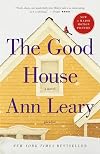
Ann Leary, the author of "The Good House", is spot-on in her description of alcoholism and its effects on the drinker and those around them. If you have ever loved an alcoholic, or ever known one as a friend or coworker, then you will recognize much truth in the author's storytelling. Even more striking for me, I actually have "known" the characters in this book, except that my people live in a small town in the mountains of VA, not a small seaside community on the coast of MA. The narrator show more of "The Good House" is Hildy Good, a top-notch realtor entering her sixties with a drinking problem intertwined with the requisite personal issues accumulated through decades of denial. After a stint in rehab, Hildy feels she has a grip on her problem--she just needs to control her alcohol consumption, not give it up. When a beautiful young woman, Rebecca, and her family move to Hildy's community, Hildy finds an unexpected friend. Hildy can trace her ancestry back to the Massachusetts of the 1600s, where one of her ancestors was tried and hanged as a witch. Hildy can "read" people due to her astute powers of observation and her many years of dealing with the public and their idiosyncrasies. She lets people think that she can read minds because it amuses her and suits her purposes. She just can't get her own mind to accept the fact that she must give up alcohol, and in true alcoholic tradition, she blurs reality in her thoughts to excuse and erase her own actions. Her marriage ended because her husband was gay, and her relationships with her grown children are anything but smooth. Then there's Frank--her old flame and lifelong friend--who wants more than friendship from Hildy. When local scandals leave no one untouched, Hildy finds out just how connected she is the people in her community, and it's time for her to choose her future path. Will she force herself to face her alcohol addiction? Is there a second chance for happiness for Hildy and Frank? Author Ann Leary will have you rooting for her perfectly imperfect heroine to find her way out of the bottle and sail toward a clear horizon.
Book Copy Gratis Amazon Vine show less
Book Copy Gratis Amazon Vine show less
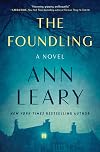
The author of this book can’t have many nice things to say about the American Dream and how it was constructed for anybody but whites in a society of conformity and obedience at the turn of the 20th century.
In this story a young woman comes of age to discover that her benefactors operate a grizzly factory for exploiting female labour for “the public good.” It is based on the very real history of asylums for non-conforming women, women considered “feebleminded” by eugenicists and show more sanctioned by male-dominated institutions.
At a time when the first fruit of economic success, suburban growth, public health, and scientific breakthroughs were easing the difficult life of women, America found a way to punish the non-conformists.
Unlike the native populations they had wiped out, unlike the blacks they chained to ignorance and poverty, and unlike the immigrants who fed the belching factories of Pittsburgh and mines of the west, women were given the vote and in this interpretation, a Pyrrhic victory.
Many women who didn’t conform were sent to institutions catering to theories of white supremacy, essentially eugenics labs for the unfortunate.
This story indicts white society as complicit in Jim Crow, in the tyranny of men over women’s lives, and of long discredited scientific principles.
This story really is about a terrible chapter in American medicine, but in the context of the time, not a terribly unique one for the American experiment.
It is worth remembering that the same as the events in this story, Southern legislators were finding ways to entrap black youth in a prison system to benefit white businesses.
This was America at the frontier.
Worse still, and although it us not part of this story, there is plenty of evidence to believe that Germany’s Nazis used American methods as a template for their own racial purification campaigns. show less
In this story a young woman comes of age to discover that her benefactors operate a grizzly factory for exploiting female labour for “the public good.” It is based on the very real history of asylums for non-conforming women, women considered “feebleminded” by eugenicists and show more sanctioned by male-dominated institutions.
At a time when the first fruit of economic success, suburban growth, public health, and scientific breakthroughs were easing the difficult life of women, America found a way to punish the non-conformists.
Unlike the native populations they had wiped out, unlike the blacks they chained to ignorance and poverty, and unlike the immigrants who fed the belching factories of Pittsburgh and mines of the west, women were given the vote and in this interpretation, a Pyrrhic victory.
Many women who didn’t conform were sent to institutions catering to theories of white supremacy, essentially eugenics labs for the unfortunate.
This story indicts white society as complicit in Jim Crow, in the tyranny of men over women’s lives, and of long discredited scientific principles.
This story really is about a terrible chapter in American medicine, but in the context of the time, not a terribly unique one for the American experiment.
It is worth remembering that the same as the events in this story, Southern legislators were finding ways to entrap black youth in a prison system to benefit white businesses.
This was America at the frontier.
Worse still, and although it us not part of this story, there is plenty of evidence to believe that Germany’s Nazis used American methods as a template for their own racial purification campaigns. show less
Women have long had little control over their own bodies and lives. This is both true historically and even up to today, despite what we have already overcome. Ann Leary's disturbing and horrifying, but ultimately captivating, Prohibition-era historical fiction, The Foundling, based on her own grandmother's experiences, shows how little autonomy women had historically through the horrors of eugenics.
Although Mary Engel's father is alive, she was raised in an orphanage until the age of 12 show more when her father reclaimed her and dropped her off, unwanted and unwelcome, at her aunt's house. It's 1927 and Mary is attending stenography school when she meets Dr. Agnes Vogel, a respected psychiatrist, one of the few women in her profession, and a hero of Mary's. Dr. Vogel invites Mary to become her secretary at the remote Nettleton State Village for Feebleminded Women of Childbearing Age. Initially Mary believes that the women held at the asylum are of limited mental capacity and that their incarceration at Nettleton is a kindness to them. Then she recognizes a woman who was raised in the same orphanage Mary was, a woman who is most emphatically not "mentally incompetent." As she looks further into Lillian's situation, she unwittingly uncovers the truth about the troubling institute and the doctor at its head. Will she turn a blind eye or will she stand up for the voiceless women, trapped in a mental institution with no hope of release and suffering terrible abuse and cruelty?
The history and practice of eugenics is a shameful one in our history. It is a moral failure of gigantic proportions that required complicity and compliance from too many people. In Mary, Leary has created an initially naïve character who must look to herself and find her moral center before she can acknowledge the great wrong going on around her. She gains strength as the novel goes on and learns to see the complex layers of those around her and to acknowledge the ways in which society has failed, or chosen to punish, women who do not conform to the accepted norms, especially the young women incarcerated in the asylum because their husbands or fathers didn't approve of their behavior. The story itself is dramatic and action packed and Leary manages to weave a recognition of the grievous wrongs of not only eugenics but also racism and anti-Semitism into Mary's moral awakening. Readers will want to race to the end to see what happens to each of the characters in this twisting and surprising novel.
This book is one of the Women's National Book Association's 2022 Great Group Reads. show less
Although Mary Engel's father is alive, she was raised in an orphanage until the age of 12 show more when her father reclaimed her and dropped her off, unwanted and unwelcome, at her aunt's house. It's 1927 and Mary is attending stenography school when she meets Dr. Agnes Vogel, a respected psychiatrist, one of the few women in her profession, and a hero of Mary's. Dr. Vogel invites Mary to become her secretary at the remote Nettleton State Village for Feebleminded Women of Childbearing Age. Initially Mary believes that the women held at the asylum are of limited mental capacity and that their incarceration at Nettleton is a kindness to them. Then she recognizes a woman who was raised in the same orphanage Mary was, a woman who is most emphatically not "mentally incompetent." As she looks further into Lillian's situation, she unwittingly uncovers the truth about the troubling institute and the doctor at its head. Will she turn a blind eye or will she stand up for the voiceless women, trapped in a mental institution with no hope of release and suffering terrible abuse and cruelty?
The history and practice of eugenics is a shameful one in our history. It is a moral failure of gigantic proportions that required complicity and compliance from too many people. In Mary, Leary has created an initially naïve character who must look to herself and find her moral center before she can acknowledge the great wrong going on around her. She gains strength as the novel goes on and learns to see the complex layers of those around her and to acknowledge the ways in which society has failed, or chosen to punish, women who do not conform to the accepted norms, especially the young women incarcerated in the asylum because their husbands or fathers didn't approve of their behavior. The story itself is dramatic and action packed and Leary manages to weave a recognition of the grievous wrongs of not only eugenics but also racism and anti-Semitism into Mary's moral awakening. Readers will want to race to the end to see what happens to each of the characters in this twisting and surprising novel.
This book is one of the Women's National Book Association's 2022 Great Group Reads. show less
I have conflicting feelings about this book. On the one had I think it is a brilliantly written book that perfectly portrays the life (and thoughts) of a 'functioning' alcoholic. On the other had I hated Hidly. So much. I think that may stem from personal feelings about an alcoholic in my own family and the parallels that I see, but what a selfish b***h. Frank was by far my favourite character, and even thought we don't really see a lot of him, Scott comes in a close second.
Without giving show more away too much one of the (many) reasons that I dislike Hildy so strongly would be the harsh and brutal way she 'promptly fired' her secretary who helped the girls with the intervention.
Are you kidding me. Someone showed they cared about you and you fire them.
I am tempted to give [a:Ann Leary|207508|Ann Leary|https://d.gr-assets.com/authors/1352560467p2/207508.jpg] three stars for this book, mainly due to my hatred of her main character, but I know that the only reason I truly hate her is because of how realistic and alive the character is written. show less
Without giving show more away too much one of the (many) reasons that I dislike Hildy so strongly would be the harsh and brutal way she 'promptly fired' her secretary who helped the girls with the intervention.
Are you kidding me. Someone showed they cared about you and you fire them.
I am tempted to give [a:Ann Leary|207508|Ann Leary|https://d.gr-assets.com/authors/1352560467p2/207508.jpg] three stars for this book, mainly due to my hatred of her main character, but I know that the only reason I truly hate her is because of how realistic and alive the character is written. show less
Lists
Awards


You May Also Like


Associated Authors
Statistics
- Works
- 9
- Also by
- 3
- Members
- 1,930
- Popularity
- #13,342
- Rating
- 3.7
- Reviews
- 133
- ISBNs
- 63
- Languages
- 4
- Favorited
- 2