
Jennifer Worth (1935–2011)
Author of Call the Midwife: A Memoir of Birth, Joy, and Hard Times
About the Author
Jennifer Worth was born Jennifer Lee in Clacton-on-Sea, Essex on September 25, 1935. She trained as a nurse at the Royal Berkshire Hospital in Reading, and then moved to London to train as a midwife. She later worked at the Royal London Hospital, the Elizabeth Garrett Anderson Hospital in Euston, show more and the Marie Curie Hospital in Hampstead. She left nursing in 1973 to study music. She received the Licentiate of the London College of Music in 1974 and was awarded a Fellowship ten years later. She taught and performed solo and in choirs throughout the United Kingdom and Europe. When she felt her musical talents ebbing, she turned to writing. She wrote three books about her experience as a midwife: Call the Midwife, Shadows of the Workhouse, and Farewell to the East End. These books are the basis of the BBC television series Call the Midwife. Her other works include Food Allergy: The Hidden Cause? and In the Midst of Life. She died of cancer on May 31, 2011 at the age of 75. (Bowker Author Biography) show less
Series
Works by Jennifer Worth
The Cazalet Chronicle Series and Midwife Trilogy Collection (7 Books) (2014) — Contributor — 9 copies
Associated Works
Tagged
Common Knowledge
- Canonical name
- Worth, Jennifer
- Birthdate
- 1935-09-25
- Date of death
- 2011-05-31
- Gender
- female
- Education
- Royal Berkshire Hospital, Reading, England
London College of Music (lic. 1974) - Occupations
- Midwife
nurse
memoirist - Organizations
- London College of Music
Community of St. John the Divine
Elizabeth Garrett Anderson Hospital
Marie Curie Hospital
Queen Mary's Maternity Home - Agent
- Eugenie Furniss (42 Management & Production)
- Short biography
- Jennifer Worth, née Lee, was born in Clacton-on-Sea, Essex, where her parents were on vacation, and grew up in Buckinghamshire. She left school at age 15 and learned shorthand and typing to become a secretary. She then decided to train as a nurse instead, and studied at the Royal Berkshire Hospital, Reading, before moving to London to receive further training as a midwife. She was hired as a staff nurse at the London Hospital in the poverty-stricken East End. In the early 1950s, she worked with the Community of St. John the Divine, a community of Anglican nuns, helping poor women and their babies. She worked later at the Elizabeth Garrett Anderson Hospital in Bloomsbury, and at the Marie Curie Hospital in Hampstead. In 1963, she married Philip Worth, an artist, and had two daughters. Jennifer Worth retired from nursing in 1973 to pursue her musical interests. She taught piano and singing at the London College of Music, and performed as a soloist and with choirs throughout the UK and Europe. In 2002, she published the first volume of what would become a trilogy of her memoirs, entitled Call the Midwife -- it became a bestseller. Shadows of the Workhouse (2005) and Farewell to the East End (2009) also became bestsellers. A fourth book, In the Midst of Life, published in 2010, described her later experiences caring for the terminally ill.
- Cause of death
- oesophageal cancer
- Nationality
- UK
- Birthplace
- Clacton-on-Sea, Essex, England, UK
- Places of residence
- London, England, UK
Amersham, Buckinghamshire, England, UK
Hemel Hempstead, Hertfordshire, England, UK - Place of death
- Hemel Hempstead, Hertfordshire, England, UK
- Map Location
- England, UK
Members
Discussions
Biography Group Read - Call the Midwife - Book Discussion Thread in 2015 Category Challenge (April 2015)
Reviews
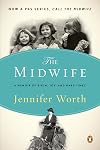
What an outstanding memoir. I was expecting a catalog of anecdotes revolving around babies and midwifery, a topic which at first sight doesn't really interest me but I'm quite fond of reading about women's history in general so I thought I'd give it a go. What I did not expect was Jennifer Worth's astonishing talent for writing. People who've led interesting lives are few. People who've led interesting lives and are born writers are a rarity. Worth is one of them. This is not only filled to show more the brim with very rich stories of births, it's also an amazing account of midwifery history. Worth is not only an excellent midwife but she reflects on her practice and often compares what life was in the 50s to what it's like now. This in turn makes for a deeply rewarding book. I learned a lot and I'm so happy I read this, it's a deeply touching, never sentimental memoir that has the knowledge of a history book and the readability of a novel. What a treasure. show less
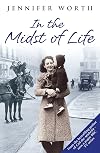
"A dangerous subject"
By sally tarbox on 5 November 2017
Format: Paperback
I'm not a viewer of the 'Call the Midwife' TV series. I mildly liked Worth's "Shadows of the Workhouse". But THIS is a fantastic and educative read which I would recommend to all.
Taking as her subject death, the author draws on her years of nursing experience, and her more recent dealings with people who have been saved from death by medical intervention - but also the many who were resuscitated from a potentially quick show more release, only to suffer a long and traumatic demise from some other long-term condition (or new problems brought on by the treatment itself.)
This is not an easy subject; the media focus on success stories - we don't hear of the problems medicine itself causes for the (mainly) elderly. Worth tells of surgeons who agree a patient would be best off left to slip away, only angry relatives would sue, the surgeon's career would be ruined - so the individual is prepared for the theatre.
Living wills, Dignitas, reported out of body experiences,the often pointless use of resuscitative techniques... Worth gives a balanced viewpoint to all.
She contrasts the acceptance of death in Victorian times, and in some societies still today, with our own embarrassment, refusal to acknowledge it, shield people from the sight of a dead person.
There is no simple answer - but I was left with a general feeling that if I'm old and frail I won't be seeking interventions at all cost but would prefer to die naturally.
One of the most significant books I've read this year. show less
By sally tarbox on 5 November 2017
Format: Paperback
I'm not a viewer of the 'Call the Midwife' TV series. I mildly liked Worth's "Shadows of the Workhouse". But THIS is a fantastic and educative read which I would recommend to all.
Taking as her subject death, the author draws on her years of nursing experience, and her more recent dealings with people who have been saved from death by medical intervention - but also the many who were resuscitated from a potentially quick show more release, only to suffer a long and traumatic demise from some other long-term condition (or new problems brought on by the treatment itself.)
This is not an easy subject; the media focus on success stories - we don't hear of the problems medicine itself causes for the (mainly) elderly. Worth tells of surgeons who agree a patient would be best off left to slip away, only angry relatives would sue, the surgeon's career would be ruined - so the individual is prepared for the theatre.
Living wills, Dignitas, reported out of body experiences,the often pointless use of resuscitative techniques... Worth gives a balanced viewpoint to all.
She contrasts the acceptance of death in Victorian times, and in some societies still today, with our own embarrassment, refusal to acknowledge it, shield people from the sight of a dead person.
There is no simple answer - but I was left with a general feeling that if I'm old and frail I won't be seeking interventions at all cost but would prefer to die naturally.
One of the most significant books I've read this year. show less
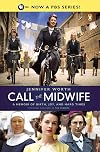
As a man my experience with birth is limited to say the least. I have participated to the extent any father can in the births of all three of my children, but still was only an observer. Call the Midwife: A Memoir of Birth, Joy, and Hard Times by Jennifer Worth is a new perspective for the casual observer, enhancing the meaning, significance and understanding of the birth of our children.
For the adolescent male mind, a part of every man regardless of his age, birth combines mystery, naughty show more bits, gross stuff, and joyful tears that leave us confused and often incapable of expressing the emotions that each aspect create. We don’t know whether to say cool, or gross, or to simply claim that allergies are behind our glistening eyes. Should we cowboy up, or do our best Mike Farrell impersonation?
Mrs. Worth uses clear, concise, and stark medical terminology to describe the rape and sexual abuse that created some of the babies she delivered, and in doing so makes the horror all forms of sexual abuse more tangible and disgusting. This is balanced against the steadfast love between many of the husbands and wives she serves, the nuns and midwives who live with them, and most importantly the love God has for mankind.
There were a couple of surprises for me in reading Mrs. Worth’s tale. I didn’t realize that even as late as the 1950’s indoor plumbing was not available to many East End Londoners, or the magnitude of the impact German bombing had on housing. The final surprise was the final delivery Mrs. Worth narrates, which was her faith in God. Even in the midst of the poverty, cruelty, injustice that so often reeked havoc in the lives of those she worked with, Mrs. Worth found love. And where there is love, there too is God. show less
For the adolescent male mind, a part of every man regardless of his age, birth combines mystery, naughty show more bits, gross stuff, and joyful tears that leave us confused and often incapable of expressing the emotions that each aspect create. We don’t know whether to say cool, or gross, or to simply claim that allergies are behind our glistening eyes. Should we cowboy up, or do our best Mike Farrell impersonation?
Mrs. Worth uses clear, concise, and stark medical terminology to describe the rape and sexual abuse that created some of the babies she delivered, and in doing so makes the horror all forms of sexual abuse more tangible and disgusting. This is balanced against the steadfast love between many of the husbands and wives she serves, the nuns and midwives who live with them, and most importantly the love God has for mankind.
There were a couple of surprises for me in reading Mrs. Worth’s tale. I didn’t realize that even as late as the 1950’s indoor plumbing was not available to many East End Londoners, or the magnitude of the impact German bombing had on housing. The final surprise was the final delivery Mrs. Worth narrates, which was her faith in God. Even in the midst of the poverty, cruelty, injustice that so often reeked havoc in the lives of those she worked with, Mrs. Worth found love. And where there is love, there too is God. show less
This first volume in the memoir that the BBC TV series of this name is based on is a fascinating, well-told read, though the incidents relayed will be very familiar to anyone who has watched the show. The memoir is perhaps a bit more detailed, though the show certainly gets most of the particulars of life, midwifery, and 1950s medicine in. The series and the book organize material differently, and therein probably lies the biggest difference between this source material and the television show more produced from it: the TV series is a story with a social conscience revolving around characters while the memoir is anecdotal social history less concerned with "what will happen next." In particular, it focuses less on the personal lives of the midwives. I suspect reading the book(s) first and then watching the show would be the more rewarding activity rather than watching and then reading (the show feels a bit like it fleshes out and invitalizes what is already on the page), but the book still has much to offer if one's already watched. Worth tells the stories compellingly, explains things well, and is particularly good at demonstrating how naive or misguided her younger self was without sounding dismissive or self-deprecatory. Recommended. show less
Lists
medical memoirs (1)
Awards


You May Also Like


Associated Authors
Statistics
- Works
- 14
- Also by
- 6
- Members
- 5,519
- Popularity
- #4,514
- Rating
- 4.1
- Reviews
- 227
- ISBNs
- 152
- Languages
- 11
- Favorited
- 1