
Delmore Schwartz (1913–1966)
Author of In Dreams Begin Responsibilities and Other Stories
About the Author
Delmore Schwartz was born on December 8, 1913 in Brooklyn, New York. He later attended the University of Wisconsin, New York University and Harvard University. He was considered one of the most influential Jewish writers during World War II. He wrote poems, short stories, and literary criticism. show more His works include In Dreams Begin Responsibilities, The Imitation of Life, The World Is a Wedding, and Successful Love and Other Stories. In 1959, he received the Bollingen Prize for Summer Knowledge: New and Selected Poems. He was an editor for the Partisan Review and The New Republic. He also taught creative writing at several universities including Harvard University, Syracuse University, Princeton University and Kenyon College. He suffered from alcohol addiction and mental illness later in life. He died of a heart attack on July 11, 1966 at the age of 52. (Bowker Author Biography) show less
Image credit: Harvard Square Library
Works by Delmore Schwartz
Associated Works
American Poetry: The Twentieth Century, Volume Two: E. E. Cummings to May Swenson (2000) — Contributor — 445 copies, 1 review
You've Got to Read This: Contemporary American Writers Introduce Stories that Held Them in Awe (1994) — Contributor — 415 copies, 3 reviews
From Totems to Hip-Hop: A Multicultural Anthology of Poetry Across the Americas 1900-2002 (2002) — Contributor — 181 copies
The Lincoln Anthology: Great Writers on His Life and Legacy from 1860 to Now (2008) — Contributor — 172 copies, 1 review
The Poet's Work: 29 Poets on the Origins and Practice of Their Art (1979) — Contributor — 96 copies, 1 review
Published and Perished: Memoria, Eulogies, and Remembrances of American Writers (2002) — Contributor — 41 copies, 1 review
Poetry in crystal; interpretations in crystal of thirty-one new poems by contemporary American poets (1963) — Contributor — 21 copies
Possibilities of Poetry: An Anthology of American Contemporaries (1970) — Contributor — 17 copies, 1 review
Sunlight on the River: Poems About Paintings, Paintings About Poems (2015) — Contributor — 11 copies, 2 reviews
Antaeus No. 23, Autumn 1976 — Contributor — 1 copy
Eco. Revista de la Cultura de Occidente. Tomo XXXIII/4. Agosto 1978. No. 202 — Contributor — 1 copy
Tagged
Common Knowledge
- Birthdate
- 1913-12-18
- Date of death
- 1966-07-11
- Gender
- male
- Education
- University of Wisconsin
New York University
Harvard University
Columbia University - Occupations
- poet
short story writer
literary critic
magazine editor - Awards and honors
- Bollingen Prize (1960)
Shelley Memorial Award (1959/1960)
American Academy of Arts and Letters Academy Award (Literature, 1953) - Relationships
- Pollet, Elizabeth (ex-echtg.)
- Nationality
- USA
- Birthplace
- Brooklyn, New York, USA
- Places of residence
- Brooklyn, New York, USA (birth)
Syracuse, New York, USA
New York, New York, USA (death) - Place of death
- New York, New York, USA
- Burial location
- Cedar Park Cemetery, Emerson, New Jersey, USA
- Associated Place (for map)
- New York, USA
Members
Reviews

Delmore Schwartz taught creative writing to Leonard Cohen. That is the least interesting thing about Schwartz. So I have your attention. And for anyone who has recently read a series of bad books, it’s time to read only good books. That is a much more interesting part of Delmore Schwartz.
I read a few of these stories again the other night and saw more than I expected. Especially the story “America, America”. This time, I noted a series of words that form a meta structure to the work. show more
What’s it about? Shenandoah Fish comes home and starts to listen to his mother in the kitchen as she tells a story about the old days and especially Baumann, the insurance salesman, Russian jew who immigrated at the end of the 19thC. Baumann is a common type among Jews of that era, but he’s also a type recognisable through his appreciation of the American ideal of life. He loves progress, invention, the wonder of freedom and the products of industry. He is genuinely in awe of a world that from the point of view of poor immigrants, truly was a wonder. Baumann’s work is an extension of his social character. He loves people, he networks, the work comes to him without effort outside the way he likes to live.
But these words that appear in italics fascinated me. Here is a list:
Insurance game
Afford
Dropped (in)
Every topic of the day
Greenhorn
Bringing into the house
Doing business
Fad
Took it out
Fresh
For himself
The deal
Pestered
Going concern
Immense
Ran with
Some are pearls of Americanisms,insurance game, fresh, doing business, going concern, greenhorn. They bind the story in a way that warranted further consideration.
The story, only about 20 pages long, is set in 1936, and written in early 1950s. So the words come across as one of the many inventive impacts on American English by those first Jewish immigrants from Eastern Europe. Or at least, that community was one of the many propagators and distributors of the new dynamic America life. After all, they were heavily involved in live theatre, movies, literature and comedy. Words like these could be said to form the vanguard of becoming American. The words are heavily weighted towards business, but also domestic - ran with, fresh, bringing into the house, dropped in etc, express the day to day - fresh defines the delightful vignetter of Baumann’s daughter who is always engaged with the social life of the house, performing for an audience, speaking her mind.
Why does this story impress at each reading? Mostly personal as it is the best story I have ever read of any immigrant experience. I have several Jewish friends whose origins are from those Yiddish speaking areas (curiously no Yiddish words are used in the story. Perhaps these Americanisms suggest a turning point in the immigrant’s experience). And third, the language of the book was still circulating for decades in the films and comedy derived from that era - Marx Brothers, Three Stooges, and endless stand up comics still operating like Larry David and Jerry Seinfeld. They became my cultural enlightenment and heritage from movies and TV. American TV and movies were widespread here in Melbourne as I grew up in the 1970s. So for me, these were lived words. Not an archive for history buffs.
______
The title story "In Dreams..." takes us to a place that questions the idea of existence, an encounter at the cinema watching your parent's own days of courtship. It could be nostalgic, or horror inducing. show less
I read a few of these stories again the other night and saw more than I expected. Especially the story “America, America”. This time, I noted a series of words that form a meta structure to the work. show more
What’s it about? Shenandoah Fish comes home and starts to listen to his mother in the kitchen as she tells a story about the old days and especially Baumann, the insurance salesman, Russian jew who immigrated at the end of the 19thC. Baumann is a common type among Jews of that era, but he’s also a type recognisable through his appreciation of the American ideal of life. He loves progress, invention, the wonder of freedom and the products of industry. He is genuinely in awe of a world that from the point of view of poor immigrants, truly was a wonder. Baumann’s work is an extension of his social character. He loves people, he networks, the work comes to him without effort outside the way he likes to live.
But these words that appear in italics fascinated me. Here is a list:
Insurance game
Afford
Dropped (in)
Every topic of the day
Greenhorn
Bringing into the house
Doing business
Fad
Took it out
Fresh
For himself
The deal
Pestered
Going concern
Immense
Ran with
Some are pearls of Americanisms,insurance game, fresh, doing business, going concern, greenhorn. They bind the story in a way that warranted further consideration.
The story, only about 20 pages long, is set in 1936, and written in early 1950s. So the words come across as one of the many inventive impacts on American English by those first Jewish immigrants from Eastern Europe. Or at least, that community was one of the many propagators and distributors of the new dynamic America life. After all, they were heavily involved in live theatre, movies, literature and comedy. Words like these could be said to form the vanguard of becoming American. The words are heavily weighted towards business, but also domestic - ran with, fresh, bringing into the house, dropped in etc, express the day to day - fresh defines the delightful vignetter of Baumann’s daughter who is always engaged with the social life of the house, performing for an audience, speaking her mind.
Why does this story impress at each reading? Mostly personal as it is the best story I have ever read of any immigrant experience. I have several Jewish friends whose origins are from those Yiddish speaking areas (curiously no Yiddish words are used in the story. Perhaps these Americanisms suggest a turning point in the immigrant’s experience). And third, the language of the book was still circulating for decades in the films and comedy derived from that era - Marx Brothers, Three Stooges, and endless stand up comics still operating like Larry David and Jerry Seinfeld. They became my cultural enlightenment and heritage from movies and TV. American TV and movies were widespread here in Melbourne as I grew up in the 1970s. So for me, these were lived words. Not an archive for history buffs.
______
The title story "In Dreams..." takes us to a place that questions the idea of existence, an encounter at the cinema watching your parent's own days of courtship. It could be nostalgic, or horror inducing. show less
*Partial spoilers ahead*
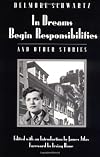
It was the title story that won fame for Delmore Schwartz in 1937, and it is the title story for which he is still lauded today. "In Dreams Begin Responsibilities" is a lovely, exquisitely polished piece of writing, and it's the first story you should read if you're new to Schwartz's work. But, in my own humble estimation, he was at his best when tackling longer pieces like "The World Is a Wedding." These stories are of two distinct types: the former of the type that show more is appreciated for its novelty (in his afterword, Irving Howe says of the titular tale that "it was the invention--the sheer cleverness of it--that one noticed first"), the latter of the type that impresses with its solidity and singleness of purpose. It is this variety which Barrett H. Clark and Maxim Lieber, editors of Great Short Stories of the World, described thusly when referring to Stephen Crane: "He was not a trick-story writer; he was neither facile nor clever; his work at its best is the sound product of an honest artist." Certainly, Delmore Schwartz could pull off a dazzling technical flourish on occasion, but his soundest product emerged when he delineated, often with painful directness, the foibles and insecurities of the people he was writing about.
Schwartz's star pupil at Syracuse University, legendary rock musician Lou Reed, learned much from his mentor in this regard. When an interviewer queried Reed about the lyrics of his masterpiece "Street Hassle," Reed said: "You know, every time I'm doing that song, when it gets to that awful last line I never know just how it's going to come across. 'So the first thing they see that allows them the right to be, they follow it / You know what it's called?' And here comes that line, and it should punch like a bullet: 'Bad luck.'" It's tempting to think that Reed, when writing that line, had the devastating final paragraph of "The World Is a Wedding" in mind. Laura Bell, the unhappy maiden sister of Rudyard Bell, not even remotely impressed by their friend Jacob Cohen's efforts to convince her that life "is a wedding, the most important kind of party, full of joy, fear, hope and ignorance" (like a Pieter Breughel painting), says flatly: "You can't fool me, the world is a funeral. We are all going to the grave no matter what you say. Let me give all of you one good piece of advice: Let your conscience be your bride."
The authors of the foreword and afterword to this collection make much of the Jewishness of Delmore Schwartz's work, underscoring this quality so frequently that it almost begins to constitute (deliberately or not) a warning: If you didn't grow up in a Depression-era Jewish family, stay away! These stories will only baffle you! This is unfortunate. While Schwartz obviously was writing about Jews in the New York City of the 1930s and '40s, his work is universally relatable. I defy any serious reader not to recognize himself and the people he cares about in the group of friends who populate "The World Is a Wedding," or the Hart family in "The Child Is the Meaning of This Life." There's even an overtly sentimental tale, "SCREENO," which makes for an interesting comparison with William S. Burroughs's lone sentimental effort "The Junky's Christmas." (I would imagine that Burroughs probably didn't think much of Schwartz as a writer--and vice versa--but Lou Reed, ever perceptive, was a great admirer of them both.) show less
It was the title story that won fame for Delmore Schwartz in 1937, and it is the title story for which he is still lauded today. "In Dreams Begin Responsibilities" is a lovely, exquisitely polished piece of writing, and it's the first story you should read if you're new to Schwartz's work. But, in my own humble estimation, he was at his best when tackling longer pieces like "The World Is a Wedding." These stories are of two distinct types: the former of the type that show more is appreciated for its novelty (in his afterword, Irving Howe says of the titular tale that "it was the invention--the sheer cleverness of it--that one noticed first"), the latter of the type that impresses with its solidity and singleness of purpose. It is this variety which Barrett H. Clark and Maxim Lieber, editors of Great Short Stories of the World, described thusly when referring to Stephen Crane: "He was not a trick-story writer; he was neither facile nor clever; his work at its best is the sound product of an honest artist." Certainly, Delmore Schwartz could pull off a dazzling technical flourish on occasion, but his soundest product emerged when he delineated, often with painful directness, the foibles and insecurities of the people he was writing about.
Schwartz's star pupil at Syracuse University, legendary rock musician Lou Reed, learned much from his mentor in this regard. When an interviewer queried Reed about the lyrics of his masterpiece "Street Hassle," Reed said: "You know, every time I'm doing that song, when it gets to that awful last line I never know just how it's going to come across. 'So the first thing they see that allows them the right to be, they follow it / You know what it's called?' And here comes that line, and it should punch like a bullet: 'Bad luck.'" It's tempting to think that Reed, when writing that line, had the devastating final paragraph of "The World Is a Wedding" in mind. Laura Bell, the unhappy maiden sister of Rudyard Bell, not even remotely impressed by their friend Jacob Cohen's efforts to convince her that life "is a wedding, the most important kind of party, full of joy, fear, hope and ignorance" (like a Pieter Breughel painting), says flatly: "You can't fool me, the world is a funeral. We are all going to the grave no matter what you say. Let me give all of you one good piece of advice: Let your conscience be your bride."
The authors of the foreword and afterword to this collection make much of the Jewishness of Delmore Schwartz's work, underscoring this quality so frequently that it almost begins to constitute (deliberately or not) a warning: If you didn't grow up in a Depression-era Jewish family, stay away! These stories will only baffle you! This is unfortunate. While Schwartz obviously was writing about Jews in the New York City of the 1930s and '40s, his work is universally relatable. I defy any serious reader not to recognize himself and the people he cares about in the group of friends who populate "The World Is a Wedding," or the Hart family in "The Child Is the Meaning of This Life." There's even an overtly sentimental tale, "SCREENO," which makes for an interesting comparison with William S. Burroughs's lone sentimental effort "The Junky's Christmas." (I would imagine that Burroughs probably didn't think much of Schwartz as a writer--and vice versa--but Lou Reed, ever perceptive, was a great admirer of them both.) show less
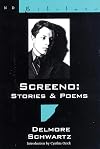
Schwartz has always been a shadowy figure venerated in certain circles I have been peripheral to, so this New Directions pocket edition seemed a good place to start. It's interesting finally to see what the fuss was about: the troubled Schwartz was a gifted poet who managed somehow to combine romanticist lyricism with a skeptical, metaphysical slant on perception and art (he studied philosophy with AN Whitehead at Harvard). The title story and the justly famous "In Dreams Begin show more Responsiblities," meanwhile, are harrowing urban fables related in a dry yet distinctive tone. With a brief, sturdy 2002 introduction by Cynthia Ozick. show less
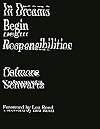
I really want to like this collection of short stories because I like Schwartz's poetry and so does Lou Reed. Even Reed's intro is about the man's poems and tragic biography, not really the stories. (By the way, Lou, it is the "Heavy Bear...", not the "Honey Bear..."). Another intro and afterword try to point away from the misspent life (Maybe a Schwartz biography including some of this best poems would be best) and argue how impactful these stories were in the '30s. I will put this on the show more shelf, maybe I am not yet of the right vintage and patience to appreciate the subtle values here.
The only one I really liked was the final, short "SCREENO" which I was intrigued by when seeing in the Table of Contents. Some forgotten pop culture trend celebrated with John Waters-esque damaged characters. It was almost that good.
THere are some lines I really like:
From "The World is a Wedding": "I like animals. They are interesting, spontaneous, and sincere."
and,
"In my late adolescence, ... life seemed to me to be Shakespearean. But now as I get older I see that life really resembles the stories of Fyodor Dostoyevsky."
and from "New Year's Eve" on inviting people to parties:
"Since both of them were intellectuals, both resorted to theories about the nature of a party and about each other's characters. A party at which too many of the guests are strangers is likely to fall flat, Arthur argued.
'There is enough alienation in modern life,' he said roundly, 'without installing it in the living room.'" show less
The only one I really liked was the final, short "SCREENO" which I was intrigued by when seeing in the Table of Contents. Some forgotten pop culture trend celebrated with John Waters-esque damaged characters. It was almost that good.
THere are some lines I really like:
From "The World is a Wedding": "I like animals. They are interesting, spontaneous, and sincere."
and,
"In my late adolescence, ... life seemed to me to be Shakespearean. But now as I get older I see that life really resembles the stories of Fyodor Dostoyevsky."
and from "New Year's Eve" on inviting people to parties:
"Since both of them were intellectuals, both resorted to theories about the nature of a party and about each other's characters. A party at which too many of the guests are strangers is likely to fall flat, Arthur argued.
'There is enough alienation in modern life,' he said roundly, 'without installing it in the living room.'" show less
Lists
Awards


You May Also Like


Associated Authors
Statistics
- Works
- 31
- Also by
- 32
- Members
- 986
- Popularity
- #26,110
- Rating
- 3.9
- Reviews
- 9
- ISBNs
- 44
- Languages
- 6
- Favorited
- 4