
Andrew S. Grove (1936–2016)
Author of Only the Paranoid Survive: How to Exploit the Crisis Points That Challenge Every Company
About the Author
Andrew S. Grove is chairman and former CEO of Intel Corporation in Santa Clara, California. He is the author of several books on technology and management, including High Output Management (1983), One-on-One With Andy Grove: How to Manage Your Boss, Yourself, and Your Co-Workers (1987) and Only the show more Paranoid Survive (1996). He has also written a weekly column on management for the San Jose Mercury News. Born September 2, 1936, in Budapest, Hungary, Grove emigrated to the U.S. in 1957 and became a naturalized citizen in 1962. He studied Chemical Engineering at City College in New York, and earned a Ph.D. in 1963 from University of California, Berkeley. He began working at Fairchild Semiconductor Research Laboratory in San Jose, California in 1963, gradually moving up the ranks to become Assistant Director of Research and Development in 1967. He joined Intel Corporation in 1968 as Vice President and Director of Operations. In 1997, Grove received the Technology Leader of the Year award from Industry Week, and was named Man of the Year by Time Magazine. (Bowker Author Biography) show less
Image credit: Andy Grove, 1997, World Economic Forum Annual Meeting
Works by Andrew S. Grove
Only the Paranoid Survive: How to Exploit the Crisis Points That Challenge Every Company (1996) 886 copies, 11 reviews
Associated Works
Tagged
Common Knowledge
- Legal name
- Grove, Andrew Stephen
- Other names
- Gróf, András István (birth name)
- Birthdate
- 1936-09-02
- Date of death
- 2016-03-21
- Gender
- male
- Education
- University of California, Berkeley (PhD|Chemical Engineering)
City College of New York (BS|Chemical Engineering) - Occupations
- businessman
science pioneer
engineer - Organizations
- Intel Corporation
Fairchild Semiconductor
International Rescue Committee
University of California, San Francisco - Awards and honors
- Heinz Award (1995)
Time Magazine, Man of the Year (1997)
IEEE Medal of Honor (2000)
California Hall of Fame - Cause of death
- not given
- Nationality
- Hungary (birth)
USA (naturalized) - Birthplace
- Budapest, Hungary
- Places of residence
- Bronx, New York, USA
Silicon Valley, California, USA - Place of death
- Los Altos, California, USA
- Associated Place (for map)
- USA
Members
Reviews
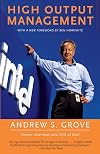
One of the best management books I've read. I was surprised how many concepts described nearly 40 years ago still ring so true today. There is a strong feeling of the author's authentic experience that shines throughout the book. He uses metaphors that are easy to grasp, yet describe complex nuances of the discussed problems. There are examples that seem to be real observations that led to presented insights (whereas in other book examples seem to be worked out backward to prove author's show more thesis). Finally, the author is very succinct - doesn't waste a single page on redundant repetitions or empty statements - and humble, not trying to self-promote or patronize.
The book presents a very "mechanical" view of the organization's design and managerial activities which can be especially appealing to more technically-minded readers. Processes, structures, and even people seem to be part of a big machine, that managers oversee and fine-tune by careful calibration of observed parameters. This might be true to some extent, especially if you want to manage for efficiency and quality. Then this book is pure gold and full of the useful and tested material as valid today as ever (e.g. MBO being "rediscovered" as OKRs and getting significant attention nowadays).
However, if you want to manage for creativity, engagement, and innovation... then you won't find much value here. If you are more into philosophy than engineering, then this book might be a harder read. The chapters about employee's motivation and psychology of work aged the most as many of the presented concepts have been developed further while others have been proved to be misguided. This made me appreciate the progress we did in this area since the book was written.
Overall, I wish I had read this book when I was a newbie manager. I would recommend it to anyone thinking about taking on a managerial role or still orienting themselves in the manager's responsibilities and purpose. show less
The book presents a very "mechanical" view of the organization's design and managerial activities which can be especially appealing to more technically-minded readers. Processes, structures, and even people seem to be part of a big machine, that managers oversee and fine-tune by careful calibration of observed parameters. This might be true to some extent, especially if you want to manage for efficiency and quality. Then this book is pure gold and full of the useful and tested material as valid today as ever (e.g. MBO being "rediscovered" as OKRs and getting significant attention nowadays).
However, if you want to manage for creativity, engagement, and innovation... then you won't find much value here. If you are more into philosophy than engineering, then this book might be a harder read. The chapters about employee's motivation and psychology of work aged the most as many of the presented concepts have been developed further while others have been proved to be misguided. This made me appreciate the progress we did in this area since the book was written.
Overall, I wish I had read this book when I was a newbie manager. I would recommend it to anyone thinking about taking on a managerial role or still orienting themselves in the manager's responsibilities and purpose. show less
Only the Paranoid Survive: How to Exploit the Crisis Points That Challenge Every Company by Andrew S. Grove
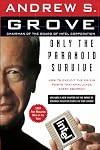
Great read on the history of Intel. The insights into the transition from vertical to horizontal industry are interesting, although his assessment of Apple seems to have been proven wrong in the end.
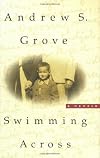
A kötet az Intel egykori legendás vezérigazgatója, Andrew S. Grove (Gróf András) személyes visszaemlékezése, amely nem az üzleti sikereire, hanem a Magyarországon töltött első húsz évére fókuszál. A szerző részletesen bemutatja a budapesti gyerekkort, a holokauszt alatti bujkálást, a háború utáni kommunista diktatúra mindennapjait, majd az 1956-os forradalmat követő kockázatos menekülését Ausztrián keresztül az Egyesült Államokba. A mű egy traumatikus show more történelmi korszak túlélésének és egy fiatalember korai eszmélésének megrázó krónikája. show less
A classic in which some sections spoke to me and some sections fell flat. I suspect this might be largely driven by my background and experiences -- some felt dead obvious and the breakfast factory metaphor felt forced, but a handful of comments were pretty valuable to me.
Valuable to me:
- Goal is to engender productivity in everything -- feedback, reviews, framing motivations. See it all through that lens.
- Motivating people means addressing their needs a la Maslow's hierarchy, giving show more opportunities to compete on metrics, ensuring folks get recognition in the form they want
Not a book I will be buying or recommending, but one I might revisit and that wasn't a waste of 2 hours to skim and focus on subareas. show less
Valuable to me:
- Goal is to engender productivity in everything -- feedback, reviews, framing motivations. See it all through that lens.
- Motivating people means addressing their needs a la Maslow's hierarchy, giving show more opportunities to compete on metrics, ensuring folks get recognition in the form they want
Not a book I will be buying or recommending, but one I might revisit and that wasn't a waste of 2 hours to skim and focus on subareas. show less
Lists
My List (1)
Awards

You May Also Like


Statistics
- Works
- 10
- Also by
- 1
- Members
- 2,012
- Popularity
- #12,793
- Rating
- 3.9
- Reviews
- 29
- ISBNs
- 52
- Languages
- 13
- Favorited
- 1