
Anthony Tucker-Jones
Author of Hitler's Great Panzer Heist: Germany's Foreign Armor in Action, 1939-45
About the Author
Anthony Tucker-Jones is a former defence intelligence officer and a widely published expert on regional conflicts, counter-terrorism and armoured and aerial warfare. He has had over forty books published by Pen Sword. His recent books include The Battle for Budapest 1944-1945, The Battle for the show more Caucasus 1942-1943 and Hitler's Panzers: The Complete History 1933-1945. For further information his website can be found at www.atuckerjones.com. show less
Works by Anthony Tucker-Jones
Falaise: The Flawed Victory: The Destruction of Panzergruppe West, August 1944 (2008) 33 copies, 1 review
Life and Death on the Eastern Front: Rare Colour Photographs from the Second World War (2022) 22 copies, 1 review
Armoured Warfare and the Fall of France: Rare Photographs from Wartime Archives (Images of War) (2014) 20 copies
Tagged
Common Knowledge
- Gender
- male
Members
Reviews
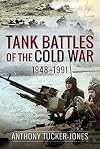
I have to say I expected much more from this book. It is a period that was marked by numerous wars between two blocks, a trend that is starting up again, and was marked by breakthroughs in many military fields - from technology to combat applications.
And this is why I expected more. Unfortunately, this book looks like a set of notes for an actual book, not a complete book on the subject. Now, dont get me wrong, the amount of data about all of these wars is so big that it just can not be put show more inside a single book. But even as an overview, this book comes short because of chapter structures and some weird conclusions.
So, the good thing is that this is a rare book that lists all main wars fought during the period between the end of WW2 and the end of the first Cold War. It covers even some less known battlefields, like those between Eritrea, Ethiopia, and Somalia. This makes this book a very interesting and good reference book.
But the rest is where the book is not so good, in my opinion. So let's go in order.
Chapters have a strange structure. I know that not every war fought in this period included armored units, but if the chapter is about Israel's war of independence, why start the talk about the development of improved M60's and finally Merkava? Especially if you are covering all the other wars, including the invasion of Lebanon, where Merkava first came under the spotlight. So you either pick up area and then cover all wars from the area or (approach author used) you go chronologically year by year world-wide but you concentrate on the time period only, and dont rush ahead and constantly mix things up. This was rather dis-concentrating.
The author is clearly biased towards Israelis but does not say why the IDF was extremely successful in the day (not so lately). Haganah (and Irgun, to be honest) were trained by British authorities in a variety of, for the time, very advanced infantry tactics - prominent role played here by Orde Wingate of Chindit fame. Officers from the British forces were also led by religious goals because they saw their role as helping the return of Jewish people to Israel. This and very high discipline of the Jewish population created a highly militarized society. After WW2, a lot of diaspora came back to Israel, and here we are talking about people with years of combat experience in modern high intensity warfare. Basically, for all means and purposes, IDF had all the personnel - when they received combat equipment combat skill wise, they were leagues ahead of their enemies. So, it is not any Israeli specific feature here - they were lucky to have smart leadership and the right people at the right time and in the right place. If anyone doubts this, just look at the failures when fighting mostly infantry irregulars that have achieved the same level of militancy as Israel in the beginning - it does not go that easy anymore.
Some chapters are just briefly given. Angola, for example, is covered by a chapter that could have come from the Wikipedia for all means and purposes. Strikes from Namibia were very important for South Africa and included a lot of armored columns striking at Angolan positions. Cubans played a great role here, fighting the SA troops with their own tanks, armor, and air force units. This was a very hot war, so to say, very conventional and very controversial (especially when it comes to Cuito Cuanavale battle, because both sides say they won). But besides brief mention of SA's 32nd and 44th battalions and Cuban led forces, readers won't be any smarter about this conflict, other than that it happened.
The author is extremely biased to the Western nations. Besides considering Israelis masters of armored warfare (which, again, is weird because, for example, South Africans were also very good), everybody else was fighting "good but not good enough." If one were to look at descriptions of conflicts, one would think that the mere presence of Western armor was sufficient to turn the tide of battle. Which is bollocks as current events show.
When talking about various wars that included opposition to "the dictators" (Gaddafi for example) foreign military help (in case of Chad from France and US) is just hinted - although weapons were supplied and allied forces armed and provided with air cover and intelligence, this is all in the background, seemingly unimportant. And let us not forget, this also applies to Israel - weren't it for US arms supplies during all conflicts where Israel was involved, situation would be significantly different. Also when it comes to military help, USSR and China do it for control while US and West do it for - well it is not mentioned why because reader would think that only arms dealers in the world at the time were USSR, China and generally Eastern Bloc. Which is ridiculous. Where are weapon supplies to Iraq during the 1980s, to Iran before the revolution, weapon supplies to Egypt, Saudi Arabia? Again, this is a very strong bias, which is funny since all of these things are common knowledge to anyone interested in the period.
Comparison of combat vehicles (West vs East) is also done without context - Israel again being a case clearly showing this, if you do not have trained and combat experienced personnel you can ride the lightning but will be shot down. And let us not forget IDF used a lot of captured USSR equipment in follow-up wars. So, again, we have this heavy bias, but OK, at least it is consistent.
The book ends on some weird note. First, the author mentions the demise of the tank as a weapon in modern war. I guess because of rise of war on terror (meaning low intensity conflicts) but book is published in 2021 during the very hot civil war in Eastern Europe, new Nagorno Karabakh war and overall arms race between [again] West and East. The book seems to be written a long time ago and just published recently (this is why I say it looks more like collection of notes for a book and not the actual book). It just does not make sense. Even after 2022, the advent of lots of new types of ammunition tank remains and will remain only reliable way of approaching the area under fire (direct and indirect) and striking the enemy.
Second, for some reason, the author has a strong relation with T54/55 tank. If you read this book, I guarantee you won't be able to discern why. At one point it is good tank, on other it is not, but then it is Chinese (or Warsaw Pact) produced one's that are subpar, or maybe not [that bias is truly disturbing]- viewpoint changes so often that you start the wonder - what? And even if you take T54/55 as a most massively produced tank during the Cold War, what about Centurion tank and derivatives especially built in South Africa and Israel? These were main tanks that were utilized by Western forces, used much more than M60's and M48's, but I would not be surprised if you read this book and end up not knowing much about them. When it comes to USSR equipment, it is sturdy and functional, no matter what Western fans say. Even in current military conflict, they play an important role. If you want to read about the modern style mechanized warfare in Africa using this equipment from the perspective of Western forces, do read about EO and their campaigns.
All in all, it's a rather weird book. I think it was rushed to the press due to current events. I mean, would it be so difficult to at least give some graphics and vehicle pictures together with textual descriptions of armored vehicles in the book appendixes?
If you are interested in the reference book about major hot spots during Cold War this is good book because it describes events in very broad strokes, but with strange, and completely unnecessary, bias present that just ruins the narration.
For anything detailed, please refer to other books that are on the subject and give much more details on a specific conflict. show less
And this is why I expected more. Unfortunately, this book looks like a set of notes for an actual book, not a complete book on the subject. Now, dont get me wrong, the amount of data about all of these wars is so big that it just can not be put show more inside a single book. But even as an overview, this book comes short because of chapter structures and some weird conclusions.
So, the good thing is that this is a rare book that lists all main wars fought during the period between the end of WW2 and the end of the first Cold War. It covers even some less known battlefields, like those between Eritrea, Ethiopia, and Somalia. This makes this book a very interesting and good reference book.
But the rest is where the book is not so good, in my opinion. So let's go in order.
Chapters have a strange structure. I know that not every war fought in this period included armored units, but if the chapter is about Israel's war of independence, why start the talk about the development of improved M60's and finally Merkava? Especially if you are covering all the other wars, including the invasion of Lebanon, where Merkava first came under the spotlight. So you either pick up area and then cover all wars from the area or (approach author used) you go chronologically year by year world-wide but you concentrate on the time period only, and dont rush ahead and constantly mix things up. This was rather dis-concentrating.
The author is clearly biased towards Israelis but does not say why the IDF was extremely successful in the day (not so lately). Haganah (and Irgun, to be honest) were trained by British authorities in a variety of, for the time, very advanced infantry tactics - prominent role played here by Orde Wingate of Chindit fame. Officers from the British forces were also led by religious goals because they saw their role as helping the return of Jewish people to Israel. This and very high discipline of the Jewish population created a highly militarized society. After WW2, a lot of diaspora came back to Israel, and here we are talking about people with years of combat experience in modern high intensity warfare. Basically, for all means and purposes, IDF had all the personnel - when they received combat equipment combat skill wise, they were leagues ahead of their enemies. So, it is not any Israeli specific feature here - they were lucky to have smart leadership and the right people at the right time and in the right place. If anyone doubts this, just look at the failures when fighting mostly infantry irregulars that have achieved the same level of militancy as Israel in the beginning - it does not go that easy anymore.
Some chapters are just briefly given. Angola, for example, is covered by a chapter that could have come from the Wikipedia for all means and purposes. Strikes from Namibia were very important for South Africa and included a lot of armored columns striking at Angolan positions. Cubans played a great role here, fighting the SA troops with their own tanks, armor, and air force units. This was a very hot war, so to say, very conventional and very controversial (especially when it comes to Cuito Cuanavale battle, because both sides say they won). But besides brief mention of SA's 32nd and 44th battalions and Cuban led forces, readers won't be any smarter about this conflict, other than that it happened.
The author is extremely biased to the Western nations. Besides considering Israelis masters of armored warfare (which, again, is weird because, for example, South Africans were also very good), everybody else was fighting "good but not good enough." If one were to look at descriptions of conflicts, one would think that the mere presence of Western armor was sufficient to turn the tide of battle. Which is bollocks as current events show.
When talking about various wars that included opposition to "the dictators" (Gaddafi for example) foreign military help (in case of Chad from France and US) is just hinted - although weapons were supplied and allied forces armed and provided with air cover and intelligence, this is all in the background, seemingly unimportant. And let us not forget, this also applies to Israel - weren't it for US arms supplies during all conflicts where Israel was involved, situation would be significantly different. Also when it comes to military help, USSR and China do it for control while US and West do it for - well it is not mentioned why because reader would think that only arms dealers in the world at the time were USSR, China and generally Eastern Bloc. Which is ridiculous. Where are weapon supplies to Iraq during the 1980s, to Iran before the revolution, weapon supplies to Egypt, Saudi Arabia? Again, this is a very strong bias, which is funny since all of these things are common knowledge to anyone interested in the period.
Comparison of combat vehicles (West vs East) is also done without context - Israel again being a case clearly showing this, if you do not have trained and combat experienced personnel you can ride the lightning but will be shot down. And let us not forget IDF used a lot of captured USSR equipment in follow-up wars. So, again, we have this heavy bias, but OK, at least it is consistent.
The book ends on some weird note. First, the author mentions the demise of the tank as a weapon in modern war. I guess because of rise of war on terror (meaning low intensity conflicts) but book is published in 2021 during the very hot civil war in Eastern Europe, new Nagorno Karabakh war and overall arms race between [again] West and East. The book seems to be written a long time ago and just published recently (this is why I say it looks more like collection of notes for a book and not the actual book). It just does not make sense. Even after 2022, the advent of lots of new types of ammunition tank remains and will remain only reliable way of approaching the area under fire (direct and indirect) and striking the enemy.
Second, for some reason, the author has a strong relation with T54/55 tank. If you read this book, I guarantee you won't be able to discern why. At one point it is good tank, on other it is not, but then it is Chinese (or Warsaw Pact) produced one's that are subpar, or maybe not [that bias is truly disturbing]- viewpoint changes so often that you start the wonder - what? And even if you take T54/55 as a most massively produced tank during the Cold War, what about Centurion tank and derivatives especially built in South Africa and Israel? These were main tanks that were utilized by Western forces, used much more than M60's and M48's, but I would not be surprised if you read this book and end up not knowing much about them. When it comes to USSR equipment, it is sturdy and functional, no matter what Western fans say. Even in current military conflict, they play an important role. If you want to read about the modern style mechanized warfare in Africa using this equipment from the perspective of Western forces, do read about EO and their campaigns.
All in all, it's a rather weird book. I think it was rushed to the press due to current events. I mean, would it be so difficult to at least give some graphics and vehicle pictures together with textual descriptions of armored vehicles in the book appendixes?
If you are interested in the reference book about major hot spots during Cold War this is good book because it describes events in very broad strokes, but with strange, and completely unnecessary, bias present that just ruins the narration.
For anything detailed, please refer to other books that are on the subject and give much more details on a specific conflict. show less
Armoured Warfare in the Arab-Israeli Conflicts: Rare Photographs from Wartime Archives (Images of War) by Anthony Tucker-Jones
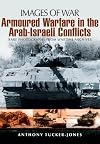
For what it is, photographic journey through the history of armored forces in conflicts between Israel and its neighbors, this is not a bad book. Lots of very interesting photographs, and apparently very rare, showing troops, conditions under which they fought and vast expanse of desert full of burned down and destroyed armored vehicles in the aftermath of major duels.
In general, as far as I can see IDF's armored forces prevailed when initiative was on IDF's side. They fought bravely and show more achieved great results. But with advent of guided missiles and when forced to fight against Arab armies without direct air force support, results were relatively even, even with more aggressive stance of IDF's commanders.
I have to say that this is one of the first books in which losses of preferable side (IDF) are at least given, especially for 1973 war and Lebanon. Are these precise numbers, nobody knows but at least losses are given and they reflect the reality of clashes between armored columns in desert with no side having total air superiority. And this was interesting find, because not many books provide this type of information.
After 1973 we are given short overview of development of Merkava tank (Osprey's book on this tank is exquisite) and its use in Lebanon and later in 2000's in Gaza.
Again, not that much detail on operations, but beautiful photographs (it is called Images of War series after all).
Only reason I took one star off is author's comment in introduction where he says how majority of literature is written from the standpoint of IDF, so this is not bias of the author (but I guess his sources?). I find this weird because author thinks about IDF armored troops to be the pinnacle of this armed service (and there is always that they are under-powered, but they have power, they are on the brink but one tank takes out X enemy tanks (where X > 10) etc etc, you know epic heroic stuff), so he is obviously very biased. So, why not work on bias control if no works that tell the story from both sides (lets say objectively) exists? Or why not try to find less biased sources, even "dry" military reports from world militaries would provide a lot of insight.For me this was like .... cheap way of saying, all the praise is because others praised them, not me (although I do :)) Weird.
But even with that very interesting book with lots of high quality photographs of the Middle East armored battlegrounds. show less
In general, as far as I can see IDF's armored forces prevailed when initiative was on IDF's side. They fought bravely and show more achieved great results. But with advent of guided missiles and when forced to fight against Arab armies without direct air force support, results were relatively even, even with more aggressive stance of IDF's commanders.
I have to say that this is one of the first books in which losses of preferable side (IDF) are at least given, especially for 1973 war and Lebanon. Are these precise numbers, nobody knows but at least losses are given and they reflect the reality of clashes between armored columns in desert with no side having total air superiority. And this was interesting find, because not many books provide this type of information.
After 1973 we are given short overview of development of Merkava tank (Osprey's book on this tank is exquisite) and its use in Lebanon and later in 2000's in Gaza.
Again, not that much detail on operations, but beautiful photographs (it is called Images of War series after all).
Only reason I took one star off is author's comment in introduction where he says how majority of literature is written from the standpoint of IDF, so this is not bias of the author (but I guess his sources?). I find this weird because author thinks about IDF armored troops to be the pinnacle of this armed service (and there is always that they are under-powered, but they have power, they are on the brink but one tank takes out X enemy tanks (where X > 10) etc etc, you know epic heroic stuff), so he is obviously very biased. So, why not work on bias control if no works that tell the story from both sides (lets say objectively) exists? Or why not try to find less biased sources, even "dry" military reports from world militaries would provide a lot of insight.For me this was like .... cheap way of saying, all the praise is because others praised them, not me (although I do :)) Weird.
But even with that very interesting book with lots of high quality photographs of the Middle East armored battlegrounds. show less
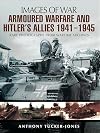
There’s an argument that lack of support for the Axis allies is one of the many reasons the Third Reich lost the Second World War. Although this is mostly intended as a book of photographs, there’s some support for that in the accompanying text; Germany was reluctant to transfer modern armor to the Bulgarians, Finns, Italians, Magyars, Slovaks, Spaniards, Romanians and Ukrainians until it was too little and too late. Thus when the Soviets smashed through around Stalingrad in 1942 the show more Axis allies had to try and stop T-34s with obsolete – recycled French R35s – and underarmed – Hungarian Turans and Italian L6/40s – tanks. At the very end, the Hungarians came up with some decent self-propelled guns and the Germans dished out a few Pz IVs. Since most of the Axis allies changed sides to try and get a deal from Stalin, this led to Hungarians fighting Romanians, both with German equipment.
As far as photographs go, there are plenty, so if you’re a military modeler and want to build a model Turan II or an L6/40, this will help. Only covers the Russian campaign, so there’s no mention of Italian armor in North Africa. There are no maps, which handicaps campaign and battle descriptions in the accompanying text, no references, and no bibliography. For a little more on Italian armor, see Iron Arm and for more on relations between Germany and the Axis allies see Germany and the Axis Powers. show less
As far as photographs go, there are plenty, so if you’re a military modeler and want to build a model Turan II or an L6/40, this will help. Only covers the Russian campaign, so there’s no mention of Italian armor in North Africa. There are no maps, which handicaps campaign and battle descriptions in the accompanying text, no references, and no bibliography. For a little more on Italian armor, see Iron Arm and for more on relations between Germany and the Axis allies see Germany and the Axis Powers. show less
Armoured Warfare in the Far East 1937 - 1945: Rare Photographs from Wartime Archives (Images of War) by Anthony Tucker-Jones
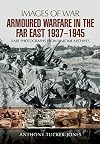
Another publication where the title aptly describes the purpose and content of the book. The author has produced several titles within this series, although this is the only one I have read and reviewed to date. The essence of this book is the collection of photographs, many of which are from U.S. Marine Corps or U.S. Army sources. As such, as is implied in the title of this book, most of them I have not seen before in print.
Armoured warfare in the Far East during the Second World War can be show more overlooked, as it is overshadowed by the tank battle fought in the U.S.S.R. and North-West Europe. The role of the tank proved to be important throughout the campaigns in this theatre. The outbreak of war between China and Japan in 1937 is this covered in the first chapters in the book. Each of the twelve chapters commencing with a short, written precis, before moving onto the photographs relevant to that chapter. Chapters Three, Four and Five cover the little known conflict between Japan and the Soviet Union, in which armoured warfare was a significant factor in the defeat of the Japanese Kwantung Army by 31 August 1939. This section contains several interesting photographs, and good explanatory content.
Chapter Six covers the Japanese invasion of Malaya and Singapore, but in my view, this book underplays the role of the Japanese armour in the series of defeats suffered by the British, British-Indian and Australian forces in Malaya. Chapters Seven and Eight cover the U.S. and Australian campaigns in the Pacific islands, and naturally, as many of the photographs are sourced from the U.S., there are several interesting ones used in these chapters. Chapters Nine and Ten cover the British led campaign in South-East Asia (Burma and India). Here again, in my view, the role of the armoured units in this campaign is understated. In addition, some of the photographs in this section do not appear directly relevant to the subject of armoured warfare. Chapter Eleven details the final Soviet/Japanese fighting, and Chapter Twelve is a summary of Japanese armoured vehicles, weapons and outcomes.
The author has written over twenty book, mainly about armoured warfare, and is clearly very knowledgeable on this subject. The photographs are of good quality, and the captions informative. The introductory sections for each chapter are well written, but only provide a summary of the events relevant to that chapter.
In conclusion, I found this book very useful and informative, and it is a welcome addition to my library. For me, the unique selling point of this book is the coverage of the Japan/China and Japan/Soviet conflicts, and the photographs of that period. On that basis, I recommend this book to any student of the Second World War, and armoured warfare in particular. show less
Armoured warfare in the Far East during the Second World War can be show more overlooked, as it is overshadowed by the tank battle fought in the U.S.S.R. and North-West Europe. The role of the tank proved to be important throughout the campaigns in this theatre. The outbreak of war between China and Japan in 1937 is this covered in the first chapters in the book. Each of the twelve chapters commencing with a short, written precis, before moving onto the photographs relevant to that chapter. Chapters Three, Four and Five cover the little known conflict between Japan and the Soviet Union, in which armoured warfare was a significant factor in the defeat of the Japanese Kwantung Army by 31 August 1939. This section contains several interesting photographs, and good explanatory content.
Chapter Six covers the Japanese invasion of Malaya and Singapore, but in my view, this book underplays the role of the Japanese armour in the series of defeats suffered by the British, British-Indian and Australian forces in Malaya. Chapters Seven and Eight cover the U.S. and Australian campaigns in the Pacific islands, and naturally, as many of the photographs are sourced from the U.S., there are several interesting ones used in these chapters. Chapters Nine and Ten cover the British led campaign in South-East Asia (Burma and India). Here again, in my view, the role of the armoured units in this campaign is understated. In addition, some of the photographs in this section do not appear directly relevant to the subject of armoured warfare. Chapter Eleven details the final Soviet/Japanese fighting, and Chapter Twelve is a summary of Japanese armoured vehicles, weapons and outcomes.
The author has written over twenty book, mainly about armoured warfare, and is clearly very knowledgeable on this subject. The photographs are of good quality, and the captions informative. The introductory sections for each chapter are well written, but only provide a summary of the events relevant to that chapter.
In conclusion, I found this book very useful and informative, and it is a welcome addition to my library. For me, the unique selling point of this book is the coverage of the Japan/China and Japan/Soviet conflicts, and the photographs of that period. On that basis, I recommend this book to any student of the Second World War, and armoured warfare in particular. show less
You May Also Like


Statistics
- Works
- 71
- Members
- 949
- Popularity
- #27,106
- Rating
- 3.6
- Reviews
- 13
- ISBNs
- 190
- Languages
- 3