

Charles Wheelan
Author of Naked Statistics: Stripping the Dread from the Data
About the Author
Charles Wheelan is the author of the best-selling Naked Statistics and Naked Economics and is a former correspondent for the Economist. He teaches public policy at Dartmouth College and lives in Hanover, New Hampshire, with his family.
Image credit: Photo courtesy the University of Chicago Experts Exchange
Works by Charles Wheelan
Naked Economics: Undressing the Dismal Science (Fully Revised and Updated) (2010) 778 copies, 7 reviews
đô-la hay lá nho? 1 copy
Tagged
Common Knowledge
- Legal name
- Wheelan, Charles J.
- Birthdate
- 1966
- Gender
- male
- Education
- Dartmouth College (BS)
Harris School of Public Policy, University of Chicago (PhD)
Woodrow Wilson School of Public Affairs, Princeton University (MPA) - Occupations
- lecturer
journalist - Organizations
- The Economist
University of Chicago - Nationality
- USA
- Places of residence
- Chicago, Illinois, USA
- Associated Place (for map)
- Illinois, USA
Members
Reviews
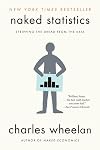
This is a very lucidly written book that covers the basics of the branch of math known as statistics. It shows the uses and misuses of statistics and some of the essential math behind the applications. Readers will find a discussion of the familiar normal distribution; an explication of the Central Limit Theorem; the formula for calculating the standard error; and a fairly detailed introduction to probability theory.
The subject matter never becomes dull in Wheelan’s treatment because of show more his light sense of humor. For example, when discussing the limits of the validity of regression analysis, he writes:
“Here is one of the most important things to remember when doing research that involves regression analysis. Try not to kill anyone.”
He then goes on to explain how a mathematically consistent analysis of a large data set by the Harvard Medical School and the Harvard School of Public Health led to the belief that estrogen supplements were beneficial to women over 50 years old. Subsequently, millions of women were prescribed estrogen supplements. But later actual clinical trials involving double blind experiments showed that women taking estrogen had a higher incidence of heart disease, stroke, blood clots, breast cancer and other adverse health outcomes!
But having warned the reader not to confuse correlation with causation and that statistical analysis yields probabilistic outcomes rather than certainty, he shows how valuable such analysis can be. He concludes with the admonition to “[g]o forth and use data wisely and well.”
Even if you have had a college level course or two in statistics, you will find this book enjoyable and enlightening.
(JAB) show less
The subject matter never becomes dull in Wheelan’s treatment because of show more his light sense of humor. For example, when discussing the limits of the validity of regression analysis, he writes:
“Here is one of the most important things to remember when doing research that involves regression analysis. Try not to kill anyone.”
He then goes on to explain how a mathematically consistent analysis of a large data set by the Harvard Medical School and the Harvard School of Public Health led to the belief that estrogen supplements were beneficial to women over 50 years old. Subsequently, millions of women were prescribed estrogen supplements. But later actual clinical trials involving double blind experiments showed that women taking estrogen had a higher incidence of heart disease, stroke, blood clots, breast cancer and other adverse health outcomes!
But having warned the reader not to confuse correlation with causation and that statistical analysis yields probabilistic outcomes rather than certainty, he shows how valuable such analysis can be. He concludes with the admonition to “[g]o forth and use data wisely and well.”
Even if you have had a college level course or two in statistics, you will find this book enjoyable and enlightening.
(JAB) show less
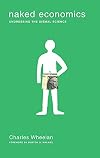
While many of the examples are woefully outdated (published 2002), the concepts are purely timeless. I laughed out loud a couple of times. Well, sometimes because of the outdated examples ("I recently visited a grocery store in Boulder, Colorado, that was experimenting with a self-serve checkout line."); but sometimes because he was just really (deliberately) funny.
And sometimes because I raise Angora goats, and the great mohair subsidy of 1955 that lasted for about 35 years was one of his show more great examples of the power of organized interests to get legislation on the books that is a boon for the interests but way outlives its usefulness and isn't big enough for any non-interested party to get worked up about enough to revoke. Although it seems some people got worked up about the mohair subsidy eventually, it just took 35 years. (We got into the hobby less than a decade too late to sit back and make a tidy living off of it.)
And sometimes I felt personal pride, while reading the whole chapter on the Federal Reserve. While it would be an overstatement to say we've forgotten 9/11, we've forgotten plenty of the details of those first weeks, months, and year of aftermath (again, publication date of this was 2002). "On September 11, 2001, hours after the terrorist attacks on the United States, the Federal Reserve issued the following statement: 'The Federal Reserve System is open and operating. The discount window is available to meet liquidity needs.'" This was his example of simple statements speaking loudly. A simple, calming statement, with not so calm people behind the scenes doing not so simple things to make it so.
What was fantastic about this book was that it had no ax to grind. It's facts and concepts. You judge. This is what government intervention can sometimes do for good. This is what it can sometimes do for ill. Know the basic economics presented in this book first; then maybe you can hold forth with an informed opinion. show less
And sometimes because I raise Angora goats, and the great mohair subsidy of 1955 that lasted for about 35 years was one of his show more great examples of the power of organized interests to get legislation on the books that is a boon for the interests but way outlives its usefulness and isn't big enough for any non-interested party to get worked up about enough to revoke. Although it seems some people got worked up about the mohair subsidy eventually, it just took 35 years. (We got into the hobby less than a decade too late to sit back and make a tidy living off of it.)
And sometimes I felt personal pride, while reading the whole chapter on the Federal Reserve. While it would be an overstatement to say we've forgotten 9/11, we've forgotten plenty of the details of those first weeks, months, and year of aftermath (again, publication date of this was 2002). "On September 11, 2001, hours after the terrorist attacks on the United States, the Federal Reserve issued the following statement: 'The Federal Reserve System is open and operating. The discount window is available to meet liquidity needs.'" This was his example of simple statements speaking loudly. A simple, calming statement, with not so calm people behind the scenes doing not so simple things to make it so.
What was fantastic about this book was that it had no ax to grind. It's facts and concepts. You judge. This is what government intervention can sometimes do for good. This is what it can sometimes do for ill. Know the basic economics presented in this book first; then maybe you can hold forth with an informed opinion. show less
We made an appointment at the local travel clinic. In theory, each of us required a one-hour appointment. We persuaded the clinic to let us all come at once. This was the first trip-related activity we did as a group and it gave us a sense that the adventure was imminent. As we stepped up to the receptionist, I said loudly to CJ [13 y.o. son], "Don't tell them that you have gonorrhea." The woman sitting in the waiting area looked up from her magazine.
CJ exclaimed loudly, "I don't have show more gonorrhea." The receptionist looked up, as did two more people in the waiting area.
"Perfect," I said. "That's very convincing."
"Because I don't have gonorrhea!" CJ yelled. Everyone in the waiting room was now looking at him.
"Dad!" Katrina [18 y.o. daughter] hissed. "You're acting like a nine-year-old." CJ chortled as he caught on. He was amused by a penis-related joke and the fact that we had successfully annoyed Katrina.
"I don't think most nine-year-olds would know what gonorrhea is," I told Katrina.
"That's true," Sophie [16 y.o. daughter] added. CJ chortled some more. Katrina stared straight ahead, refusing to make eye contact with any of us.
"Just ignore them," Leah [wife] admonished.
"Why did you marry him?" Katrina asked accusingly, her nostrils flaring in frustration. "Seriously."
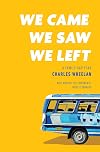
Meet "Team Wheelan": educator parents and three teens who decided to take a "family gap year" back in 2016-17. If you find the author's sense of humor "immature" or "annoying," this is probably not the book for you. If you don't like teens or reading about teens and their emotional drama, this book is not for you. (As a former high school teacher, currently homeschooling my adolescent sons, I really like that age group. And my sense of humor probably reflects that. I laughed out loud at the above passage and many others.)
I'm hoping to make a family trip to South Korea next spring when my sons will be 13 and 15, pandemic allowing. (We lived there when they were very young -- my younger son was born there -- but they don't remember it all all.) This book made me even more eager to take them, and to travel more as a family before they leave the nest. The Wheelans had many hilarious moments and great experiences, but also their share of traveling snafus (including bureaucratic red tape and flesh-eating bacteria) and total family meltdowns. It's all here. (He also discusses many of the details that allowed them to take a "nine month break from life," which he fully admits includes a lot of privilege and good luck.)
The only thing I don't care for is the "starting in the middle" (or sometimes even the end) format that the author often employs in his chapters, apparently to build suspense, but which I found distracting (and more annoying that his sense of humor). Each titled chapter begins with an excerpt from later in the chapter and a map of the area covered in the chapter, before jumping into the "story," often still a ways into the sequence of events, but not up to the excerpt. (That probably sounds even more confusing than it is.) For example, Chapter 4, titled "If You Want Peace, You Won't Get Justice," begins with this excerpt:
Then, the author details the family's arrival in Colombia and their travels which culminate with them attending a "peace concert" in Bogotá, where a police officer comes across the plaza to...tell the author his backpack is unzipped (from removing aforementioned camera). I ended up trying to skip the excerpts at the beginning of each chapter, which is more difficult that it sounds because when my eyes see words, they want to read them.
Overall, this is an entertaining travel memoir, focused more on the family aspect of the trip, while covering a lot of locations. If you want a travelogue or memoir that focuses more on specific places (and/or doesn't include teens and dad jokes), look elsewhere. show less
CJ exclaimed loudly, "I don't have show more gonorrhea." The receptionist looked up, as did two more people in the waiting area.
"Perfect," I said. "That's very convincing."
"Because I don't have gonorrhea!" CJ yelled. Everyone in the waiting room was now looking at him.
"Dad!" Katrina [18 y.o. daughter] hissed. "You're acting like a nine-year-old." CJ chortled as he caught on. He was amused by a penis-related joke and the fact that we had successfully annoyed Katrina.
"I don't think most nine-year-olds would know what gonorrhea is," I told Katrina.
"That's true," Sophie [16 y.o. daughter] added. CJ chortled some more. Katrina stared straight ahead, refusing to make eye contact with any of us.
"Just ignore them," Leah [wife] admonished.
"Why did you marry him?" Katrina asked accusingly, her nostrils flaring in frustration. "Seriously."
Meet "Team Wheelan": educator parents and three teens who decided to take a "family gap year" back in 2016-17. If you find the author's sense of humor "immature" or "annoying," this is probably not the book for you. If you don't like teens or reading about teens and their emotional drama, this book is not for you. (As a former high school teacher, currently homeschooling my adolescent sons, I really like that age group. And my sense of humor probably reflects that. I laughed out loud at the above passage and many others.)
I'm hoping to make a family trip to South Korea next spring when my sons will be 13 and 15, pandemic allowing. (We lived there when they were very young -- my younger son was born there -- but they don't remember it all all.) This book made me even more eager to take them, and to travel more as a family before they leave the nest. The Wheelans had many hilarious moments and great experiences, but also their share of traveling snafus (including bureaucratic red tape and flesh-eating bacteria) and total family meltdowns. It's all here. (He also discusses many of the details that allowed them to take a "nine month break from life," which he fully admits includes a lot of privilege and good luck.)
The only thing I don't care for is the "starting in the middle" (or sometimes even the end) format that the author often employs in his chapters, apparently to build suspense, but which I found distracting (and more annoying that his sense of humor). Each titled chapter begins with an excerpt from later in the chapter and a map of the area covered in the chapter, before jumping into the "story," often still a ways into the sequence of events, but not up to the excerpt. (That probably sounds even more confusing than it is.) For example, Chapter 4, titled "If You Want Peace, You Won't Get Justice," begins with this excerpt:
I took my camera out of my backpack and began shooting. Less than a minute later, an officer across the plaza pointed at me. I was well aware that soldiers and law enforcement types generally do not like to be photographed. The officer began walking in my direction.
Then, the author details the family's arrival in Colombia and their travels which culminate with them attending a "peace concert" in Bogotá, where a police officer comes across the plaza to...tell the author his backpack is unzipped (from removing aforementioned camera). I ended up trying to skip the excerpts at the beginning of each chapter, which is more difficult that it sounds because when my eyes see words, they want to read them.
Overall, this is an entertaining travel memoir, focused more on the family aspect of the trip, while covering a lot of locations. If you want a travelogue or memoir that focuses more on specific places (and/or doesn't include teens and dad jokes), look elsewhere. show less
It’s probably obvious, but Naked Statistics is a book about statistics. Like the title suggests, it strips back the concepts to basics in easy to understand examples. I’ve studied statistics at both undergrad and postgrad level but never really gotten into the depths of analysis. I know about the normal distribution and t- tests and p values but it’s only recently where I’ve had to rely on my knowledge to actually decipher whether studies are useful underneath the analysis. Rather show more than turn to a textbook, I decided to give this book a go after seeing it in a bookshop.
Naked Statistics is definitely more fun than a textbook. It starts with the very basic concepts (mean, median and mode) and works its way up to regression analysis. It builds on the concepts learned and applies them to both realistic and fantastic situations (such as bus hunting for terrorists on the hunt for food. Luckily, it just happens to be the International Festival of Sausage, which calms them down nicely). The equations and letters x, y and n are few and far between (but are included in appendices if you want to revisit them).
My favourite part of the book is the examples. Sometimes they are funny (like the International Festival of Sausage), sometimes the examples are ripped straight from the headlines. It shows the science behind the spin of predicting presidential candidates to whether going to a famous college like Harvard means you will earn more (you won’t). If you already question the media when it comes to polls, the chapter on them will be fascinating. It shows how information can be skewed using statistics to get the result you want. A lot of this relies on the samples taken – ‘garbage in, garbage out’ (i.e. if you choose a biased sample, such as supporters at a Trump rally, of course you will get a high percentage voting for him. This sample is not reflective of the entire American population).
The language that Wheelan uses to describe the concepts is easy to read and easy to understand. I had flashbacks of remembering the dry statistics from uni and it was refreshing to read them described in a different way (which was also way more interesting). I didn’t find it patronising, even the mean/median/mode section (when we had this as a 2 hour postgrad lecture, my friends and I spent the time wandering in and out, buying chips and lollies and writing notes to each other because we deemed ourselves above this). I really wish my lecturers had read this book!
However, you don’t need previous knowledge of statistics to enjoy this book. You will find that you’ve been exposed to a lot of these methods in the world around you. I enjoyed this book so much that I’m going to read Wheelan’s Naked Economics, a subject I know less about (but again, need to learn about for work reasons). I’m sure he’s going to make any subject he turns to interesting.
http://samstillreading.wordpress.com show less
Naked Statistics is definitely more fun than a textbook. It starts with the very basic concepts (mean, median and mode) and works its way up to regression analysis. It builds on the concepts learned and applies them to both realistic and fantastic situations (such as bus hunting for terrorists on the hunt for food. Luckily, it just happens to be the International Festival of Sausage, which calms them down nicely). The equations and letters x, y and n are few and far between (but are included in appendices if you want to revisit them).
My favourite part of the book is the examples. Sometimes they are funny (like the International Festival of Sausage), sometimes the examples are ripped straight from the headlines. It shows the science behind the spin of predicting presidential candidates to whether going to a famous college like Harvard means you will earn more (you won’t). If you already question the media when it comes to polls, the chapter on them will be fascinating. It shows how information can be skewed using statistics to get the result you want. A lot of this relies on the samples taken – ‘garbage in, garbage out’ (i.e. if you choose a biased sample, such as supporters at a Trump rally, of course you will get a high percentage voting for him. This sample is not reflective of the entire American population).
The language that Wheelan uses to describe the concepts is easy to read and easy to understand. I had flashbacks of remembering the dry statistics from uni and it was refreshing to read them described in a different way (which was also way more interesting). I didn’t find it patronising, even the mean/median/mode section (when we had this as a 2 hour postgrad lecture, my friends and I spent the time wandering in and out, buying chips and lollies and writing notes to each other because we deemed ourselves above this). I really wish my lecturers had read this book!
However, you don’t need previous knowledge of statistics to enjoy this book. You will find that you’ve been exposed to a lot of these methods in the world around you. I enjoyed this book so much that I’m going to read Wheelan’s Naked Economics, a subject I know less about (but again, need to learn about for work reasons). I’m sure he’s going to make any subject he turns to interesting.
http://samstillreading.wordpress.com show less
Lists
Awards


You May Also Like


Associated Authors
Statistics
- Works
- 12
- Members
- 3,460
- Popularity
- #7,351
- Rating
- 3.9
- Reviews
- 75
- ISBNs
- 53
- Languages
- 9
- Favorited
- 3