
Robert Woodruff Anderson (1917–2009)
Author of Tea and Sympathy: A Drama in Three Acts
About the Author
Image credit: findagrave.com
Works by Robert Woodruff Anderson
All summer long; a drama in two acts 2 copies
Associated Works
50 Best Plays of the American Theatre, Volume 4 — Contributor — 4 copies
Tagged
Common Knowledge
- Birthdate
- 1917-04-28
- Date of death
- 2009-02-09
- Gender
- male
- Education
- Harvard University
Phillips Exeter Academy - Occupations
- playwright
teacher - Organizations
- United States Navy (WWII)
- Awards and honors
- Bronze Star
American Theatre Hall of Fame (1981) - Nationality
- USA
- Birthplace
- New York, New York, USA
- Places of residence
- New York, New York, USA
- Place of death
- New York, New York, USA
- Associated Place (for map)
- New York, New York, USA
Members
Reviews

A young nun struggles with the nunly virtue of obedience.
Intelligent. And surprisingly engaging even though at times it can feel a little like going to church. Ultimately, it didn't do much for me, I think because we never get any sense of why this woman is a nun in the first place.
Concept: B
Story: B
Characters: B
Dialog: B
Pacing: A
Cinematography: C
Special effects/design: B
Acting: B
Music: C
Enjoyment: C plus
GPA: 2.8/4
Intelligent. And surprisingly engaging even though at times it can feel a little like going to church. Ultimately, it didn't do much for me, I think because we never get any sense of why this woman is a nun in the first place.
Concept: B
Story: B
Characters: B
Dialog: B
Pacing: A
Cinematography: C
Special effects/design: B
Acting: B
Music: C
Enjoyment: C plus
GPA: 2.8/4

I thought I would belatedly add this much-loved and often-read play to my LT collection. I have read it several times over the past forty-some years. I bought this Signet paperback edition in 1970, shortly after seeing the film adaptation with Gene Hackman and Melvyn Douglas, who played the domineering, angry, aging father with faculties that were failing fast. Hackman was equally good, as the ex-Marine son doing his best to help his parents and resolve the longstanding misunderstandings and show more lack of communication between him and his father. Am I praising a book, a play or a film here? It doesn't really matter. If you've never read Robert Anderson's play - or his screenplay - or seen the film, then I urge you to do so. Just as a sample, to perhaps pull you in, here is the opening voice-over, from the son -
"Death ends a life, but it does not end a relationship, which struggles on in the survivor's mind toward some resolution, which it may never find."
Although this is a play about fathers and sons, I think mothers and daughters might find it equally moving and relevant. I'm not going to say any more. Read the play or see the movie. My highest recommendation. show less
"Death ends a life, but it does not end a relationship, which struggles on in the survivor's mind toward some resolution, which it may never find."
Although this is a play about fathers and sons, I think mothers and daughters might find it equally moving and relevant. I'm not going to say any more. Read the play or see the movie. My highest recommendation. show less
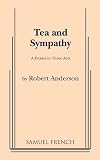
A gem. There is so much interesting and unexpected eroticism at play here... a world in which everyone guesses at everyone else's feelings, and no one seems to know their own.
Minelli does a fine job, and the original Broadway cast, reprising their roles, all do fine work. The problem is that the censors at the Hayes Office made them butcher Tea and Sympathy, as badly as with Cat on a Hot Tin Roof. In the original 1954 play, a teacher takes Tom swimming, then the teacher is fired for being gay, and the other students assume Tom is gay and begin throwing around terms like "queer" and "fairy." The Hollywood 1956 film is reduced to implying he's "less than manly" show more because the other boys see him sewing with the faculty wives. They start calling him "sisterboy." The original play makes clear that the husband of the Deborah Kerr character (played by Leif Erickson in a fine, bravely repellent performance) abets the boys in persecuting Tom because he himself is really gay and in the closet. The film of course cuts her line near the end of the play, which causes the couple to break up: "Did it ever occur to you that you persecute in Tom, that boy up there, you persecute in him the thing you fear in yourself?" The film would be more powerful and less dated and make more sense if Anderson and Minelli had been allowed to leave these things in. But the worst act of Hayes Office butchery does not relate to the issue of homosexuality; it has to do with the fact that the censors felt adultery must never ever seem to be endorsed on-screen. The film is given the framing device of Tom returning to the school at reunion time, and the epilogue, when it gets back to the framing device ... that's rubbish, there for the censors. It has nothing to do with the real story. Wise viewers will switch off after Deborah Kerr's line: "Years from now, when you talk about this, and you will, be kind." That's where the play ends. This was Deborah Kerr's favorite role in all her years of acting, and Laura Reynolds is the character she has said she most identified with. It shows; she does a lovely, heartfelt job. She and John Kerr (no relation) had fine chemistry indeed. show less
Lists
You May Also Like


Associated Authors
Statistics
- Works
- 25
- Also by
- 8
- Members
- 771
- Popularity
- #33,005
- Rating
- 3.7
- Reviews
- 7
- ISBNs
- 56
- Languages
- 2