
Heather Dune Macadam
Author of Rena's Promise: A Story of Sisters in Auschwitz
Works by Heather Dune Macadam
999: The Extraordinary Young Women of the First Official Jewish Transport to Auschwitz (2020) 374 copies, 14 reviews
Tagged
Common Knowledge
- Gender
- female
Members
Reviews

Every Holocaust survivor memoir is a difficult but important read. When she was writing Rena′s Promise, Heather Macadam was asked, ″What′s it to you?″ I find that both an easy and difficult question to answer. To never forget. To honor those lost and those who survived. To try and understand. But I also feel a personal imperative that is difficult to put in words. It′s a self-directed reflection. What would I have done when faced with impossible choices? Where would I have fallen show more on the moral spectrum? Rena Kornreich′s focus was clear: everything she did and the choices she made were to save her little sister, Danka, and bring her home.
Rena was the third oldest of four sisters in a conservative Jewish family living in a small village in Poland. Danka was the baby of the family. When Nazi soldiers began harassing the girls, their parents sent them to stay with relatives in nearby Slovakia where conditions for Jews were slightly better. Unfortunately they ended up on the first registered transport of Jewish women to Auschwitz on March 25, 1942. The two sisters spent the next three years first in Auschwitz, then Birkenau. As liberating armies neared, they were forced on a death march to Ravensbruck in January 1945. These two facts—being on the first transport and surviving three years in the camps—make this memoir stand out from others, but the reason as to why they survived intrigues me too.
In The Train in Winter, Caroline Moorehead discusses how women who were communist were more likely to survive in prison and the concentration camps because they organized for each other. Similarly I think Rena survived in part because she was driven by the thought of bringing her baby sister home to her parents. Protecting her sister gave her a reason to life and continue to fight, when she might otherwise have given up. Nationality also played a cohesive role; several male Polish prisoners were instrumental in supplying the sisters with food and warmer clothing. Finding commonality was key to survival.
Although Rena′s Promise is of necessity dark, it was not a dismal read. Rena focuses on all the people that helped them: from Andrzej, who guided her across the border to Slovakia; to Emma, the work kapo who protected her; to Malek, the Polish captain who provided food and clothing. She also focuses on the love she found before, during, and after the war. Upon finishing the book, I was left with a feeling of hope and happiness, not despair. That's not always the case with these types of memoirs. Recommended. show less
Rena was the third oldest of four sisters in a conservative Jewish family living in a small village in Poland. Danka was the baby of the family. When Nazi soldiers began harassing the girls, their parents sent them to stay with relatives in nearby Slovakia where conditions for Jews were slightly better. Unfortunately they ended up on the first registered transport of Jewish women to Auschwitz on March 25, 1942. The two sisters spent the next three years first in Auschwitz, then Birkenau. As liberating armies neared, they were forced on a death march to Ravensbruck in January 1945. These two facts—being on the first transport and surviving three years in the camps—make this memoir stand out from others, but the reason as to why they survived intrigues me too.
In The Train in Winter, Caroline Moorehead discusses how women who were communist were more likely to survive in prison and the concentration camps because they organized for each other. Similarly I think Rena survived in part because she was driven by the thought of bringing her baby sister home to her parents. Protecting her sister gave her a reason to life and continue to fight, when she might otherwise have given up. Nationality also played a cohesive role; several male Polish prisoners were instrumental in supplying the sisters with food and warmer clothing. Finding commonality was key to survival.
Although Rena′s Promise is of necessity dark, it was not a dismal read. Rena focuses on all the people that helped them: from Andrzej, who guided her across the border to Slovakia; to Emma, the work kapo who protected her; to Malek, the Polish captain who provided food and clothing. She also focuses on the love she found before, during, and after the war. Upon finishing the book, I was left with a feeling of hope and happiness, not despair. That's not always the case with these types of memoirs. Recommended. show less
 This review was written for LibraryThing Early Reviewers.
999: The Extraordinary Young Women of the First Official Jewish Transport to Auschwitz by Heather Dune Macadam
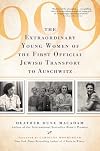
Survival. That is the heart of this moving book. For the young women of the first transport, leaving their homes in Slovakia to do “government service” in 1942, to survive meant to withstand physical, mental, and emotional hardships and cruelty. It meant finding the will to keep living. Starving, sick (typhus, tuberculosis), abused, dehumanized, these young women lived. Those that survived the first 6 months, and then over the next two years somehow avoided dying from illness, being shot show more by the SS for fun, dying from cruel sterilization experiments, and ‘selection’ for the gas chamber, were ultimately part of the final death March. They were not freedom fighters or combatants or troublemakers. They were innocent civilians dragged from their families to be tortured and killed. The fact that any survived to bear witness is a miracle.
This book is an important addition to the historical record of the Holocaust. While we are regularly reminded of the numbers — how many people fit in a cattle car (more than cattle and yet weighed less), how many people were registered in camp and how many went straight to the gas chamber, how many days or weeks or months the girls were assigned to which building, how many Jews remained in a village, town, or city after the authorities rounded people up for transport — that isn’t what makes this book special. The author uses interviews and archives of testimony to help the reader imagine what it was like for these young women. Each difficult choice... Should a person starve or break the rule of kashrut against eating horse meat? Should she fast on Yom Kippur when she is already starving? Should she celebrate Passover and recite the words of freedom when she is a slave? Should she have sex with the SS officer or be shot for refusing? Should she break god’s law by killing herself rather than allowing the SS to take her life? Considering these questions, describing the unbearable choices .. that is the power of this book. show less
This book is an important addition to the historical record of the Holocaust. While we are regularly reminded of the numbers — how many people fit in a cattle car (more than cattle and yet weighed less), how many people were registered in camp and how many went straight to the gas chamber, how many days or weeks or months the girls were assigned to which building, how many Jews remained in a village, town, or city after the authorities rounded people up for transport — that isn’t what makes this book special. The author uses interviews and archives of testimony to help the reader imagine what it was like for these young women. Each difficult choice... Should a person starve or break the rule of kashrut against eating horse meat? Should she fast on Yom Kippur when she is already starving? Should she celebrate Passover and recite the words of freedom when she is a slave? Should she have sex with the SS officer or be shot for refusing? Should she break god’s law by killing herself rather than allowing the SS to take her life? Considering these questions, describing the unbearable choices .. that is the power of this book. show less
[Rena's Promise] by [[Rena Kornreich Gelissen]] and [[Heather Dune Macadam]]
This is an expanded edition of a memoir that was initially released in 1995. New information and verifications have been added, as much more information is available now.
Rena Kornreich was among the first registered transport of Jewish women to Auschwitz (998 women). She was taken there in 1942, at the age of 21, her sister Danka soon followed. They had been illegally in Slovakia (they were Polish), but Rena feared show more what would happen to the people harboring her and turned herself in. Danka followed her example, feeling they should stay together. Both had been fooled as to what life in the camp would entail.
They survived over three years in the camp, including the death march to Ravensbrück. Rena did everything in her power to keep her sister's spirits up, and promised that they would get out. She was resourceful and wise beyond her years, and while her sister came first, she helped others as much as she could, and would not directly harm anyone just to live.
The book is done extremely well. Macadam recorded Rena's story and manages to capture the directness of it without sacrificing readability or quality of writing. The sense of how our memories fracture and compartmentalize and connect is preserved, and footnotes let you know the precise dates of events Rena describes. Even though you know that she and Danka survive, it's a book it's a book you don't want to put down. Rena seems to have been one of those people who is liked by everyone, and the reasons for that come through, I think.
Absolutely recommended. show less
This review was written for LibraryThing Early Reviewers.
Paris in 1940. Amidst the German Occupation, a forbidden romance unfolds between Annette Zelman, a Jewish student at the Beaux-Arts, and Jean Jausion, a young Catholic poet.
I always feel awkward saying I enjoyed reading historical fiction or non-fiction about horrific points in history such as the Holocaust but the excellent writing and research of STAR CROSSED: A TRUE ROMEO AND JULIET STORY IN HITLER’S PARIS did make for a pleasurable read. This is a true story, not fiction. It’s show more absolutely heartbreaking to read what Annette, Jean, their families and communities went through. What I appreciated most about this book is that the authors clearly acknowledge when information is unknown. Research included family letters, interviews, and archival sources. If there was a gap in the narrative, they didn’t just throw in some wild speculation for the sake of shock factor or making it a better sell of the book. That gains my respect. I’m glad that Annette and Jean’s stories had a chance to be told. Their lives were captured so well on page.
I’d highly recommend STAR CROSSED: A TRUE ROMEO AND JULIET STORY IN HITLER’S PARIS to anyone interested in WWII history or those who enjoy reading non-fiction in general. I look forward to checking out the author’s other works. show less
I always feel awkward saying I enjoyed reading historical fiction or non-fiction about horrific points in history such as the Holocaust but the excellent writing and research of STAR CROSSED: A TRUE ROMEO AND JULIET STORY IN HITLER’S PARIS did make for a pleasurable read. This is a true story, not fiction. It’s show more absolutely heartbreaking to read what Annette, Jean, their families and communities went through. What I appreciated most about this book is that the authors clearly acknowledge when information is unknown. Research included family letters, interviews, and archival sources. If there was a gap in the narrative, they didn’t just throw in some wild speculation for the sake of shock factor or making it a better sell of the book. That gains my respect. I’m glad that Annette and Jean’s stories had a chance to be told. Their lives were captured so well on page.
I’d highly recommend STAR CROSSED: A TRUE ROMEO AND JULIET STORY IN HITLER’S PARIS to anyone interested in WWII history or those who enjoy reading non-fiction in general. I look forward to checking out the author’s other works. show less
Lists
Awards


You May Also Like


Associated Authors
Statistics
- Works
- 5
- Members
- 945
- Popularity
- #27,197
- Rating
- 4.4
- Reviews
- 31
- ISBNs
- 49
- Languages
- 10
