
E. R. Chamberlin (1926–2006)
Author of The Bad Popes
About the Author
E. R. Chamberlin was born in Kingston, Jamaica, in 1926, and came to England with his family in 1933. After serving with the Royal Navy he worked on the staff of a public library, then with a government historical section, and finally as an editor at a publishing house before turning professional show more writer show less
Works by E. R. Chamberlin
Rural Rides : An abridgement with biographical introduction by E.R.Chamberlin (1982) — Editor — 9 copies
Survival: The rise, fall and rise of The Guildford Institute of The University of Surrey (1995) 6 copies
Marguerite of Valois: Queen of Navarre and France, 1553-1615 (Women Who Changed the Course of History) (2022) 3 copies
Carisbrooke castle 1 copy
Tagged
Common Knowledge
- Legal name
- Chamberlin, Eric Russell
- Other names
- Chamberlin, Russell
Chamberlin, E. R. - Birthdate
- 1926-05-25
- Date of death
- 2006-12-08
- Gender
- male
- Education
- left school at 14
- Occupations
- historian
librarian
Wireless operator, HMS Magpie - Awards and honors
- M.Univ Surrey University
- Nationality
- UK
- Birthplace
- Kingston, Jamaica
- Places of residence
- Guildford, Surrey, England, UK
- Place of death
- Guildford, Surrey, England, UK
- Associated Place (for map)
- Guildford, Surrey, England, UK
Members
Reviews
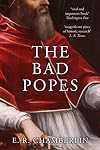
If you thought the Catholic Church was bad already, just read this and you'll realize that the corruption and criminality was built in from the beginning. This is a fascinating tale of seven bad popes, nepotism, murder, lust for money and power, orgies, you name it. Somehow the author seems to maintain some sort of sympathy for the church throughout it all. He shows how the selection of popes was based on nothing more than who could best bribe the selection committee. This book is show more fascinating, but the reader will benefit from at least a little prior knowledge of history. show less
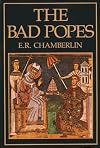
"The fiscal machinery of the church, with its lines passing through the greatest monarchs down to the humblest country priest, was perhaps the most efficient system ever devised for a continent-wide extraction of gold....[John XXII] destroyed the little friars who had arisen with their terrible heresy that Christ and his disciples had been poor men, that the amassing of wealth was contrary to his teaching."
If you're interested in the theology, liturgy, or rites of the Roman Catholic Church, show more this book won't help you. If you're interested in the role of the medieval village priest in the lives and fortunes of his flock, keep moving. In you're interested in a soaring history of Christendom from Bethlehem to its third millennium, you won't find that here.
What you will find is exactly what the book promises: a catalog of the worst excesses of seven of the worst prelates ever to occupy the see of Peter, from the rise of the imperial papacy out of the murk of fallen Rome to the vacillations of Pope Clement VII, whose inept double-dealing lost his empire to the kings of Europe and his flock to the Reformation. If the publishers were to retitle the book for a pop-culture audience, they couldn't do worse than "The Lateran Cantina: A Wretched Hive of Scum and Villainy."
Chamberlin doesn't just offer a peek at the skeletons in the Vatican's closet. He pulls them out of the closet, dresses them in sacerdotal finery, and parades them around the room for your horrified, guilty pleasure. However, thankfully, he is not sensationalistic for the sake of sensationalism. He doesn't drown you with lurid or prurient details to attract late-night pay-cable sensibilities. Frankly, he doesn't need to. When you've got a pope getting beaten to death by a cuckolded husband, you don't need to work that hard to achieve shock value.
What I appreciate is the care Chamberlin takes to present as accurate a history of the bad popes as he can. He's careful to debunk some of the more lurid myths (such as the tale of Pope Joan), and is even willing to credit (possibly) a forgery such as the Donation of Constantine to good intentions. This is not a Protestant screed cleverly disguised as history. It's just history, albeit of a sort which casts an unforgiving light on the simony, nepotism, lewdness, debauchery, greed, and lust for power that so often spattered the late-ancient and medieval papacy.
One can even detect a bit of wistfulness in Chamberlin's account of Pope Celestine V, a poor holy man dragged from his beloved cave to be the cardinals's compromise pope. Here, Chamberlin seems to say, was a man whose morality could have risen to the ideals of his office and brought much-needed reform to a church that badly needed a reformer. What could have been had such men occupied the Lateran Palace more frequently? But honest men were no match for the ruthless politics of the papal court, and Celestine's reign was as brief as it was clumsy.
Indeed, one might conclude that the bishopric's location in the City of Rome foredoomed it. Besieged by powerful Roman families jealous of their ancient privileges, awash in skilled courtiers and double-dealing politicians, the Vatican's fate may have been inevitable, to become nothing more sacred than a weaponized prize for the elite. From the schemes of Roman Senators to the glitz and glam of the Borgias and the Medicis, the history of the throne of Peter is not so much a spiritual meditation as it is a narrative of wealthy and powerful families doing what wealthy and powerful families do: get wealth and power for the family, in order to get more wealth and more power for the family.
"The Bad Popes" is a fast-paced jaunt through the lowest sewers of Christendom, sewers dug by men and women determined to the use the kingdom of Heaven to build a kingdom on Earth. The history of the papacy's multiple nadirs well deserves the 14th-century lament of Giovanni de' Mussi with which the book opens: "How is it possible that there has never been any good pope to remedy such evils and that so many wars have been waged for these transient possessions. Truly we cannot serve God and Mammon at the same time, cannot stand with one foot in Heaven and the other on Earth." show less
If you're interested in the theology, liturgy, or rites of the Roman Catholic Church, show more this book won't help you. If you're interested in the role of the medieval village priest in the lives and fortunes of his flock, keep moving. In you're interested in a soaring history of Christendom from Bethlehem to its third millennium, you won't find that here.
What you will find is exactly what the book promises: a catalog of the worst excesses of seven of the worst prelates ever to occupy the see of Peter, from the rise of the imperial papacy out of the murk of fallen Rome to the vacillations of Pope Clement VII, whose inept double-dealing lost his empire to the kings of Europe and his flock to the Reformation. If the publishers were to retitle the book for a pop-culture audience, they couldn't do worse than "The Lateran Cantina: A Wretched Hive of Scum and Villainy."
Chamberlin doesn't just offer a peek at the skeletons in the Vatican's closet. He pulls them out of the closet, dresses them in sacerdotal finery, and parades them around the room for your horrified, guilty pleasure. However, thankfully, he is not sensationalistic for the sake of sensationalism. He doesn't drown you with lurid or prurient details to attract late-night pay-cable sensibilities. Frankly, he doesn't need to. When you've got a pope getting beaten to death by a cuckolded husband, you don't need to work that hard to achieve shock value.
What I appreciate is the care Chamberlin takes to present as accurate a history of the bad popes as he can. He's careful to debunk some of the more lurid myths (such as the tale of Pope Joan), and is even willing to credit (possibly) a forgery such as the Donation of Constantine to good intentions. This is not a Protestant screed cleverly disguised as history. It's just history, albeit of a sort which casts an unforgiving light on the simony, nepotism, lewdness, debauchery, greed, and lust for power that so often spattered the late-ancient and medieval papacy.
One can even detect a bit of wistfulness in Chamberlin's account of Pope Celestine V, a poor holy man dragged from his beloved cave to be the cardinals's compromise pope. Here, Chamberlin seems to say, was a man whose morality could have risen to the ideals of his office and brought much-needed reform to a church that badly needed a reformer. What could have been had such men occupied the Lateran Palace more frequently? But honest men were no match for the ruthless politics of the papal court, and Celestine's reign was as brief as it was clumsy.
Indeed, one might conclude that the bishopric's location in the City of Rome foredoomed it. Besieged by powerful Roman families jealous of their ancient privileges, awash in skilled courtiers and double-dealing politicians, the Vatican's fate may have been inevitable, to become nothing more sacred than a weaponized prize for the elite. From the schemes of Roman Senators to the glitz and glam of the Borgias and the Medicis, the history of the throne of Peter is not so much a spiritual meditation as it is a narrative of wealthy and powerful families doing what wealthy and powerful families do: get wealth and power for the family, in order to get more wealth and more power for the family.
"The Bad Popes" is a fast-paced jaunt through the lowest sewers of Christendom, sewers dug by men and women determined to the use the kingdom of Heaven to build a kingdom on Earth. The history of the papacy's multiple nadirs well deserves the 14th-century lament of Giovanni de' Mussi with which the book opens: "How is it possible that there has never been any good pope to remedy such evils and that so many wars have been waged for these transient possessions. Truly we cannot serve God and Mammon at the same time, cannot stand with one foot in Heaven and the other on Earth." show less

A compendium of sordid medieval fables and debauched grandiosity that could have been the inspiration for Frederick Rolfe’s megalomaniacal alter-ego Hadrian the Seventh. The contrivers of cruel fortune in Greek tragedy or Shakespeare have nothing on the bad popes—some of whom were contemporaries, and subjects, of Petrarch, Dante, and Machiavelli. Even the virtues of a man like Clement VII, writes Chamberlin, were more disastrous than the vices of other men.
Chamberlin’s prose style is show more well-suited to the material: he recounts episodes of papal avarice, depravity, and self-aggrandizement with a keen detachment and a dry, sardonic wit. Chamberlin’s historiography is also commendable: he carefully situates the authors of the extant source material in relevant proximity to events, and is appropriately skeptical toward accounts by aggrieved enemies and dynastic partisans. It is trivial to note that truth is stranger than fiction, unless the writing is as good as it is here.
The interment of the bones of an early Christian martyr in a pagan cemetery on Vatican Hill and the collusion of Carolingian kings and Roman bishops in the bogus sacralizing of the Donation of Constantine set the stage for the blend of mysticism, mythology, and materialism that came to be embodied by the occupant of the chair of St. Peter. No one can be shocked by the corruption and depravity of those in positions of power within religious institutions, but we can be entertained (as long as the stories are of long-ago, and well told). A few highlights:
Gregory II’s rejection of Byzantine iconoclasm in 726 triggered a war so frightful and bloody that for six years thereafter the inhabitants of the Po valley abstained from eating the fish of the river for fear of involuntary cannibalism.
In an episode known as the Synod horrenda, Pope Stephen VII put on “trial” the corpse of his immediate predecessor Formosus, which was propped on a throne in sacerdotal robes, cursed, found guilty, stripped, hacked away from the three fingers of benediction on the right hand, and finally tossed in the Tiber.
The military campaign of Charles V of Spain against Clement VII was backed by the bottomless coffers of Europe’s greatest banking house, the Fuggers.
In these pages, popes lie, steal, cheat, fornicate, torture, and die grisly deaths. But, writes Chamberlin, the spiritual capacity of each remained unaffected by his temporal activities since, according to Church teachings, “the waters of divine grace continued to pass through him unaffected by the possible foulness of the conduit.”
Chamberlin ends with the sack of Rome in May 1527, at the hands of the enemies of the last Medici pope, and just before the power and fury of the Church was renewed by the Counter-Reformation and the Inquisition. And we all know how that turned out. show less
Chamberlin’s prose style is show more well-suited to the material: he recounts episodes of papal avarice, depravity, and self-aggrandizement with a keen detachment and a dry, sardonic wit. Chamberlin’s historiography is also commendable: he carefully situates the authors of the extant source material in relevant proximity to events, and is appropriately skeptical toward accounts by aggrieved enemies and dynastic partisans. It is trivial to note that truth is stranger than fiction, unless the writing is as good as it is here.
The interment of the bones of an early Christian martyr in a pagan cemetery on Vatican Hill and the collusion of Carolingian kings and Roman bishops in the bogus sacralizing of the Donation of Constantine set the stage for the blend of mysticism, mythology, and materialism that came to be embodied by the occupant of the chair of St. Peter. No one can be shocked by the corruption and depravity of those in positions of power within religious institutions, but we can be entertained (as long as the stories are of long-ago, and well told). A few highlights:
Gregory II’s rejection of Byzantine iconoclasm in 726 triggered a war so frightful and bloody that for six years thereafter the inhabitants of the Po valley abstained from eating the fish of the river for fear of involuntary cannibalism.
In an episode known as the Synod horrenda, Pope Stephen VII put on “trial” the corpse of his immediate predecessor Formosus, which was propped on a throne in sacerdotal robes, cursed, found guilty, stripped, hacked away from the three fingers of benediction on the right hand, and finally tossed in the Tiber.
The military campaign of Charles V of Spain against Clement VII was backed by the bottomless coffers of Europe’s greatest banking house, the Fuggers.
In these pages, popes lie, steal, cheat, fornicate, torture, and die grisly deaths. But, writes Chamberlin, the spiritual capacity of each remained unaffected by his temporal activities since, according to Church teachings, “the waters of divine grace continued to pass through him unaffected by the possible foulness of the conduit.”
Chamberlin ends with the sack of Rome in May 1527, at the hands of the enemies of the last Medici pope, and just before the power and fury of the Church was renewed by the Counter-Reformation and the Inquisition. And we all know how that turned out. show less
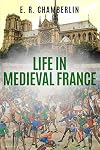
Life in Medieval France by E R Chamberlin is a very good overview and, even with age, is an excellent starting point for anyone wanting to learn more.
I have read several of Chamberlin's books, though none in quite some time, and this slim volume reminded me of what made them worthwhile: wonderful writing and a focused clarity. This is not an academic work, which is neither a positive nor a negative, it is a statement. The rigor and research are present but it is written to inform, engage, show more and entertain in equal proportion. In some ways, many academic writers could have learned a few things from Chamberlin.
Even with scholarship that has shed light on many aspects of the period this book still serves its purpose well. Because it is an overview it is less affected by changes to how we understand some of the smaller details.
While ideal for those looking to start their journey into medieval history, this is also a wonderful book for those who have drilled so deep into a specific area or theme that they sometimes lose track of the bigger picture and the longer view. This volume helps with that.
Reviewed from a copy made available by the publisher via NetGalley. show less
I have read several of Chamberlin's books, though none in quite some time, and this slim volume reminded me of what made them worthwhile: wonderful writing and a focused clarity. This is not an academic work, which is neither a positive nor a negative, it is a statement. The rigor and research are present but it is written to inform, engage, show more and entertain in equal proportion. In some ways, many academic writers could have learned a few things from Chamberlin.
Even with scholarship that has shed light on many aspects of the period this book still serves its purpose well. Because it is an overview it is less affected by changes to how we understand some of the smaller details.
While ideal for those looking to start their journey into medieval history, this is also a wonderful book for those who have drilled so deep into a specific area or theme that they sometimes lose track of the bigger picture and the longer view. This volume helps with that.
Reviewed from a copy made available by the publisher via NetGalley. show less
You May Also Like


Statistics
- Works
- 45
- Members
- 1,618
- Popularity
- #15,920
- Rating
- 3.7
- Reviews
- 20
- ISBNs
- 131
- Languages
- 7