
Hélène Cixous
Author of Three Steps on the Ladder of Writing
About the Author
Born in 1937 in Algeria, Helene Cixous came to Paris, where she is currently professor of English, in 1955. After a dissertation on James Joyce, The Exile of James Joyce (1968), she began to publish novels, critical essays, and plays, most notably Le Portrait de Dora (1976), a feminist retelling of show more a Freudian case history. Jacques Derrida has named Helene Cixous the greatest contemporary French writer. Cixous has been an active participant in the development of literary criticism after structuralism and has been a leading figure in the French feminist movement. (Bowker Author Biography) show less
Image credit: Hélène Cixous foto by Sara Gordan
Works by Hélène Cixous
The Writing Notebooks of Helene Cixous (Athlone Contemporary European Thinkers Series) (2004) 29 copies
The Terrible but Unfinished Story of Norodom Sihanouk, King of Cambodia (European Women Writers) (1986) 28 copies, 1 review
White Ink: Interviews on Sex, Text, and Politics (European Perspectives: A Series in Social Thought and Cultural Criticism) (2008) 25 copies, 1 review
Le tablier de Simon Hantaï [Texte imprimé] : Annagrammes ; Suivi de H.C. S.H : lettres (2005) 3 copies
Politics, Ethics and Performance: Hélène Cixous and the Théâtre du Soleil (Anamnesis) (2016) 3 copies
L'Indiade, ou, L'Inde de leurs reves: Et quelques ecrits sur le theatre (French Edition) (1987) 1 copy
Rouen, la trentième nuit de mai '31 [Villeneuve-lès-Avignon, 18 juillet 2001] (GALILEE) (2001) 1 copy
Souffles 1 copy
Lengua por venir / Langue à venir: Seminario de Barcelona (Ακαδημεια) (Spanish and French Edition) (2004) 1 copy
Prénoms de personne 1 copy
HIPERSUE¥O 1 copy
Associated Works
An Algerian Childhood: A Collection of Autobiographical Narratives (1997) — Author — 29 copies, 1 review
HOW(ever), Vol. VI, No. 1, January 1990 — Contributor — 1 copy
Tagged
Common Knowledge
- Canonical name
- Cixous, Hélène
- Legal name
- Cixous, Hélène
- Other names
- Cixous, Helene
- Birthdate
- 1937-06-05
- Gender
- female
- Education
- Lycée Lakanal
University of Bordeaux - Occupations
- professor
critic
novelist
playwright
philosopher
autobiographer (show all 7)
feminist - Organizations
- University of Paris VIII
Northwestern University
University of Bordeaux
University of Nanterre
European Graduate School, Saas-Fee, Switzerland - Awards and honors
- Légion d'Honneur (1994)
Ordre national du Mérite (1998) - Relationships
- Derrida, Jacques (friend)
- Short biography
- Hélène Cixous was born in Oran, Algeria, to Jewish parents. Her mother was a refugee from Nazi Germany, and her father came from a family that had reached Algeria after expulsion of Jews from Spain. Hélène, who never thought she was at home in Algeria, often draws on her own and her family's circumstances and life experiences with colonialism and anti-Semitism in her work. She attended secondary school in Algiers. In 1955, she married Guy Berger, a philosophy teacher, with whom she had three children. The couple moved to Paris, where she attended the Lycée Lakanal, in which she was the only North African student in her class. The following year, her husband was assigned a teaching position in Bordeaux, where she began to prepare for the agrégation (highest level teachers' exam) in English literature. She obtained a secondary school teaching diploma in English and then the agrégation soon afterwards. In 1960, she began to work on a thesis on James Joyce and in 1962 was named assistant teacher at the University of Bordeaux. In Paris, she met Jacques Derrida, another Jewish-Algerian-French intellectual. Their talks on James Joyce were the beginning of a lifelong friendship. They co-authored several books and texts on each other's work. In 1963, she made her first trip to the USA, where she did research on Joyce's manuscripts and met Jacques Lacan, with whom she worked regularly on Joyce. In 1964, Hélène and her husband divorced, and a year later she became assistant lecturer at the Sorbonne. In 1967, she published her first book of fiction, Le Prénom du Dieu (God’s First Name) and was appointed full professor at the University of Nanterre. She was charged by the Ministry of Education with creating the experimental University of Paris VIII. Under her leadership, a number of exiled Latin-American writers and groundbreaking scholars such as Gérard Genette, Tzvetan Todorov, and Michel Foucault received teaching positions. With Genette and Todorov, she launched the journal Poétique in 1968. That same year, she finally defended her thesis on James Joyce and earned her Ph.D. She then was named professor of English literature at Paris VIII and won the prestigious Prix Médicis for her second book of fiction, Dedans (Inside). In 1974, she set up the first doctoral program in women’s studies in Europe. In 1975, she published her first play, Portrait de Dora (Portrait of Dora), which was critically acclaimed and ran for a year at the Théâtre d’Orsay. Over the next two decades, she became internationally recognized, and received numerous prestigious awards, including one for helping to promote the works of the Jewish-Russian-Brazilian writer Clarice Lispector. She published some 70 works, including 23 volumes of poems, six books of essays, five plays, and numerous scholarly articles. She lectured in Europe, the UK, and the USA. In 1989, she collaborated on the film La Nuit Miraculeuse (The Miraculous Night). She published a series of autobiographical books, exploring relatives and places from her childhood. In 2008, she was appointed Professor-at-Large at Cornell University.
- Nationality
- France
- Birthplace
- Oran, Algeria
- Places of residence
- Oran, Algeria
Paris, France
Bordeaux, Gironde, Nouvelle-Aquitaine, France - Associated Place (for map)
- France
Members
Reviews
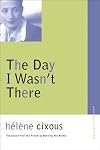
Hélène Cixous is the greatest writer/thinker of the last 50-ish years. There have been great writers who don't think as well, and I love some of their books just as much. And great thinkers who do not write as well, and I appreciate their efforts, at times. But Cixous is a great modern thinker because like the Rodin sculpture, she thinks with her whole body, thrust forward. Not only in the mind, headcase, skull-numbed knocker, but also the visceral venereal contagion of the body, and the show more emotional rut and rot of the gut, she is a full-body thinker. Which is fine and good, but how often do you find someone like that who can also match such thinking-skills with writing-skills?
For that is exactly how you must read her, with your own full intellect, emotion, and bodily-thrust. That is the only way to fully comprehend her thought, which is so well-proportioned along all three axis. There have been others with comparable thinking/writing skills, for example Musil is great at both, but then he is a very male thinker. He thinks mostly with his head, and thus he is top-heavy, prone to toppling over if it weren't for his sense-of-humor which keeps him slightly more light-headed than he would otherwise be (this is totally not a dig, Musil being one of my favorite writers).
This book is a personal investigation, a thinking-back to her firstborn son's early death, a coming to terms with something she had not fully thought through before.What gets me in the end is how simple the 'solution' was. Being such an intelligent person, how did she not think to ask her brother for the cause of death? Was it that part of her really didn't want to know, that she was holding out on the answer which she must have suspected right in front of her the whole time? (this would line up with the whole "give me the poison pill but don't tell me that you're going to do it" theme of the book) Or was it that she was thinking in such subtleties that the obvious answer was always out of reach?
This book further solidifies my high opinion of Cixous upon reading her for the first time in [b:Double Oblivion of the Ourang-Outang|17028457|Double Oblivion of the Ourang-Outang|Hélène Cixous|http://d.gr-assets.com/books/1356002739s/17028457.jpg|23344907]. But it also opens up the deep sorrow (or one of the many deep sorrows) that drives her forward. Although there were playful parts, the book as a whole was less 'balanced' than Ourang-Outang, it was a serious personal and emotional journey. Ourang-Outang, on the other hand, though also serious, was the best mix of serious and playful, intellectual and personal, a perfect light-but-not-too-light introduction to her I could have hoped for. Now I can't wait to read all the others.
For that is exactly how you must read her, with your own full intellect, emotion, and bodily-thrust. That is the only way to fully comprehend her thought, which is so well-proportioned along all three axis. There have been others with comparable thinking/writing skills, for example Musil is great at both, but then he is a very male thinker. He thinks mostly with his head, and thus he is top-heavy, prone to toppling over if it weren't for his sense-of-humor which keeps him slightly more light-headed than he would otherwise be (this is totally not a dig, Musil being one of my favorite writers).
It's this human porosity that bothers me and that I can't escape since it is the faith of my skin, the extra sense which is everywhere in my being, this lack of eyelids on the face of the soul, or perhaps this imaginary lack of imaginary lids, this excessive facility I have for catching others, I am caught by persons or things animated or unanimated that I don't even frequent, and even the verb catch I catch or rather I am caught by it, for, note this please, it's not I who wish to change, it's the other who gets his hooks in me for lack of armor. All it takes is for me to be plunged for an hour or less into surroundings where the inevitable occurs--cafe, bus, hair salon, train carriage, recording studio--there must be confinement and envelopment, and there I am stained intoxicated, practically any speaker can appropriate my mental cells and poison my sinuses, shit, idiocies, cruelties, vulgar spite, trash, innumerable particles of human hostility inflame the windows of my brain and I get off the transport sick for days. It isn't the fault of one Eichmann or another. I admit to being guilty of excessive receptivity to mental miasma. The rumor of a word poisons me for a long time. Should I read or hear such and such a turn of phrase or figure of speech, right away I can't breathe my mucous membranes swell up, my lips go dry, I am asthmaticked, sometimes I lose my balance and crash to the ground, or on a chair if perchance one is there, in the incapacity of breathing the unbreathable.But yes, Cixous. . . her writing is very raw, it's like this lidlessness she talks about, it allows you straight into her thinking and emotion with very little membrane in between. And she's quick to dispose of all writing conventions, grammar, and rules in order to convey whatever she wants most directly. Look, she's already abandoned her writing ship. 'Whatever it takes!' she says above the thunderous roar.
But I remember the string beans. The title of the scene would be: "betrayed in the nick of time by a handful of beans snapped too fast." p.99But it is also this ability of hers that makes her books difficult: to read her on multiple levels you must read her both carefully and carelessly. Because you must catch all her senses, you need to slow down to get the intellectual sense, but then you have to go back and read it again fast to get the rush of the words, the intonations and catch of her breath, the whats-said beneath the immediate sense of the words. Just as she herself does constantly when she thinks: as when she thinks about the conversation with her mother, she interprets her words one way but also observes the way she handles the string beans as saying something completely different with her body.
This book is a personal investigation, a thinking-back to her firstborn son's early death, a coming to terms with something she had not fully thought through before.
This book further solidifies my high opinion of Cixous upon reading her for the first time in [b:Double Oblivion of the Ourang-Outang|17028457|Double Oblivion of the Ourang-Outang|Hélène Cixous|http://d.gr-assets.com/books/1356002739s/17028457.jpg|23344907]. But it also opens up the deep sorrow (or one of the many deep sorrows) that drives her forward. Although there were playful parts, the book as a whole was less 'balanced' than Ourang-Outang, it was a serious personal and emotional journey. Ourang-Outang, on the other hand, though also serious, was the best mix of serious and playful, intellectual and personal, a perfect light-but-not-too-light introduction to her I could have hoped for. Now I can't wait to read all the others.
But later, I take the metro under the earth to go to the Cinema. I was going to see a film that I do not want to see but it's a duty I know. Un Specialiste. Repellent name. But impelled by my son the wind and drawn by the word that repels me, pulled this way and that off I go taking the way through the dark. As soon as there is species, special, I grow tense. Going to see the specialist was like delivering my myopia to the Cyclops to size up. More precisely handing my two quivering eyes like two fuzzy-eyed lambs over to be judged. In order to see the film called A Specialist it is necessary to have in your soul a region which is carefully insulated from the rest of your being so that the evil cannot ooze out indefinitely. To say I wanted to see it calls for an explanation: It is precisely the film one especially-does-not-want to see one wants nonetheless to see, just for that reason, because there is refusal repugnance and danger, that's how one day I ended up reading a book I especially-did-not-want to read because the minute I opened it I saw that everything took place in one sanatorium or another, places I force myself not to write satanorium by mistake, because for one reason or another if there is one place in the world I dread more than a prison or camp, because of the evil sorts of metamorphosis that happen to us there, it's the place called by the Latin word sanatorium: And likewise I have a repugnance for the Latin word in French specialiste, and likewise for the same Latin word in German. And in the same way after a losing battle with myself I end up writing a book that I especially-did-not-want to write.show less
At twenty-one years of age I had just discovered the other world of the world, and in a single blow. Nobody had warned us.
Cixous' effort straddles essay and memoir, it is strident and yet remains strophic. It plumbs the distortions of memory in order to frame the short life of her first child, one born with Down's Syndrome. This is sensitive ground for me. What results is a meditation on the definition of life and humanity and whether the edges of both are blurred by pragmatics.
It is often show more inconvenient to have only a dozen pages left when departing for a trip. It helped in this matter that the book was so slight. Cixous maintains a tension, she is of two minds about the legacy of her dead son. I kept that struggle alive for a few days during my conference in New York. I am thankful for that. show less
Cixous' effort straddles essay and memoir, it is strident and yet remains strophic. It plumbs the distortions of memory in order to frame the short life of her first child, one born with Down's Syndrome. This is sensitive ground for me. What results is a meditation on the definition of life and humanity and whether the edges of both are blurred by pragmatics.
It is often show more inconvenient to have only a dozen pages left when departing for a trip. It helped in this matter that the book was so slight. Cixous maintains a tension, she is of two minds about the legacy of her dead son. I kept that struggle alive for a few days during my conference in New York. I am thankful for that. show less
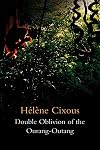
I completely fell for this book, which from the start felt almost like prose poetry. Had I not have read Proust, though, I might've been confused at times—and I know my understanding would've benefited from much greater familiarity with Poe's work. Still: I think it's the *way* Cixous describes or admits to or delves into fears and anxieties and so much more that makes a grasp of the literary references almost secondary, where sheer enjoyment at immersing myself in the text is concerned.
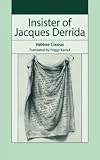
I am not forgetting that each time I call him, designate him, paradigmatically by this name of Derrida, I make as if I knew whom I was talking about or what whereas not at all, I know so little, and in the instant there is one of them, another one, there are so many ones in him that are dissembled beginning with resemblances that ephemeral but vivid but tenuous, and each one uniquely him. 'You know me a little' he says.
This was such an astonishing journey. Should we begin with the title, show more which was Derrida's puny punny name for Cixous? Emergng with similar origins and faiths, both were allowed to simmer and saunter over a lifetime: aside form the predilections, there were/are forces at play which allowed (encouraged?) this philosophical conspiracy. This book straddles elegy and eulogy and somehow escapes the sum. It is constructed with imagined dialogues, stream-of-conscious prose poems and excerpts from texts. It offers the shadow of an altar (alter?) but Inister is only a dream's punch line. This is a haunting text: as it reveals it circles back to an always already appreciation, keeping that impossible distance. I feel fortunate to have spent a day with it. show less
This was such an astonishing journey. Should we begin with the title, show more which was Derrida's puny punny name for Cixous? Emergng with similar origins and faiths, both were allowed to simmer and saunter over a lifetime: aside form the predilections, there were/are forces at play which allowed (encouraged?) this philosophical conspiracy. This book straddles elegy and eulogy and somehow escapes the sum. It is constructed with imagined dialogues, stream-of-conscious prose poems and excerpts from texts. It offers the shadow of an altar (alter?) but Inister is only a dream's punch line. This is a haunting text: as it reveals it circles back to an always already appreciation, keeping that impossible distance. I feel fortunate to have spent a day with it. show less
Awards


You May Also Like


Associated Authors
Statistics
- Works
- 138
- Also by
- 14
- Members
- 2,401
- Popularity
- #10,684
- Rating
- 3.8
- Reviews
- 23
- ISBNs
- 288
- Languages
- 13
- Favorited
- 14

