
Anne Labastille (1935–2011)
Author of Woodswoman: Living Alone in the Adirondack Wilderness
About the Author
Anne LaBastille received a Roger Tory Peterson Award for National Nature Educator in 1994, the Gold Medal from the Society of Women Geographers in 1993, and a Citation of Merit from The Explorers Club. A licensed Adirondack wilderness guide, she lives with her German shepherds in the Adirondack show more Park of upstate New York show less
Series
Works by Anne Labastille
Associated Works
Sisters of the Earth: Women's Prose and Poetry About Nature (1991) — Contributor — 441 copies, 6 reviews
Jo's Girls: Tomboy Tales of High Adventure, True Grit, and Real Life (1997) — Contributor — 48 copies
Tagged
Common Knowledge
- Canonical name
- Labastille, Anne
- Legal name
- LaBastille, Anne
- Birthdate
- 1935-11-20
- Date of death
- 2011-07-01
- Gender
- female
- Education
- Cornell University (B.S.|Conservation|1955)
Colorado State University (M.S.|Wildlife Management|1961)
Cornell University (Ph.D.|Wildlife ecology|1969) - Occupations
- ecologist
photographer
administrator
environmentalist
naturalist - Organizations
- Wild Life Fund
Adirondack Park Agency (commissioner|1975-1993) - Relationships
- LaBastille, Irma (mother)
- Short biography
- Anne LaBastille received her doctorate degree in Wildlife Ecology from Cornell University in 1969. She also held a master's degree in Wildlife Management from Colorado State University, and earned her bachelor's of science in Conservation from Cornell. She was a pioneering environmentalist whose work reached from the USA to Guatemala, and was the author of more than a dozen books. She also wrote more than 150 popular articles and 25 scientific papers. She was a contributing writer to the Sierra Club and National Geographic, as well as many other magazines. Anne LaBastille gave wilderness workshops and lectures for 40 years and served on many conservation organizations in her beloved Adirondack Mountains of New York. She traveled around the world and worked with many nonprofit organizations to study and reduce the destructive effects of pollution on lakes and wildlife. She also was a noted wildlife photographer whose work appeared in many nature publications.
- Nationality
- USA
- Birthplace
- Montclair, New Jersey, USA
- Places of residence
- Twitchell Lake, New York, USA
Plattsburgh, New York, USA - Place of death
- Plattsburgh, New York, USA
- Map Location
- USA
Members
Reviews
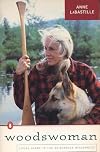
Living in a log cabin in a secluded lakeside woods has probably crossed many people's minds, but in the 60s, LaBastille made it her reality in the Adirondacks.
I loved the details about how her log cabin came together, her daily living situation (gas canisters, truck batteries, cabin upkeep, outhouse situation, meals, dips in the lakes), her initial inexperience with hikes and camping trips (prior to her cabin life) to her later honed expertise, the animals she encounters in and out of her show more home. It is satisfying to know someone is living the life. I do wonder how different this book would be were it to happen now instead. I wonder about how modern technology (snowmobiles being the height of technology back then) would be utilised by a modern-day LaBastille in various situations. I wonder whether there would be more racial diversity in the Adirondacks population (doubtful). I wonder if there is an Australian equivalent.
I did not like the unnatural informercial dialogue (meant to convey the history of the Adirondacks or the author's own ideologies) nor the judgemental tone towards big cities (which is what supports her secluded life with consulting/research work, allows her to break up the loneliness and monotony of the Adirondack winters, and supports employment in the Adirondacks). Many circumstances and life choices had made it possible for LaBastille to live in the Adirondacks wilderness, which I feel could have been expanded upon.
I feel like sometimes when people experience a lot of nature, they start to develop a disregard for the rules of civilisation and their flouting of the rules (set in place for the wellbeing of the general populace and nature etc, not just to police "fun") is excused:
-LaBastille's first (accidental) flouting of the law came when she built her log cabin too close to the shore. She excused it as not having read her contract properly, which is perhaps fair enough, but then the enormity of her anger, turning into daydreams of gleeful violence inflicted on the lawyer who delivered the letter, made me lose sympathy for her;
-The irresponsibility of using the winch as a playground resulting in the hand incident;
-The legality regarding her pets: the cat, the fox which was just released into the wild (which surely is illegal in itself) with no thought to the threat it poses to other creatures/humans, the dog that she smuggled from overseas to avoid quarantine (which made me scream in frustration);
-The questionable ethics of her shooting a bear that was getting riled up by her pet dog and then subsequently feeding bear meat to her friends but not telling them that it was bear meat;
-Her fleeting casual friendships with black people feels more like a defiance to the racism of the Adirondacks in the 60s, less about the actual people she's befriending but more as an act;
-In her retelling of her train-hitchhiking time to Nick, did .. did she at 18yo sit on the 60yo train driver's lap and then roll her eyes at Nick's suggestion that she kissed him? Because it does really seem very suss and unnatural!
-Her complaint about all the city-living people seems very short-sighted. It's like a tourist visiting a tourist-attraction and then complaining about how there's too many tourists about. Not everyone can live in the Adirondacks wilderness, because then it will not be a wilderness but a city, the very thing that she detests .
Still, this will proudly join my small burgeoning collection of nature writing. show less
I loved the details about how her log cabin came together, her daily living situation (gas canisters, truck batteries, cabin upkeep, outhouse situation, meals, dips in the lakes), her initial inexperience with hikes and camping trips (prior to her cabin life) to her later honed expertise, the animals she encounters in and out of her show more home. It is satisfying to know someone is living the life. I do wonder how different this book would be were it to happen now instead. I wonder about how modern technology (snowmobiles being the height of technology back then) would be utilised by a modern-day LaBastille in various situations. I wonder whether there would be more racial diversity in the Adirondacks population (doubtful). I wonder if there is an Australian equivalent.
I did not like the unnatural informercial dialogue (meant to convey the history of the Adirondacks or the author's own ideologies) nor the judgemental tone towards big cities (which is what supports her secluded life with consulting/research work, allows her to break up the loneliness and monotony of the Adirondack winters, and supports employment in the Adirondacks). Many circumstances and life choices had made it possible for LaBastille to live in the Adirondacks wilderness, which I feel could have been expanded upon.
I feel like sometimes when people experience a lot of nature, they start to develop a disregard for the rules of civilisation and their flouting of the rules (set in place for the wellbeing of the general populace and nature etc, not just to police "fun") is excused:
-
-
-
-
-
-
-
Still, this will proudly join my small burgeoning collection of nature writing. show less

With eleven Mayan folktales featuring our feathered friends, and appealing two-tone woodcut illustrations, Bird Kingdom of the Mayas is an engaging collection of stories, sure to appeal to young folklore lovers. Pourquoi tales like How the King of the Birds Was Chosen, which explains how Kukul the quetzal gained his beautiful feathers from Xtun-tun-kinil the roadrunner, and thereby became the ruler of the birds; The Cardinal's Concert, which relates how mockingbirds gained their singing show more ability, while cardinals missed their opportunity; and The Gift to the Hummingbird, which tells of how Tzunuum the hummingbird's virtue was rewarded with many gifts; all point to a rich store of avian folklore, highlighting the importance of bird life to the Maya.
I enjoyed the selections presented by Anne LeBastille Bowes, a naturalist whose work took her all over Latin America and the Caribbean, immensely, and think they will appeal both to bird-lovers and folktale enthusiasts. Anita Benarde's woodcut (I think) illustrations, with black outlines and pink coloring, have an appealingly stylized folk-motif feel to them. All in all, a fun little volume! show less
I enjoyed the selections presented by Anne LeBastille Bowes, a naturalist whose work took her all over Latin America and the Caribbean, immensely, and think they will appeal both to bird-lovers and folktale enthusiasts. Anita Benarde's woodcut (I think) illustrations, with black outlines and pink coloring, have an appealingly stylized folk-motif feel to them. All in all, a fun little volume! show less
This was very inspirational. It's conversational and sometimes boring, too. I kept putting it down to add a first aid kit or ax to my wish list, which I think is a great quality in a book.
To be fair, I read this at least 25 years ago. I've never forgotten it and have lately begun reading about wilderness and survival. This is a must read for anyone thinking this is the life they seek. Sadly, Anne LaBastille died of Alzheimer's several years ago.
Excellent read. Really - the cabin had to be moved!!
Excellent read. Really - the cabin had to be moved!!
Lists
You May Also Like


Associated Authors
Statistics
- Works
- 22
- Also by
- 3
- Members
- 994
- Popularity
- #25,915
- Rating
- 3.8
- Reviews
- 18
- ISBNs
- 36
- Languages
- 1
- Favorited
- 2