
Vance Randolph (1892–1980)
Author of Pissing in the Snow and Other Ozark Folktales
About the Author
Noted folklorist Vance Randolph was born in Pittsburg, Kansas. After attending college at Kansas State Teachers College, Clark University, and the University of Kansas, he worked as a staff writer for Appeal to Reason, as an assistant instructor in psychology at the University of Kansas, and as a show more scenario writer for MGM studios in California before devoting all of his time to freelance writing. Randolph is perhaps one of America's most prolific collectors of folk tales, and he is especially renowned for his study of the Ozarks and that region's ribald folk literature. Because of their bawdy nature, many collectors and compilers have passed over such tales from this region, but Randolph compiled many of them in a work entitled Pissing in the Snow and Other Ozark Folk Tales (1976). His regional specialization has led to a number of other works, including The Ozarks: An American Survival of Primitive Society (1931), From an Ozark Mountain Holler: Stories of Ozark Mountain Folk (1933), Ozark Superstitions (1947), and Sticks in the Knapsack and Other Ozark Folk Tales (1958). Regarding his work on the Ozarks, critics have said that Randolph "gives a sensitive portrayal of a fast-vanishing breed of people . . . [and] insight to a way of life that is rapidly passing" (Choice). (Bowker Author Biography) show less
Image credit: Vance Randolph (cropped) from photo held at Library of Congress.
Series
Works by Vance Randolph
Ozark Folksongs: Volume IV, Religious Songs and Other Items (Volume 4) (Religious Songs & Other Items) (1980) 8 copies
How to know the spiders 3 copies
Physiology self taught 2 copies
Modern philosophers 2 copies
Ozark Folksongs (4 Volume Set) 2 copies
The Bald Knobbers: The Story of the Lawless Knight Riders Who Ruled Southern Missouri in the 80's 2 copies
Ozark Mountain Folks 2 copies
Vance Randolph in the Ozarks 1 copy
An Ozark Anthology 1 copy
Life among the butterflies 1 copy
Life among the ants 1 copy
Tall Tales from the Ozarks 1 copy
Our insect enemies 1 copy
Funny Stories from Arkansas 1 copy
The Camp-Meeting Murders 1 copy
Beekeeping for profit 1 copy
Associated Works
The Magazine of Fantasy and Science Fiction November 1952, Vol. 3, No. 7 (1952) — Contributor — 8 copies
Tagged
Common Knowledge
- Birthdate
- 1892-02-23
- Date of death
- 1980-11-01
- Gender
- male
- Education
- Pittsburg State University
Clark University - Occupations
- folklorist
- Organizations
- American Folklore Society
- Awards and honors
- Fellow, American Folklore Society
- Nationality
- USA
- Birthplace
- Pittsburg, Kansas, USA
- Places of residence
- Worcester, Massachusetts, USA
Pineville, Missouri, USA
Eureka Springs, Arkansas, USA - Place of death
- Fayetteville, Arkansas, USA
- Burial location
- Fayetteville National Cemetery, Fayetteville, Arkansas, USA
- Associated Place (for map)
- USA
Members
Reviews

This is an odd little book, essentially a collection of bawdy stories collected by folklorist Vance Randolph but never included in the scholarly collections because of the subject matter.
It's all dressed up with serious introductions, footnotes, and references, but at its heart (and elsewhere), it's a collection of naughty tales about traveling salesmen, farmers' daughters, dim-witted farm boys, libertine preachers, sexually frustrated widows, brothels, barrooms, and bedrooms, and the show more misadventures that occur therein. Some of the stories may be familiar -- in fact, my dad's favorite blue joke is in there -- and the afterwords following most of the tales trace them back in time, some as far as the middle ages.
Indeed, the ultimate moral may be that there's no such thing as a new dirty joke, so if you're in the mood for a retelling of some blue classics, this is an amusing way to spend an evening. show less
It's all dressed up with serious introductions, footnotes, and references, but at its heart (and elsewhere), it's a collection of naughty tales about traveling salesmen, farmers' daughters, dim-witted farm boys, libertine preachers, sexually frustrated widows, brothels, barrooms, and bedrooms, and the show more misadventures that occur therein. Some of the stories may be familiar -- in fact, my dad's favorite blue joke is in there -- and the afterwords following most of the tales trace them back in time, some as far as the middle ages.
Indeed, the ultimate moral may be that there's no such thing as a new dirty joke, so if you're in the mood for a retelling of some blue classics, this is an amusing way to spend an evening. show less
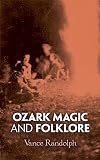
This is a classic study on backwoods folk-magick. It was originally written in the 40s, so the author was able to interview folks who lived in the 1800s. The author lived in the Ozarks (one of the few educated ones) and got to know many of the people he interviewed. He felt it was important that the old lore should be recorded, as most of the practitioners were already elderly or dead -- a dying art. He was able to gain the info because he wasn't an outsider. They would have never spoken a show more word to him if he hadn't been from the area.
It's a wonderful book, though at times it was a tad tedious as it's packed to the gills with info. Some of the best stuff dealt with stories of the mountain witches or "Power Doctors", as they're called back in the hills. The book is 367 pages of strange customs, rituals, spells, beliefs and superstitions. Most of the early white inhabitants of the Ozarks were English stock, so many of their customs and beliefs can be traced back to old British practices. They often used the bible in rituals. However, since very few of them could read, the bible was used as more of a talisman or "spell book" and not in the standard Christian way. The hill folk were (are) strong believers in astrology/the zodiac and would consult the "signs" for everything they did: planting, marriages,.. even repairing a roof or slaughtering a hog. They had their own interpretations, of course. Naturally there aren't any scorpions in the Ozarks, so the hill-folk assumed that the sign of Scorpio was a Crawfish or crawdad and called it the "sign of the Craw Pappy". The early settlers also adopted many local Indian customs and learned tribal medicine. The Ozark hill-folk of the 18th and 19th centuries were a very isolated group and pretty much out of touch with the rest of the world until well into the 20th century. It's very fortunate that the author was able to record all this information before it vanished.
Many of the spells and methods aren't for the squeamish! The spells and folk remedies are truly hardcore backwoods conjure. One can almost imagine some hag stewing an awful brew in some old shack way back in the hills. Want to know a cure for a teething baby? Rub rabbit brains over the babie’s gums. Want to get rid of fleas? Urinate all over your clothes and then wear them all day (it may have something to do with the ammonia). Some of the cursing/hexing rituals were really elaborate and fascinating. These people didn't mess around. If someone hexed you, you were as good as dead. show less
It's a wonderful book, though at times it was a tad tedious as it's packed to the gills with info. Some of the best stuff dealt with stories of the mountain witches or "Power Doctors", as they're called back in the hills. The book is 367 pages of strange customs, rituals, spells, beliefs and superstitions. Most of the early white inhabitants of the Ozarks were English stock, so many of their customs and beliefs can be traced back to old British practices. They often used the bible in rituals. However, since very few of them could read, the bible was used as more of a talisman or "spell book" and not in the standard Christian way. The hill folk were (are) strong believers in astrology/the zodiac and would consult the "signs" for everything they did: planting, marriages,.. even repairing a roof or slaughtering a hog. They had their own interpretations, of course. Naturally there aren't any scorpions in the Ozarks, so the hill-folk assumed that the sign of Scorpio was a Crawfish or crawdad and called it the "sign of the Craw Pappy". The early settlers also adopted many local Indian customs and learned tribal medicine. The Ozark hill-folk of the 18th and 19th centuries were a very isolated group and pretty much out of touch with the rest of the world until well into the 20th century. It's very fortunate that the author was able to record all this information before it vanished.
Many of the spells and methods aren't for the squeamish! The spells and folk remedies are truly hardcore backwoods conjure. One can almost imagine some hag stewing an awful brew in some old shack way back in the hills. Want to know a cure for a teething baby? Rub rabbit brains over the babie’s gums. Want to get rid of fleas? Urinate all over your clothes and then wear them all day (it may have something to do with the ammonia). Some of the cursing/hexing rituals were really elaborate and fascinating. These people didn't mess around. If someone hexed you, you were as good as dead. show less
There's not just magic in the title, there's magic in the writing and reseach behind this book. The author has empathy for the subjects of his study, but he avoids going 'native' His writing, while meticulous and academic is poetry.
This book was a "vector origin" for me. My reading habit for non-fiction is to pick something in a very unfamiliar field, read it, and if I like it, I find more to read in that area. This was my first read on academic folklore. Sad to say - it was also the best. show more Get this. Please. The people studied are amazing; they are almost entirely gone today - but read this and understand how so recently we had people in this country, for whom life was scary, magical, more earthy, much more carnal in all the good ways, and richer than it is for so many of us "rationalists" today. Eating, hunting, growing food, sex, shelter, and fear of age, disease, and the unknown - all with a wonder of the world lost to most of us.
Buy this book. show less
This book was a "vector origin" for me. My reading habit for non-fiction is to pick something in a very unfamiliar field, read it, and if I like it, I find more to read in that area. This was my first read on academic folklore. Sad to say - it was also the best. show more Get this. Please. The people studied are amazing; they are almost entirely gone today - but read this and understand how so recently we had people in this country, for whom life was scary, magical, more earthy, much more carnal in all the good ways, and richer than it is for so many of us "rationalists" today. Eating, hunting, growing food, sex, shelter, and fear of age, disease, and the unknown - all with a wonder of the world lost to most of us.
Buy this book. show less

This could have been a fun little book of bawdy Ozark folktales, assembled by Ozark folklorist Vance Randolph. But someone got hold of it and added comments ("annotations") at the end of each story, explaining the "true" origins of each story, and comparing it to other stories across the ages. It took something amusing and turned it into serious study. I tried to not read the annotations, but I couldn't, and they really detracted from some of the stories.
Awards

You May Also Like


Associated Authors
Statistics
- Works
- 57
- Also by
- 3
- Members
- 901
- Popularity
- #28,453
- Rating
- 3.8
- Reviews
- 8
- ISBNs
- 38
- Favorited
- 1
