
Donald Harrington (1935–2009)
Author of The Architecture of the Arkansas Ozarks
About the Author
Donald Harington was born and raised in Little Rock, Arkansas. He spent nearly all of his early summers in the Ozark mountain hamlet of Drakes Creek. He knew at an early age that he wanted to be a writer, but also wanted to be a teacher. He has taught art history at a variety of colleges in New show more York, New England, South Dakota and finally at his alma mater, the University of Arkansas, Fayetteville, where he lectured for approximately 22 years, until his retirement in 2008. Harington won the Porter Prize in 1987, the Heasley Prize at Lyon College in 1998, was inducted into the Arkansas Writers' Hall of Fame in 1999 and that same year won the Arkansas Fiction Award of Arkansas Library Association. Many of this novels take place in the fictional town of Stay More, which is loosely based on Drakes Creek. Harington died in 2009. (Publisher Fact Sheets) show less
Image credit: DonaldHarington.com
Series
Works by Donald Harrington
The Return 1 copy
Associated Works
Christmas in the South: Holiday Stories from the South's Best Writers (2004) — Contributor — 31 copies, 1 review
Tagged
Common Knowledge
- Canonical name
- Harrington, Donald
- Legal name
- Harington, Donald Douglas
- Birthdate
- 1935-12-22
- Date of death
- 2009-11-07
- Gender
- male
- Education
- University of Arkansas (BA|1956|MFA|1958)
Boston University (MA|1959)
Harvard University - Occupations
- professor
novelist - Organizations
- University of Arkansas
Windham College
Bennett College - Awards and honors
- Robert Penn Warren Award for Fiction (2003)
Oxford American Lifetime Achievement Award (2006)
Arkansas Writers Hall of Fame (1999)
Porter Prize for Literary Excellence (1987)
Heasley Prize (1998)
Arkansas Fiction Award (1999) - Cause of death
- pneumonia
- Nationality
- USA
- Birthplace
- Little Rock, Arkansas, USA
- Places of residence
- Fayetteville, Arkansas, USA
Boston, Massachusetts, USA
Millbrook, New York, USA
Putney, Vermont, USA - Place of death
- Springdale, Arkansas, USA
- Associated Place (for map)
- USA
Members
Reviews
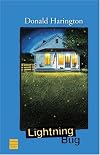
What a strange and entrancing read this was. If Truman Capote and William Faulkner had come back from the dead to contemplate what a real love story might look like, and then written something together in the last ten years or so as a result of that drunken and zombie-ish conversation, I'm betting it would look something like this. Harington's depiction of a small town and a long, strange friendship (romance?!?) is weirdly innocent, and sort of wonderfully fresh at the same time. His humor show more brings every page to life, and yet, the frantic nature of the narrative is never lost because of his careful weaving back and forth from past to present, calm to craze.
No doubt, some of you may read this review, and then read the book, and be a bit horrified that I called it--even in passsing--a love story. And admittedly, I didn't think about it in just those terms until I began thinking about what to say in reaction to this book. The unpolitical, uncomfortable truth is, though, that not all love stories look the same, or look innocent, or even look like love. Some just look like life, oddly lived, and that's what Harington has delivered here. So, don't pick this up because I called it a love story. Pick it up because you love strange southern lit., good books, or books where the plots twist in so many little ways that you can't stop reading, and where the characters pull each moment of its place and turn it around for their own pleasure. show less
No doubt, some of you may read this review, and then read the book, and be a bit horrified that I called it--even in passsing--a love story. And admittedly, I didn't think about it in just those terms until I began thinking about what to say in reaction to this book. The unpolitical, uncomfortable truth is, though, that not all love stories look the same, or look innocent, or even look like love. Some just look like life, oddly lived, and that's what Harington has delivered here. So, don't pick this up because I called it a love story. Pick it up because you love strange southern lit., good books, or books where the plots twist in so many little ways that you can't stop reading, and where the characters pull each moment of its place and turn it around for their own pleasure. show less
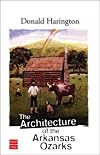
It was Friday night, a week ago. I was in Seoul, alone in my hotel room, facing a long shabbat with nothing to do but read. I started reading this book at 10pm. By the time I went to sleep, at 5am, I was half-way through it. The only reason I stopped was that I wanted to give myself a few more days of pleasure, instead of finishing it all in one go.
This is an epic novel that traces several generations of the Ingledews, the first settlers of the town of Stay More in Arkansas. The town was show more named so by the Indian the brothers met upon arriving in Arkansas (or rather, John met, as Noah was scared shitless of the native and ran to the woods). This Indian, Fanshaw, who spoke English with a British accent, referred to the Ingledew dwelling by this name because John kept telling him politely to "stay more" every time he came to visit. So it is only natural that the town dwellers became knows as the Stay Morons.
This wonderful book has twenty chapters. Each chapter opens with an illustration of a building, and through the story of that building and its distinctive architecture, Harington weaves the tale of Stay More and the Stay Morons. The tale makes its way through the Civil War, the Great Depression and two World Wars, gradually building a world which entrances the reader and makes him fall in love with its inhabitants. These hillibillys, with their simple ways and their reluctance to adapt to PROG RESS, go through good and bad but stay fiercely proud of their home town. The men work hard, which makes them come down with bad cases of the Frakes, a mysterious incapacitating disease that makes life seem utterly pointless, but they also enjoy the simple pleasures in life: hunting, fornicating, or simply sitting around on the porch of the town's general store or mill. The wives are busy producing children and taking care of their homes, although most of them turn out to be much smarter than the men.
The best way I can find to describe this novel is to call it the "American 100 years of Solitude". It will make you laugh aloud, it will make you smile, it will make you ponder life and it will definitely change the way you think about early American settlers and their modern-day offspring. I don't recall how I came by this book and why I bought it, but I'm so thankful I did. show less
This is an epic novel that traces several generations of the Ingledews, the first settlers of the town of Stay More in Arkansas. The town was show more named so by the Indian the brothers met upon arriving in Arkansas (or rather, John met, as Noah was scared shitless of the native and ran to the woods). This Indian, Fanshaw, who spoke English with a British accent, referred to the Ingledew dwelling by this name because John kept telling him politely to "stay more" every time he came to visit. So it is only natural that the town dwellers became knows as the Stay Morons.
This wonderful book has twenty chapters. Each chapter opens with an illustration of a building, and through the story of that building and its distinctive architecture, Harington weaves the tale of Stay More and the Stay Morons. The tale makes its way through the Civil War, the Great Depression and two World Wars, gradually building a world which entrances the reader and makes him fall in love with its inhabitants. These hillibillys, with their simple ways and their reluctance to adapt to PROG RESS, go through good and bad but stay fiercely proud of their home town. The men work hard, which makes them come down with bad cases of the Frakes, a mysterious incapacitating disease that makes life seem utterly pointless, but they also enjoy the simple pleasures in life: hunting, fornicating, or simply sitting around on the porch of the town's general store or mill. The wives are busy producing children and taking care of their homes, although most of them turn out to be much smarter than the men.
The best way I can find to describe this novel is to call it the "American 100 years of Solitude". It will make you laugh aloud, it will make you smile, it will make you ponder life and it will definitely change the way you think about early American settlers and their modern-day offspring. I don't recall how I came by this book and why I bought it, but I'm so thankful I did. show less
This reminded me of [b:One Hundred Years of Solitude|320|One Hundred Years of Solitude|Gabriel García Márquez|https://i.gr-assets.com/images/S/compressed.photo.goodreads.com/books/1327881361l/320._SX50_.jpg|3295655], set in the Ozarks, which is what Mr. Harington set out to write. He has the elements: family saga, tragicomedy, magical realism, uncomfortable portrayals of sex & incest, but in a uniquely 'Merican style. Following the Ingledew family through 140 years and six generations, show more mundane and extraordinary events blend together to create the saga of Stay More, Arkansas.
TAotAO begins in the Antebellum era, when the first Ingledew brothers, Jacob and Noah Ingledew, move from Tennessee to an Arkansas valley, establishing Stay More, named for the phrase Jacob uses whenever a guest is preparing to leave. After the departure of the few remaining native inhabitants (a man named Fanshaw, who learned English from a British geologist, and his squaw), other settlers trickle into the valley. Despite their hereditary inability to talk to women, Jacob and his descendents manage to produce male offspring for six generations. Along the way, several wars change the world around them, although Stay Morons (as the inhabitants are called) try not to get involved in such events, with varying levels of success. A peddler from Connecticut brings outside technology to the valley again and again: clocks, scissors, photography, automobiles, etc, while preachers of various denominations attempt to convert the Stay Morons, with varying levels of success.
Mr. Harington's narrative voice is often excessively academic, discussing at length for instance the origins of the root "arc" and the way it is incorporated into every major word in the book title. In contrast, the lives of his backwoods characters are quite coarse. The narrator occasionally inserts himself into the story, implying that he grew up in Stay More, and at the very end things get very meta, with the narrator and readers becoming part of the story and the tense changing from past to present to future.
Overall, it was an interesting and mostly enjoyable (although sometimes really uncomfortable) read, one which I would recommend for a reading experience very different from the norm, but which I will probably not chose to reread (unlike OHYoS). show less
TAotAO begins in the Antebellum era, when the first Ingledew brothers, Jacob and Noah Ingledew, move from Tennessee to an Arkansas valley, establishing Stay More, named for the phrase Jacob uses whenever a guest is preparing to leave. After the departure of the few remaining native inhabitants (a man named Fanshaw, who learned English from a British geologist, and his squaw), other settlers trickle into the valley. Despite their hereditary inability to talk to women, Jacob and his descendents manage to produce male offspring for six generations. Along the way, several wars change the world around them, although Stay Morons (as the inhabitants are called) try not to get involved in such events, with varying levels of success. A peddler from Connecticut brings outside technology to the valley again and again: clocks, scissors, photography, automobiles, etc, while preachers of various denominations attempt to convert the Stay Morons, with varying levels of success.
Mr. Harington's narrative voice is often excessively academic, discussing at length for instance the origins of the root "arc" and the way it is incorporated into every major word in the book title. In contrast, the lives of his backwoods characters are quite coarse. The narrator occasionally inserts himself into the story, implying that he grew up in Stay More, and at the very end things get very meta, with the narrator and readers becoming part of the story and the tense changing from past to present to future.
Overall, it was an interesting and mostly enjoyable (although sometimes really uncomfortable) read, one which I would recommend for a reading experience very different from the norm, but which I will probably not chose to reread (unlike OHYoS). show less
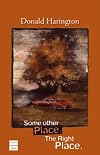
A friend in the publishing business gave me a hardcover copy of this novel in 1973, and I still proudly cherish my first edition copy. The book was a formative read when I was first discovering and building my literary interests. I never really found other of Harington's works in print locally. (just joking, there must still be some around in South Africa) Now, since the digital publication of his nearly complete works by Lake Union Publishing, I can continue my education in Donald show more Harington's universe.
Re-reading 'Some Other Place' 40 years down the line, in such a different era, I am delighted to find that the work is still as fresh, surprising and delightful as it was when I was a young and fresh reader. Initially, I half sceptically expected to be a bit disappointed at times, half fearing that I might find aspects of the book too superficial, too slow for the tempo of movies and novels that we have become used to.
Of course some of the aspects of the Seventies now looks a bit dated, not many would write poetry by hand on scraps of paper today. But Donald Harington never makes you doubt the soundness of the experience of his characters, not even in some other time, this time. His easy power of invention and skill in storytelling charmed me even more than it did before. show less
Re-reading 'Some Other Place' 40 years down the line, in such a different era, I am delighted to find that the work is still as fresh, surprising and delightful as it was when I was a young and fresh reader. Initially, I half sceptically expected to be a bit disappointed at times, half fearing that I might find aspects of the book too superficial, too slow for the tempo of movies and novels that we have become used to.
Of course some of the aspects of the Seventies now looks a bit dated, not many would write poetry by hand on scraps of paper today. But Donald Harington never makes you doubt the soundness of the experience of his characters, not even in some other time, this time. His easy power of invention and skill in storytelling charmed me even more than it did before. show less
Lists
Five star books (1)
Awards


You May Also Like


Associated Authors
Statistics
- Works
- 48
- Also by
- 1
- Members
- 1,518
- Popularity
- #16,944
- Rating
- 4.1
- Reviews
- 36
- ISBNs
- 77
- Languages
- 1
- Favorited
- 15