
Charles Portis (1933–2020)
Author of True Grit
About the Author
Charles Portis lives in Arkansas, where he was born (1933) and educated. Portis served as a reporter for the New York Herald-Tribune and was also its London bureau chief. His first novel, Norwood, was published in 1966. His other novels are True Grit, The Dog of the South, Masters of Atlantis, and show more Gringos. True Grit has been made into a movie two times, once in 1969 with John Wayne (who won his only academy award by playing the main character of Rooster Cogburn), and a second time in 2010 with Jeff Bridges as the main character. Mr. Bridges was nominated for the Rooster Cogburn role, but did not win. Charles Portis died on February 17, 2020 in Little Rock, Arkansas at age 86. He had been under hospice care for two years. (Bowker Author Biography) show less
Works by Charles Portis
Collected Works: Norwood / True Grit / The Dog of the South / Masters of Atlantis / Gringos / Stories & Other Writings (2023) 145 copies, 1 review
The John Wayne Collection: Volume 1: True Grit / Rio Lobo / El Dorado — Writer — 3 copies
A Velha Raposa 1 copy
Stories & Other Writings 1 copy
Portis (Collected Works) 1 copy
Associated Works
The 50 Funniest American Writers: An Anthology of Humor from Mark Twain to The Onion (2011) — Contributor — 287 copies, 3 reviews
Tagged
Common Knowledge
- Legal name
- Portis, Charles McColl
- Birthdate
- 1933-09-28
- Date of death
- 2020-02-17
- Gender
- male
- Education
- University of Arkansas, Fayetteville (BA|1958)
- Occupations
- journalist
author - Organizations
- United States Marine Corps (Korea)
Arkansas Gazette
New York Herald Tribune - Cause of death
- Alzheimer's disease
- Nationality
- USA
- Birthplace
- El Dorado, Arkansas, USA
- Places of residence
- New York, New York, USA
London, England, UK
Little Rock, Arkansas, USA - Place of death
- Little Rock, Arkansas, USA
- Associated Place (for map)
- Arkansas, USA
Members
Discussions
True Grit in Westerns (December 2016)
Reviews

When fourteen-year-old Mattie Ross' father is murdered, she sets out to revenge herself on the killer, hiring a US Marshal with a mean reputation to track him down and then simply and steadfastly refusing to be left behind on the hunt. It's a very simple story, one that goes exactly where it tells you at the outset it's going to go. But it's a surprisingly compelling one. Largely that's due to the main character; the stolid, determined, tough and serious-minded Mattie is a pretty memorable show more gal. But a lot of it also has to do with the voice it's written in. First person narration is something of a literary conceit, really, one that usually requires a certain amount of suspension of disbelief, no matter how unconscious and effortless that might be. Seldom is it truly quite believable that a novel would in fact be told by its main character exactly the way it is told, especially when the character is not herself a professional writer. Not this one, though. Everything about it, from the slightly stilted language to Mattie's not infrequent digressions into political or religious opinions, feels absolutely authentic, as though it could indeed have been written years later by a real person who really lived these experiences. Nothing about it feels the least bit artful or artificial, and yet, as a novel, it reads absolutely smoothly. It's a darned impressive effect. show less
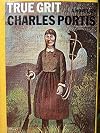
It is the rare book that delivers a unique and complete voice, unadulterated, without shaving off the rough edges. Mattie Ross, Charles Portis’ young teen heroine in [True Grit] is just such a pure voice.
[True Grit] is told entirely by Mattie, re-told really, as though recounting the events toward the end of her life to someone close to her, someone with whom she shared a trust. So, how much of Mattie’s story is accurately reflected in the pages of the book? How much of the antics and show more character of Rooster Cogburn or LaBouef can we believe? How much of the speech and eccentricities of these rough men are true to life? Remember, we are viewing the entire story through the eyes of a lonely, and bitter from the sound of it, spinster who lived through the adventures when she was just fourteen-years-old. And these particular fourteen-year-old eyes are filtered through fundamentalist religion and the politics of 1890’s democrats.
Whether Mattie was an accurate historian or not, her story suggests a deeper issue – are we accurate historians of our own lives? Mattie describes how she left home to attend to the affairs of her recently murdered father. At fourteen, she ties up the loose ends of her father’s legal and business affairs with the acumen we would attribute to someone skilled in the art of ‘fixing.’ She enlists the services of the most brutal man she can find to help her catch a man at the top of his game in the art of con and vice. She hits the trail with this hard-drinking, hair-triggered brute, and manages to tame him somewhere along the trail. With Rooster’s help, and LeBouef’s, she exacts her revenge, and survives a nest of rattlesnakes. If you’re looking for realism, the story itself stretches the boundaries. But, perhaps because it is told by Mattie herself, all of it has the absolute ring of truth. The question is whether it is the truth or the truth that Mattie’s told herself through many years of living alone and caring for an ailing mother.
That question is one we could all put to ourselves. If nothing else, Portis manages to secure Mattie as someone who knows who she is and what has made her who she is. Portis’ subtlety in telling Mattie’s story in her own voice is magical, allowing us to see the hazy light just through the veil of her own peculiarities and grasp the point of her story, and his. Everyone begins to recreate the history of their own lives, re-shaping and excising the outlying facts when they don’t conform to the story we want to tell. In the end, Portis bedevils us all with a story about taming the beasts that lay hidden deep inside of us all. Mattie tames her fears and tames her own strong will to live through the adventure. Mattie helps Rooster to tame his own demons, ones created in blood and immorality. Mattie and Rooster help LaBouef tame his ego and pride to become something greater than himself. So, we forgive Mattie if she doesn’t tell everything just as it happened – just as our friends and family forgive us when the details go awry but the story makes its point; just as we forgive ourselves for re-shaping our own history if it helps us become who we need to be.
On a side note, this particular edition is graced with an afterword by Donna Tartt, she of [The Goldfinch] fame. Tartt explains her own fascination with Portis’ epic Old West tale, finding it the intersection of the frontier with chivalry. With apologies to Ms. Tartt, chivalry was not absent in the frontier, it was everywhere. The point she makes is that Rooster’s nobility seems to arise in his interaction with Mattie and her quest. I believer Portis gives us enough of Rooster’s background to see that he was a noble man at some point, even if he’s lost his way. So, I believe that the point, while well-taken, is slightly missed. My own take is that Roster regains lost nobility that was always there, he is able to tame the demons created by his poor choices, just as Mattie’s own nobility shines through the obsessive will and pride of her character.
Bottom Line: A tale of redemption, of people taming their demons and proving their nobility.
4 ½ bones!!!!! show less
[True Grit] is told entirely by Mattie, re-told really, as though recounting the events toward the end of her life to someone close to her, someone with whom she shared a trust. So, how much of Mattie’s story is accurately reflected in the pages of the book? How much of the antics and show more character of Rooster Cogburn or LaBouef can we believe? How much of the speech and eccentricities of these rough men are true to life? Remember, we are viewing the entire story through the eyes of a lonely, and bitter from the sound of it, spinster who lived through the adventures when she was just fourteen-years-old. And these particular fourteen-year-old eyes are filtered through fundamentalist religion and the politics of 1890’s democrats.
Whether Mattie was an accurate historian or not, her story suggests a deeper issue – are we accurate historians of our own lives? Mattie describes how she left home to attend to the affairs of her recently murdered father. At fourteen, she ties up the loose ends of her father’s legal and business affairs with the acumen we would attribute to someone skilled in the art of ‘fixing.’ She enlists the services of the most brutal man she can find to help her catch a man at the top of his game in the art of con and vice. She hits the trail with this hard-drinking, hair-triggered brute, and manages to tame him somewhere along the trail. With Rooster’s help, and LeBouef’s, she exacts her revenge, and survives a nest of rattlesnakes. If you’re looking for realism, the story itself stretches the boundaries. But, perhaps because it is told by Mattie herself, all of it has the absolute ring of truth. The question is whether it is the truth or the truth that Mattie’s told herself through many years of living alone and caring for an ailing mother.
That question is one we could all put to ourselves. If nothing else, Portis manages to secure Mattie as someone who knows who she is and what has made her who she is. Portis’ subtlety in telling Mattie’s story in her own voice is magical, allowing us to see the hazy light just through the veil of her own peculiarities and grasp the point of her story, and his. Everyone begins to recreate the history of their own lives, re-shaping and excising the outlying facts when they don’t conform to the story we want to tell. In the end, Portis bedevils us all with a story about taming the beasts that lay hidden deep inside of us all. Mattie tames her fears and tames her own strong will to live through the adventure. Mattie helps Rooster to tame his own demons, ones created in blood and immorality. Mattie and Rooster help LaBouef tame his ego and pride to become something greater than himself. So, we forgive Mattie if she doesn’t tell everything just as it happened – just as our friends and family forgive us when the details go awry but the story makes its point; just as we forgive ourselves for re-shaping our own history if it helps us become who we need to be.
On a side note, this particular edition is graced with an afterword by Donna Tartt, she of [The Goldfinch] fame. Tartt explains her own fascination with Portis’ epic Old West tale, finding it the intersection of the frontier with chivalry. With apologies to Ms. Tartt, chivalry was not absent in the frontier, it was everywhere. The point she makes is that Rooster’s nobility seems to arise in his interaction with Mattie and her quest. I believer Portis gives us enough of Rooster’s background to see that he was a noble man at some point, even if he’s lost his way. So, I believe that the point, while well-taken, is slightly missed. My own take is that Roster regains lost nobility that was always there, he is able to tame the demons created by his poor choices, just as Mattie’s own nobility shines through the obsessive will and pride of her character.
Bottom Line: A tale of redemption, of people taming their demons and proving their nobility.
4 ½ bones!!!!! show less

MASTERS OF ATLANTIS | read 2023-09
Portis's flat, journalistic delivery masks a thoroughgoing farce of American culture, and attentive readers steadily come to know more of what's going on than the characters. While Portis uses 3P omniscient throughout, he doesn't employ authorial asides to make this clear, and one result is a distinctive narrative tone. Masters of Atlantis is more serious than deadpan comedy and more sympathetic toward its characters than mockery or ridicule.
Essentially show more Gnomonism --the mystery cult driving the plot-- is rooted in a classic con, but Jimmerson, the believer behind its rise in America, doesn't realise this himself. It's important to note a few things before dismissing Portis's tale as simply a comedy of simpletons duped by nonsense and conned into buying a bill of goods.
● Portis never addresses whether the mysteries are real or not; the closest he gets is in describing the reactions of other characters and currents in American society. The reader is no wiser than the characters on this specific point.
● Jimmerson is described as unfailingly sincere in his efforts at sharing the mysteries with Americans; if Gnomonism isn't "real", Jimmerson at worst is unwitting perpetrator, never shyster. This is not to say the story doesn't treat of shysters nor that the Gnomon Society avoids this part of the American character, merely that the story is not solely or even principally about that.
● The character representing establishment opposition to Gnomonism generally, and Jimmerson and Hen personally, is that of Pharris White, a lawyer, former adept, and current FBI agent every bit as absurd, comical, and inept as any Gnomon. Portis presents us with no America more competent or less absurd than that of the Gnomons.
This story is not about the mysteries purportedly at the heart of Gnomonism, then. It's about people who believe in the mysteries, the people they attempt to win over, others who seek out Gnomons to persuade of other things "more important", and finally the reactions of everyone else these various characters encounter. The bewildering plot and intertwined interests form the North American companion to Foucault's Pendulum, that very Continental novel of secret societies and conspiracies (enticingly published just a few years after Portis's novel).
//
to read:
NORWOOD
TRUE GRIT
DOG OF THE SOUTH
GRINGOS
COLLECTED STORIES
CIVIL RIGHTS REPORTING
ESSAYS
MEMOIR show less
Portis's flat, journalistic delivery masks a thoroughgoing farce of American culture, and attentive readers steadily come to know more of what's going on than the characters. While Portis uses 3P omniscient throughout, he doesn't employ authorial asides to make this clear, and one result is a distinctive narrative tone. Masters of Atlantis is more serious than deadpan comedy and more sympathetic toward its characters than mockery or ridicule.
Essentially show more Gnomonism --the mystery cult driving the plot-- is rooted in a classic con, but Jimmerson, the believer behind its rise in America, doesn't realise this himself. It's important to note a few things before dismissing Portis's tale as simply a comedy of simpletons duped by nonsense and conned into buying a bill of goods.
● Portis never addresses whether the mysteries are real or not; the closest he gets is in describing the reactions of other characters and currents in American society. The reader is no wiser than the characters on this specific point.
● Jimmerson is described as unfailingly sincere in his efforts at sharing the mysteries with Americans; if Gnomonism isn't "real", Jimmerson at worst is unwitting perpetrator, never shyster. This is not to say the story doesn't treat of shysters nor that the Gnomon Society avoids this part of the American character, merely that the story is not solely or even principally about that.
● The character representing establishment opposition to Gnomonism generally, and Jimmerson and Hen personally, is that of Pharris White, a lawyer, former adept, and current FBI agent every bit as absurd, comical, and inept as any Gnomon. Portis presents us with no America more competent or less absurd than that of the Gnomons.
This story is not about the mysteries purportedly at the heart of Gnomonism, then. It's about people who believe in the mysteries, the people they attempt to win over, others who seek out Gnomons to persuade of other things "more important", and finally the reactions of everyone else these various characters encounter. The bewildering plot and intertwined interests form the North American companion to Foucault's Pendulum, that very Continental novel of secret societies and conspiracies (enticingly published just a few years after Portis's novel).
//
to read:
NORWOOD
TRUE GRIT
DOG OF THE SOUTH
GRINGOS
COLLECTED STORIES
CIVIL RIGHTS REPORTING
ESSAYS
MEMOIR show less
I am a hideous Yankee who comes from a whole family of hideous Yankees, so this might be the first cowboy novel — can I call it a western? — that I've ever read. It's terrific. I was also born years after the first version of "True Grit" was filmed, so perhaps it isn't surprising that it was the Cohen Brothers' version of this book that motivated me to sit down and read it. As much as I enjoyed that movie, there are things going on here that the Cohen's didn't — and perhaps couldn't show more — show, and those are covered beautifully in the Donna Tartt's afterword. "True Grit" succeeds because its vision is, in a sense, simultaneously narrow and spacious: its barely teenaged heroine, Mattie Ross, embarks a grand adventure knowing little outside of the rural, frontier environment in which she was raised and the Sunday School lessons that she was taught. She's seen as a rather prim, schoolmarmish figure at the end of the Cohen's film, but it's rather astonishing to realize that this is an attitude that she displays throughout the novel: her extraordinary bravery and her thirst for revenge is not framed by some otherworldly fury but by the practical and moral lessons that her parents imparted to her on their farm. Even while acting as her fathers avenger, she holds forth on cowboy dress codes, good horsemanship, and the arcane differences between various competing forms of American religiosity. Though her thinking is practical and directed, her imaginative mind can sometimes seem remarkably incurious. "True Grit" can seem, in its first half, at least, as revenge as cooked up in a doll's kitchen. At the same time, nothing seems to be missing here: while the older version of Mattie who tells the story largely assumes the attitudes of the young girl she was at the time of these events, her ability to feel, judge, and, perhaps most importantly, act seems unimpeded. The book's universe, and hers, feels marvelously complete.
Of course, this is the Old West, and that doesn't last. The senselessness of her father's death knocks something loose in young Mattie, a slowly manifesting inner strength that Hailee Steinfeld grabbed on to in her wonderful portrayal of this character. While Mattie asks the local constabulary which of the federal marshals assigned to Fort Smith, Arkansas possess "true grit," she is also, of course, on the way to developing her own. In doing so, the novel manages to combine the rough-and-tumble values that we associate with the American Frontier — toughness, resilience, a willingness to use violence with necessary — with the virtues that were more likely to be desired in the women in the time in which Mattie Ross lived. She is, in her own fashion, thrifty, faithful, and chaste, and her break with the social order that this adventure represents was occasioned only by the misfortune that befell her father. Portis makes it quietly clear that Mattie does what she does out of duty, not out of a desire to escape the confines of her own life. This is perhaps why — despite all the death that Mattie witnesses and danger that she faces, "True Grit" can seem a rather gentle book, a story about a young girl and and old lawman trying to restore good order, as best they can, to a world whose moral order has been shaken. Recommended. show less
Of course, this is the Old West, and that doesn't last. The senselessness of her father's death knocks something loose in young Mattie, a slowly manifesting inner strength that Hailee Steinfeld grabbed on to in her wonderful portrayal of this character. While Mattie asks the local constabulary which of the federal marshals assigned to Fort Smith, Arkansas possess "true grit," she is also, of course, on the way to developing her own. In doing so, the novel manages to combine the rough-and-tumble values that we associate with the American Frontier — toughness, resilience, a willingness to use violence with necessary — with the virtues that were more likely to be desired in the women in the time in which Mattie Ross lived. She is, in her own fashion, thrifty, faithful, and chaste, and her break with the social order that this adventure represents was occasioned only by the misfortune that befell her father. Portis makes it quietly clear that Mattie does what she does out of duty, not out of a desire to escape the confines of her own life. This is perhaps why — despite all the death that Mattie witnesses and danger that she faces, "True Grit" can seem a rather gentle book, a story about a young girl and and old lawman trying to restore good order, as best they can, to a world whose moral order has been shaken. Recommended. show less
Lists
Best Audiobooks (1)
Franklit (1)
2025 Books (1)
Best Westerns (1)
Ranking (1)
A Novel Cure (1)
Awards


You May Also Like


Associated Authors
Statistics
- Works
- 15
- Also by
- 4
- Members
- 8,068
- Popularity
- #3,001
- Rating
- 4.0
- Reviews
- 344
- ISBNs
- 168
- Languages
- 11
- Favorited
- 28
