
Alix Kates Shulman
Author of Memoirs of an Ex-Prom Queen
About the Author
Alix Kates Shulman is the author of eleven books, and three other novels, two memoirs, two books on the anarchist Emma Goldman, and three children's books. She divides her time between New York City and Maine
Image credit: photographer, Marion Ettlinger
Works by Alix Kates Shulman
Women's Liberation!: Feminist Writings that Inspired a Revolution & Still Can (2021) 45 copies, 3 reviews
Svñgen Box 1 1 copy
Drinking the Rain: A Memoir 1 copy
Associated Works
Women in the Trees: U.S. Women's Short Stories About Battering and Resistance, 1839-1994 (1996) — Foreword — 45 copies
The Strange History of Suzanne LaFleshe and Other Stories of Women and Fatness (2003) — Foreword — 31 copies, 1 review
Tagged
Common Knowledge
- Canonical name
- Shulman, Alix Kates
- Birthdate
- 1932-08-17
- Gender
- female
- Education
- Columbia University (MA | Philosophy)
- Organizations
- New York Radical Women
Redstockings
WITCH (Women's International Conspiracy from Hell)
New York Radical Feminists
CARASA
No More Nice Girls (member | founder Honolulu, HI branch) (show all 9)
Feminist Futures
Take Back the Future
THEA (The House of Elder Artists | founder) - Awards and honors
- DeWitt Wallace/Readers Digest Fellowship (1979)
American Academy in Rome (visiting artist | 1982)
National Endowment for the Arts Fellowship (Fiction | 1983)
Rockefeller Foundation Center (fellow | Bellagio, Italy | 1998)
Honorary Doctorate (Case Western Reseve | 2001)
Who's Who in America (show all 7)
Feminists Who Changed America - Relationships
- Shulman, Polly
- Nationality
- USA
- Birthplace
- Cleveland, Ohio, USA
- Places of residence
- New York, New York, USA
- Associated Place (for map)
- USA
Members
Reviews

When it was originally published in 1972, Memoirs of an Ex-Prom Queen by Alix Shulman was considered quite shocking, as it ruthlessly exposes what it was like growing up female in middle class America. I have to admit this book made me feel very uncomfortable at times as I often recognized my younger self in some of the main character’s actions. This book writes of a time when women were only considered as reflections of the men in their lives, and they were judged on how well they show more enhanced their fathers, brothers, boyfriend and, later husband’s reputation. Women were possessions, and high expectations were placed on their appearance and behavior. One’s ability to hold a man was considered far more important than their ability to hold a job, and, in most cases, it was a job that a woman took, not a career. Careers were for the men.
I didn’t always agree with the choices that the main character made, it was painfully obvious that she always needed to have the next man in her life lined up before she discarded her current one. But her struggle to find herself amid so many conflicting cultural expectations was told in a strong, witty style that made the subject matter palatable. Above all, this character felt her appearance was the one thing that could open doors and so she pursued beauty at all costs.
Although today things are slowly changing and women expect more of and for themselves than they did, the passages about sexual harassment, job discrimination, double standards and the bind that marriage and motherhood can put on females still rings true. This sardonic portrayal of a white, middle class girl coming-of-age went on to sell over a million copies in the 1970’s and was considered one of the literary works of the woman’s liberation movement. As many of the cultural references are still relevant today, Memoirs of an Ex-Prom Queen continues to resonate with it’s readers and act as a measuring stick to show how far we’ve come and how far we still have to go. show less
I didn’t always agree with the choices that the main character made, it was painfully obvious that she always needed to have the next man in her life lined up before she discarded her current one. But her struggle to find herself amid so many conflicting cultural expectations was told in a strong, witty style that made the subject matter palatable. Above all, this character felt her appearance was the one thing that could open doors and so she pursued beauty at all costs.
Although today things are slowly changing and women expect more of and for themselves than they did, the passages about sexual harassment, job discrimination, double standards and the bind that marriage and motherhood can put on females still rings true. This sardonic portrayal of a white, middle class girl coming-of-age went on to sell over a million copies in the 1970’s and was considered one of the literary works of the woman’s liberation movement. As many of the cultural references are still relevant today, Memoirs of an Ex-Prom Queen continues to resonate with it’s readers and act as a measuring stick to show how far we’ve come and how far we still have to go. show less
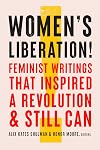
When Betty Friedan published The Feminine Mystique in 1963, the book exploded into women’s consciousness. Before the decade was out, what had begun as a campaign for women’s civil rights transformed into a diverse and revolutionary movement for freedom and social justice that challenged many aspects of everyday life long accepted as fixed: work, birth control and abortion, childcare and housework, gender, class, and race, art and literature, sexuality and identity, rape and domestic show more violence, sexual harassment, pornography, and more. This was the women’s liberation movement, and writing—powerful, personal, and prophetic—was its beating heart.
Fifty years on, in the age of #MeToo and Black Lives Matter, this visionary and radical writing is as relevant and urgently needed as ever, ready to inspire a new generation of feminists. Activists and writers Alix Kates Shulman and Honor Moore have gathered an unprecedented collection of works—many long out-of-print and hard to find—that catalyzed and propelled the women’s liberation movement. Ranging from Friedan’s Feminine Mystique to Backlash, Susan Faludi’s Reagan-era requiem, and framed by Shulman and Moore with an introduction and headnotes that provide historical and personal context, the anthology reveals the crucial role of Black feminists and other women of color in a decades long mass movement that not only brought about fundamental changes in American life—changes too often taken for granted today—but envisioned a thoroughgoing revolution in society and consciousness still to be achieved. - from publishers show less
Fifty years on, in the age of #MeToo and Black Lives Matter, this visionary and radical writing is as relevant and urgently needed as ever, ready to inspire a new generation of feminists. Activists and writers Alix Kates Shulman and Honor Moore have gathered an unprecedented collection of works—many long out-of-print and hard to find—that catalyzed and propelled the women’s liberation movement. Ranging from Friedan’s Feminine Mystique to Backlash, Susan Faludi’s Reagan-era requiem, and framed by Shulman and Moore with an introduction and headnotes that provide historical and personal context, the anthology reveals the crucial role of Black feminists and other women of color in a decades long mass movement that not only brought about fundamental changes in American life—changes too often taken for granted today—but envisioned a thoroughgoing revolution in society and consciousness still to be achieved. - from publishers show less
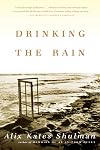
Thoughtful and interesting memoir exploring her growing connection with the natural world beginning at age 50. Shulman's memoir looks back at her early involvement in the feminist movement and reflects on her marriage, but her primary focus is on the time she spends at a rough cabin on a Maine coastal island. Coming from a very active New York City life, she learns to slow down, to forage for mussels, seaweeds, and other wild foods, to live with the rhythms of the changing summer. Without show more central heating (or plumbing, electricity and phone), she leaves each fall to a crumbling marriage or to new work as creative writing teacher. She introduces us to a few friends who influence her to accept the joy she feels living on the island..
Reading someone else's slow awareness of nature made me appreciate my own instinctive need and connection to the natural world which has guided my entire life. I had difficulty relating to (or appreciating) her references to big city life in the first part of the book. The book ends at age 60 as she becomes aware that all is not well with the environment; in increasing amount of trash and pollution is washing up on the shores, yet she is buoyed by the involvement of younger activists as she strives for the balance between acceptance and action. show less
Reading someone else's slow awareness of nature made me appreciate my own instinctive need and connection to the natural world which has guided my entire life. I had difficulty relating to (or appreciating) her references to big city life in the first part of the book. The book ends at age 60 as she becomes aware that all is not well with the environment; in increasing amount of trash and pollution is washing up on the shores, yet she is buoyed by the involvement of younger activists as she strives for the balance between acceptance and action. show less
This book is a great collection of feminist writing but of course it's also much more than that; it's also an attempt to reclaim and to some extent rehabilitate second wave feminism from charges about how white and disconnected from working class women the "movement" was. (Movement in quote marks to delineate the idea of a single movement.) I would say it's a compelling argument, and definitely raises some questions about how we mark off movements of feminism, though I'm not sure it's show more necessarily always useful to take these different concerns and mark them all as "second wave."
My primary Big Beef is the way the text draws a line between "academic feminism" and "regular" feminism, as if many of the pieces in the book--including the writings of Audre Lorde--were not produced for academic conferences. The lines between academic and non-academic are not as neatly drawn as this book might suggest, and I'm not sure who they were intending to exclude--Judith Butler? Joan Scott? (neither of whom I would say were second wave necessarily, and in fact responding to some of the claims that "regular" second wave feminists were making.)
A smaller beef is with some of the explanatory text--which overall I did deeply appreciate, but occasionally important terms like "Third World Woman" were badly contextualized (in that case, stripping the term of any anti-colonial commitments.)
Overall though, my personal nitpicking aside, I think this collection is actually very useful and does make a compelling argument for reexamining our assumptions about what constitutes the "second wave." I think especially for teaching, this collection is really really helpful, and I am glad I read it (and have already used it greatly for finding things for high school students and others to read!) show less
My primary Big Beef is the way the text draws a line between "academic feminism" and "regular" feminism, as if many of the pieces in the book--including the writings of Audre Lorde--were not produced for academic conferences. The lines between academic and non-academic are not as neatly drawn as this book might suggest, and I'm not sure who they were intending to exclude--Judith Butler? Joan Scott? (neither of whom I would say were second wave necessarily, and in fact responding to some of the claims that "regular" second wave feminists were making.)
A smaller beef is with some of the explanatory text--which overall I did deeply appreciate, but occasionally important terms like "Third World Woman" were badly contextualized (in that case, stripping the term of any anti-colonial commitments.)
Overall though, my personal nitpicking aside, I think this collection is actually very useful and does make a compelling argument for reexamining our assumptions about what constitutes the "second wave." I think especially for teaching, this collection is really really helpful, and I am glad I read it (and have already used it greatly for finding things for high school students and others to read!) show less
Lists
Awards


You May Also Like


Associated Authors
Statistics
- Works
- 15
- Also by
- 11
- Members
- 943
- Popularity
- #27,255
- Rating
- 3.8
- Reviews
- 21
- ISBNs
- 69
- Languages
- 6