
Julia Gray
Author of The First Named
About the Author
Disambiguation Notice:
Julia Gray is a pseudonym of Mark and Julia Smith, who also write as Jonathan Wylie.
Image credit: via author's website
Series
Works by Julia Gray
Dark Moon 10 copies
The company states keep : international economic organizations and investor perceptions (2013) 3 copies
The Book about James: The Fourth Book in Betty Collier's Living Inside the Testimony Book Series (2015) 2 copies
Reckless For You 1 copy
The Christmas Snowflake 1 copy
Finn houdt zóo vee van PAPA 1 copy
The ABC of You 1 copy
Associated Works
Tagged
Common Knowledge
- Gender
- female
- Relationships
- Smith, Mark [8] (contributor to shared pen name Julia Gray)
- Disambiguation notice
- Julia Gray is a pseudonym of Mark and Julia Smith, who also write as Jonathan Wylie.
Members
Discussions
Fantasy Novel, Start of a Series in Name that Book (October 2010)
Reviews
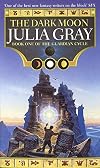
This is a reread for me, which ought to say something in its own right. Despite the very overused plot description, this was actually a very enjoyable book with twists, turns, and an interesting and complex societal structure.
I find it particularly interesting that the main character, Terrell, is disabled, and this is called attention to quite often. Wth a twisted leg and a withered arm, he sometimes has to find ways of doing things that are different than what abled people would do, which show more is a nice touch. Disabled folk don't often get a lot of showtime in epic fantasy novels, somewhat understandably so since it's hard to go off on adventures when your body doesn't work very well. Thus, it's interesting to see Terrel try to get by.
On the flip side, though, some of the disability was glossed over. With such problems, Terrel should have been facing increased energy use, serious pain when sleeping on anything other than a decent bed, and trouble moving over land that isn't particularly flat. Instead, he manages to do things like climbing down mine shafts in the dark. It's not that I'm saying it's impossible to do those things, but I am saying that it would be a lot harder than the author made it sound. Travelling for weeks on end would have been a lot more taxing than the author made it sound!
In spite of this, and a rather overdone-sounding description of the plot, this book manages to pull you in and along rather well. If there's one thing I've noticed about Julia Gray, it's her ability to create and submerge the reader in wonderfully rich and complex cultures. It's her biggest talent, I'd say, when it comes to her novels, and given that I have a pet interest in anthropology, it's not hard to see another aspect of this series that kept me pushing onward to the next paragraph, next chapter, next book.
Another talent of hers is to make people question. There are so many different shades of truth presented in this novel, both from the character's point of view and the reader's. Jax is shown off to the world as the Guardian, but it's obvious to even most other characters that he isn't. Thus we think Terrell's the real Guardian, which has support from other characters in the book. But sometimes events happen that make you question which one may actually be the Guardian after all. Is it neither? Both? There's nothing definitive in this book, or the next book, or the one after that. Though there are hints and pieces of speculation, it isn't entirely revealed until near the end of the fifth and final novel.
Though to be fair, the revelation doesn't come as much of a surprise to anybody apart from a few characters. But the way the author makes you question your assumptions every once in a while is pretty clever sometimes.
If you're in the mood for some epic fantasy that isn't particularly dark (or daunting, as this series is only 5 books long), give this one a whirl. It's light, it's fun, but it's a richer world and story than you'd first think when reading the back of the book. Well worth it, in my opinion. show less
I find it particularly interesting that the main character, Terrell, is disabled, and this is called attention to quite often. Wth a twisted leg and a withered arm, he sometimes has to find ways of doing things that are different than what abled people would do, which show more is a nice touch. Disabled folk don't often get a lot of showtime in epic fantasy novels, somewhat understandably so since it's hard to go off on adventures when your body doesn't work very well. Thus, it's interesting to see Terrel try to get by.
On the flip side, though, some of the disability was glossed over. With such problems, Terrel should have been facing increased energy use, serious pain when sleeping on anything other than a decent bed, and trouble moving over land that isn't particularly flat. Instead, he manages to do things like climbing down mine shafts in the dark. It's not that I'm saying it's impossible to do those things, but I am saying that it would be a lot harder than the author made it sound. Travelling for weeks on end would have been a lot more taxing than the author made it sound!
In spite of this, and a rather overdone-sounding description of the plot, this book manages to pull you in and along rather well. If there's one thing I've noticed about Julia Gray, it's her ability to create and submerge the reader in wonderfully rich and complex cultures. It's her biggest talent, I'd say, when it comes to her novels, and given that I have a pet interest in anthropology, it's not hard to see another aspect of this series that kept me pushing onward to the next paragraph, next chapter, next book.
Another talent of hers is to make people question. There are so many different shades of truth presented in this novel, both from the character's point of view and the reader's. Jax is shown off to the world as the Guardian, but it's obvious to even most other characters that he isn't. Thus we think Terrell's the real Guardian, which has support from other characters in the book. But sometimes events happen that make you question which one may actually be the Guardian after all. Is it neither? Both? There's nothing definitive in this book, or the next book, or the one after that. Though there are hints and pieces of speculation, it isn't entirely revealed until near the end of the fifth and final novel.
Though to be fair, the revelation doesn't come as much of a surprise to anybody apart from a few characters. But the way the author makes you question your assumptions every once in a while is pretty clever sometimes.
If you're in the mood for some epic fantasy that isn't particularly dark (or daunting, as this series is only 5 books long), give this one a whirl. It's light, it's fun, but it's a richer world and story than you'd first think when reading the back of the book. Well worth it, in my opinion. show less
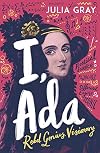
Ada Byron has a disreputable genius of a father and a restrictive mother. Her father lives abroad and dies when she is young but Ada inherits some of his instability as well as her mother's skill for mathematics. Ada longs to break free of society and become that new thing, a scientist, but she has a path mapped out for her by society. When she meets an inventor called Babbage, Ada is inspired and then realises that she can improve his ideas.
I was asked to read this book with a view for it show more to be taken up in a school reading programme and I do intend to recommend it. The language is age appropriate and the story very much appealing to the 'Bridgerton' fans with added science. Gray is unable to avoid the scandal associated with Byron himself but it is handled sensitively. show less
I was asked to read this book with a view for it show more to be taken up in a school reading programme and I do intend to recommend it. The language is age appropriate and the story very much appealing to the 'Bridgerton' fans with added science. Gray is unable to avoid the scandal associated with Byron himself but it is handled sensitively. show less
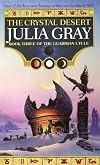
I've always thought that Julia Gray's greatest strength in writing is her skill with worldbuilding, and it's very much evident in this book. Here we have Terrel seeing a land and people unlike any he's ever known, a desert-dwelling nomadic tribe. If the people he met in the previous book were strange to him, well, they have nothing on the people of Misrah. The culture was obviously heavily inspired by traditional Arabic peoples, though artistic license was obviously taken.
The greatest show more detriment to this novel is that its story is much the same as in the previous two books, and the same as what shall be found in the following two also. Terrel meets new and strange people, talks to ghosts, finds out about the Ancient living in that area, and crontrives a way to get to it, talk to it, and save people from the negative effects it's causing. It starts to read much like a kid's TV show, only one where the villian of the week is pretty much the same as the villain of last week.
But here's the thing: the world the author builds is such an interesting one that just finding out more about the cultures and the land and events is what keeps you pushing past the rehashed plot, keeps you turning pages, and keeps you interested. Little by little, more revelations are made, more speculations are tossed around, and in spite of a bit of predictability in places, some of the conclusions that characters reach are pretty original.
This may not be the absolute best of high fantasy. But that doesn't mean it isn't enjoyable to read. I've loved this series ever since I first found it in the library five years ago, and it hasn't suffered for being reread. I like to think that's the mark of a good book. If you don't mind rereading it even when you know everything that's going to happen, then there's got to be something good to say about the book, whether it's the writing, the worldbuilding, the plot, anything. But there's something, and that makes a lot of difference when compared to some books that are on the market.
This is my favourite book of the series, and in no small way because I have a fondness for nomadic desert tribes. Julia Gray gives me what I want to read, makes it entertaining, and leaves me wanting more. show less
The greatest show more detriment to this novel is that its story is much the same as in the previous two books, and the same as what shall be found in the following two also. Terrel meets new and strange people, talks to ghosts, finds out about the Ancient living in that area, and crontrives a way to get to it, talk to it, and save people from the negative effects it's causing. It starts to read much like a kid's TV show, only one where the villian of the week is pretty much the same as the villain of last week.
But here's the thing: the world the author builds is such an interesting one that just finding out more about the cultures and the land and events is what keeps you pushing past the rehashed plot, keeps you turning pages, and keeps you interested. Little by little, more revelations are made, more speculations are tossed around, and in spite of a bit of predictability in places, some of the conclusions that characters reach are pretty original.
This may not be the absolute best of high fantasy. But that doesn't mean it isn't enjoyable to read. I've loved this series ever since I first found it in the library five years ago, and it hasn't suffered for being reread. I like to think that's the mark of a good book. If you don't mind rereading it even when you know everything that's going to happen, then there's got to be something good to say about the book, whether it's the writing, the worldbuilding, the plot, anything. But there's something, and that makes a lot of difference when compared to some books that are on the market.
This is my favourite book of the series, and in no small way because I have a fondness for nomadic desert tribes. Julia Gray gives me what I want to read, makes it entertaining, and leaves me wanting more. show less
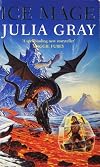
7/10
People often say that good writers show rather than tell. Author Julia Gray sometimes falls into telling rather than showing, yet many of her passages are vivid and evocative.
The main characters, Ico and Andrin, lovers and leaders of the Firebrands, were less fully developed and nuanced than I would have liked, but many of the secondary characters (Vargo, Allegra, Maciot, the Barber, and of course, Kantrowe) were more complex and interesting and played vital roles int the plot.
I'm show more looking forward to reading the sequel at some point. show less
People often say that good writers show rather than tell. Author Julia Gray sometimes falls into telling rather than showing, yet many of her passages are vivid and evocative.
The main characters, Ico and Andrin, lovers and leaders of the Firebrands, were less fully developed and nuanced than I would have liked, but many of the secondary characters (Vargo, Allegra, Maciot, the Barber, and of course, Kantrowe) were more complex and interesting and played vital roles int the plot.
I'm show more looking forward to reading the sequel at some point. show less
Lists
Awards


You May Also Like


Associated Authors
Statistics
- Works
- 40
- Also by
- 1
- Members
- 2,504
- Popularity
- #10,255
- Rating
- 3.3
- Reviews
- 16
- ISBNs
- 83
- Languages
- 4