
Leslie Cabarga
Author of Logo, Font & Lettering Bible
Works by Leslie Cabarga
The Designer's Guide to Global Color Combinations: 750 Color Formulas in CMYK and RGB from Around the World (2001) 67 copies, 1 review
Lively Advertising Cuts of the Twenties and Thirties: 1,102 Illustrations of Animals, Food and Dining, Children, etc. (1990) — Editor — 38 copies
Harvey Comics Classics, Vol. 2: Richie Rich the Poor Little Rich Boy (2007) — Editor — 35 copies, 1 review
Harvey Comics Classics, Vol. 5: The Harvey Girls: Little Audrey, Little Dot & Little Lotta (2009) — Editor — 21 copies, 1 review
Talks with Trees; A Plant Psychic's Interviews with Vegetables, Flowers and Trees (1997) 17 copies, 1 review
Art Deco Advertising 1 copy
Food Designs: 24 Black-and-White Pressure-Sensitive Stickers (Dover Instant Art Stickers) (1993) 1 copy
Associated Works
Manhunt #2 — Contributor — 1 copy
Tagged
Common Knowledge
- Canonical name
- Cabarga, Leslie
- Legal name
- Carbarga, Zavier Leslie
- Birthdate
- 1954-10-09
- Gender
- male
- Occupations
- cartoonist
graphic designer - Places of residence
- Ojai, California, USA
- Associated Place (for map)
- California, USA
Members
Reviews
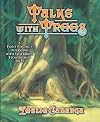
Talks with Trees contains a collection of over thirty "interviews" with many different species of plants and trees including ancient redwoods, a Japanese maple, a garlic bulb, an onion, an apple tree, two heads of lettuce, a purple potato and many more. The author, a spirit channel for over fifteen years, one day realized that if he could successfully make contact with the spirit guides of the many people for whom he provided psychic readings, he might also do the same with the spirits of show more plants and trees.
His first "interviewee" was a potted plant sitting atop a bank counter. While waiting for the teller to return, Leslie Cabarga asked the plant, "How are you?" With the words of the plant's response forming clearly in his head, Cabarga heard, "Oh, not very well. We are trying our best to grow lushly and beautifully for everyone to appreciate but it is hard under the circumstances." As the author writes, "I looked around. Rows of fluorescent lights lined the ceiling. There was no natural illumination. The piped-in air was stagnant. I understood. The plant repeated its intention to do its best and I was struck both by its selfless resolve to fulfill its function, and the lack of resentment over its situation. This delicate little assortment of flowers was a kamikaze of love, fulfilling its obligation to its creator with every ounce of energy, and oblivion its only reward."
Leslie Cabarga then decided that when he'd interviewed at least fifty plants and trees, he would group them into a book. Ultimately the contents were edited down to just over thirty interviews. Author Comments: "Although I occasionally meet with skepticism when I talk about Talks With Trees, I've been gratified and sometimes amazed by the many people I meet who 'come out of the closet' by admitting their own love of trees and nature, and of their own experiences of deep spiritual communion-and conversations-with trees. 'Oh, I always talk to trees!' they'll tell me, 'Why, there was this one tree'
"But nothing amazes me much these days, except the disbelief that so many still have around the subject of spirit communication. I like to ask, 'Hasn't the thought of someone suddenly come into your mind and the next minute the phone rings and it's them? Haven't you ever dreamt an event that later came true? Haven't you ever glimpsed a ghost or heard a noise or voice that you couldn't rationally explain?"
Almost everybody has had experiences of this sort at least once in their lives. And doesn't that indicate that there is more to life than the physical sciences can yet comprehend? show less
His first "interviewee" was a potted plant sitting atop a bank counter. While waiting for the teller to return, Leslie Cabarga asked the plant, "How are you?" With the words of the plant's response forming clearly in his head, Cabarga heard, "Oh, not very well. We are trying our best to grow lushly and beautifully for everyone to appreciate but it is hard under the circumstances." As the author writes, "I looked around. Rows of fluorescent lights lined the ceiling. There was no natural illumination. The piped-in air was stagnant. I understood. The plant repeated its intention to do its best and I was struck both by its selfless resolve to fulfill its function, and the lack of resentment over its situation. This delicate little assortment of flowers was a kamikaze of love, fulfilling its obligation to its creator with every ounce of energy, and oblivion its only reward."
Leslie Cabarga then decided that when he'd interviewed at least fifty plants and trees, he would group them into a book. Ultimately the contents were edited down to just over thirty interviews. Author Comments: "Although I occasionally meet with skepticism when I talk about Talks With Trees, I've been gratified and sometimes amazed by the many people I meet who 'come out of the closet' by admitting their own love of trees and nature, and of their own experiences of deep spiritual communion-and conversations-with trees. 'Oh, I always talk to trees!' they'll tell me, 'Why, there was this one tree'
"But nothing amazes me much these days, except the disbelief that so many still have around the subject of spirit communication. I like to ask, 'Hasn't the thought of someone suddenly come into your mind and the next minute the phone rings and it's them? Haven't you ever dreamt an event that later came true? Haven't you ever glimpsed a ghost or heard a noise or voice that you couldn't rationally explain?"
Almost everybody has had experiences of this sort at least once in their lives. And doesn't that indicate that there is more to life than the physical sciences can yet comprehend? show less
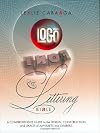
I'm marking this as read, because I've spent hours (seriously, hours) reading and browsing this book, and it has earned a permanent place beside me in my studio, beside my bed to read and read again, and anywhere I have a chance to look at it.
This is a gorgeous book, written with a discreet (usually) sense of humour, and even though it was published in 2004, it is still extremely useful and inspiring. Every single page is eye-catching and interesting. One could possibly say that it is show more sometimes "busy" to look at, but the whole point (I think) of this book, is how to make anything interesting to look at.
I bloody love this book. I'd marry it, if I could. (well, I hope he would...!) show less
This is a gorgeous book, written with a discreet (usually) sense of humour, and even though it was published in 2004, it is still extremely useful and inspiring. Every single page is eye-catching and interesting. One could possibly say that it is show more sometimes "busy" to look at, but the whole point (I think) of this book, is how to make anything interesting to look at.
I bloody love this book. I'd marry it, if I could. (well, I hope he would...!) show less
Harvey Comics Classics Volume 1: Casper the Friendly Ghost (Harvey Comic Classics) (v. 1) by Leslie Cabarga
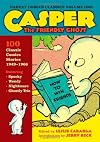
Ok ok ok ok. I read through the first 100 pages or so, but GOLLY, is this comic repetitive. Good thing kids like repetition. Fun stroll down memory lane, though, and amusing...for better or worse, which is why I'm bumping it up to 3 stars. Casper's a sweet guy, just wants to make friends, and I liked all the classic "AIEEEE!" moments of other characters getting spooked by our little friendly ghost. Then there were at least two comics where he tried to kill himself because he couldn't make show more friends. And the one with a Mexican bullfight that mixed Spanish words with a French accent. And an "Eskimo" scene with a totem pole (I'm pretty sure totem poles don't figure into Native cultures that far north?). And all the problems inherent with all that. Ah, the '50s.
********
Counting as my Golden Age comic (the text specifies that the comics in Part I fall under the Golden Age category) for the Panels Read Harder challenge. show less
********
Counting as my Golden Age comic (the text specifies that the comics in Part I fall under the Golden Age category) for the Panels Read Harder challenge. show less
The Designer's Guide to Global Color Combinations: 750 Color Formulas in CMYK and RGB from Around the World by Leslie Cabarga
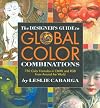
I went with this book instead of The Designer's Guide to Color Combinations because a lot of those sample palettes felt dated. This book takes folk art, modern art, currency, logos, etc. from around the world and breaks them down into palettes, giving the RGB and CMYK for each color. Cabarga also provides other color groups not directly derived from the source material, but of a similar style. Each spread shows the same basic design in each of the 12 color schemes. It's an interesting idea, show more and sometimes it works better than others. Depending on the spread, I feel like 20-30% fall completely flat.
One of the downsides to the "global" approach (particularly with his own combinations) is that many of the palettes come off as markedly "exotic", and could only be used for something very specialized. I would be afraid that the sorts of stereotypes they invoke would distract the viewer from the message. I also can't help but wonder at his choice of source material at times (surely there are better examples of the colors of the "African national spectrum" than a peanut M&M wrapper). His commentary on the source material, too, frequently takes a very patronizing, Western tone and is best ignored.
All this being said, there are some gems in this book with the subtlety and flexibility to be applied to a variety of projects. I'm not sure there's enough to be worth the full price, but it's not bad to have around if you can get it on discount.
(Q) show less
One of the downsides to the "global" approach (particularly with his own combinations) is that many of the palettes come off as markedly "exotic", and could only be used for something very specialized. I would be afraid that the sorts of stereotypes they invoke would distract the viewer from the message. I also can't help but wonder at his choice of source material at times (surely there are better examples of the colors of the "African national spectrum" than a peanut M&M wrapper). His commentary on the source material, too, frequently takes a very patronizing, Western tone and is best ignored.
All this being said, there are some gems in this book with the subtlety and flexibility to be applied to a variety of projects. I'm not sure there's enough to be worth the full price, but it's not bad to have around if you can get it on discount.
(Q) show less
You May Also Like


Associated Authors
Statistics
- Works
- 48
- Also by
- 6
- Members
- 1,142
- Popularity
- #22,480
- Rating
- 3.7
- Reviews
- 13
- ISBNs
- 54
- Languages
- 2
