
Alex Grey
Author of Sacred Mirrors: The Visionary Art of Alex Grey
About the Author
Alex Grey es el autor de Espejos sagrados: El arte visionario de Alex Grey y La mision del arte. Su trabajo se ha exhibido alrededor del mundo, incluyendo el Museo Nuevo y la Galeria Stux en la ciudad de Nueva York, el Gran Palacio en Paris, la Bienal de San Paulo y la exhibicion ARK del espacio, show more en Tokio. En 1995 el Museo de Arte Contemporaneo de San Diego, distinguio a Grey con una retrospectiva sobre la mitad de su carrera. Su arte ha sido exhibido en puntos de reunion tan diversos como el arte de los discos de los Beastie Boys, Nirvana y Tool, la revista Newsweek y Discovery Channel. El vive en Nueva York con su esposa, la artista Allyson Grey, y la hija de ambos, la actriz Zena Grey show less
Image credit: Alex Grey (by Dan Allison, 2006)
Works by Alex Grey
Learning through play 1 copy
World Spirit 1 copy
Associated Works
Theories and Documents of Contemporary Art: A Sourcebook of Artists' Writings (1995) — Contributor — 415 copies, 1 review
Tagged
Common Knowledge
- Canonical name
- Grey, Alex
- Birthdate
- 1953-11-29
- Gender
- male
Members
Reviews
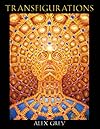
Every once in a great while an artist emerges who does more than simply reflect the social trends of the time. These artists are able to transcend established thinking and help us redefine ourselves and our world. Today, a growing number of art critics, philosophers, and spiritual seekers believe they have found that vision in the art of Alex Grey.
Transfigurations is the eagerly awaited follow-up to Sacred Mirrors, one of the most successful art books of the 1990s. It includes all of Grey's show more major works completed in the past decade, including the masterful seven-paneled altarpiece Nature of Mind, called "the grand climax of Grey's art" by Donald Kuspit. Grey's portrayals of human beings blend scientific exactitude with visionary depictions of universal life energy, leading us on the soul's journey from material world encasement to recovery of our divinely illuminated core. show less
Transfigurations is the eagerly awaited follow-up to Sacred Mirrors, one of the most successful art books of the 1990s. It includes all of Grey's show more major works completed in the past decade, including the masterful seven-paneled altarpiece Nature of Mind, called "the grand climax of Grey's art" by Donald Kuspit. Grey's portrayals of human beings blend scientific exactitude with visionary depictions of universal life energy, leading us on the soul's journey from material world encasement to recovery of our divinely illuminated core. show less
In high school we went to visit Alex Grey at his studio in New York City. The director of our stagecraft department was friends with him. I remember my parents had give me two twenty dollar bills, and with it I was able to purchase the softcover copy of this book. I also remember getting home late that night and spending what felt like hours looking at the illustrations in the book.
For some reason, I haven't gotten around to actually reading many of my of the "coffee-table" style books until show more recently, even though I picked up many of them in my childhood and teenage years. I've found it quite rewarding.
This book summarizes the work of Alex Grey between his birth in 1953 and its publication in 2001. It starts out with what I find to be an extremely dark period in his youth when he worked in a morgue. He relates a chilling story where, after making a mold of a woman's inner ear by pouring molten lead into it, in dreamtime a judge and jury put him on lifelong probation. This was his wakeup call, and his art after this moment is of a new chapter, which draws on human anatomy, but is also highly energetic in its content.
His incident with the molten lead followed by a renaissance reminds me of a period in my youth, when I participated in the dissection of a ram (after his death, as part of an animal husbandry program), contrasted the following weekend by a delightful fling with a woman I was enamored with. Both experiences were full of visceral emotions, as well as unforgettable physical and energetic moments. And, as much of Grey's art depicts, in a way, they represented the dark and the light, polar opposites.
People in peak experience are a common subject of Grey's art. For example, it is very hard not to be touched by the power of paints like Grey's depiction of birth. His work rarely involves nature as its primary subject (plants, animal, fungi), although such being do play supporting roles (especially entheogens).
The words in this book feature a series of essays, many of which are written by Grey's friends. The book features an interview with Ken Wilbur, founder of Integral Theory. Integral is a good representation of Grey's art. Grey is much more focused on the cosmic and the universal as opposed to the specific, the chthonic (aside from in representational form representing temptation and downfall). In this regard, the messaging behind his art are conventional (Christian, Buddhist) rather than indigenous. show less
For some reason, I haven't gotten around to actually reading many of my of the "coffee-table" style books until show more recently, even though I picked up many of them in my childhood and teenage years. I've found it quite rewarding.
This book summarizes the work of Alex Grey between his birth in 1953 and its publication in 2001. It starts out with what I find to be an extremely dark period in his youth when he worked in a morgue. He relates a chilling story where, after making a mold of a woman's inner ear by pouring molten lead into it, in dreamtime a judge and jury put him on lifelong probation. This was his wakeup call, and his art after this moment is of a new chapter, which draws on human anatomy, but is also highly energetic in its content.
His incident with the molten lead followed by a renaissance reminds me of a period in my youth, when I participated in the dissection of a ram (after his death, as part of an animal husbandry program), contrasted the following weekend by a delightful fling with a woman I was enamored with. Both experiences were full of visceral emotions, as well as unforgettable physical and energetic moments. And, as much of Grey's art depicts, in a way, they represented the dark and the light, polar opposites.
People in peak experience are a common subject of Grey's art. For example, it is very hard not to be touched by the power of paints like Grey's depiction of birth. His work rarely involves nature as its primary subject (plants, animal, fungi), although such being do play supporting roles (especially entheogens).
The words in this book feature a series of essays, many of which are written by Grey's friends. The book features an interview with Ken Wilbur, founder of Integral Theory. Integral is a good representation of Grey's art. Grey is much more focused on the cosmic and the universal as opposed to the specific, the chthonic (aside from in representational form representing temptation and downfall). In this regard, the messaging behind his art are conventional (Christian, Buddhist) rather than indigenous. show less
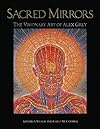
This unique series of paintings takes the viewer on a graphic, visionary journey through the physical and metaphysical anatomy of the self. In his exploration into the nature of man/woman, Alex Grey portrays the nervous, vascular, skeletal and other bodily systems with a disarming, anatomically exact realism. He then passes to spiritual/energetic systems, envisioning the sacred and esoteric symbolism of the body and the forces that define its field of energy.
An interesting and inspiring esoteric view through the visual medium of religion, spirituality and philosophy.
Lists
Books I've Read (1)
Awards

You May Also Like


Associated Authors
Statistics
- Works
- 25
- Also by
- 3
- Members
- 903
- Popularity
- #28,406
- Rating
- 4.1
- Reviews
- 9
- ISBNs
- 37
- Languages
- 4
- Favorited
- 2