
Chris Packham
Author of Fingers in the Sparkle Jar: A Memoir
About the Author
Image credit: Chris Packham
Works by Chris Packham
Chris Packham's Wild Side Of Town: Getting to Know the Wildlife in Our Towns and Cities (The Wildlife Trusts) (2003) 11 copies
Terre grandeur nature : Les chefs-d'oeuvre des plus grands photographes (2005) — Photographer — 3 copies
Tales of a Tabloid Twitcher 1 copy
Associated Works
No. More. Plastic.: What you can do to make a difference - the #2minutesolution (2018) — Foreword — 58 copies, 4 reviews
Wild Maps for Curious Minds: 100 New Ways to See the Natural World (2022) — Foreword — 41 copies, 1 review
The Wildlife Trusts Handbook of Garden Wildlife (Wildlife Trusts Guide Series) (2002) — Foreword — 16 copies
How Nature Works [2012 documentary series] — Narrator — 2 copies
Tagged
Common Knowledge
- Birthdate
- 1961-05-04
- Gender
- male
- Education
- Southampton University, England (Zoology)
- Occupations
- naturalist
documentary filmmaker
photographer - Organizations
- BBC
- Awards and honors
- Order of the British Empire
- Relationships
- Packham, Jenny (sister)
- Nationality
- UK
- Birthplace
- Southampton, Hampshire, England, UK
- Associated Place (for map)
- England, UK
Members
Reviews
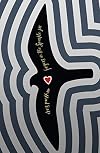
I was repeatedly surprised by Chris Packham’s memoir. First by his writing, which is amazingly lyrical and poetic when describing nature. It’s beautiful, in fact, and really gives the reader an insight into his love of wild creatures. Second, by his raw emotional honesty. Parts of the book, especially those that deal with a suicide attempt, are upsetting and difficult to read. Packham appears to be working through the traumas of his childhood, periodically occupying the point of view of show more others observing his younger self. It’s disconcerting but works. At the centre of the book is his relationship with the kestrel he kept; this reminded me of the excellent [b:H is for Hawk|18803640|H is for Hawk|Helen Macdonald|https://images.gr-assets.com/books/1442151714s/18803640.jpg|26732095]. I found the whole thing powerful and evocative, a very personal account of nature’s wonders and the perils of being different as a child. As usual, I have much less to say about a book that provoked a predominantly emotional rather than intellectual response. show less
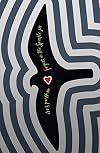
Fingers in the Sparkle Jar is Chris Packham’s highly acclaimed memoir, in which he talks with great honesty about his childhood, his obsession with animals and the natural world, the struggle he had feeling different to other kids, and the depression which led him to contemplate suicide.
“I’m sorry, I haven’t got change of a ladybird.’
The ice-cream man had opened the matchbox expecting a sixpence but instead found a six-spotted beetle that was now scuttling manically over his show more counter, defiantly refusing reinternment in its crisp little cell despite repeated repositioning.”
The structure is somewhat unusual for an autobiography – and yet it really works well. For a start events are not told chronologically – the majority of the book is slowly building to a particular incident in 1975 – which was so painfully life changing for the young Chris. Although this event takes place when he is just fourteen it is related something like 250 pages into the book. By which time, we know Chris well enough to realise just what impact it had. Many sections are actually told in the third person, again this is unusual for an autobiography, in this way we get to know some of his neighbours, an elderly WW1 veteran, kids from school and the ice-cream van man alongside a more distanced view of Chris himself. Other chapters revert to a more conventional first person narrative, which is necessarily more personal and intimate. When I saw Chris Packham interviewed by Horatio Clare at Hay, he explained a little about why he had structured his memoir in this way. He had wanted his adult readers to have an adult perspective of his childhood. The whole thing is beautiful, in prose both lyrical and intimate, it is an unforgettable, coming of age memoir which I think is worth all the hype. The narrative is suffused with Chris Packham’s voice, and his not infrequent wry humour.
“Unfalling, the bird stands chopping air, fluttering and then rolling down smooth, slipping and then sliding away to ring a curve across the storm until it pitches at its apex and begins to dance with the wind, its plumes constantly shaken, folding and flicking to steer it still and… balance broken it tumbles and steadies with a twist of grey – cloud-licked and clean, now measuring the weight of the sky again. Then a drop, deckling wings furling – waiting, rich brown back and freckled front – watching, and then the ground quickly surges up and swallows it into the scrolling grass, sucks it down in a greedy rush. And it’s stopped, nothing happens now.”
The majority of Fingers in the Sparkle Jar tells the story of Chris Packham’s childhood leading up to and including the summer he was fourteen when he acquired a young kestrel and began to train it. From a very young boy Chris was fascinated by all kinds of wildlife. Obsessional, a loner at school, Chris only felt at peace in the open spaces, fields and woods close to his suburban home. His obsessions varied and changed over time, a dinosaur phase replaced by an otter phase, and so on. He collected all manner of tiny creatures in jam jars where they were frequently left to expire in the sun on his window sill. In the company of the young Chris, we taste tadpoles off a spoon, watch fox clubs at dusk, plead to be allowed to see One million years BC (an A rated film, he needed an adult to take him), and visit Portswood Pets almost weekly where he could visit the caiman and the fruit bats he so coveted for his own. Then that summer in 1975 Chris steals a young kestrel from a nest and takes it home to rear and train. The relationship the teenage Chris develops with this bird is life changing, teaching this awkward, frequently frustrated boy, what it means to connect with and love another creature.
“Once at home my father had regained his composure and held it down wrapped in an old tea towel whilst I attached the jesses and bells, the pencil pre-training not counting for much. Then I’d fed it some beef, banished my sister from the room and settled down for what my mother assured me would be a ‘long old night.’ But every minute was magical, every single thing it did was fascinating and everything it didn’t do was equally wondrous, and to be sat there, with a Kestrel, a real live Kestrel, my own real live Kestrel on my wrist! I felt like I’d climbed through a hole in heaven’s fence.”
Alongside the accounts of Chris’s adventures with wild life as a young boy – are some first-hand accounts of sessions with his therapist in 2003 after Chris had come close to taking his own life.
This is an incredible book; I hope Chris Packham continues writing (he referred to some short stories written years ago simply as an exercise for himself during that talk – I for one would love to read them.) If you are reading this book in the future – don’t forget to read the acknowledgements in which Chris pays a lovely tribute to his parents. show less
“I’m sorry, I haven’t got change of a ladybird.’
The ice-cream man had opened the matchbox expecting a sixpence but instead found a six-spotted beetle that was now scuttling manically over his show more counter, defiantly refusing reinternment in its crisp little cell despite repeated repositioning.”
The structure is somewhat unusual for an autobiography – and yet it really works well. For a start events are not told chronologically – the majority of the book is slowly building to a particular incident in 1975 – which was so painfully life changing for the young Chris. Although this event takes place when he is just fourteen it is related something like 250 pages into the book. By which time, we know Chris well enough to realise just what impact it had. Many sections are actually told in the third person, again this is unusual for an autobiography, in this way we get to know some of his neighbours, an elderly WW1 veteran, kids from school and the ice-cream van man alongside a more distanced view of Chris himself. Other chapters revert to a more conventional first person narrative, which is necessarily more personal and intimate. When I saw Chris Packham interviewed by Horatio Clare at Hay, he explained a little about why he had structured his memoir in this way. He had wanted his adult readers to have an adult perspective of his childhood. The whole thing is beautiful, in prose both lyrical and intimate, it is an unforgettable, coming of age memoir which I think is worth all the hype. The narrative is suffused with Chris Packham’s voice, and his not infrequent wry humour.
“Unfalling, the bird stands chopping air, fluttering and then rolling down smooth, slipping and then sliding away to ring a curve across the storm until it pitches at its apex and begins to dance with the wind, its plumes constantly shaken, folding and flicking to steer it still and… balance broken it tumbles and steadies with a twist of grey – cloud-licked and clean, now measuring the weight of the sky again. Then a drop, deckling wings furling – waiting, rich brown back and freckled front – watching, and then the ground quickly surges up and swallows it into the scrolling grass, sucks it down in a greedy rush. And it’s stopped, nothing happens now.”
The majority of Fingers in the Sparkle Jar tells the story of Chris Packham’s childhood leading up to and including the summer he was fourteen when he acquired a young kestrel and began to train it. From a very young boy Chris was fascinated by all kinds of wildlife. Obsessional, a loner at school, Chris only felt at peace in the open spaces, fields and woods close to his suburban home. His obsessions varied and changed over time, a dinosaur phase replaced by an otter phase, and so on. He collected all manner of tiny creatures in jam jars where they were frequently left to expire in the sun on his window sill. In the company of the young Chris, we taste tadpoles off a spoon, watch fox clubs at dusk, plead to be allowed to see One million years BC (an A rated film, he needed an adult to take him), and visit Portswood Pets almost weekly where he could visit the caiman and the fruit bats he so coveted for his own. Then that summer in 1975 Chris steals a young kestrel from a nest and takes it home to rear and train. The relationship the teenage Chris develops with this bird is life changing, teaching this awkward, frequently frustrated boy, what it means to connect with and love another creature.
“Once at home my father had regained his composure and held it down wrapped in an old tea towel whilst I attached the jesses and bells, the pencil pre-training not counting for much. Then I’d fed it some beef, banished my sister from the room and settled down for what my mother assured me would be a ‘long old night.’ But every minute was magical, every single thing it did was fascinating and everything it didn’t do was equally wondrous, and to be sat there, with a Kestrel, a real live Kestrel, my own real live Kestrel on my wrist! I felt like I’d climbed through a hole in heaven’s fence.”
Alongside the accounts of Chris’s adventures with wild life as a young boy – are some first-hand accounts of sessions with his therapist in 2003 after Chris had come close to taking his own life.
This is an incredible book; I hope Chris Packham continues writing (he referred to some short stories written years ago simply as an exercise for himself during that talk – I for one would love to read them.) If you are reading this book in the future – don’t forget to read the acknowledgements in which Chris pays a lovely tribute to his parents. show less
Whatever else Chris Packham might be, TV naturalist, photographer, – he is also undoubtedly a writer of some quality.
First of all, I have to come right out and say I really rather love Chris Packham. Before hearing him speak at Hay festival I really liked him, but having heard him speak and now read his marvellous book I have become a proper big fan.
Fingers in the Sparkle Jar is Chris Packham’s highly acclaimed memoir, in which he talks with great honesty about his childhood, his show more obsession with animals and the natural world, the struggle he had feeling different to other kids, and the depression which led him to contemplate suicide.
“I’m sorry, I haven’t got change of a ladybird.’
The ice-cream man had opened the matchbox expecting a sixpence but instead found a six-spotted beetle that was now scuttling manically over his counter, defiantly refusing reinternment in its crisp little cell despite repeated repositioning.”
The structure is somewhat unusual for an autobiography – and yet it really works well. For a start events are not told chronologically – the majority of the book is slowly building to a particular incident in 1975 – which was so painfully life changing for the young Chris. Although this event takes place when he is just fourteen it is related something like 250 pages into the book. By which time, we know Chris well enough to realise just what impact it had. Many sections are actually told in the third person, again this is unusual for an autobiography, in this way we get to know some of his neighbours, an elderly WW1 veteran, kids from school and the ice-cream van man alongside a more distanced view of Chris himself. Other chapters revert to a more conventional first person narrative, which is necessarily more personal and intimate. When I saw Chris Packham interviewed by Horatio Clare at Hay, he explained a little about why he had structured his memoir in this way. He had wanted his adult readers to have an adult perspective of his childhood. The whole thing is beautiful, in prose both lyrical and intimate, it is an unforgettable, coming of age memoir which I think is worth all the hype. The narrative is suffused with Chris Packham’s voice, and his not infrequent wry humour.
“Unfalling, the bird stands chopping air, fluttering and then rolling down smooth, slipping and then sliding away to ring a curve across the storm until it pitches at its apex and begins to dance with the wind, its plumes constantly shaken, folding and flicking to steer it still and… balance broken it tumbles and steadies with a twist of grey – cloud-licked and clean, now measuring the weight of the sky again. Then a drop, deckling wings furling – waiting, rich brown back and freckled front – watching, and then the ground quickly surges up and swallows it into the scrolling grass, sucks it down in a greedy rush. And it’s stopped, nothing happens now.”
The majority of Fingers in the Sparkle Jar tells the story of Chris Packham’s childhood leading up to and including the summer he was fourteen when he acquired a young kestrel and began to train it. From a very young boy Chris was fascinated by all kinds of wildlife. Obsessional, a loner at school, Chris only felt at peace in the open spaces, fields and woods close to his suburban home. His obsessions varied and changed over time, a dinosaur phase replaced by an otter phase, and so on. He collected all manner of tiny creatures in jam jars where they were frequently left to expire in the sun on his window sill. In the company of the young Chris, we taste tadpoles off a spoon, watch fox clubs at dusk, plead to be allowed to see One million years BC (an A rated film, he needed an adult to take him), and visit Portswood Pets almost weekly where he could visit the caiman and the fruit bats he so coveted for his own. Then that summer in 1975 Chris steals a young kestrel from a nest and takes it home to rear and train. The relationship the teenage Chris develops with this bird is life changing, teaching this awkward, frequently frustrated boy, what it means to connect with and love another creature. chris packham1
“Once at home my father had regained his composure and held it down wrapped in an old tea towel whilst I attached the jesses and bells, the pencil pre-training not counting for much. Then I’d fed it some beef, banished my sister from the room and settled down for what my mother assured me would be a ‘long old night.’ But every minute was magical, every single thing it did was fascinating and everything it didn’t do was equally wondrous, and to be sat there, with a Kestrel, a real live Kestrel, my own real live Kestrel on my wrist! I felt like I’d climbed through a hole in heaven’s fence.”
Alongside the accounts of Chris’s adventures with wild life as a young boy – are some first-hand accounts of sessions with his therapist in 2003 after Chris had come close to taking his own life.
This is an incredible book; I hope Chris Packham continues writing (he referred to some short stories written years ago simply as an exercise for himself during that talk – I for one would love to read them.) If you are reading this book in the future – don’t forget to read the acknowledgements in which Chris pays a lovely tribute to his parents. show less
First of all, I have to come right out and say I really rather love Chris Packham. Before hearing him speak at Hay festival I really liked him, but having heard him speak and now read his marvellous book I have become a proper big fan.
Fingers in the Sparkle Jar is Chris Packham’s highly acclaimed memoir, in which he talks with great honesty about his childhood, his show more obsession with animals and the natural world, the struggle he had feeling different to other kids, and the depression which led him to contemplate suicide.
“I’m sorry, I haven’t got change of a ladybird.’
The ice-cream man had opened the matchbox expecting a sixpence but instead found a six-spotted beetle that was now scuttling manically over his counter, defiantly refusing reinternment in its crisp little cell despite repeated repositioning.”
The structure is somewhat unusual for an autobiography – and yet it really works well. For a start events are not told chronologically – the majority of the book is slowly building to a particular incident in 1975 – which was so painfully life changing for the young Chris. Although this event takes place when he is just fourteen it is related something like 250 pages into the book. By which time, we know Chris well enough to realise just what impact it had. Many sections are actually told in the third person, again this is unusual for an autobiography, in this way we get to know some of his neighbours, an elderly WW1 veteran, kids from school and the ice-cream van man alongside a more distanced view of Chris himself. Other chapters revert to a more conventional first person narrative, which is necessarily more personal and intimate. When I saw Chris Packham interviewed by Horatio Clare at Hay, he explained a little about why he had structured his memoir in this way. He had wanted his adult readers to have an adult perspective of his childhood. The whole thing is beautiful, in prose both lyrical and intimate, it is an unforgettable, coming of age memoir which I think is worth all the hype. The narrative is suffused with Chris Packham’s voice, and his not infrequent wry humour.
“Unfalling, the bird stands chopping air, fluttering and then rolling down smooth, slipping and then sliding away to ring a curve across the storm until it pitches at its apex and begins to dance with the wind, its plumes constantly shaken, folding and flicking to steer it still and… balance broken it tumbles and steadies with a twist of grey – cloud-licked and clean, now measuring the weight of the sky again. Then a drop, deckling wings furling – waiting, rich brown back and freckled front – watching, and then the ground quickly surges up and swallows it into the scrolling grass, sucks it down in a greedy rush. And it’s stopped, nothing happens now.”
The majority of Fingers in the Sparkle Jar tells the story of Chris Packham’s childhood leading up to and including the summer he was fourteen when he acquired a young kestrel and began to train it. From a very young boy Chris was fascinated by all kinds of wildlife. Obsessional, a loner at school, Chris only felt at peace in the open spaces, fields and woods close to his suburban home. His obsessions varied and changed over time, a dinosaur phase replaced by an otter phase, and so on. He collected all manner of tiny creatures in jam jars where they were frequently left to expire in the sun on his window sill. In the company of the young Chris, we taste tadpoles off a spoon, watch fox clubs at dusk, plead to be allowed to see One million years BC (an A rated film, he needed an adult to take him), and visit Portswood Pets almost weekly where he could visit the caiman and the fruit bats he so coveted for his own. Then that summer in 1975 Chris steals a young kestrel from a nest and takes it home to rear and train. The relationship the teenage Chris develops with this bird is life changing, teaching this awkward, frequently frustrated boy, what it means to connect with and love another creature. chris packham1
“Once at home my father had regained his composure and held it down wrapped in an old tea towel whilst I attached the jesses and bells, the pencil pre-training not counting for much. Then I’d fed it some beef, banished my sister from the room and settled down for what my mother assured me would be a ‘long old night.’ But every minute was magical, every single thing it did was fascinating and everything it didn’t do was equally wondrous, and to be sat there, with a Kestrel, a real live Kestrel, my own real live Kestrel on my wrist! I felt like I’d climbed through a hole in heaven’s fence.”
Alongside the accounts of Chris’s adventures with wild life as a young boy – are some first-hand accounts of sessions with his therapist in 2003 after Chris had come close to taking his own life.
This is an incredible book; I hope Chris Packham continues writing (he referred to some short stories written years ago simply as an exercise for himself during that talk – I for one would love to read them.) If you are reading this book in the future – don’t forget to read the acknowledgements in which Chris pays a lovely tribute to his parents. show less

Chris Packham is the much loved BBC TV presenter of Springwatch. Well, perhaps not universally loved as his recent campaigning against the issuing of licences to shoot birds has led to death threats and a selection of dead animals being nailed to his garden gate. During the lock-down in the U.K. in the second quarter of 2020, as the country as a whole developed a new found interest in the natural world, he presented the ‘Self-Isolating Bird-Club’ on YouTube with his step-daughter Megan show more McCubbin, a zoologist in her own right.
Back to Nature is a call to arms to all those people who started to think about the natural world during lockdown, as well as those who were already interested in conservation. A polemic against everything that Chris feels in wrong with the natural world in the U.K., with poor management of National Parks, industrialisation of farming, persecution of raptors, and managed grouse moors all very high up the list. And it’s also an argument for what we should be doing instead: from large scale rewilding to managing our small garden plots for wildlife. While it does touch on the wider picture, the focus is very much on conservation in the U.K. and I’m not sure it would appeal to a wider audience. There is a fair amount of detail at times (and consequently at times it can get a little dry), but Chris’s enthusiasm wins through. While Chris Packham has provided the main body of the work, Megan McCubbin has written a number of interesting vignettes on aspects of the natural world, to remind the reader of what it is that they should be saving.
This is one of those books that has left me with a very large list of ‘things I ought to be doing’ from joining the R.S.P.B., to writing to my M.P. about a large number of topics, to having another go at persuading Mr SandDune to cut a hole in the garden gate for any passing hedgehogs. I’ll be referring back to a number of the sections to follow up on some of the topics in more detail.
I would also recommend Chris Packam’s memoir Fingers in the Sparkle Jar (which I read a few years ago) about growing up as a nature obsessed child with undiagnosed Aspergers. show less
Back to Nature is a call to arms to all those people who started to think about the natural world during lockdown, as well as those who were already interested in conservation. A polemic against everything that Chris feels in wrong with the natural world in the U.K., with poor management of National Parks, industrialisation of farming, persecution of raptors, and managed grouse moors all very high up the list. And it’s also an argument for what we should be doing instead: from large scale rewilding to managing our small garden plots for wildlife. While it does touch on the wider picture, the focus is very much on conservation in the U.K. and I’m not sure it would appeal to a wider audience. There is a fair amount of detail at times (and consequently at times it can get a little dry), but Chris’s enthusiasm wins through. While Chris Packham has provided the main body of the work, Megan McCubbin has written a number of interesting vignettes on aspects of the natural world, to remind the reader of what it is that they should be saving.
This is one of those books that has left me with a very large list of ‘things I ought to be doing’ from joining the R.S.P.B., to writing to my M.P. about a large number of topics, to having another go at persuading Mr SandDune to cut a hole in the garden gate for any passing hedgehogs. I’ll be referring back to a number of the sections to follow up on some of the topics in more detail.
I would also recommend Chris Packam’s memoir Fingers in the Sparkle Jar (which I read a few years ago) about growing up as a nature obsessed child with undiagnosed Aspergers. show less
Lists
Awards


You May Also Like


Associated Authors
Statistics
- Works
- 30
- Also by
- 11
- Members
- 586
- Popularity
- #42,791
- Rating
- 3.8
- Reviews
- 8
- ISBNs
- 64
- Languages
- 4
- Favorited
- 1