
Stephen Kershaw
Author of A Brief Guide to the Greek Myths
About the Author
Works by Stephen Kershaw
The Harvest of War: Marathon, Thermopylae, and Salamis: The Epic Battles that Saved Democracy (2022) 31 copies
The Harry Potter Monster Books of Monsters (Harry Potter Guides) (Harry Potter Encyclopedia) (2011) 2 copies
Yunan Mitolojisi Rehber Kitabi; Tanrilar, Canavarlar, Kahramanlar ve Efsanelerin Kökenleri (2018) 2 copies
The Harry Potter Order of the Phoenix (Harry Potter Guides) (Harry Potter Encyclopedia) (2011) 2 copies
The Harry Potter Encyclopedia 2 copies
Associated Works
The Penguin Dictionary of Classical Mythology (1951) — Editor, some editions — 514 copies, 2 reviews
Tagged
Common Knowledge
Members
Reviews
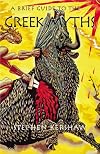
I came across this one when doing various Google searches on Greek myths, by its title it kind of looked like it would do more than just retell the myths.
It did this, I have come away with a lot more understanding of these myths. What was the most helpful is it made me aware that there is not really a set chronology to these myths – the order of all these stories have been puzzling me for some time. I also liked how it gave very very (and I do mean very) brief commentary to different show more readings of myths ranging from the structuralist to Freudian to Feminist to Marxist.
As a read I found this easy, and it was made easier to follow with tables and family trees.
The only chapter I was disappointed by was the one on Medea and Jason, compared to the others this was the least informative.
However, the title does say Brief Guide, so it’s given me the beginnings of continuing my journey to look at these stories beyond the myths. show less
It did this, I have come away with a lot more understanding of these myths. What was the most helpful is it made me aware that there is not really a set chronology to these myths – the order of all these stories have been puzzling me for some time. I also liked how it gave very very (and I do mean very) brief commentary to different show more readings of myths ranging from the structuralist to Freudian to Feminist to Marxist.
As a read I found this easy, and it was made easier to follow with tables and family trees.
The only chapter I was disappointed by was the one on Medea and Jason, compared to the others this was the least informative.
However, the title does say Brief Guide, so it’s given me the beginnings of continuing my journey to look at these stories beyond the myths. show less
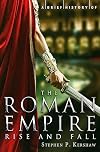
This history of the Roman Empire isn't as brief as the title suggests. It in fact covers a lot of ground but doesn't dwell on any one thing for too long. I read this as my knowledge of Roman history is patchy.
It's quite shocking how siblings would kill each other to gain power. In some cases - such as Caligula - the reverse to hatred happened: he married one of his sisters. I guess he was influenced by the Ancient Egyptians - or just plain mad as he's believed to be.
Worse than that was show more Nero's mother wanting to heal a rift between them by offering herself sexually to him. Glad he didn't go for this, but sad that he had her killed.
The author writes in an upbeat tone and informal style that appeals to me. I liked the book in parts rather than on the whole. At times there were so many different names referred to at once - many emperors have an average of five names - that it confused me as to who was whom.
Anyone with a passion for Roman history should like this tome. It's also worth reading if, like me, you have a mild interest in this period. show less
It's quite shocking how siblings would kill each other to gain power. In some cases - such as Caligula - the reverse to hatred happened: he married one of his sisters. I guess he was influenced by the Ancient Egyptians - or just plain mad as he's believed to be.
Worse than that was show more Nero's mother wanting to heal a rift between them by offering herself sexually to him. Glad he didn't go for this, but sad that he had her killed.
The author writes in an upbeat tone and informal style that appeals to me. I liked the book in parts rather than on the whole. At times there were so many different names referred to at once - many emperors have an average of five names - that it confused me as to who was whom.
Anyone with a passion for Roman history should like this tome. It's also worth reading if, like me, you have a mild interest in this period. show less
Ugh...this was an arduous experience. Tantamount to wading through a mountain of research notes to be used for a graduate thesis. All of the information one would desire/require is available, but the ability to synthesize, prioritize, and present a compelling tale was sorely lacking. A torrent of names and places, but...exhausting.
I thought this was a great book, well detailed and put together. Personally it isn't one that I would read again which is why I only gave it 4 stars but I would certainly recommend it to anyone interested in Roman history. I did enjoy the irony of the Roman Empire ending with Romulus Augustulus, a name synonymous with the Genesis as well as the Alpha and Omega of Rome.
Lists
Awards

You May Also Like


Statistics
- Works
- 19
- Also by
- 1
- Members
- 714
- Popularity
- #35,523
- Rating
- 3.7
- Reviews
- 7
- ISBNs
- 32
- Languages
- 2