

Marie Chauvet (1916–1973)
Author of Love, Anger, Madness
About the Author
Works by Marie Chauvet
Fille d'Haïti : roman 1 copy
Fille d’Haïti 1 copy
Associated Works
Daughters of Africa: An International Anthology of Words and Writings by Women of African Descent from the Ancient Egyptian to the Present (1992) — Contributor — 186 copies
Her True-True Name : an anthology of women's writing from the Caribbean (1989) — Contributor — 48 copies
Tagged
Common Knowledge
- Birthdate
- 1916-09-16
- Date of death
- 1973-06-19
- Gender
- female
- Occupations
- novelist
poet
playwright - Cause of death
- brain cancer
- Nationality
- Haiti
- Birthplace
- Port-au-Prince, Haiti
- Place of death
- New York, New York, USA
- Map Location
- Haiti
Members
Reviews

The triptych Amour, Colère et Folie is a merciless attack on Haitian society in the second half of the 20th century: amongst other things, Vieux-Chauvet exposes the damaging effects of a long tradition of racism and class-prejudice, the competing demands of two rapacious and terminally-conservative religious traditions (Voudou and Roman Catholicism) and the economic disaster resulting from a succession of corrupt governments selling off whatever they could to the USA. All this has left the show more Haitian people collectively too cowardly to stand up to state terrorism.
Duvalier is never actually mentioned, and in fact one of the three stories is ostensibly set long before he came to power, whilst the two others describe fictional political movements whose iconography has more to do with Nazi Germany than with Haiti, but in all three cases it's clear that the crimes they commit are exactly those most associated with the Tontons Macoutes. Duvalier got the message, anyway: he was apparently so furious about the book that Vieux-Chauvet had to flee the country whilst her family bought up and suppressed all remaining copies of the original 1968 edition (it wasn't republished until 2005, long after her death).
The three stories don't form a linked narrative: each has a different location and set of characters, and there isn't even any obvious time-sequence. But they have very strong thematic links: each is about a group of characters literally or metaphorically trapped in a house by the threat of political terror. They draw strongly on mainstream European literary traditions with all the descriptions of bourgeois neighbours spying on each other from behind their shutters and evaluating microscopic differences in social status. (There's also clearly a Chekhov thing going on: in each story the main peripheral character is a doctor, the first story is about three provincial sisters, the second about a family trying to avoid the confiscation of an orchard, ...)
All this comfortable middle-classness is set against a jarringly-different external world, where people are being arbitrarily arrested to be beaten, tortured and sexually assaulted in jail; where the beggars carry guns and spy for the police; where the police or paramilitaries shoot people apparently at random during festivals or on park benches; where a poet is ipso facto a political criminal; and where the reality is always decidedly worse than the nightmare. Emma as directed by Quentin Tarantino.
It's all very strange and quite disturbing, and obviously in many ways specific to the time and place where it was written, especially because of the dominant role of the mulatto landowning class in post-revolutionary Haiti, which led to the obsessive attention to precise degrees of ancestry and shades of skin-colour that Vieux-Chauvet describes. But it's still very much worth reading for what it tells us about the ways in which bullies and sadists get into power by exploiting existing weaknesses in the societies where they find themselves. show less
Duvalier is never actually mentioned, and in fact one of the three stories is ostensibly set long before he came to power, whilst the two others describe fictional political movements whose iconography has more to do with Nazi Germany than with Haiti, but in all three cases it's clear that the crimes they commit are exactly those most associated with the Tontons Macoutes. Duvalier got the message, anyway: he was apparently so furious about the book that Vieux-Chauvet had to flee the country whilst her family bought up and suppressed all remaining copies of the original 1968 edition (it wasn't republished until 2005, long after her death).
The three stories don't form a linked narrative: each has a different location and set of characters, and there isn't even any obvious time-sequence. But they have very strong thematic links: each is about a group of characters literally or metaphorically trapped in a house by the threat of political terror. They draw strongly on mainstream European literary traditions with all the descriptions of bourgeois neighbours spying on each other from behind their shutters and evaluating microscopic differences in social status. (There's also clearly a Chekhov thing going on: in each story the main peripheral character is a doctor, the first story is about three provincial sisters, the second about a family trying to avoid the confiscation of an orchard, ...)
All this comfortable middle-classness is set against a jarringly-different external world, where people are being arbitrarily arrested to be beaten, tortured and sexually assaulted in jail; where the beggars carry guns and spy for the police; where the police or paramilitaries shoot people apparently at random during festivals or on park benches; where a poet is ipso facto a political criminal; and where the reality is always decidedly worse than the nightmare. Emma as directed by Quentin Tarantino.
It's all very strange and quite disturbing, and obviously in many ways specific to the time and place where it was written, especially because of the dominant role of the mulatto landowning class in post-revolutionary Haiti, which led to the obsessive attention to precise degrees of ancestry and shades of skin-colour that Vieux-Chauvet describes. But it's still very much worth reading for what it tells us about the ways in which bullies and sadists get into power by exploiting existing weaknesses in the societies where they find themselves. show less
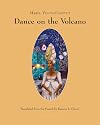
I’ve always had an interest in the Haitian Revolution, as the only slave rebellion to have produced a free state ruled by former slaves and free non-whites. Marie Vieux-Chauvet’s novel gives a different perspective than that of the history books, following one character’s experience of pre-revolutionary Saint-Domingue and the beginning days of the revolution itself.
The principal characters and events are real — Vieux-Chauvet wove her research, focused on that one character, Minette, show more a “free person of color”, into an historical novel.
The book begins in the years leading up to the revolution in late eighteenth century Saint-Domingue, to become free Haiti. Minette is a young girl, living with her sister Lise, and her mother Jasmine, who sells scarves and other items on the street in Port-au-Prince.
Minette is gifted with a magnificent singing voice. Once trained by a benefactor, the white Creole actress Mme Acquaire, Minette experiences a much broader spectrum of life than someone of her class in colonial Saint-Domingue would normally experience. She performs at the Comédie of Port-au-Prince, despite a ban on non-white performers. The public’s appreciation and admiration is so great that even the most ardent opponents of rights for non-whites are compelled to allow her exception.
Living the life of a young girl in Port-au-Prince, in the small world of her family and friends, conditions could just be what they were. But as she takes on a role as a performer for the privileged classes of planters and slaveowners, she sees more. She sees within the households of white planters how slaves are routinely tortured, how freedmen (and women) are regarded as less than human. And she sees, in her own case, how her talents will get her only so far — she becomes, at best, a privileged member of an unprivileged class. She can sing for the privileged classes but she is being granted an exception for her talent only, not for herself. She learns the word “injustice”.
Minette also falls in love with a person who wraps up what may be inevitable contradictions in pre-revolutionary Haitian society. Jean-Baptiste Lapointe is a free, slave-holding black man. He fights against the wealthy white planters, in tenuous alliance with a group of rebels who help both the free but oppressed and the enslaved. But he abuses his own slaves and treats them with utter disrespect, reveling in his own position of power and privilege. Minette’s turn toward rebellion is also a turn against her lover’s character, if not completely against himself.
Minette, Lapointe, and many other characters in the book are true, historical figures from revolutionary Haiti (as are the events depicted in the novel drawn from real historical events). Vieux-Chauvet arrays the characters in such a way as to portray a spectrum of virtues and vices — unrebellious mulatto women doing their best to thrive and survive in a world where they have no power, dedicated warriors who risk everything, sympathetic whites who do what they can, . . . I’m not in any position to judge how accurate the personal portrayals are — I suspect they are almost certainly cleaned up to create a dramatic and edifying novel.
The book was originally written in 1957 but is only now translated into English. Vieux-Chauvet’s writing is dramatic in tone, even over the top (even given its subject matter) at times, kind of the way that acting in silent movies is over the top, as if straining a bit to convey and emphasize emotion and meaning. But this was one of those books I read more compulsively the farther I got into it.
Obviously, I wouldn’t substitute a novel for history. In fact, reading Vieux-Chauvet inspired me to look at some of the same research she presumably relied upon (see Jean Fouchard’s historical writing), as well as other sources (see the more recent Avengers of the New World by Laurent Dubois). I’d also recommend Yanick Lahens’ novel of Duvalier-era Haiti, Moonbath, for a portrayal of modern village Haiti. show less
The principal characters and events are real — Vieux-Chauvet wove her research, focused on that one character, Minette, show more a “free person of color”, into an historical novel.
The book begins in the years leading up to the revolution in late eighteenth century Saint-Domingue, to become free Haiti. Minette is a young girl, living with her sister Lise, and her mother Jasmine, who sells scarves and other items on the street in Port-au-Prince.
Minette is gifted with a magnificent singing voice. Once trained by a benefactor, the white Creole actress Mme Acquaire, Minette experiences a much broader spectrum of life than someone of her class in colonial Saint-Domingue would normally experience. She performs at the Comédie of Port-au-Prince, despite a ban on non-white performers. The public’s appreciation and admiration is so great that even the most ardent opponents of rights for non-whites are compelled to allow her exception.
Living the life of a young girl in Port-au-Prince, in the small world of her family and friends, conditions could just be what they were. But as she takes on a role as a performer for the privileged classes of planters and slaveowners, she sees more. She sees within the households of white planters how slaves are routinely tortured, how freedmen (and women) are regarded as less than human. And she sees, in her own case, how her talents will get her only so far — she becomes, at best, a privileged member of an unprivileged class. She can sing for the privileged classes but she is being granted an exception for her talent only, not for herself. She learns the word “injustice”.
Minette also falls in love with a person who wraps up what may be inevitable contradictions in pre-revolutionary Haitian society. Jean-Baptiste Lapointe is a free, slave-holding black man. He fights against the wealthy white planters, in tenuous alliance with a group of rebels who help both the free but oppressed and the enslaved. But he abuses his own slaves and treats them with utter disrespect, reveling in his own position of power and privilege. Minette’s turn toward rebellion is also a turn against her lover’s character, if not completely against himself.
Minette, Lapointe, and many other characters in the book are true, historical figures from revolutionary Haiti (as are the events depicted in the novel drawn from real historical events). Vieux-Chauvet arrays the characters in such a way as to portray a spectrum of virtues and vices — unrebellious mulatto women doing their best to thrive and survive in a world where they have no power, dedicated warriors who risk everything, sympathetic whites who do what they can, . . . I’m not in any position to judge how accurate the personal portrayals are — I suspect they are almost certainly cleaned up to create a dramatic and edifying novel.
The book was originally written in 1957 but is only now translated into English. Vieux-Chauvet’s writing is dramatic in tone, even over the top (even given its subject matter) at times, kind of the way that acting in silent movies is over the top, as if straining a bit to convey and emphasize emotion and meaning. But this was one of those books I read more compulsively the farther I got into it.
Obviously, I wouldn’t substitute a novel for history. In fact, reading Vieux-Chauvet inspired me to look at some of the same research she presumably relied upon (see Jean Fouchard’s historical writing), as well as other sources (see the more recent Avengers of the New World by Laurent Dubois). I’d also recommend Yanick Lahens’ novel of Duvalier-era Haiti, Moonbath, for a portrayal of modern village Haiti. show less
Dense and dark, the three parts contract in cast and duration and attachment to reality. The largest first section is of unrealized sexual obsession, the second with land obsession and the last is a purified obsession of unsupported aspiration with nothing to aspire to. All set in a poisonous landscape of reflexive racism, lethal violence, and squandered resources.

The three novellas in this book look at Haitian families of different social standings. Each novella evokes the emotions of its title. Vieux-Chauvet does a fabulous job of creating the emotions, and the reader can feel what each character feels. Love, Anger, Madness.
Love looks at the three adult daughters who live in their late parents' large stately home. Claire, the oldest, is the darkest (darker than either parent) and is an old maid and the housekeeper/house manager. She has never show more managed to marry, due to her dark skin and her own complex about her dark skin. Felicia, the middle sister, is blonde and married to Jean Luze. Claire is desperately in love with her brother-in-law, who has eyes for his other sister-in-law. Annette, the youngest, is fair with dark hair. She is 22 and has a serious marriage prospect. The story recounts these goings on in their home, as well as the violence in their neighborhood, with the Commandant Calédu's attacks on the bourgoise people of the town. The beggars are his army, such as it is.
Anger looks at a family who's great-grandfather worked hard in a small time and managed to legally buy and certify land and a home in Port-au-Prince. The land has now been seized by soldiers. His grandson will do anything to save it, but the great-granddaughter Rose knows she is the only one who can, through the sacrifice of her virtue and future. The ending was clear but also confusing.
Madness looks at some of the beggar class--the poor, dark men. This group consists of 3 beggar-poets, all poor and dark, and 1 French world war veteran who fled France after the war. They drink too much and eat too little. René seems to be their leader--a mulatto son of a late black single woman who carefully served her loas, he fits in no society and has abandoned all religion. He thinks the town is being attacked and has been hiding with Jacques and André, and then also Simon. His delusions will get him into trouble in the end. IS he truly mad, or is this alcohol-induced? show less
Love looks at the three adult daughters who live in their late parents' large stately home. Claire, the oldest, is the darkest (darker than either parent) and is an old maid and the housekeeper/house manager. She has never show more managed to marry, due to her dark skin and her own complex about her dark skin. Felicia, the middle sister, is blonde and married to Jean Luze. Claire is desperately in love with her brother-in-law, who has eyes for his other sister-in-law. Annette, the youngest, is fair with dark hair. She is 22 and has a serious marriage prospect. The story recounts these goings on in their home, as well as the violence in their neighborhood, with the Commandant Calédu's attacks on the bourgoise people of the town. The beggars are his army, such as it is.
Anger looks at a family who's great-grandfather worked hard in a small time and managed to legally buy and certify land and a home in Port-au-Prince. The land has now been seized by soldiers. His grandson will do anything to save it, but the great-granddaughter Rose knows she is the only one who can, through the sacrifice of her virtue and future. The ending was clear but also confusing.
Madness looks at some of the beggar class--the poor, dark men. This group consists of 3 beggar-poets, all poor and dark, and 1 French world war veteran who fled France after the war. They drink too much and eat too little. René seems to be their leader--a mulatto son of a late black single woman who carefully served her loas, he fits in no society and has abandoned all religion. He thinks the town is being attacked and has been hiding with Jacques and André, and then also Simon. His delusions will get him into trouble in the end. IS he truly mad, or is this alcohol-induced? show less
Lists
Awards


You May Also Like


Associated Authors
Statistics
- Works
- 10
- Also by
- 2
- Members
- 336
- Popularity
- #70,810
- Rating
- 4.1
- Reviews
- 8
- ISBNs
- 23
- Languages
- 4
- Favorited
- 2