

Matthew Parris
Author of Chance Witness: An Outsider's Life in Politics
About the Author
Works by Matthew Parris
Great Parliamentary Scandals: Four Centuries of Calumny, Smear and Innuendo (1995) 74 copies, 2 reviews
Cumberland Lodge 1 copy
Associated Works
Tagged
Common Knowledge
- Birthdate
- 1949-08-07
- Gender
- male
- Education
- Waterford Kamhlaba United World College of Southern Africa
University of Cambridge (Clare College)
Yale University - Occupations
- journalist
writer
Member of Parliament (West Derbyshire, 1979-86) - Nationality
- UK
- Birthplace
- Johannesburg, South Africa
- Places of residence
- Swaziland
Cyprus
Rhodesia
South Africa
Catalonia, Spain
Jamaica (show all 7)
England, UK
Members
Reviews
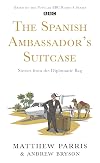
Laugh out loud funny in parts, interesting reading about the impressions of British Diplomats in various parts of the world - mostly the countries which one rarely reads about; and the valedictory report from Hanoi frankly horrified me.
It is customary for diplomats to file a report of 'first impressions' three months after taking up a new post and another one when they leave. These make very interesting reading as do the comments preceding each report. My only disappointment was the show more valedictory report from the Vatican but suspect that to say more could have been political dynamite.
This is a book which will be added to my permanent collection. Each report is short and is therefore a book which can be picked up and read almost at random.
My main feeling, having read all the reports was ... NEVER marry into the Diplomatic Corps; those poor women. show less
It is customary for diplomats to file a report of 'first impressions' three months after taking up a new post and another one when they leave. These make very interesting reading as do the comments preceding each report. My only disappointment was the show more valedictory report from the Vatican but suspect that to say more could have been political dynamite.
This is a book which will be added to my permanent collection. Each report is short and is therefore a book which can be picked up and read almost at random.
My main feeling, having read all the reports was ... NEVER marry into the Diplomatic Corps; those poor women. show less
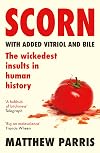
Pleasant dipper-in. Lots of familiar quotes are included like Brendan Behan’s well-known put-down of critics, as being like eunuchs in a harem. The wit and venom of writers pronouncing on each other is especially notable: a whole host of contemporaries show up here mocking Henry James’s style and interests, similar too on Conrad and Trollope. There’s backbiting by or about E.M. Forster and Woolf and Huxley too. Happily, not all the contents are entirely scornful, but there is some show more trademark bile from Morrissey, and jibes directed at compiler Matthew Parris (“that little shit Parris with his perma-smirk” - Alastair Campbell), some nice digs at pseuds of yesteryear like George Bernard-Shaw, and plenty of funny-revealing quotes like Queen Victoria on King Lear (“A strange, horrible business, but I suppose good enough for Shakespeare’s day”). As the compilation was produced in 2016-7, it’s neat that they managed to squeeze in an addendum on our recent salvo of scorn around Brexit, Trump, and more. Trump’s face when persuaded to denounce the Charlottesville attack, one Twitter user wrote, “is the same face I made when my parents made me eat Brussels sprouts”. show less
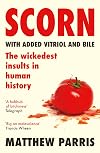
I don't recall using a highlighter to mark passages in a book since I was at University, but Scorn - The Wittiest and Wickedest Insults in Human History by Matthew Parris is that kind of book.
Here are some of my favourite quotes included in the collection (read my review for the complete listing http://www.carpelibrum.net/2017/03/scorn-wittiest-and-wickedest-insults-in.html)
Imagine someone holding forth on biology whose only knowldege of the subject is the Book of British Birds, and you have show more a rough idea of what it feels like to read Richard Dawkins on theology. Terry Eagleton, Page 27
His argument is as thin as the homeopathic soup that was made by boiling the shadow of a pigeon that had been starved to death. Abraham Lincoln on Stephen A. Douglas, Page 189
Thank you for the manuscript; I shall lose no time in reading it. Benjamin Disraeli's standard reply to authors who sent him unsolicited copies of their books, Page 227
My favourite poem is the one that starts 'Thirty days hath September' because it actually tells you something. Groucho Marx, Page 259
I loved these quotes, and there are plenty more in the book I couldn't include for obvious reasons, however I took issue with the author's admission that others did the heavy lifting for him. By his own admission, two helpers gathered a 'mountain from which I have assembled this personal molehill of an anthology'. I don't know about you, by why aren't their names on the cover?
He also contrived quotes involving himself; a self indulgence that should have been squashed somewhere along the route to being published.
Consequently, the author's readiness to let others do the majority of the work for him reduced my enjoyment of this collection. In addition to that, his arrogance to include several quotes about himself further diminished my enjoyment. If you can overlook both of these flaws, Scorn by Matthew Parris is an enjoyable read and a book you'll want to share with others.
* Copy courtesy of Allen & Unwin * show less
Here are some of my favourite quotes included in the collection (read my review for the complete listing http://www.carpelibrum.net/2017/03/scorn-wittiest-and-wickedest-insults-in.html)
Imagine someone holding forth on biology whose only knowldege of the subject is the Book of British Birds, and you have show more a rough idea of what it feels like to read Richard Dawkins on theology. Terry Eagleton, Page 27
His argument is as thin as the homeopathic soup that was made by boiling the shadow of a pigeon that had been starved to death. Abraham Lincoln on Stephen A. Douglas, Page 189
Thank you for the manuscript; I shall lose no time in reading it. Benjamin Disraeli's standard reply to authors who sent him unsolicited copies of their books, Page 227
My favourite poem is the one that starts 'Thirty days hath September' because it actually tells you something. Groucho Marx, Page 259
I loved these quotes, and there are plenty more in the book I couldn't include for obvious reasons, however I took issue with the author's admission that others did the heavy lifting for him. By his own admission, two helpers gathered a 'mountain from which I have assembled this personal molehill of an anthology'. I don't know about you, by why aren't their names on the cover?
He also contrived quotes involving himself; a self indulgence that should have been squashed somewhere along the route to being published.
Consequently, the author's readiness to let others do the majority of the work for him reduced my enjoyment of this collection. In addition to that, his arrogance to include several quotes about himself further diminished my enjoyment. If you can overlook both of these flaws, Scorn by Matthew Parris is an enjoyable read and a book you'll want to share with others.
* Copy courtesy of Allen & Unwin * show less

http://nhw.livejournal.com/71616.html
I have a certain sense of loyalty to Clare College, Cambridge, where I spent five mostly happy years between 1986 and 1991, and part of that includes following the careers of my fellow alumni not just from my own year but those who attended after I left (like the sf writer China Miéville) and who graduated before me, or even those who, like the entertainer Richard Stilgoe, the poet Siegfried Sassoon and the mystic philosopher Thomas Merton, had attended show more for a few terms and got thrown out.
When I arrived, and challenged the Senior Tutor at one of those embarrassing get-to-know-you sherry parties to name someone famous in contemporary public life who had been at Clare, he named Matthew Parris, who had just a few months before resigned one of the safest Tory seats in the country to become presenter of ITV's best known current affairs program, Weekend World. I didn't know it at the time, but I encountered his legacy in the college when I served on the committee of the Clare College Students Association and became the resident wonk on constitutional issues; Parris had written the constitution and given the CCSA its name back in 1969. (The year after my term of office the name was again changed, to the Union of Clare Students.)
So I've followed his progress since. I've seen him in the flesh precisely once, at a Cambridge Union Society debate on the anti-homosexual Clause 28 of the 1988 Local Government Act, where he made a moving and effective speech about being a lonely and shy gay undergraduate at the tail end of the swinging sixties. It went better than his first speech in the Union Society chamber, an embarrassing debacle which he describes in painful detail. In fact much of this autobiography is taken up with embarrassing events described in painful detail. He fails as a diplomat, fails as a politician, and fails as a TV presenter (Weekend World was axed, largely because of Parris' own lacklustre performance in the chair), before finding his element in written journalism.
As with a lot of autobiography, particularly if it's written in a confessional style, one has to be cautious about feeling that one has got to know the author; what is written is fascinating, especially about his colonial childhood in Africa and Cyprus, but presumably much is unwritten as well. But I feel I would like Matthew Parris if I were ever to meet him socially.
The other thing I take from the book is what a difference a split second decision can make. The most significant act of Parris' political career was to rescue a small dog which was drowning in the River Thames, shortly before the 1979 election. The resultant favourable publicity was enough to get him the nomination for West Derbyshire, beating out not only another Clare graduate, Peter Lilley, who later became deputy leader of the party under William Hague, but also a smart London lawyer called Michael Howard, who is now the party's leader. The most hilarious moment in the book is when a reluctant Mrs Thatcher is compelled to present Parris with an award for his bravery at a ceremony attended also by the dog and its owners. The dog, excited by the occasion, humps Mrs Thatcher's leg in front of the full scrutiny of the press. Alas, those days were more discreet, and nobody mentioned it at the time. But it gave me a good laugh. show less
I have a certain sense of loyalty to Clare College, Cambridge, where I spent five mostly happy years between 1986 and 1991, and part of that includes following the careers of my fellow alumni not just from my own year but those who attended after I left (like the sf writer China Miéville) and who graduated before me, or even those who, like the entertainer Richard Stilgoe, the poet Siegfried Sassoon and the mystic philosopher Thomas Merton, had attended show more for a few terms and got thrown out.
When I arrived, and challenged the Senior Tutor at one of those embarrassing get-to-know-you sherry parties to name someone famous in contemporary public life who had been at Clare, he named Matthew Parris, who had just a few months before resigned one of the safest Tory seats in the country to become presenter of ITV's best known current affairs program, Weekend World. I didn't know it at the time, but I encountered his legacy in the college when I served on the committee of the Clare College Students Association and became the resident wonk on constitutional issues; Parris had written the constitution and given the CCSA its name back in 1969. (The year after my term of office the name was again changed, to the Union of Clare Students.)
So I've followed his progress since. I've seen him in the flesh precisely once, at a Cambridge Union Society debate on the anti-homosexual Clause 28 of the 1988 Local Government Act, where he made a moving and effective speech about being a lonely and shy gay undergraduate at the tail end of the swinging sixties. It went better than his first speech in the Union Society chamber, an embarrassing debacle which he describes in painful detail. In fact much of this autobiography is taken up with embarrassing events described in painful detail. He fails as a diplomat, fails as a politician, and fails as a TV presenter (Weekend World was axed, largely because of Parris' own lacklustre performance in the chair), before finding his element in written journalism.
As with a lot of autobiography, particularly if it's written in a confessional style, one has to be cautious about feeling that one has got to know the author; what is written is fascinating, especially about his colonial childhood in Africa and Cyprus, but presumably much is unwritten as well. But I feel I would like Matthew Parris if I were ever to meet him socially.
The other thing I take from the book is what a difference a split second decision can make. The most significant act of Parris' political career was to rescue a small dog which was drowning in the River Thames, shortly before the 1979 election. The resultant favourable publicity was enough to get him the nomination for West Derbyshire, beating out not only another Clare graduate, Peter Lilley, who later became deputy leader of the party under William Hague, but also a smart London lawyer called Michael Howard, who is now the party's leader. The most hilarious moment in the book is when a reluctant Mrs Thatcher is compelled to present Parris with an award for his bravery at a ceremony attended also by the dog and its owners. The dog, excited by the occasion, humps Mrs Thatcher's leg in front of the full scrutiny of the press. Alas, those days were more discreet, and nobody mentioned it at the time. But it gave me a good laugh. show less
Awards


You May Also Like


Associated Authors
Statistics
- Works
- 20
- Also by
- 1
- Members
- 886
- Popularity
- #28,919
- Rating
- 3.7
- Reviews
- 19
- ISBNs
- 52
- Languages
- 1
- Favorited
- 1