
Jeremy Paxman
Author of The English: A Portrait of a People
About the Author
Jeremy Paxman grew up thinking of himself as English, despite being one quarter Scottish. Currently the anchor of Britain's premier television news program, the BBC's Newsnight, he has had a long and distinguished career in British television. His books include On Royalty, Empire, and The Political show more Animal. show less
Image credit: Peter Wright
Works by Jeremy Paxman
A Higher Form of Killing: The Secret History of Chemical and Biological Warfare (1982) 209 copies, 4 reviews
Associated Works
Tagged
Common Knowledge
- Legal name
- Paxman, Jeremy Dickson
- Birthdate
- 1950-05-11
- Gender
- male
- Education
- University of Cambridge (St Catharine's College)
Malvern College, Malvern, Worcestershire, England, UK - Occupations
- journalist
author
television presenter (Newsnight|1989-2014|University Challenge|1994-2023) - Organizations
- British Broadcasting Corporation
- Awards and honors
- Royal Television Society (Interviewer of the Year, 1998)
BAFTA's Richard Dimbleby Award (outstanding presenter in the factual arena, 1996)
Royal Television Society (TV journalism presenter of the year award, 2002)
Royal Television Society (TV journalism presenter of the year award, 2007) - Nationality
- UK
- Birthplace
- Leeds, Yorkshire, England, UK
- Places of residence
- Peopleton, Worcestershire, England, UK
Stonor, Oxfordshire, England, UK - Associated Place (for map)
- England, UK
Members
Reviews
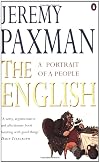
http://nhw.livejournal.com/1106609.html
It was very interesting as an intellectual exercise to separate out England and Englishness, to acknowledge the fact that I am an outsider to both, and to consider them as phenomena in themselves. Having said that, I found myself in silent agreement with an awful lot of what Paxman writes about the English attitudes to history, the countryside, religion, sex, food, property and history again - so much so that I'm not going to recapitulate it, just urge show more you to read the book. There were just two points that jumped out at me as especially thought-provoking.
First, a rather technical historical point, and one that is not original to Paxman. The dissolution of the monasteries and Henry VIII's breach with the Pope, it is argued, had deep effects on England's cultural psyche; a rich mainstream (Catholic) European artistic heritage was literally destroyed forever, and the new concentration on the Word of scripture, translated into English, created the intellectual space for Shakespeare, etc, while England was unable to match the continent in the more visual arts. I suspect one could find plenty of opposing evidence if one wanted, but I sense there may be something there, and I should read more about it.
The second, more general point I picked up from Paxman's book is this: that for many English people, national identity is not something that actually has to be considered at all. Going back again to my Cambridge days, I remember one friend from Essex assuring me, "I daon't really 'ave an accent!" Of course he did, but he had never thought of it in that way; he just though he talked normal, and that I talked funny. We who come from smaller, or indeed just other, countries and nations are constantly (made) aware of our origins when we are in England. Other nationalities (certainly everywhere else I have lived, including even the US) accept that they are themselves a distinct and particular group of people, and that other countries are the same; in England, we visitors sometimes feel that we are weirdly and perhaps quaintly deviating from the default state of humankind, which is only found locally.
("Yet, in spite of all temptations / to belong to other nations / he is an Englishman! / He remains an E-e-e-e-e-e-englishman!")
Paxman then goes on to suggest that because the English sense of Englishness (or Britishness) is poorly or even unpleasantly articulated, it becomes much more difficult to have a rational discussion of European integration. To expand his point, the Belgians, Germans, Latvians, and Portuguese all have a good idea of where they are starting from, so are less worried about and more interested in going down the European track. Going back to Paxman, the British (and that largely means English, with certain peculiar exceptions in the territory where I was born) sense of mission collapsed with economic austerity and the loss of Empire after 1945, without anything much to replace it. Yet paradoxically the civic liberal tradition which is one of England's most admirable contributions to the world makes it almost impossible to construct a replacement national ideology. And even if that were possible, it's difficult to see how the Scots and Welsh might buy into such a project; consider how silly Gordon Brown's recent pronouncements on Britishness sounded, especially coming from a Scot.
Anyway, that's what I thought. I hope none of you English people reading this are offended - I like most of you and I love some of you! show less
It was very interesting as an intellectual exercise to separate out England and Englishness, to acknowledge the fact that I am an outsider to both, and to consider them as phenomena in themselves. Having said that, I found myself in silent agreement with an awful lot of what Paxman writes about the English attitudes to history, the countryside, religion, sex, food, property and history again - so much so that I'm not going to recapitulate it, just urge show more you to read the book. There were just two points that jumped out at me as especially thought-provoking.
First, a rather technical historical point, and one that is not original to Paxman. The dissolution of the monasteries and Henry VIII's breach with the Pope, it is argued, had deep effects on England's cultural psyche; a rich mainstream (Catholic) European artistic heritage was literally destroyed forever, and the new concentration on the Word of scripture, translated into English, created the intellectual space for Shakespeare, etc, while England was unable to match the continent in the more visual arts. I suspect one could find plenty of opposing evidence if one wanted, but I sense there may be something there, and I should read more about it.
The second, more general point I picked up from Paxman's book is this: that for many English people, national identity is not something that actually has to be considered at all. Going back again to my Cambridge days, I remember one friend from Essex assuring me, "I daon't really 'ave an accent!" Of course he did, but he had never thought of it in that way; he just though he talked normal, and that I talked funny. We who come from smaller, or indeed just other, countries and nations are constantly (made) aware of our origins when we are in England. Other nationalities (certainly everywhere else I have lived, including even the US) accept that they are themselves a distinct and particular group of people, and that other countries are the same; in England, we visitors sometimes feel that we are weirdly and perhaps quaintly deviating from the default state of humankind, which is only found locally.
("Yet, in spite of all temptations / to belong to other nations / he is an Englishman! / He remains an E-e-e-e-e-e-englishman!")
Paxman then goes on to suggest that because the English sense of Englishness (or Britishness) is poorly or even unpleasantly articulated, it becomes much more difficult to have a rational discussion of European integration. To expand his point, the Belgians, Germans, Latvians, and Portuguese all have a good idea of where they are starting from, so are less worried about and more interested in going down the European track. Going back to Paxman, the British (and that largely means English, with certain peculiar exceptions in the territory where I was born) sense of mission collapsed with economic austerity and the loss of Empire after 1945, without anything much to replace it. Yet paradoxically the civic liberal tradition which is one of England's most admirable contributions to the world makes it almost impossible to construct a replacement national ideology. And even if that were possible, it's difficult to see how the Scots and Welsh might buy into such a project; consider how silly Gordon Brown's recent pronouncements on Britishness sounded, especially coming from a Scot.
Anyway, that's what I thought. I hope none of you English people reading this are offended - I like most of you and I love some of you! show less

The English is a disappointing read, but it's hard to pinpoint why. Paxman writes clearly and (occasionally) perceptively. His anecdotes and examples are well-chosen, even if they are sometimes too selective, and the topic is a rich and interesting one that should be a joy to unpack.
Partly, I admit, my disappointment with the book was that it didn't chime with my own views. It's hard to shake a sense of defeatism and a wearying strain of negativity throughout. Now, of course there is a show more strong element of decline in any reading of modern British history. Paxman is right (and thoroughly absolved) when he points out that "the belief that something has rotted in England is widely held: a people cannot spend decades being told their civilization is in decline and not be affected by it" (pg. 17). But Paxman neither fully embraces this negativity nor gives sufficient airing to a more positive view of the English; rather, he treads a meandering course through the middle of it all. Often, you don't know where Paxman stands on a certain issue and you get lost amidst all the anecdotes (which consequently lack the force they would have got from bolstering a certain viewpoint).
When he does make a stand on a certain issue, it is in favour of views that are (still) quite popular only amongst the privileged political classes in Britain. He comes down strongly in favour of mass immigration and multiculturalism, experiments by the country's insulated elites that have, in the years since, been found wanting and widely deemed to have failed, even amongst former proselytizers like Trevor Phillips. There is a strong argument to be made that it was policies like this that helped dilute the sense of what it meant to be English. No wonder Paxman couldn't find it.
So the book shows its age here – not least in that it repeats the lazy party line on multiculturalism without seeking even to defend it, for in the late Nineties when it was written it was so commonly accepted as indisputable fact. But its creaking, outdated stance would be more palatable if Paxman wasn't also dismissive of 'bigots' and 'thugs' when referring to those ordinary people who expressed concern about the collapse of communities and the rise of political correctness and 'no-go' zones. Paxman's book in these moments looks woefully narrow-minded and out-of-date, especially now in a post-Brexit age which has crystalized such discontent into a political force we still don't fully understand.
But this is not entirely – and not even mostly – about disapproval of contrary views on my part. It would be fine having different views as long as you could still see some kind of academic merit or method in the approach: that, at least, would endure through all the years since publication. But Paxman's approach is selective, haphazard and lacking the clear force of argument. His logic and perspective is sometimes off: one particularly big clunker occurs when describing the slums and disorganization of English industrial towns. He contrasts them with the beauty and coherent city-planning of French towns, for France "had the great advantage of industrializing later than the British" (pg. 163). It is incredible tunnel vision: yes, being late to the Industrial Revolution perhaps meant France could plan its city infrastructure with more care, but it also meant it missed out on the prosperity, primacy and influence Britain reaped as the first industrial society. The largest empire ever seen, untold wealth, the development of English as the world's second language, the scientific development and technologies… But, yeah, French towns got wider streets, so win. What?
I wasn't expecting anything forensic, just something with a bit more rigour and foresight as to what Paxman wanted to portray in writing about the English. In the concluding chapter, where Paxman should be re-emphasising his main points and perspectives before making a few final poignant thoughts to stick in the memory of the reader, he instead introduces a previously unmentioned observation about hooliganism and the general British love of getting drunk, writes pages and pages on this, before saying: "The vast majority of English people do not spend their time getting drunk, fighting and throwing up" (pg. 254). Then why devote the majority of your concluding chapter to it? For all its nice moments, the book as a whole is a bog.
It is also very unbalanced. As I mentioned earlier, there is a strong feeling of negativity throughout the book, even though Paxman himself doesn't really come down forcefully in promoting such a view. Rather, this effect is created by Paxman spending too much time outlining the various faults and character flaws of the English (or, more specifically, Englishmen), complete with damning anecdotes and examples. After such a construction, he will then say something along the lines of "of course, not all...", and then summarize the various successes or positive traits in a brief couple of sentences which are kept vague and devoid of detail or qualification. It is as if he enjoys rooting through the negative stuff, and includes positive achievements almost offhand – compensatory fillips at the end of each critique. But that, I suppose, is also quintessentially English: "to ignore the silver lining and to grasp at the cloud" (pg. 17). And I suppose that's also what I've done in this review. The clear prose and the anecdotal colour are the silver lining of Jeremy Paxman's The English. But the great mass, I'm afraid, is all cloud. show less
Partly, I admit, my disappointment with the book was that it didn't chime with my own views. It's hard to shake a sense of defeatism and a wearying strain of negativity throughout. Now, of course there is a show more strong element of decline in any reading of modern British history. Paxman is right (and thoroughly absolved) when he points out that "the belief that something has rotted in England is widely held: a people cannot spend decades being told their civilization is in decline and not be affected by it" (pg. 17). But Paxman neither fully embraces this negativity nor gives sufficient airing to a more positive view of the English; rather, he treads a meandering course through the middle of it all. Often, you don't know where Paxman stands on a certain issue and you get lost amidst all the anecdotes (which consequently lack the force they would have got from bolstering a certain viewpoint).
When he does make a stand on a certain issue, it is in favour of views that are (still) quite popular only amongst the privileged political classes in Britain. He comes down strongly in favour of mass immigration and multiculturalism, experiments by the country's insulated elites that have, in the years since, been found wanting and widely deemed to have failed, even amongst former proselytizers like Trevor Phillips. There is a strong argument to be made that it was policies like this that helped dilute the sense of what it meant to be English. No wonder Paxman couldn't find it.
So the book shows its age here – not least in that it repeats the lazy party line on multiculturalism without seeking even to defend it, for in the late Nineties when it was written it was so commonly accepted as indisputable fact. But its creaking, outdated stance would be more palatable if Paxman wasn't also dismissive of 'bigots' and 'thugs' when referring to those ordinary people who expressed concern about the collapse of communities and the rise of political correctness and 'no-go' zones. Paxman's book in these moments looks woefully narrow-minded and out-of-date, especially now in a post-Brexit age which has crystalized such discontent into a political force we still don't fully understand.
But this is not entirely – and not even mostly – about disapproval of contrary views on my part. It would be fine having different views as long as you could still see some kind of academic merit or method in the approach: that, at least, would endure through all the years since publication. But Paxman's approach is selective, haphazard and lacking the clear force of argument. His logic and perspective is sometimes off: one particularly big clunker occurs when describing the slums and disorganization of English industrial towns. He contrasts them with the beauty and coherent city-planning of French towns, for France "had the great advantage of industrializing later than the British" (pg. 163). It is incredible tunnel vision: yes, being late to the Industrial Revolution perhaps meant France could plan its city infrastructure with more care, but it also meant it missed out on the prosperity, primacy and influence Britain reaped as the first industrial society. The largest empire ever seen, untold wealth, the development of English as the world's second language, the scientific development and technologies… But, yeah, French towns got wider streets, so win. What?
I wasn't expecting anything forensic, just something with a bit more rigour and foresight as to what Paxman wanted to portray in writing about the English. In the concluding chapter, where Paxman should be re-emphasising his main points and perspectives before making a few final poignant thoughts to stick in the memory of the reader, he instead introduces a previously unmentioned observation about hooliganism and the general British love of getting drunk, writes pages and pages on this, before saying: "The vast majority of English people do not spend their time getting drunk, fighting and throwing up" (pg. 254). Then why devote the majority of your concluding chapter to it? For all its nice moments, the book as a whole is a bog.
It is also very unbalanced. As I mentioned earlier, there is a strong feeling of negativity throughout the book, even though Paxman himself doesn't really come down forcefully in promoting such a view. Rather, this effect is created by Paxman spending too much time outlining the various faults and character flaws of the English (or, more specifically, Englishmen), complete with damning anecdotes and examples. After such a construction, he will then say something along the lines of "of course, not all...", and then summarize the various successes or positive traits in a brief couple of sentences which are kept vague and devoid of detail or qualification. It is as if he enjoys rooting through the negative stuff, and includes positive achievements almost offhand – compensatory fillips at the end of each critique. But that, I suppose, is also quintessentially English: "to ignore the silver lining and to grasp at the cloud" (pg. 17). And I suppose that's also what I've done in this review. The clear prose and the anecdotal colour are the silver lining of Jeremy Paxman's The English. But the great mass, I'm afraid, is all cloud. show less
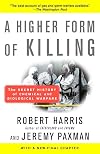
i read this book 13 or 14 years ago. really! (yes! i'm just adding it now!) not that it was forgotten. it has lived in the back of my brain ever since. when the anthrax scare happened, when i saw mr. death, whenever the X-files had episodes about strange diseases, whenever i think of sheep on rocky scottish islands (for reals! look up Gruinard Island), whenever W mentioned imaginary WMD's, and now, yesterday, when i listened to the new episode of radiolab show more (http://www.radiolab.org/2012/jan/09/) and found out that fritz haber, father of biowarfare, lived in the city where i now live. in fact, the title of the book is from a quote by this lovely piece of work. this is what you get when you invent, and USE, chlorine gas: your wife kills herself in protest of your actions, your government is taken over by nazis, who first drive out jewish people like yourself and then take another of your inventions, zyklon A, and make it even deadlier, zyklon B, and more effective at killing off your relatives. that's just part of it. i'm beside myself and a little angry. just, i dunno, read the book. if you can stomach the fact that in WWI the opposition had no idea what mustard or chlorine gas were, so when they were hit with it they would run. the gas would overtake them and they would run, and then they would be gasping for air, so they would remove their gasmasks. gasping = quicker, more painful death full of mucus and blood and drowning in your own saliva and seriously, this book had an effect on me. duh. show less
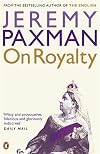
A thoroughly enjoyable and thought-provoking book. A rebublican by conviction when he started the book, Paxman considers all aspects of the British royal family, past and present: their ancestry and history; their relationship with their people, and with God; their day-to-day life in the past and these days; their obligations, rights and responsibilities. It's a closely and thoroughly researched book, but witty too, and written with a light touch. At the end he concludes that, with all its show more imperfections, the stability and well being of our country is better assured by the fact that we have a hereditary monarch, rather than an elected president. I found it easy to agree with his arguments. show less
Lists
Awards


You May Also Like


Associated Authors
Statistics
- Works
- 15
- Also by
- 1
- Members
- 3,546
- Popularity
- #7,159
- Rating
- 3.6
- Reviews
- 50
- ISBNs
- 86
- Languages
- 5
- Favorited
- 2