
George Orwell (1903–1950)
Author of Nineteen Eighty-Four
About the Author
George Orwell was born Eric Arthur Blair on June 25, 1903 in Motihari in Bengal, India and later studied at Eton College for four years. He was an assistant superintendent with the Indian Imperial Police in Burma. He left that position after five years and moved to Paris, where he wrote his first show more two books: Burmese Days and Down and Out in Paris and London. He then moved to Spain to write but decided to join the United Workers Marxist Party Militia. After being decidedly opposed to communism, he served in the British Home Guard and with the Indian Service of the BBC during World War II. After the war, he wrote for the Observer and was literary editor for the Tribune. His best known works are Animal Farm and 1984. His other works include A Clergyman's Daughter, Keep the Aspidistra Flying, The Road to Wigan Pier, Homage to Catalonia, and Coming Up for Air. He died on January 21, 1950 at the age of 46. (Bowker Author Biography) show less
Disambiguation Notice:
George Orwell is the pen name used by Eric Arthur Blair.
Do NOT combine this page with "Orwell". There are other authors who share that surname. Thank you.
Image credit: Photographie d'Orwell sur sa carte de membre du Syndicat national des journalistes (National Union of Journalists (en)) en 1943
Series
Works by George Orwell
The Collected Essays, Journalism and Letters of George Orwell [4-volume set] (1968) 1,288 copies, 78 reviews
The Collected Essays, Journalism and Letters of George Orwell, Volume 2: My Country Right or Left, 1940-1943 (1968) 555 copies, 3 reviews
The Collected Essays, Journalism and Letters of George Orwell, Volume 1: An Age Like This, 1920-1940 (1968) 547 copies, 7 reviews
The Collected Essays, Journalism and Letters of George Orwell, Volume 4: In Front of Your Nose, 1945-1950 (1968) 513 copies, 3 reviews
The Collected Essays, Journalism and Letters of George Orwell, Volume 3: As I Please, 1943-1945 (1968) 505 copies, 3 reviews
Orwell and Politics: Animal Farm in the Context of Essays, Reviews and Letters (2001) 76 copies, 1 review
Seeing Things as They Are: Selected Journalism and Other Writings (Penguin Modern Classics) (2014) 61 copies
Orwell's England: The Road to Wigan Pier in the Context of Essays, Reviews, Letters and Poems (2001) 60 copies
Fahrenheit 451,Brave New World and 1984 Nineteen Eighty-Four 3 Books Bundle Collection (2016) 55 copies
Selected Works: Down and Out in Paris and London, Homage to Catalonia, The Road to Wigan Pier, Selections from Essays and Journalism, 1931-1949 (1933) 55 copies
Orwell and the Dispossessed: Down and Out in Paris and London in the Context of Essays, Reviews and Letters (2001) 47 copies
Animal Farm, Burmese Days, A Clergyman's Daughter & Ninteen Eight-Four (4 titles) (1986) 42 copies, 1 review
Reportage : (Funny, But Not Vulgar; Down & Out in Paris & London; Homage to Catalonia; My Country Right Or Left; The Road to Wigan Pier) (1998) 28 copies
El poder y la palabra / Power and Words: 10 ensayos sobre lenguaje, politica y verdad (Spanish Edition) (2017) 19 copies
On Reading: Bookshop Memories, Good Bad Books, Nonsense Poetry, Books vs. Cigarettes, and Confessions of a Book Reviewer (2022) 13 copies, 2 reviews
Opresión y resistencia (edición definitiva avalada por The Orwell Estate): Escritos contra el totalitarismo 1937-1949 (2021) 9 copies
Ecrits politiques (1928-1949) : Sur le socialisme, les intellectuels et la démocratie (2009) 9 copies
Escritor en guerra (edición definitiva avalada por The Orwell Estate): Correspondencia y diarios (1936-1943) (Spanish Edition) (2014) 8 copies
George Orwell, Die großen Werke. Farm der Tiere, 1984, Die großen Essays. Im Schuber: Dystopie, Fabel und kluge, zeitlose politische Aufsätze (2023) 7 copies
Tra sdegno e passione 6 copies
George Orwell 6 copies
Lear, Tolstoy and the Fool 5 copies
George Orwell 5 copies
The Selected Essays (Everyman's Library Classics) (Everyman’s Library Contemporary Classics) 5 copies
Letteratura palestra di libertà. Saggi su libri, librerie, scrittori e sigarette (2013) 4 copies, 1 review
The Scarlet Internet 3 copies
Czy naprawdę schamieliśmy? 2 copies
Gerechtigkeit und Freiheit - Gedanken über Selbstverwirklichung, Kreativität und Lebensqualität (1996) 2 copies
Los desplazados 2 copies
By George Orwell New Paperback Book 2 copies
Moja wojna 2 copies
British pamphleteers 2 copies
Notes on Dali 2 copies
Ruins: Orwell’s Reports as War Correspondent in France, Germany and Austria from February until June 1945 (2021) 2 copies, 1 review
1984. Studiehandledning 2 copies
"Spilling the Spanish Beans" 2 copies
I capolavori: La fattoria degli animali-1984-Senza un soldo a Parigi e a Londra-Giorni in Birmania-Omaggio alla Catalogna (2021) 2 copies
La politique et la langue 1 copy
Homage to Catalunia 1 copy
Matar um elefante 1 copy
1984: Mil Novecentos e Oitenta e Quatro. Edição Integral (Coleção Orwelliana) (Portuguese Edition) 1 copy
La liberté de parole 1 copy
1984 : regňy 1 copy
Literary and Political Essays: Annotated Edition: Fully Annotated Edition with over 800 notes (2025) 1 copy
1985 1 copy
Oxford Bookworms Library: Level 3:: Animal Farm: Graded readers for secondary and adult learners 1 copy
George Orwell Boxed Set 1 copy
George Orwell (Non-Fiction) 1 copy
George Orwell (Fiction) 1 copy
Ensayos 1928-1949 1 copy
Эссе, статьи, рецензии 2 том 1 copy
Эссе. Статьи. Рецензии Т. 2 1 copy
Дочь священника 1 copy
Da zdravstvuet fikus! 1 copy
NDERIM KATALONJËS 1 copy
My Sin 1 copy
The Freedom of the Press 1 copy
Animal Farm Study Guide 1 copy
DALJE PËR AJËR 1 copy
LUANI DHE NJEBRIRESHI 1 copy
Politik Kandang 1 copy
Animal Farm - Indonesia 1 copy
Republik Hewan (Animal Farm) 1 copy
The Spike 1 copy
Guerra cultural: Como o pós-modernismo criou uma narrativa de desconstrução do ocidente (Portuguese Edition) (2023) 1 copy
Animal Farm (abridged) 1 copy
Poetry and the Microphone 1 copy
Animal Farm - The Complete Novel with Annotations and Knowledge Organisers: for the 2025 and 2026 exams (CGP School Classics) (2022) 1 copy
"New Words" 1 copy
Riding an Elephant 1 copy
Kitchener 1 copy
"Future of a Ruined Germany" 1 copy
What Is Fascism? 1 copy
Talking to India 1 copy
George Orwell Complete Fiction: 9 Novels (Animal Farm, 1984, Burmese Days, A Clergyman's Daughter and much more) (2020) 1 copy
The Lost Writings 1 copy
La fattoria degli animali + Animal farm: Ediz. integrale + Unabridged edit. (Grandi classici) (Italian Edition) (2020) 1 copy
Pourquoi j’écris 1 copy
Chuyện ở Nông trại 1 copy
La corrupción del lenguaje : ensayos sobre propaganda, mentira y manipulación en la política (2023) 1 copy
Animal House 1 copy
Bergegas Mengudara 1 copy
1984 : powieść 1 copy
George Orwell: A BBC Radio Collection: Including Nineteen Eighty-Four, Animal Farm and Other Dramas and Readings (2020) 1 copy
Na livraria com Orwell 1 copy
Romanzi e racconti 1 copy
Stjórnmál og bókmenntir 1 copy
Niech żyje aspidistra 1 copy
ΔΟΚΙΜΙΑ 1 copy
Dzīvnieku farma 1 copy
Associated Works
Choice Cuts: A Savory Selection of Food Writing from Around the World and Throughout History (2002) — Contributor — 367 copies, 2 reviews
The Norton Anthology of English Literature, 4th Edition, Volume 2 (1979) — Contributor — 269 copies, 1 review
The Art of Fact: A Historical Anthology of Literary Journalism (1997) — Contributor — 225 copies, 1 review
The Moral Life: An Introductory Reader in Ethics and Literature (1999) — Contributor — 202 copies, 2 reviews
The Graphic Canon, Vol. 3: From Heart of Darkness to Hemingway to Infinite Jest (2013) — Contributor — 161 copies, 1 review
The Mark Twain Anthology: Great Writers on His Life and Work (2010) — Contributor — 157 copies, 1 review
Die englische Literatur 10 in Text und Darstellung. 20. Jahrhundert 2. (2001) — Contributor — 6 copies
Sylvia Plath's Tomato Soup Cake: A Compendium of Classic Authors' Favourite Recipes (2024) — Contributor — 6 copies
Die englische Literatur 09 in Text und Darstellung. 20. Jahrhundert. (2001) — Contributor — 3 copies
Horizon 21 (September 1941) — Contributor — 2 copies
Ensayistas ingleses — Contributor — 2 copies
7 Novel Dystopian Collection — Contributor — 1 copy
Dystopia Boxed Set: 18 Dystopian Classics in One Edition — Contributor — 1 copy
Contemporary British Short Stories II. George Orwell, Dylan Thomas, D. H. Lawrence, Virginia Woolf, H. E. Bates. (1998) — Author — 1 copy
Eight Modern Essayists (First Edition) — Contributor — 1 copy
Tagged
Common Knowledge
- Legal name
- Blair, Eric Arthur
- Other names
- Freeman, John
- Birthdate
- 1903-06-25
- Date of death
- 1950-01-21
- Gender
- male
- Education
- Eton College
St Cyprian's School, Eastbourne, Sussex, England - Occupations
- journalist
police officer (Indian Imperial Police)
soldier (Spanish Civil War)
dishwasher
farm labourer
teacher (show all 7)
novelist - Organizations
- Workers Party of Marxist Unification
Independent Labour Party
Confederación Nacional del Trabajo
Federacion Anarquista Iberica
Indian Imperial Police - Agent
- Leonard Moore
- Relationships
- Brownell, Sonia (second wife|1949)
Blair, Eileen Maud (née O’Shaughnessy, first wife, 1936-1945) - Short biography
- George Orwell was the pen name of Eric Blair, the English journalist and writer.
- Cause of death
- tuberculosis
- Nationality
- UK
- Birthplace
- Motihari, Bihar, Bengal Presidency, British India
- Places of residence
- Motihari, Bihar, Bengal Presidency, India
London, Middlesex, England, UK
Katha, Burma - Place of death
- Camden, London, Middlesex, England, UK
- Burial location
- All Saints Churchyard, Sutton Courtenay, Oxfordshire, England, UK
- Map Location
- England, UK
- Disambiguation notice
- George Orwell is the pen name used by Eric Arthur Blair.
Do NOT combine this page with "Orwell". There are other authors who share that surname. Thank you.
Members
Discussions
January 2026: George Orwell in Monthly Author Reads (February 4)
New LE: 1984 in Folio Society Devotees (November 2024)
Gollancz's George Orwell business files in George Orwell (August 2024)
St. James Park Press - forthcoming 1984 edition. in Fine Press Forum (May 2024)
Artist wants copies of 1984 in Book talk (January 2024)
Group Read, August 2021: Burmese Days in 1001 Books to read before you die (May 2022)
Bokcirkel om Orwells 1984 i mars in Swedish Thing (April 2022)
November 2021: George Orwell in Monthly Author Reads (December 2021)
New Suntup 1984 in Fine Press Forum (April 2021)
Reviews
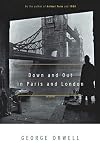
Down and Out in Paris and London is not a novel ... it’s a searing autopsy of dignity. Orwell drags you by the throat into the bowels of human existence, where grease coats your lungs, your stomach gnaws itself from hunger, and the stench of unwashed humanity clings like a curse you can’t scrub off.
Forget the polite image of “living rough.” This is the real thing: lice, filth, starvation, humiliation ... the slow rot of a man who’s become invisible. Orwell doesn’t romanticize show more poverty; he vivisects it. He shows you how despair isn’t loud or tragic ... it’s tedious, monotonous, and smells of cold cabbage water and damp wool.
His time in the Paris kitchens is a nightmare of futility ... endless piles of filthy plates, scalding water, and the hiss of oil so thick with grime you feel slimy just reading the words. Then London arrives like a wet slap ... the soup kitchens, the tramps shuffling from workhouse to workhouse, the cold so deep it seeps into your thoughts. It’s not just poverty you feel ... it’s degradation made tangible, a slow suffocation of spirit.
I read this book as a lazy, cocky young man and it scared the hell out of me. It was the slap I needed. I could smell the rot in those pages, taste the bitterness, and I swore I’d never, ever let myself fall into that kind of oblivion. Orwell made the struggle real and made me get off my ass and do something about it.
This isn’t literature to admire. It’s literature to endure. It doesn’t entertain; it haunts. You don’t finish it clean. You finish it grateful. For anyone who's ever thought about living hard just to experience that existence, read this ... and take the better road. show less
Forget the polite image of “living rough.” This is the real thing: lice, filth, starvation, humiliation ... the slow rot of a man who’s become invisible. Orwell doesn’t romanticize show more poverty; he vivisects it. He shows you how despair isn’t loud or tragic ... it’s tedious, monotonous, and smells of cold cabbage water and damp wool.
His time in the Paris kitchens is a nightmare of futility ... endless piles of filthy plates, scalding water, and the hiss of oil so thick with grime you feel slimy just reading the words. Then London arrives like a wet slap ... the soup kitchens, the tramps shuffling from workhouse to workhouse, the cold so deep it seeps into your thoughts. It’s not just poverty you feel ... it’s degradation made tangible, a slow suffocation of spirit.
I read this book as a lazy, cocky young man and it scared the hell out of me. It was the slap I needed. I could smell the rot in those pages, taste the bitterness, and I swore I’d never, ever let myself fall into that kind of oblivion. Orwell made the struggle real and made me get off my ass and do something about it.
This isn’t literature to admire. It’s literature to endure. It doesn’t entertain; it haunts. You don’t finish it clean. You finish it grateful. For anyone who's ever thought about living hard just to experience that existence, read this ... and take the better road. show less

This is the most frightening book I have ever read. I probably feel this way because I am living through the first four weeks of the Donald Trump presidency in the United States. I see so many parallels in this book with the direction our new government is going that this book almost seems like nonfiction rather than the dystopic fiction it was meant to be. I am terrified that my country is becoming a dictatorship. This book gives an outline of just how such a situation can happen.
The story show more takes one man, Winston Smith, who longs for freedom of thought and shows how he is slowly deprived of his ability to think for himself because his life is under control of Big Brother.
"How does one man assert power over another, Winston?"
Winston thought. "By making him suffer," he said. show less
The story show more takes one man, Winston Smith, who longs for freedom of thought and shows how he is slowly deprived of his ability to think for himself because his life is under control of Big Brother.
"How does one man assert power over another, Winston?"
Winston thought. "By making him suffer," he said. show less
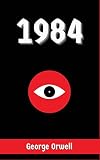
First things first. This is not a happy book, nor is it a quick jaunt through the meadow of careless reading. "1984" is the sum of two things: George Orwell's immense grasp of worldbuilding, and George Orwell's appreciation for his own intellectual farts.
If you are hoping to read this classic middle-century critique of fictional totalitarianism for a hopeful twinge at the end, you will be sorely disappointed. This is a tale of a hero who is not a hero, a government that is not a government, show more and a fundamentally unnecessary essay-style recap of the "events as they stand" bridging the gap between two major plot points.
1984 is a story about Winston Smith, an unassuming man nearing the age of forty in a world utterly dominated by a governmental system known only as the Party. You are immediately treated to a wealth of worldbuilding around Newspeak—a form of verbal information control masquerading as a language—and Ingsoc—English Socialism, Orwell's invention as inspired by socialist movements in Russia / Germany / China. There's a lot of onboarding, a lot of words thrown at you to be defined at some nebulous later date.
Despite being one of the chief "calling cards" of 1984, there is a profound LACK of Newspeak. We are treated to handful of words, or more accurately, UNwords which reduce the scope of English down to the bare essentials. Terms like BLACKWHITE, DOUBLETHINK, and CRIMESTOP. We are given definitions for these terms, and occasionally direct translations of full Newspeak sentences used in day-to-day life, but the actual prevalence OF Newspeak is cavernous in its absence. Like, if I can be honest, having DOUBLETHINK explained five separate times is immersion-breaking, man.
This is not because the concept of DOUBLETHINK, to believe in a pair of conflicting things at once, is boring. This is because the main character, Winston, reiterates his deductions on the meaning and role of Newspeak words such as DOUBLETHINK within the safety of his own mind three times too many. As a protagonist, Winston is hard to connect with. While I certainly did my best to meet at his level, Orwell makes it profoundly hard to connect with Winston Smith each time he uses the poor man as an authorial mouthpiece for political theory. Much of the meandering socio-economic conversations 1984 has with itself exist outside the characters' collective thought-space, pushing against their natural conclusions as story-telling devices.
What this means is that Winston will launch into an internal diatribe directed at nobody but himself, but he is supposed to be the reader, and the reader is also supposed to be lurking over his shoulder watching things happen, and the reader is also a nonentity whose impact is merely observational. Even the introduction of a firebrand such as Julia, a young woman brought up within the boundaries of the Party and no comprehension of the things outside it, fails to knock Winston out of a perpetual injured-wing death spiral. From the beginning of the book, things are simply happening to Winston and every matter is considered a rote expectation from him.
This is furthered by the ending, in which he is—to summarize down to the barest bones—is brainwashed into a state of passive obedience through tactics of mind control, reality control, stimulus control, and fear implantation. It is implied that Winston has not had a single thought which is his own, yet he is treated like a sort of pariah for behaving exactly as "irrationally" as the Party expected him to. THOUGHTCRIME, the idea that wrongdoing begins in the mind and the physical crime is merely secondary, is touted as the reasoning for Winston's ultimate fate. Yet conversely, the protagonist swears to die hating the figurehead overlord BIG BROTHER, master of the Party, even if only for a moment. Then he suffers for a chapter or so of implied timeskipping, and dies loving BIG BROTHER.
There's a message here, sure, but it is hidden by the heavy-handed theological ninja death shits that Orwell is unleashing in this public bathroom, one stall over from mine. I'm not even going to touch the fact that roughly one-half of a loooong chapter is just a recap of the political theory as established by the preceding 180ish pages, written by an invented heretic against the Party, which spans completely unbroken for paragraph after paragraph after paragraph. Winston doesn't even engage with this stuff. Like me, he admits that it just regurgitates all the things he already thought while being wordier—snootier—about the delivery. A disproportionate amount of this could have been a 3 sentence email!
Orwell subjects the reader to more of this meandering Socialism & Faults In Hierarchical Society 101 by pretending that his protagonist is reading this to his lover, with the intent of explaining it to her younger and less-theologcally-inclined mind. Winston does not, in fact, read this to his lover. We read it, as Emmanuel Goldstein drags on and on and on about the concept of reality control—something WELL established by this point in the story. Joy! I checked to see when this diatribe ended, or when the story actually picked up again, just to give myself the strength to forge on. Five more pages... Four more pages...
Ultimately, I did actually enjoy this book. I liked Syme, Parsons, O'Brien, Julia, and even Winston well enough. The pacing was alright until the last 1.5 chapters, and the worldbuilding was fundamentally insane with all the details that my brain likes to meander on. There were a lot of chillingly cruel scenes, a surprisingly forward-thinking approach to partners with previous sexual experience, and some era-typical nonsense about the effectiveness of torture. I think that THE BOOK should have just been a stand-alone addendum partnered with 1984 as additional reading, and that Orwell should have released at least some semblance of the 11th Newspeak Dictionary. That would have been awesome to build a TTRPG with, and a bit more fun than the seemingly-rushed final send-off of the last chapter.
As a book that treads into commentary on the modern day, it is definitely worth a read. Many elements of CRIMESTOP, the idea of becoming deliberately stupid as to avoid being reasoned with, are used in our political landscape alongside other terms cleverly initiated by Newspeak. No matter the party that you are addressing, the matter of purposeful unknowing and the concept of unmaking words which mean things is a constant threat. It is important to know that the opposite of good is not ungood, but evil, and that UNGOOD merely means the lack of good. 1984 does not make me feel disheartened, however, despite the harrowing finality of its own tale. Rather, it is defined specifically by the role that Winston plays in his torture scenes. Mankind, refusing to be destroyed by the unreality of a broken society. Winston Smith is a character who fails, but we know in our hearts that for a split second before the bullet struck him dead, he thought: DOWN WITH BIG BROTHER. So, march on.
Favorite character? That fat old prole doing her laundry outside the Charrington shop. I hope she's doing well. If anyone has her number, let me know. show less
If you are hoping to read this classic middle-century critique of fictional totalitarianism for a hopeful twinge at the end, you will be sorely disappointed. This is a tale of a hero who is not a hero, a government that is not a government, show more and a fundamentally unnecessary essay-style recap of the "events as they stand" bridging the gap between two major plot points.
1984 is a story about Winston Smith, an unassuming man nearing the age of forty in a world utterly dominated by a governmental system known only as the Party. You are immediately treated to a wealth of worldbuilding around Newspeak—a form of verbal information control masquerading as a language—and Ingsoc—English Socialism, Orwell's invention as inspired by socialist movements in Russia / Germany / China. There's a lot of onboarding, a lot of words thrown at you to be defined at some nebulous later date.
Despite being one of the chief "calling cards" of 1984, there is a profound LACK of Newspeak. We are treated to handful of words, or more accurately, UNwords which reduce the scope of English down to the bare essentials. Terms like BLACKWHITE, DOUBLETHINK, and CRIMESTOP. We are given definitions for these terms, and occasionally direct translations of full Newspeak sentences used in day-to-day life, but the actual prevalence OF Newspeak is cavernous in its absence. Like, if I can be honest, having DOUBLETHINK explained five separate times is immersion-breaking, man.
This is not because the concept of DOUBLETHINK, to believe in a pair of conflicting things at once, is boring. This is because the main character, Winston, reiterates his deductions on the meaning and role of Newspeak words such as DOUBLETHINK within the safety of his own mind three times too many. As a protagonist, Winston is hard to connect with. While I certainly did my best to meet at his level, Orwell makes it profoundly hard to connect with Winston Smith each time he uses the poor man as an authorial mouthpiece for political theory. Much of the meandering socio-economic conversations 1984 has with itself exist outside the characters' collective thought-space, pushing against their natural conclusions as story-telling devices.
What this means is that Winston will launch into an internal diatribe directed at nobody but himself, but he is supposed to be the reader, and the reader is also supposed to be lurking over his shoulder watching things happen, and the reader is also a nonentity whose impact is merely observational. Even the introduction of a firebrand such as Julia, a young woman brought up within the boundaries of the Party and no comprehension of the things outside it, fails to knock Winston out of a perpetual injured-wing death spiral. From the beginning of the book, things are simply happening to Winston and every matter is considered a rote expectation from him.
This is furthered by the ending, in which he is—to summarize down to the barest bones—is brainwashed into a state of passive obedience through tactics of mind control, reality control, stimulus control, and fear implantation. It is implied that Winston has not had a single thought which is his own, yet he is treated like a sort of pariah for behaving exactly as "irrationally" as the Party expected him to. THOUGHTCRIME, the idea that wrongdoing begins in the mind and the physical crime is merely secondary, is touted as the reasoning for Winston's ultimate fate. Yet conversely, the protagonist swears to die hating the figurehead overlord BIG BROTHER, master of the Party, even if only for a moment. Then he suffers for a chapter or so of implied timeskipping, and dies loving BIG BROTHER.
There's a message here, sure, but it is hidden by the heavy-handed theological ninja death shits that Orwell is unleashing in this public bathroom, one stall over from mine. I'm not even going to touch the fact that roughly one-half of a loooong chapter is just a recap of the political theory as established by the preceding 180ish pages, written by an invented heretic against the Party, which spans completely unbroken for paragraph after paragraph after paragraph. Winston doesn't even engage with this stuff. Like me, he admits that it just regurgitates all the things he already thought while being wordier—snootier—about the delivery. A disproportionate amount of this could have been a 3 sentence email!
Orwell subjects the reader to more of this meandering Socialism & Faults In Hierarchical Society 101 by pretending that his protagonist is reading this to his lover, with the intent of explaining it to her younger and less-theologcally-inclined mind. Winston does not, in fact, read this to his lover. We read it, as Emmanuel Goldstein drags on and on and on about the concept of reality control—something WELL established by this point in the story. Joy! I checked to see when this diatribe ended, or when the story actually picked up again, just to give myself the strength to forge on. Five more pages... Four more pages...
Ultimately, I did actually enjoy this book. I liked Syme, Parsons, O'Brien, Julia, and even Winston well enough. The pacing was alright until the last 1.5 chapters, and the worldbuilding was fundamentally insane with all the details that my brain likes to meander on. There were a lot of chillingly cruel scenes, a surprisingly forward-thinking approach to partners with previous sexual experience, and some era-typical nonsense about the effectiveness of torture. I think that THE BOOK should have just been a stand-alone addendum partnered with 1984 as additional reading, and that Orwell should have released at least some semblance of the 11th Newspeak Dictionary. That would have been awesome to build a TTRPG with, and a bit more fun than the seemingly-rushed final send-off of the last chapter.
As a book that treads into commentary on the modern day, it is definitely worth a read. Many elements of CRIMESTOP, the idea of becoming deliberately stupid as to avoid being reasoned with, are used in our political landscape alongside other terms cleverly initiated by Newspeak. No matter the party that you are addressing, the matter of purposeful unknowing and the concept of unmaking words which mean things is a constant threat. It is important to know that the opposite of good is not ungood, but evil, and that UNGOOD merely means the lack of good. 1984 does not make me feel disheartened, however, despite the harrowing finality of its own tale. Rather, it is defined specifically by the role that Winston plays in his torture scenes. Mankind, refusing to be destroyed by the unreality of a broken society. Winston Smith is a character who fails, but we know in our hearts that for a split second before the bullet struck him dead, he thought: DOWN WITH BIG BROTHER. So, march on.
Favorite character? That fat old prole doing her laundry outside the Charrington shop. I hope she's doing well. If anyone has her number, let me know. show less

It is quite amazing that a novel which is so depressing and so negative has not only been read widely but is still consumed by many people today. Why? Nothing positive happens and even more, it paints a very bleak picture of a possible future. The same thing that happened to me must have happened to many people: I couldn't put it down and I can't tell you why. Perhaps George Orwell's mastery of storytelling is even more amazing than his talents for prognostication.
The year is 1984, show more ironically now in our past, and the entire world is split up into a very few totalitarian states. Never do we learn if in fact these states are ruled by a single dictator and to me that was part of the intrigue because you never quite know how everything works. An rather anonymous office worker by the name of Winston, in charge of forging the past, decides to keep a diary to note down all those facts and thoughts he wants to keep. We get the distinct feeling that Winston isn't sure himself if his memories are truly real and truly his own. Every external piece of evidence to a threatening past is constantly erased or changed. We follow him as he searches for true history and true facts and we learn how someone survives in a state where nothing you do is ever private and where paranoia is simply common sense.
The novel 1984 gives us a protagonist who has no hope, and more sadly: no apparent interest in a better future. He is not even sure if he can remember if there was such a thing as a better past. His main talent, and that thing which appears to drive us mostly in going along with his telling, is his desire to write down everything he experiences in the hopes of coming up with some explanation as to how the world ended up in such a mess. He is curious about what is happening to him and his world but he doesn't seem to have any inclination in changing it. We are told he does indeed want revolution but the true inspiration or insight isn't there. Instead he appears to be eternally searching for answers which he hopes will tell him: was I making the past up or was it really different?
I keep coming back to the central question: why do people read this novel with such great interest? It is not escapist literature in any sense and the book lacks every feel-good trope we've come to expect from works of fiction. Yet, with all the gloom and darkness we're fascinated as to what will happen next and we can't stop wondering how the somber world of Big Brother keeps on ticking. show less
The year is 1984, show more ironically now in our past, and the entire world is split up into a very few totalitarian states. Never do we learn if in fact these states are ruled by a single dictator and to me that was part of the intrigue because you never quite know how everything works. An rather anonymous office worker by the name of Winston, in charge of forging the past, decides to keep a diary to note down all those facts and thoughts he wants to keep. We get the distinct feeling that Winston isn't sure himself if his memories are truly real and truly his own. Every external piece of evidence to a threatening past is constantly erased or changed. We follow him as he searches for true history and true facts and we learn how someone survives in a state where nothing you do is ever private and where paranoia is simply common sense.
The novel 1984 gives us a protagonist who has no hope, and more sadly: no apparent interest in a better future. He is not even sure if he can remember if there was such a thing as a better past. His main talent, and that thing which appears to drive us mostly in going along with his telling, is his desire to write down everything he experiences in the hopes of coming up with some explanation as to how the world ended up in such a mess. He is curious about what is happening to him and his world but he doesn't seem to have any inclination in changing it. We are told he does indeed want revolution but the true inspiration or insight isn't there. Instead he appears to be eternally searching for answers which he hopes will tell him: was I making the past up or was it really different?
I keep coming back to the central question: why do people read this novel with such great interest? It is not escapist literature in any sense and the book lacks every feel-good trope we've come to expect from works of fiction. Yet, with all the gloom and darkness we're fascinated as to what will happen next and we can't stop wondering how the somber world of Big Brother keeps on ticking. show less
Lists
Reading LIst (16)
Classics To read (1)
Read (1)
Didactic Fiction (1)
Futurism Works (1)
aijowenuwaneaw (1)
WISHLIST (1)
My Wishlist (1)
2014 (1)
Europe (1)
bound (1)
THE WAR ROOM (1)
Antiheroes (1)
Secret Histories (1)
AP Lit (1)
um actually (1)
Science Fiction (1)
Wishlist (1)
Take Four Books (1)
Read This Next (1)
100 (1)
Elevenses (1)
To Read (1)
Titles to Avoid (1)
Classics (1)
Books I've read (1)
Books (1)
Ambleside Books (1)
Best First Lines (1)
Revolutions (1)
top 100 (1)
Jim's Bookshelf (1)
Best Young Adult (1)
Banned Books (1)
SF Masterworks (1)
Books I've Read (1)
Books to buy (1)
Page Turners (1)
Future Visions (1)
Check Library (1)
Short and Sweet (1)
BitLife (2)
Tagged Cold War (2)
scav (2)
BBC Big Read (2)
1940s (2)
Banned Books (2)
Read (2)
Non-Fiction (2)
BBC Big Read (2)
Overdue Podcast (2)
2024 Reads (2)
Read (3)
Folio Society (3)
Five star books (4)
1930s (6)
Unread books (3)
Art of Reading (2)
Carole's List (2)
Classic Sci-Fi (2)
Best Satire (3)
el (3)
Backlisted (1)
stories at work (1)
Totalitarianism (1)
2025 (1)
100 knjiga (1)
Sense of place (1)
War Literature (1)
Wishlist (1)
current (1)
A Novel Cure (1)
BBC Top Books (2)
Delete This List (2)
Daria (2)
. (2)
Pageturners (2)
Best Dystopias (2)
. (2)
Favourite Books (2)
Awards


You May Also Like


Associated Authors
Statistics
- Works
- 377
- Also by
- 65
- Members
- 220,071
- Popularity
- #19
- Rating
- 4.1
- Reviews
- 3,364
- ISBNs
- 3,144
- Languages
- 54
- Favorited
- 976


