
Thomas Harding (1) (1968–)
Author of Hanns and Rudolf: The True Story of the German Jew Who Tracked Down and Caught the Kommandant of Auschwitz
For other authors named Thomas Harding, see the disambiguation page.
About the Author
Thomas Harding is a former documentary filmmaker and journalist who has written for the Financial Times and The Guardian, among other publications. He founded a television station in Oxford, England, and for many years was an award-winning publisher of a newspaper in West Virginia. He lives in show more Hampshire, England. show less
Image credit: wikimediacommons/poetsstone
Works by Thomas Harding
Hanns and Rudolf: The True Story of the German Jew Who Tracked Down and Caught the Kommandant of Auschwitz (2013) 456 copies, 25 reviews
The House by the Lake: One House, Five Families, and a Hundred Years of German History (2015) 379 copies, 21 reviews
The House by the Lake: The True Story of a House, Its History, and the Four Families Who Made It Home (2020) 42 copies, 3 reviews
Tagged
Common Knowledge
- Birthdate
- 1968
- Gender
- male
- Nationality
- UK
- Birthplace
- London, England, UK
- Associated Place (for map)
- England, UK
Members
Reviews
Hanns and Rudolf: The True Story of the German Jew Who Tracked Down and Caught the Kommandant of Auschwitz by Thomas Harding
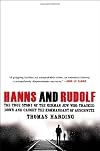
There have been many books written about the Holocaust, and I have read quite a few of them; Hanns and Rudolf by Thomas Harding adds a new dimension to the bibliography, in that it chronicles the lives of two Germans in parallel-one a German Jew who along with his family, barely made it out of Nazi Germany alive, and the other the Kommandant of Auschwitz. What makes this story unique is that it offers the personal perspective of each man’s experience, allowing the reader to view the horror show more in detail through the eyes of both men.
Hanns Alexander and his twin brother Paul were members of an affluent Jewish family in Berlin. Rudolf Höss was a farmer who fell in with a young Adolf Hitler, getting caught up in the Beer Hall Putsch which got him imprisoned for 4 years. As an early member of the Nazi party, Höss would climb the ranks until becoming a Kommandant of the infamous Auschwitz concentration camp. He would be instrumental in the design and implementation of the most brutal prison system the world has ever seen.
Thomas Harding has put together a well written historical biography of both men, with their life stories told in tandem from childhood to their fateful meeting at war’s end. Hanns, along with his family were able to escape to England, where both he and his brother Paul enlisted in the British army, with Hanns becoming a lead investigator and Nazi Hunter, in a quest to bring the Reich’s leaders to justice. Hanns is the man responsible for tracking and capturing Rudolf Höss, who would be convicted during the Nuremberg Trials.
As the world is losing the last remaining witnesses to World War II, this book is a reminder of what the human race is capable of, both good and bad, while educating a new generation in what sacrifices have been made by their ancestors. The dual biographies go into intricate detail concerning events that have contributed to the rise of the Nazi party and the war that ravaged much of Europe; events such as the 1929 Stock Market crash, and its effect on the German economy, as well as the ineffective Weimar Government, which fermented Nationalism among most of the population.
Harding presents an excellent chronological time line of events, in an easy to follow style which reads like a thrilling novel. Much of the personal information on Höss is taken from his autobiography, written while in prison awaiting trial. He was the first high ranking officer to admit to his crimes, while giving detailed information on the building of the concentration camp system and unlike his peers, Höss laid bare the Reich’s objectives of wiping European Jews from the face of the earth.
I highly recommend this book for anyone interested in World War II history, Jewish Studies, or a compelling biography with a gripping story. show less
Hanns Alexander and his twin brother Paul were members of an affluent Jewish family in Berlin. Rudolf Höss was a farmer who fell in with a young Adolf Hitler, getting caught up in the Beer Hall Putsch which got him imprisoned for 4 years. As an early member of the Nazi party, Höss would climb the ranks until becoming a Kommandant of the infamous Auschwitz concentration camp. He would be instrumental in the design and implementation of the most brutal prison system the world has ever seen.
Thomas Harding has put together a well written historical biography of both men, with their life stories told in tandem from childhood to their fateful meeting at war’s end. Hanns, along with his family were able to escape to England, where both he and his brother Paul enlisted in the British army, with Hanns becoming a lead investigator and Nazi Hunter, in a quest to bring the Reich’s leaders to justice. Hanns is the man responsible for tracking and capturing Rudolf Höss, who would be convicted during the Nuremberg Trials.
As the world is losing the last remaining witnesses to World War II, this book is a reminder of what the human race is capable of, both good and bad, while educating a new generation in what sacrifices have been made by their ancestors. The dual biographies go into intricate detail concerning events that have contributed to the rise of the Nazi party and the war that ravaged much of Europe; events such as the 1929 Stock Market crash, and its effect on the German economy, as well as the ineffective Weimar Government, which fermented Nationalism among most of the population.
Harding presents an excellent chronological time line of events, in an easy to follow style which reads like a thrilling novel. Much of the personal information on Höss is taken from his autobiography, written while in prison awaiting trial. He was the first high ranking officer to admit to his crimes, while giving detailed information on the building of the concentration camp system and unlike his peers, Höss laid bare the Reich’s objectives of wiping European Jews from the face of the earth.
I highly recommend this book for anyone interested in World War II history, Jewish Studies, or a compelling biography with a gripping story. show less
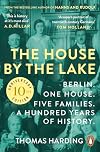
Berlin. One House. Five Families. A hundred years of History.
The above description on the cover of The House by the Lake caught my attention straight away because I love stories about old houses and their inhabitants down through the years and the fact that The house by the Lake by Thomas Harding was located on the outskirts of Berlin and Harding's ancestors were forced to leave when the Nazis swept to power really enhanced my interest. A home which played a major part of so many family's show more lives, a home where a concrete footpath cut through the garden marking where the Berlin Wall had stood for nearly three decades.
Thomas Harding was eager to save his ancestral home from demolition and began the mammoth task of researching the house's history and that of the five families who were connected with the house. A noble farmer, a prosperous Jewish family, a renowned Nazi composer, a widow and her children and a Stasi informant.
This book is a wonderful read well researched and well written, and and what could easily have been just a family memoir turns out to be a book that will be of great historical interest to many. The author has a talent for research and turning his research into a terrific historical read and account of life behind the Iron curtain. I have read a few books about the Iron Curtain and German reunification but this is one that really really offers so much more and brings to life twentieth century Germany for the reader.
I picked up a hard copy of this book in my local bookstore and had never come across the writer before. I have enjoyed every minute I spent with this book so much so that I announced to my husband on finishing the book " I have to visit Berlin" and his usual response was " another book another trip"
A great read for those interested in social history and twentieth century Germany and a book that is moving and evocative but never too sentimental. The book contains numerous photographs, Family trees, Maps of Germany & Berlin and an extremely detailed notes section which I really appreciated. show less
The above description on the cover of The House by the Lake caught my attention straight away because I love stories about old houses and their inhabitants down through the years and the fact that The house by the Lake by Thomas Harding was located on the outskirts of Berlin and Harding's ancestors were forced to leave when the Nazis swept to power really enhanced my interest. A home which played a major part of so many family's show more lives, a home where a concrete footpath cut through the garden marking where the Berlin Wall had stood for nearly three decades.
Thomas Harding was eager to save his ancestral home from demolition and began the mammoth task of researching the house's history and that of the five families who were connected with the house. A noble farmer, a prosperous Jewish family, a renowned Nazi composer, a widow and her children and a Stasi informant.
This book is a wonderful read well researched and well written, and and what could easily have been just a family memoir turns out to be a book that will be of great historical interest to many. The author has a talent for research and turning his research into a terrific historical read and account of life behind the Iron curtain. I have read a few books about the Iron Curtain and German reunification but this is one that really really offers so much more and brings to life twentieth century Germany for the reader.
I picked up a hard copy of this book in my local bookstore and had never come across the writer before. I have enjoyed every minute I spent with this book so much so that I announced to my husband on finishing the book " I have to visit Berlin" and his usual response was " another book another trip"
A great read for those interested in social history and twentieth century Germany and a book that is moving and evocative but never too sentimental. The book contains numerous photographs, Family trees, Maps of Germany & Berlin and an extremely detailed notes section which I really appreciated. show less
Hanns and Rudolf: The True Story of the German Jew Who Tracked Down and Caught the Kommandant of Auschwitz by Thomas Harding
Hanns and Rudolf: The True Story of the German Jew Who Tracked Down and Caught the Kommandant of Auschwitz, by Thomas Harding, is a brilliantly written and well-researched book.
This non-fiction account of two men whose lives converge, told through the eyes of the author, whose uncle was Lieutenant Hanns Alexander. Hanns was a Jewish German, and also the son of an immigrant family who fled Germany for England. They had to turn over all of their holdings in order to gain exit visas.
Rudolph show more Hoss (not to be confused with Rudolf Hess) was a farmer, a man who enjoyed the earth and farming. Farming eventually became far removed from his life, and it eluded him once he joined the "Schutz-Staffel" (SS), under the suggestion of Heinrich Himmler.
The author refers to the two men by their given name, and I shall do the same. Their personal lives are depicted throughout the pages, regarding their childhoods, their families, their adult lives and their aspirations.
One thing that struck me was the dedication to Judaism within the Alexander family. And, cemented within that, is the family Torah, the "Alexander Torah".
Within rotating chapters detailing the lives of both Hanns and Rudolf, the reader gains an intense perspective of their backgrounds, their personal lives, their goals and their individual quests in the name of country and war.
Hanns' life takes dramatic turns once he is in England. He wants nothing more than to be viewed as "English as possible" and wants to gain citizenship. He joins the British Army, and is told that once he serves his enlistment time, he would gain citizenship. This enlistment leads to more than he could ever imagine.
The pages are infused with compelling documentation, letters, forms, photographs, testimonies, and portions of Rudolf's own journal entries. From all of the intense documentations, one is given perspectives that are unimaginable, concerning Rudolf's rise to Kommandant, not only Kommandant, but Kommandant of Auschwitz.
Rudolf writes forthrightly concerning the atrocities he is involved with, and this reader could see how his initial attitude of concern for Jews eventually turns into one of pure evilness and lack of caring and concern for humanity. How he went from a man who was repulsed by witnessing camp murders (yet, stood there watching as if it was a normal fact of life, to save his reputation), to a man whose attitude changed dramatically. He became a man possessed with death and destruction, and a man who had no remorse or concern for his implementation of the gas chambers.
He had a hand in the design and was witness to the first gassings, he programmed the entire operation, employing not only his power, but whatever was available in order to incorporate destruction and horrific atrocities. He oversaw over one million individuals exterminated at the hands of the Nazis. He was the master planner, and created the extermination program that existed, including the procedures, schedules, structures, and instructions. He was fearless, merciless and steadfast in his pursuit to please his superiors.
Hanns moved up through the ranks, and his Lieutenant status saw him eventually given the status of respect he desired. He took part in the Normandy Landing. In 1945 he was afforded a role on the newly formed War crimes Investigation Team for England, based in a Brussels suburb. This position took him to Bergen-Belsen concentration camp where he saw the remains of unspeakable acts of genocide, after liberation.
His reputation fostered, he was given the job as an interpreter, taking notes from interviews and witness statements in German and then transcribing them into English. he interviewed several high-ranking individuals affiliated with Auschwitz, and other individuals from the SS. He untiring efforts garnered information that proved that certain SS members knew that gassings/exterminations occurred at Auschwitz.
The war crimes trial began with the trial of Josef Kramer and forty four other people. Hanns could see, after a few days of trial testimony, Hanns knew in his heart of hearts that there were others who were conspirators or who headed the exterminations of the Jews.
The War Crimes Group was created, and those involved, including Hanns, were trying to locate SS high ranking officials through their intelligence experise. In 1946, he looked over the list of war criminals, and Rudolf's name was next. He began investigating and searching for Rudolf. He was relentless in his investigation and searching. He left no stone unturned, every name was interviewed and reinterviewed. On March 10 1946, Rudolf was taken to prison.
From there, the rest is history. Rudolf confessed to murdering over two million individuals. He was hanged at Auschwitz, in the same spot where Jews were hung.
Hanns and Rudolf is an incredibly compelling book, reading like a spy story of sorts. It is intense, written brilliantly and with extreme accuracy, through the dedication of exhaustive research in all of its formats. Harding has done humanity an amazing tribute to the tirelessness of Hanns and his efforts to right the wrongs through justice being done.
Harding has also shown the world a side of Rudolf that is invaluable for historical purposes. The reader is taken on a journey of a man who controlled his emotions, controlled the deaths of Jews, and who controlled Auschwitz with a firm hand.
I knew the book would be intense and filled with horrific situations and events. Yet, I read it, and within the pages of depictions of Auschwitz and the lack of humanity within the electrified fences, I was chilled to the bone reading about some of the circumstances, and more chilled and horrified at how Rudolf seemed to slough off the atrocities as if they were nothing of importance.
Harding's efforts are to be applauded. Hanns and Rudolf: The True Story of the German Jew Who Tracked Down and Caught the Kommandant of Auschwitz is a work of extreme brilliance and Thomas Harding is masterful in the telling. From the opening page, describing Hanns' funeral, to the last page, I was captivated and involved in reading the relaying of history, and inhaling the familial dynamics, especially of the Alexander family. Hanns and Rudolf belongs on every book shelf, personal or otherwise. It is books such as this that will keep history alive, and will keep it not only for this generation, but generations past, and generations in the future. It is an invaluable historical resource.
I want to thank Leah Johanson, from Simon and Schuster for the Advanced Uncorrected Proof of Hanns and Rudolf. I am grateful to have received it, and to have read it. Thank you! show less
This non-fiction account of two men whose lives converge, told through the eyes of the author, whose uncle was Lieutenant Hanns Alexander. Hanns was a Jewish German, and also the son of an immigrant family who fled Germany for England. They had to turn over all of their holdings in order to gain exit visas.
Rudolph show more Hoss (not to be confused with Rudolf Hess) was a farmer, a man who enjoyed the earth and farming. Farming eventually became far removed from his life, and it eluded him once he joined the "Schutz-Staffel" (SS), under the suggestion of Heinrich Himmler.
The author refers to the two men by their given name, and I shall do the same. Their personal lives are depicted throughout the pages, regarding their childhoods, their families, their adult lives and their aspirations.
One thing that struck me was the dedication to Judaism within the Alexander family. And, cemented within that, is the family Torah, the "Alexander Torah".
Within rotating chapters detailing the lives of both Hanns and Rudolf, the reader gains an intense perspective of their backgrounds, their personal lives, their goals and their individual quests in the name of country and war.
Hanns' life takes dramatic turns once he is in England. He wants nothing more than to be viewed as "English as possible" and wants to gain citizenship. He joins the British Army, and is told that once he serves his enlistment time, he would gain citizenship. This enlistment leads to more than he could ever imagine.
The pages are infused with compelling documentation, letters, forms, photographs, testimonies, and portions of Rudolf's own journal entries. From all of the intense documentations, one is given perspectives that are unimaginable, concerning Rudolf's rise to Kommandant, not only Kommandant, but Kommandant of Auschwitz.
Rudolf writes forthrightly concerning the atrocities he is involved with, and this reader could see how his initial attitude of concern for Jews eventually turns into one of pure evilness and lack of caring and concern for humanity. How he went from a man who was repulsed by witnessing camp murders (yet, stood there watching as if it was a normal fact of life, to save his reputation), to a man whose attitude changed dramatically. He became a man possessed with death and destruction, and a man who had no remorse or concern for his implementation of the gas chambers.
He had a hand in the design and was witness to the first gassings, he programmed the entire operation, employing not only his power, but whatever was available in order to incorporate destruction and horrific atrocities. He oversaw over one million individuals exterminated at the hands of the Nazis. He was the master planner, and created the extermination program that existed, including the procedures, schedules, structures, and instructions. He was fearless, merciless and steadfast in his pursuit to please his superiors.
Hanns moved up through the ranks, and his Lieutenant status saw him eventually given the status of respect he desired. He took part in the Normandy Landing. In 1945 he was afforded a role on the newly formed War crimes Investigation Team for England, based in a Brussels suburb. This position took him to Bergen-Belsen concentration camp where he saw the remains of unspeakable acts of genocide, after liberation.
His reputation fostered, he was given the job as an interpreter, taking notes from interviews and witness statements in German and then transcribing them into English. he interviewed several high-ranking individuals affiliated with Auschwitz, and other individuals from the SS. He untiring efforts garnered information that proved that certain SS members knew that gassings/exterminations occurred at Auschwitz.
The war crimes trial began with the trial of Josef Kramer and forty four other people. Hanns could see, after a few days of trial testimony, Hanns knew in his heart of hearts that there were others who were conspirators or who headed the exterminations of the Jews.
The War Crimes Group was created, and those involved, including Hanns, were trying to locate SS high ranking officials through their intelligence experise. In 1946, he looked over the list of war criminals, and Rudolf's name was next. He began investigating and searching for Rudolf. He was relentless in his investigation and searching. He left no stone unturned, every name was interviewed and reinterviewed. On March 10 1946, Rudolf was taken to prison.
From there, the rest is history. Rudolf confessed to murdering over two million individuals. He was hanged at Auschwitz, in the same spot where Jews were hung.
Hanns and Rudolf is an incredibly compelling book, reading like a spy story of sorts. It is intense, written brilliantly and with extreme accuracy, through the dedication of exhaustive research in all of its formats. Harding has done humanity an amazing tribute to the tirelessness of Hanns and his efforts to right the wrongs through justice being done.
Harding has also shown the world a side of Rudolf that is invaluable for historical purposes. The reader is taken on a journey of a man who controlled his emotions, controlled the deaths of Jews, and who controlled Auschwitz with a firm hand.
I knew the book would be intense and filled with horrific situations and events. Yet, I read it, and within the pages of depictions of Auschwitz and the lack of humanity within the electrified fences, I was chilled to the bone reading about some of the circumstances, and more chilled and horrified at how Rudolf seemed to slough off the atrocities as if they were nothing of importance.
Harding's efforts are to be applauded. Hanns and Rudolf: The True Story of the German Jew Who Tracked Down and Caught the Kommandant of Auschwitz is a work of extreme brilliance and Thomas Harding is masterful in the telling. From the opening page, describing Hanns' funeral, to the last page, I was captivated and involved in reading the relaying of history, and inhaling the familial dynamics, especially of the Alexander family. Hanns and Rudolf belongs on every book shelf, personal or otherwise. It is books such as this that will keep history alive, and will keep it not only for this generation, but generations past, and generations in the future. It is an invaluable historical resource.
I want to thank Leah Johanson, from Simon and Schuster for the Advanced Uncorrected Proof of Hanns and Rudolf. I am grateful to have received it, and to have read it. Thank you! show less

In 1927 Thomas Harding’s great-grandfather built a weekend cottage for his family on the shore of a lake in Groß Glienicke, on the western edge of Berlin. The Alexanders were able to enjoy the house for a few years before Hitler’s anti-Jewish policies made them emigrate to Britain. Another family, the Meisels, then acquired the place cheaply as “abandoned Jewish property”, but lost it again when it became part of the Soviet Zone and later the DDR. Two further families lived in the show more house during the DDR period, when it changed from dacha to permanent residence — but with the peculiarity that the Berlin Wall now ran through the back garden, cutting the house off from the lake.
Harding went to Berlin in 2013 to look for the now-abandoned house his relatives had talked about, and to research its history by talking to residents of Groß Glienicke, an exercise which culminated in a project to turn the house into a protected monument and eventually a museum of local history.
Harding uses a mixture of oral history and documents to chronicle the history of the house and the village from the 1890s, before the local landowner sold off portions of his estate for housing, right through to the campaign to restore the house. This is all quite engaging, particularly because Harding treats all the people who have lived in the house with equal respect and focuses on their experience of living there rather than allowing himself to be tempted into recriminations about strangers living in the house his family built for themselves. We get a lively — albeit somewhat arbitrary — slice of German social history through time, with quite a lot of interesting details.
The book is a little less successful when Harding is trying to fill us in on the bigger picture of German history to give a context to the events: inevitably, he has to condense and simplify, and he often ends up with a story that is lacking in nuance and precision. A lot of relevant information is banished to the (ridiculously long) endnotes, and Penguin make things worse by not allowing him to put references to the notes in the text: you have to guess which passages might have notes attached to them and which don’t.
Not bad on the whole, but I think there are much more interesting books about German history written by actual Germans (OK, Australians too…). show less
Harding went to Berlin in 2013 to look for the now-abandoned house his relatives had talked about, and to research its history by talking to residents of Groß Glienicke, an exercise which culminated in a project to turn the house into a protected monument and eventually a museum of local history.
Harding uses a mixture of oral history and documents to chronicle the history of the house and the village from the 1890s, before the local landowner sold off portions of his estate for housing, right through to the campaign to restore the house. This is all quite engaging, particularly because Harding treats all the people who have lived in the house with equal respect and focuses on their experience of living there rather than allowing himself to be tempted into recriminations about strangers living in the house his family built for themselves. We get a lively — albeit somewhat arbitrary — slice of German social history through time, with quite a lot of interesting details.
The book is a little less successful when Harding is trying to fill us in on the bigger picture of German history to give a context to the events: inevitably, he has to condense and simplify, and he often ends up with a story that is lacking in nuance and precision. A lot of relevant information is banished to the (ridiculously long) endnotes, and Penguin make things worse by not allowing him to put references to the notes in the text: you have to guess which passages might have notes attached to them and which don’t.
Not bad on the whole, but I think there are much more interesting books about German history written by actual Germans (OK, Australians too…). show less
Lists
Awards


You May Also Like


Associated Authors
Statistics
- Works
- 15
- Members
- 1,155
- Popularity
- #22,249
- Rating
- 4.0
- Reviews
- 60
- ISBNs
- 119
- Languages
- 10
- Favorited
- 2