
Ken Asamatsu
Author of Night Voices, Night Journeys
About the Author
Series
Works by Ken Asamatsu
Spherical Trigonometry 1 copy
Associated Works
蠱惑の本―異形コレクション (光文社文庫) — Contributor — 1 copy
Tagged
Common Knowledge
- Legal name
- 朝松 健
- Birthdate
- 1956-04-10
- Gender
- male
- Nationality
- Japan
- Birthplace
- Sapporo, Hokkaido, Japan
- Associated Place (for map)
- Hokkaido, Japan
Members
Reviews
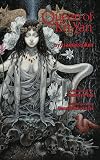
Queen of K'n-yan is the latest Cthulhu mythos offering from Kurodahan Press; it is written by Asamatsu Ken and translated by Kathleen Taji. Asamatsu-san should be familiar to all serious Cthulhu mythos fans for the 4 book series Lairs of the Hidden Gods, translations of modern Japanese mythos fiction. Queen of K'n-yan was apparently written in 1993 but set in 2007. I'm not sure if the author slightly revised it with the later release of the translated edition? This is its first publication show more available to English speakers. List price is $16.00 but discounted to $14.40 from Amazon. The text runs from page 3-213, pretty good value for the money with a price tag similar to other genre trade paperbacks. There is a very entertaining introduction from Darrell Schweitzer that puts the book into its proper context while giving no more spoilers than the blurb on the back, and a page with very brief biographies of the author, translator and cover artist. The exquisite cover art is by Ayami Kojima. I can't get over how beautiful the cover art has been for the Kurodahan Press books has been. Akihiro Yamada gave us the covers for the Lairs of the Hidden Gods and it was very unfortunate that none of his work was included in the recent Centipede Press book of Lovecraftian art. Ayami san's cover is equally wonderful. Production qualities are very good with few typos in this POD book. By and large I had no complaints about the translation except in the action sequences near the end where the writing seemed to lose some hint of immediacy, and I was left wondering if this was due to the author or the translator.
The antecedent story for this novel was the `revision' of Zealia Bishop's story The Mound, which was actually probably 99+% written by Lovecraft (which probably gets an award for the cheesiest use of an italicized ending, being written in both Spanish and English). The concept of a primordially ancient people living undetected in gigantic caverns under the earth must have resonated with Asamatsu-san, resident of a land with a culture thousands of years old, a land of catastrophic earthquakes, a land adjacent to China where discoveries like the terra cotta army are made during mundane excavations. Asamatsu-san did what we would hope any mythos author would do: he took a concept and ran with it. This is no pastiche and is not slavishly beholden to Lovecraft; it is wholly original and all the better for it. No antiquarian resident of Boston poking around a Yig haunted desert here! For the westerner approaching this, it comes from entirely different traditions than our own and a bit of knowledge of some history of Japan and China, which the Japanese author takes as a given for his audience, would be very helpful (in fact, I wish Darrell Schweitzer had provided this in his introduction; maybe it is not necessary as you can infer what you need to, but it would have facilitated things for me.). The occurrence of crimes against humanity in World War II in the west mainly brings to mind Hitler's death camps but in Asia calls to mind Japanese experimentation with infecting Chinese and Manchurian citizens with biological agents. Many scientists from the notorious Unit 731 were never prosecuted. This is fertile ground for a Japanese author of horror fiction. Another piece of history that helps the story make sense is the Yin dynasty (perhaps better known to us westerners as the Shang dynasty), which ruled parts of China from about 1700 to about 1100 BC. The immediate antecedent state was the Xia dynasty, which possibly could be mythical. The Shang dynasty represented fire, and may have needed to create an opponent who they overcame who represented water. Thus the Xia may not have actually been a real political entity. What is important for our story is the opposition of the water people to those of the fire. Finally this story uses political realities of 1990s Asia. Japan's economic star is fading and wealthy Chinese businesses are investing heavily in Japanese companies. To the Japanese, the thought of Chinese economic (or worse, military) masters may be very unpalatable, and adds to the disquieting atmosphere Asamatsu-san is creating for his readers. Whew! Now what about the book itself?
Briefly, in the midst of a relentlessly scorching heat wave and with news of severe earth quakes happening in China, Morishita Anri, a molecular biologist, is driving to her new job in an ultramodern and imposingly large building, the headquarters of Japan Gene Engineering (JGE). Interestingly, Anri is a very girly name in Japan, perhaps like Missy or Tootsie here, making what she ends up doing seem all the more shocking. Once inside the immense tower, things get very weird very quickly. Anri meets an older scientist from China named Dr. Li, who is a very formidable woman. Perhaps she is Anri's mentor or perhaps she is a fiendish opponent. Certainly it becomes obvious that the two main characters are somehow linked intimately. Anri had only a sketchy idea about what she would be doing for JGE, but it turns out the Chinese military is heavily involved. A mummy has been discovered under the earth in China and she may be a denizen of the mythical kingdom of K'n-yan, which may be the origin of early Chinese mythology. Anri unravels the mummy's genetic code, which is discovered to be unhuman. It turns out Dr. Li probably already knew this but needed Anri to find out some other puzzle hidden in this mysterious DNA. When she uncovers what may be a missing piece, tying into the Japanese biological experimentation in World War II, all hell literally breaks loose.
I have indicated how well Asamatsu-san synthesizes varying modern elements with Asian history and a Lovecraftian idea. This novel works wonderfully well on so many levels; I found it to be a refreshingly original and vivid Cthulhu mythos novel. Unlike many mythos pastiches, there are exciting action sequences as well as otherworldly horrific images. The two main characters are believably drawn and come to life on the page. I liked everything: the prose, the plot, the characters, the exotic (for me) cultural setting and history and the Lovecraftian elements. The denouement was just about perfect. Anyone who cares about Cthulhu mythos fiction needs to read this. I can only wonder what other Lovecraftian wonders have been published in Japan or elsewhere, and when we might ever see them. Urgently recommended! show less
The antecedent story for this novel was the `revision' of Zealia Bishop's story The Mound, which was actually probably 99+% written by Lovecraft (which probably gets an award for the cheesiest use of an italicized ending, being written in both Spanish and English). The concept of a primordially ancient people living undetected in gigantic caverns under the earth must have resonated with Asamatsu-san, resident of a land with a culture thousands of years old, a land of catastrophic earthquakes, a land adjacent to China where discoveries like the terra cotta army are made during mundane excavations. Asamatsu-san did what we would hope any mythos author would do: he took a concept and ran with it. This is no pastiche and is not slavishly beholden to Lovecraft; it is wholly original and all the better for it. No antiquarian resident of Boston poking around a Yig haunted desert here! For the westerner approaching this, it comes from entirely different traditions than our own and a bit of knowledge of some history of Japan and China, which the Japanese author takes as a given for his audience, would be very helpful (in fact, I wish Darrell Schweitzer had provided this in his introduction; maybe it is not necessary as you can infer what you need to, but it would have facilitated things for me.). The occurrence of crimes against humanity in World War II in the west mainly brings to mind Hitler's death camps but in Asia calls to mind Japanese experimentation with infecting Chinese and Manchurian citizens with biological agents. Many scientists from the notorious Unit 731 were never prosecuted. This is fertile ground for a Japanese author of horror fiction. Another piece of history that helps the story make sense is the Yin dynasty (perhaps better known to us westerners as the Shang dynasty), which ruled parts of China from about 1700 to about 1100 BC. The immediate antecedent state was the Xia dynasty, which possibly could be mythical. The Shang dynasty represented fire, and may have needed to create an opponent who they overcame who represented water. Thus the Xia may not have actually been a real political entity. What is important for our story is the opposition of the water people to those of the fire. Finally this story uses political realities of 1990s Asia. Japan's economic star is fading and wealthy Chinese businesses are investing heavily in Japanese companies. To the Japanese, the thought of Chinese economic (or worse, military) masters may be very unpalatable, and adds to the disquieting atmosphere Asamatsu-san is creating for his readers. Whew! Now what about the book itself?
Briefly, in the midst of a relentlessly scorching heat wave and with news of severe earth quakes happening in China, Morishita Anri, a molecular biologist, is driving to her new job in an ultramodern and imposingly large building, the headquarters of Japan Gene Engineering (JGE). Interestingly, Anri is a very girly name in Japan, perhaps like Missy or Tootsie here, making what she ends up doing seem all the more shocking. Once inside the immense tower, things get very weird very quickly. Anri meets an older scientist from China named Dr. Li, who is a very formidable woman. Perhaps she is Anri's mentor or perhaps she is a fiendish opponent. Certainly it becomes obvious that the two main characters are somehow linked intimately. Anri had only a sketchy idea about what she would be doing for JGE, but it turns out the Chinese military is heavily involved. A mummy has been discovered under the earth in China and she may be a denizen of the mythical kingdom of K'n-yan, which may be the origin of early Chinese mythology. Anri unravels the mummy's genetic code, which is discovered to be unhuman. It turns out Dr. Li probably already knew this but needed Anri to find out some other puzzle hidden in this mysterious DNA. When she uncovers what may be a missing piece, tying into the Japanese biological experimentation in World War II, all hell literally breaks loose.
I have indicated how well Asamatsu-san synthesizes varying modern elements with Asian history and a Lovecraftian idea. This novel works wonderfully well on so many levels; I found it to be a refreshingly original and vivid Cthulhu mythos novel. Unlike many mythos pastiches, there are exciting action sequences as well as otherworldly horrific images. The two main characters are believably drawn and come to life on the page. I liked everything: the prose, the plot, the characters, the exotic (for me) cultural setting and history and the Lovecraftian elements. The denouement was just about perfect. Anyone who cares about Cthulhu mythos fiction needs to read this. I can only wonder what other Lovecraftian wonders have been published in Japan or elsewhere, and when we might ever see them. Urgently recommended! show less
The last of a fascinating, rare, unique series, "The Dreaming God" concludes this collection of eldritch Cthulhu Mythos fiction from Japan, and while not the strongest entry in the Lairs of the Hidden Gods series, it is a nice end to an interesting assemblage of tales. I quite enjoyed viewing Lovecraft's style of cosmic horror filtered through a Japanese point of view, and the stories here highlight some thought-provoking aspects of Japanese culture. For instance, Lovecraft's story "The show more Shadow Over Innsmouth," seems to resonate strongly in the series, with three stories in this volume drawing inspiration from the Deep Ones depicted in that story. These stories are, in my mind, some of the most compelling in the series and "City of the Dreaming God," by Yufuko Senowo was my favorite here, as two academics realize how strange the little Japanese mountain town overlooking the sea really is, with some intriguing philosophical and theological debates included as well. Fushimi Kenji's "Rshanabi Street," also provides a dark exploration of a seedy, but mysterious, street in Tokyo, making for some very atmospheric moments. A worthy conclusion to an intriguing series. show less
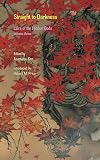
The third of four titles in the "Lairs of the Hidden Gods" anthology series of Lovecraft inspired fiction from Japan, "Straight to Darkness" offers more unique cosmic horror tales in English for the first time. With awesome cover art drawing from the four seasons, this "autumn" entry includes some very interesting takes on the "Cthulhu Mythos." Like any anthology, there is a mix of ideas, and while I can't say I really enjoyed all of them, there is some neat, scary stuff in here for devotees show more of Lovecraft. The translation in a few of the tales were a bit stilted, but for the most part, I feel that they come through with all of their spookiness intact. Some were traditional pastiches such as Kida Junichiro's "Keepsake of the Grandfather," in which a family heirloom from the South Pacific brings strange and unwelcome attention in 1930s Japan, while others, such as Takeuchi Yoshikazu's "She Flows," take an entirely mundane but bleak look at the horror of life for a pair of young women in the soul numbing ennui of contemporary Japan (not Lovecraftian in style, but Lovecraftian in spirit, perhaps?).
My personal favorites were Sano Shiro's "Horror Special," which deals with strange goings on at the filming of an adaptation of the "The Dunwich Horror" for Japanese TV and Aramata Hiroshi's "The Road," in which a Japanese tourist in Providence, RI, encounters ghosts from Lovecraft's life. "C-City," by Kobayashi Yasumi, just might be the best interpretation of Cthulhu in the modern world I've seen yet. show less
My personal favorites were Sano Shiro's "Horror Special," which deals with strange goings on at the filming of an adaptation of the "The Dunwich Horror" for Japanese TV and Aramata Hiroshi's "The Road," in which a Japanese tourist in Providence, RI, encounters ghosts from Lovecraft's life. "C-City," by Kobayashi Yasumi, just might be the best interpretation of Cthulhu in the modern world I've seen yet. show less
Mythos fans everywhere should rejoice at the release of Straight to Darkness, the third volume in the landmark series of modern Lovecraftian fiction from Japan. This book shares all of the strengths of the previous two volumes. The cover art by Yamada Akihiro is phenomenally gorgeous, showing a demon statue concealed in autumnal woods...or is it a statue? I thought there was no way the painting gracing the cover of Inverted Kingdom could be bettered but I stand corrected. The book is POD and show more production qualities are good; there were no obvious editorial gaffes. Translations were seamless with no awkwardness coming between the reader and the story (unlike Inverted Kingdom where a few things fell jarringly on the ear (or eye)). Page count is about 330. This includes the introductions, cover sheets for the stories, individual story introductions, nonfiction essay and author and translator minbios, but still allowed a generous page number for each story. The introduction by Asamatsu Ken was just perfect at setting the mood. The introduction by Robert Price (yes, he's back, and no, he's not going away) was an amusing comparison of the Cthulhu mythos and the Godzilla mythos. I would avoid reading the individual introductions until you finish the actual story as they can contain spoilers. For the most part they were useful. The nonfiction essay was about the Cthulhu mythos in rock and roll, and was a very diverting read but didn't seem to have much to do with Japan. Price was $20, not discounted but available for free shipping on Amazon if you buy $25 worth of stuff. Here are the contents:
ASAMATSU Ken - Foreword: "Quivering Brainstems" translated by Edward LIPSETT
TANAKA Hirofumi - "The Secret Memoir of the Missionary - Prologue" translated by Daniel DAY
KIDA Jun'ichiro - "A Keepsake of Grandfather" translated by K. Bird LINCOLN
SANO Shiro - "Horror Special" translated by Daniel DAY
ARAMATA Hiroshi - "The Road" translated by Kathleen TAJI
TAKEUCHI Yoshikazu - "She Flows" translated by Nora Stevens HEATH
KOBAYASHI Yasumi - "C-City" translated by Kathleen TAJI
TOMONO Sho - "Straight to Darkness" translated by Toshiya A. KAMEI
SHIMOTSUKI Aoi - "Sounds Out of Space, or, Cthulhu Metal" translated by Jerome WOODS
***Spoilers may follow - you have been warned***
I found this book mesmerizing. Once I dipped into it I could not put it down and had to read it through a sleepless night. The writing was of uniform high quality. To be fair, however, there were no brilliant gems like Terror Rate or A Night at Yuan-su from Inverted Kingdom. On the other hand there were no stories like The Horror in the Kabuki Theater that rubbed me the wrong way.
Tanaka Hirofumi - "The Secret Memoir of the Missionary - Prologue" - For this story it would be worthwhile to read a brief history of the early introduction of Christianity into Japan. I, of course, did not need to do this because I had read Shogun (um, er...). This was a very inventive use of that time in history, using actual figures from the period, substituting the worship of a Great Old One for God, after the missionaries are waylaid and converted (as it were) en route to Japan. Tanaka san may write a sequel or continuation for us some time in the future and I can only hope we will ever see a translation of it.
Kida Jun'ichiro - "A Keepsake of Grandfather" - To best appreciate A Keepsake of Grandfather you have to reread Out of the Aeons by Hazel Heald (actually by HPL, ghost written for Hazel Heald (how come no famous authors want to ghost write some stories for me?)). This story is a worthy successor to Out of the Aeons and more or less carries on with the history of T'yog.
Sano Shiro - "Horror Special" - This is the story of a Japanese film company making a movie of The Dunwich Horror some years after their movie of The Shadow Over Innsmouth was clouded by mysterious goings on. The entire crew is reassembled including the unusual special effects guy. Although the mythos breathes throughout the production it is never clear if it is real or just a bunch of stories, which adds to the effectiveness. You can decide what really happened.
Aramata Hiroshi - "The Road" - This was clearly my favorite story in the book. A big HPL fan from Japan on a train ride from NYC to Boston takes a not so spontaneous detour into the streets of Providence to walk in the Old Gent's footsteps. It turns out he's more successful than he expected, and that time and space are more malleable than is comfortable.
Takeuchi Yoshikazu - "She Flows" - This story gives us a glimpse into a dialogue between two young people who have had very difficult childhoods. While I liked it I couldn't really place it in the mythos, unless you think alienation as a theme merits inclusion. Oh, well, I was happy to read it.
Kobayashi Yasumi - "C-City" - After The Road, this was my next favorite tale. The world is trying to prevent the rising of R'lyeh and has gathered its top scientists into a remote village to come up with the best means to deal with this threat. As might be expected, there is no consensus and the machinations of the Great Old Ones pervade even this bastion.
Tomono Sho - "Straight to Darkness" - Another winner! In the future it is a winner takes all battle for dominance of the planet among all the alien forms and races that have ever inhabited earth. Maybe the Great Race did not plan carefully enough...this one actually would make a good video game!
That's about it! I was completely captivated. I feel compelled to say that I got a free reviewer's copy from Kurodahan Press (only the second time this has ever happened to me), but that did not influence my opinion. I would have bought a copy anyway. Urgently recommended! show less
ASAMATSU Ken - Foreword: "Quivering Brainstems" translated by Edward LIPSETT
TANAKA Hirofumi - "The Secret Memoir of the Missionary - Prologue" translated by Daniel DAY
KIDA Jun'ichiro - "A Keepsake of Grandfather" translated by K. Bird LINCOLN
SANO Shiro - "Horror Special" translated by Daniel DAY
ARAMATA Hiroshi - "The Road" translated by Kathleen TAJI
TAKEUCHI Yoshikazu - "She Flows" translated by Nora Stevens HEATH
KOBAYASHI Yasumi - "C-City" translated by Kathleen TAJI
TOMONO Sho - "Straight to Darkness" translated by Toshiya A. KAMEI
SHIMOTSUKI Aoi - "Sounds Out of Space, or, Cthulhu Metal" translated by Jerome WOODS
***Spoilers may follow - you have been warned***
I found this book mesmerizing. Once I dipped into it I could not put it down and had to read it through a sleepless night. The writing was of uniform high quality. To be fair, however, there were no brilliant gems like Terror Rate or A Night at Yuan-su from Inverted Kingdom. On the other hand there were no stories like The Horror in the Kabuki Theater that rubbed me the wrong way.
Tanaka Hirofumi - "The Secret Memoir of the Missionary - Prologue" - For this story it would be worthwhile to read a brief history of the early introduction of Christianity into Japan. I, of course, did not need to do this because I had read Shogun (um, er...). This was a very inventive use of that time in history, using actual figures from the period, substituting the worship of a Great Old One for God, after the missionaries are waylaid and converted (as it were) en route to Japan. Tanaka san may write a sequel or continuation for us some time in the future and I can only hope we will ever see a translation of it.
Kida Jun'ichiro - "A Keepsake of Grandfather" - To best appreciate A Keepsake of Grandfather you have to reread Out of the Aeons by Hazel Heald (actually by HPL, ghost written for Hazel Heald (how come no famous authors want to ghost write some stories for me?)). This story is a worthy successor to Out of the Aeons and more or less carries on with the history of T'yog.
Sano Shiro - "Horror Special" - This is the story of a Japanese film company making a movie of The Dunwich Horror some years after their movie of The Shadow Over Innsmouth was clouded by mysterious goings on. The entire crew is reassembled including the unusual special effects guy. Although the mythos breathes throughout the production it is never clear if it is real or just a bunch of stories, which adds to the effectiveness. You can decide what really happened.
Aramata Hiroshi - "The Road" - This was clearly my favorite story in the book. A big HPL fan from Japan on a train ride from NYC to Boston takes a not so spontaneous detour into the streets of Providence to walk in the Old Gent's footsteps. It turns out he's more successful than he expected, and that time and space are more malleable than is comfortable.
Takeuchi Yoshikazu - "She Flows" - This story gives us a glimpse into a dialogue between two young people who have had very difficult childhoods. While I liked it I couldn't really place it in the mythos, unless you think alienation as a theme merits inclusion. Oh, well, I was happy to read it.
Kobayashi Yasumi - "C-City" - After The Road, this was my next favorite tale. The world is trying to prevent the rising of R'lyeh and has gathered its top scientists into a remote village to come up with the best means to deal with this threat. As might be expected, there is no consensus and the machinations of the Great Old Ones pervade even this bastion.
Tomono Sho - "Straight to Darkness" - Another winner! In the future it is a winner takes all battle for dominance of the planet among all the alien forms and races that have ever inhabited earth. Maybe the Great Race did not plan carefully enough...this one actually would make a good video game!
That's about it! I was completely captivated. I feel compelled to say that I got a free reviewer's copy from Kurodahan Press (only the second time this has ever happened to me), but that did not influence my opinion. I would have bought a copy anyway. Urgently recommended! show less
Lists
You May Also Like


Associated Authors
Statistics
- Works
- 11
- Also by
- 7
- Members
- 280
- Popularity
- #83,033
- Rating
- 3.7
- Reviews
- 12
- ISBNs
- 12
- Languages
- 1