
W. H. Pugmire (1951–2019)
Author of Sesqua Valley & Other Haunts
About the Author
Image credit: me with one cool book
Works by W. H. Pugmire
Pale Trembling Youth 4 copies
The Book of Cthulhu 3 copies
The Revenant of Rebecca Pascal 3 copies
Delicious Antique Whore 1 copy
An Eidolon of Filth 1 copy
Your Weighing of My Heart 1 copy
Jester of the Yellow Day 1 copy
Punk Lust #14 1 copy
Idiot Chaos #1 1 copy
Graffito Flow 1 copy
Tales of Sesqua Valley 1 copy
They Smell of Thunder 1 copy
The Fungal Stain 1 copy
Cool Mist 1 copy
Midnight Mushrumps 1 copy
Some Buried Memory 1 copy
Inhabitants Of Wraithwood 1 copy
O Christmas Tree 1 copy
Midnight Fantasies #3 1 copy
Associated Works
Love in Vein: Twenty Original Tales of Vampiric Erotica (1994) — Contributor — 821 copies, 7 reviews
World War Cthulhu: A Collection of Lovecraftian War Stories (2014) — Contributor — 73 copies, 4 reviews
The Children of Gla'aki: A Tribute to Ramsey Campbell's Great Old One (2016) — Contributor — 42 copies, 2 reviews
The Yith Cycle: Lovecraftian Tales of the Great Race and Time Travel (Call of Cthulhu Fiction) (2010) — Contributor — 33 copies, 1 review
Searchers After Horror: New Tales of the Weird and Fantastic (2014) — Contributor — 30 copies, 3 reviews
That Is Not Dead: Tales of the Cthulhu Mythos Through the Centuries (2015) — Contributor — 19 copies
Dark Discoveries Issue Number 15, Fall 2009 — Contributor — 1 copy
Tagged
Common Knowledge
- Canonical name
- Pugmire, W. H.
- Legal name
- Pugmire, Wilum Hopfrog
- Other names
- Pugmire, William H.
- Birthdate
- 1951-05-03
- Date of death
- 2019-03-26
- Gender
- male
- Occupations
- short story writer
- Agent
- Literary executor - S. T. Joshi
- Short biography
- Wilum Hopfrog Pugmire (born May 3, 1951) was a writer of horror fiction based in Seattle, Washington. His works typically are published as W. H. Pugmire. His adopted middle name derives from the story of the same title by Edgar Allan Poe.
Strongly influenced by the works of H. P. Lovecraft, many of Pugmire's stories directly reference "Lovecraftian" elements (such as Yog-Sothoth of the Cthulhu Mythos). Pugmire's major original contribution to the Cthulhu Mythos is the Sesqua Valley, a fictional location in the Pacific Northwest of the United States that serves as the primary locale for much of his fiction. According to his official biography, his "goal as an author is to dwell forevermore within Lovecraft's titan shadow."
Pugmire is a self-proclaimed eccentric recluse, "the Queen of Eldritch Horror, " as well as a self-identified "punk rock queen and street transvestite".
Pugmire began to write fiction while serving as a Mormon missionary in Omagh, Northern Ireland, under the inspiration of his friend and correspondent, Robert Bloch. When, upon returning to the States, he discovered Arkham House and the fiction and Selected Letters of H. P. Lovecraft, he became an obsessed Lovecraftian determined to join the ranks of modern Mythos writers, and to that end he has devoted himself as an author. After a brief stint as a male whore, he discovered punk rock, which saved his soul and gave him a new fictive voice.
His stories have appeared in major horror anthologies, and collections of his fiction and poetry have appeared under small press imprints such as Necropolitan Press, Mythos Books, Delirium Books, and Hippocampus Press. In October 2010 a major retrospective of his work was published by Centipede Press. - Nationality
- USA
- Places of residence
- Seattle, Washington, USA
- Place of death
- Seattle, Washington, USA
- Associated Place (for map)
- Seattle, Washington, USA
Members
Discussions
Some Unknown Gulf of Night by W.H. Pugmire in The Chapel of the Abyss (April 2014)
Reviews

"What's interesting about these tales is his descriptions of Sesqua Valley. This is no Lovecraftian Witch Haunted place filled with pulpy, unnatural plant life but a sort of summery sylvan paradise that hides disquieting knowledge. Those looking for full on Cthulhu Mythos will not find it here, Nyarlathotep makes an appearance but like the master himself Pugmire uses the Mythos as a spice, not a main course. The whole book is infused with a sort of late summer twilight dreaminess that show more occasionally descends into unspeakable horror. Like Bradbury meets Lovecraft...only not. But while Lovecraft's Characters would be horrified by the incursion from the "outside," Pugmire's characters are often one with the darkness and openly embrace the forces of chaos."
--https://www.amazon.com/Bohemians-Sesqua-Valley-W-H-Pugmire/dp/B00IZK1NOE/ref=sr_1_1?dchild=1&keywords=Bohemians of Sesqua Valley&qid=1623072084&s=books&sr=1-1 show less
--https://www.amazon.com/Bohemians-Sesqua-Valley-W-H-Pugmire/dp/B00IZK1NOE/ref=sr_1_1?dchild=1&keywords=Bohemians of Sesqua Valley&qid=1623072084&s=books&sr=1-1 show less
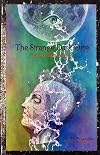
I didn't much care for this collection based on Nyarlathotep. The first problem was not so much with the content per se. The book is a print-on-demand affair (How can a p-o-d claim to be a First Edition?) riddled with typos and grammatical errors.
On to the content. These stories all look like the sort of thing that you would get if you asked a senior high school creative writing class to write a story based on Nyarlathotep. My next problem is with Pugmire's prose. It is overwrought and show more purple in an effort to mimic Lovecraft's own prose but falls short. It almost looks like someone went through and marked out repetitions with a thesaurus in hand. They didn't get them all. There are also some bizarre shifts in dialect from archaic to modern in just a few sentences. Finally, there is zero characterization and scene setting. Because the other elements fail, this proves ultimately fatal to the whole.
I just got an amateur feel from the whole book. Not having read much of Mr. Pugmire's fiction except for the odd story in an anthology, this characterization might not be fair, but could Wilum be the Ed Wood of Lovecraftian fiction? Would he really mind? show less
On to the content. These stories all look like the sort of thing that you would get if you asked a senior high school creative writing class to write a story based on Nyarlathotep. My next problem is with Pugmire's prose. It is overwrought and show more purple in an effort to mimic Lovecraft's own prose but falls short. It almost looks like someone went through and marked out repetitions with a thesaurus in hand. They didn't get them all. There are also some bizarre shifts in dialect from archaic to modern in just a few sentences. Finally, there is zero characterization and scene setting. Because the other elements fail, this proves ultimately fatal to the whole.
I just got an amateur feel from the whole book. Not having read much of Mr. Pugmire's fiction except for the odd story in an anthology, this characterization might not be fair, but could Wilum be the Ed Wood of Lovecraftian fiction? Would he really mind? show less
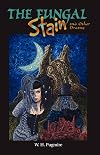
The Fungal Stain is a breath of fresh spore-laiden air. Pugmire doesn't hit the reader over the head with Lovecraftian name-dropping like other contemporary mythos writers. In addition, many of the unwholesome locations, books, entities, etc. are of his own creation. Sure here and there he'll make a reference to Miskatonic University or something, but it's done in a playful way.
I truly enjoy the atmosphere he creates. Stylistically, he's strikes me as a modern version of Arthur Machen. show more One gets the sense he has a genuine love for the Weirld Tale -- not in a fan-boy type of mimicry; rather, a true understanding of the atmosphere and mystery created by mere suggestions of outre' things. His Sesqua Valley (the location of all his stories) is a fascinating creation.
Read anything you can by Pugmire. You won't regret it. show less
I truly enjoy the atmosphere he creates. Stylistically, he's strikes me as a modern version of Arthur Machen. show more One gets the sense he has a genuine love for the Weirld Tale -- not in a fan-boy type of mimicry; rather, a true understanding of the atmosphere and mystery created by mere suggestions of outre' things. His Sesqua Valley (the location of all his stories) is a fascinating creation.
Read anything you can by Pugmire. You won't regret it. show less
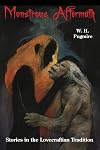
A lovely book of florid prose, in a gothic tradition, and richly influenced by the works of H.P. Lovecraft, Robert Chambers, Clark Ashton Smith, Edgar Allen Poe, and Oscar Wilde. Genuinely an exquisite volume of subtle and supernatural horror, with the masterful Pugmire twining delicate beauty, cosmic rapture, hellish vistas, and the mysteries of our own corruptible flesh, blood, and bone into a uncompromising vision of the outer and otherworldly.
You May Also Like


Associated Authors
Statistics
- Works
- 39
- Also by
- 40
- Members
- 432
- Popularity
- #56,590
- Rating
- 3.7
- Reviews
- 11
- ISBNs
- 24
- Languages
- 1
- Favorited
- 5

