

Joshua Wolf Shenk
Author of Lincoln's Melancholy: How Depression Challenged a President and Fueled His Greatness
About the Author
Joshua Wolf Shenk is an essayist and independent scholar whose work has appeared in numerous magazines and in the national bestseller Unholy Ghost: Writers on Depression. He has written for The New Yorker, Harper's Magazine, The Atlantic Monthly, The New York Times, New Republic, the Economist, show more U.S. News and World Report, and other publications. His book, Lincoln's Melancholy: How Depression Challenged a President and Fueled His Greatness, has won awards from the Abraham Lincoln Institute, the National Alliance for the Mentally Ill, and the National Mental Health Association. (Bowker Author Biography) show less
Image credit: Greg Martin
Works by Joshua Wolf Shenk
Lincoln's Melancholy: How Depression Challenged a President and Fueled His Greatness (2005) 1,075 copies, 27 reviews
In Lincoln's Hand: His Original Manuscripts with Commentary by Distinguished Americans (2009) — Editor — 155 copies, 1 review
Associated Works
Tagged
Common Knowledge
- Gender
- male
- Occupations
- writer
instructor - Awards and honors
- Fellow in non-fiction literature at the New York Foundation for the Arts (2005-06)
Rosalynn Carter fellowship in mental health journalism at the Carter Center
Frank Whiting scholarship at the Bread Loaf Writer’s Conference - Short biography
- see http://www.shenk.net/
- Nationality
- USA
- Associated Place (for map)
- USA
Members
Reviews
Lincoln's Melancholy: How Depression Challenged a President and Fueled His Greatness by Joshua Wolf Shenk

Definitely one of my memorable books of the year but Lincoln’s Melancholy is not a traditional biography of Abraham Lincoln. Shenk’s premise is that Lincoln’s struggles with melancholy/depression ultimately helped him to guide America through the turmoils of the Civil War and, with reference to Lincoln’s writings and other contemporary documents, this is what Shenk sets out to prove with this book. Shenk tries to answer the questions of whether Lincoln’s melancholy was indeed what show more we would term clinical depression today, how Lincoln responded to his melancholy and how Lincoln’s experience of melancholy contributed to his work as a public figure.
If you’re looking for a straight biography of Lincoln and his presidency then this may not be the book to choose. Whilst Shenk does cover most of the major events of Lincoln’s life, his focus is more on discussing Lincoln’s thoughts and feelings around each event rather than giving the clearest picture of the progression of the events themselves. I didn’t come away from this book feeling like I understood how Abraham Lincoln became president or the whys and wherefores behind the American Civil War but I did come away feeling like I understood Lincoln’s personality and his melancholy.
Having experienced and struggled with depression/clinical depression/melancholy (whatever you want to call it) myself and knowing other people who have also struggled with it, I found this book quite an emotional read at times but also a very helpful book to read. The parts I found most interesting concerned the differences between our late 20th century/early 21st century views of mental illness and depression and the 19th century view of Lincoln’s time. Although the treatments for depression/melancholy in the 19th century often seemed quite barbaric to my eyes, this seemed to be balanced by a society that accepted personalities that were not always bright, bubbly and cheerful. Lincoln was well known when he was alive for having a sad and melancholy disposition as well as a great ability for telling jokes and laughing, and this sadness or melancholy seemed to be respected by his contemporaries as a normal aspect of people’s personalities; it was recognised that there may be a positive side to this as well as a negative.
‘The big difference is that today we often hear that the disease of depression is entirely distinct from the ordinary experience of being sad or in the dumps. But in the nineteenth-century conception of melancholy they were part of the same overall picture. A person with a melancholy temperament had been fated with both an awful burden and what Byron called ‘a fearful gift’. The burden was sadness and despair that could tip into a state of disease. But the gift was a capacity for depth, wisdom – even genius.’
I understood Shenk to be saying that Lincoln had both a melancholy disposition and that he experienced periods of what we term clinical depression. The phrase melancholy disposition doesn’t mean the sort of Eeyore-like negativity that I think in the 21st century we tend to associate with such a phrase, but includes a sense of graveness and sensitivity. Shenk, of course, is not advocating that we don’t treat clinical depression but that we recognise that the sort of temperaments that may be more susceptible to clinical depression and other mental illnesses have their good points and bad points in the same way as other temperaments do, and that, most importantly, it is OK to have a more melancholy temperament in the same way that it is OK to have a more bright and bubbly one.
In fact, interestingly, Shenk references certain studies which have shown that depressed people may be more in touch with reality than those we think of as optimists and he argues that it was this depressive realism that helped Lincoln govern America successfully during one of its toughest periods; he saw the approaching storm more quickly than his more optimistic opponents.
‘In Lincoln’s time people understood…. {that} every cognitive style has assets and defects, which change according to circumstances. This seems surprising today because, by some quirk of culture, some cognitive styles are held to be superior and others inferior; one emotion (joy) is “positive” and all others (sadness, fear, anger and shame) are “negative”. If we value accurate perception, however, we must qualify our worship of joy and happiness. People actively seek to filter out painful stimuli, and while this may help them limit distress, it can also sharply distort their actual environment. “If most of us remain ignorant of ourselves,” wrote Aldous Huxley, “it is because self-knowledge is painful and we prefer the pleasures of illusion.”’
One of the points that I found particularly encouraging was Shenk’s claim that although Lincoln’s suffering bore fruit during the American Civil War, he was never completely cured of his melancholy.
‘No point exists after which the melancholy dissolved – not January 1841, not during his “reign of reason” in middle age, and not at his political resurgence beginning in 1854. Some scholars aver that Lincoln’s melancholy abated in the war years, as he was too busy with his work to give space to his own gloom. We’ll see evidence to the contrary. Whatever greatness Lincoln achieved cannot be explained as a triumph over personal suffering. Rather, it must be accounted for as an outgrowth of the same system that produced the suffering. This is not a story of transformation but one of integration. Lincoln didn’t do great work because he solved the problem of his melancholy. The problem of his melancholy was all the more fuel for the fire of his great work.’
It probably sounds strange to say that’s encouraging, but as someone who has struggled with mental illness in one form or another for almost half my life, it’s more encouraging to read about someone who managed to live with something similar than to read the more common type of biography where the suffering is completely overcome, never again to reappear (crisis and recovery narratives as Shenk calls them).
So, in summary, if you want to understand how Lincoln became president and led America during the American Civil War then this is not the book for you. If you have any interest in mental illness or suffering then I think this would be both a helpful and interesting book to read. show less
If you’re looking for a straight biography of Lincoln and his presidency then this may not be the book to choose. Whilst Shenk does cover most of the major events of Lincoln’s life, his focus is more on discussing Lincoln’s thoughts and feelings around each event rather than giving the clearest picture of the progression of the events themselves. I didn’t come away from this book feeling like I understood how Abraham Lincoln became president or the whys and wherefores behind the American Civil War but I did come away feeling like I understood Lincoln’s personality and his melancholy.
Having experienced and struggled with depression/clinical depression/melancholy (whatever you want to call it) myself and knowing other people who have also struggled with it, I found this book quite an emotional read at times but also a very helpful book to read. The parts I found most interesting concerned the differences between our late 20th century/early 21st century views of mental illness and depression and the 19th century view of Lincoln’s time. Although the treatments for depression/melancholy in the 19th century often seemed quite barbaric to my eyes, this seemed to be balanced by a society that accepted personalities that were not always bright, bubbly and cheerful. Lincoln was well known when he was alive for having a sad and melancholy disposition as well as a great ability for telling jokes and laughing, and this sadness or melancholy seemed to be respected by his contemporaries as a normal aspect of people’s personalities; it was recognised that there may be a positive side to this as well as a negative.
‘The big difference is that today we often hear that the disease of depression is entirely distinct from the ordinary experience of being sad or in the dumps. But in the nineteenth-century conception of melancholy they were part of the same overall picture. A person with a melancholy temperament had been fated with both an awful burden and what Byron called ‘a fearful gift’. The burden was sadness and despair that could tip into a state of disease. But the gift was a capacity for depth, wisdom – even genius.’
I understood Shenk to be saying that Lincoln had both a melancholy disposition and that he experienced periods of what we term clinical depression. The phrase melancholy disposition doesn’t mean the sort of Eeyore-like negativity that I think in the 21st century we tend to associate with such a phrase, but includes a sense of graveness and sensitivity. Shenk, of course, is not advocating that we don’t treat clinical depression but that we recognise that the sort of temperaments that may be more susceptible to clinical depression and other mental illnesses have their good points and bad points in the same way as other temperaments do, and that, most importantly, it is OK to have a more melancholy temperament in the same way that it is OK to have a more bright and bubbly one.
In fact, interestingly, Shenk references certain studies which have shown that depressed people may be more in touch with reality than those we think of as optimists and he argues that it was this depressive realism that helped Lincoln govern America successfully during one of its toughest periods; he saw the approaching storm more quickly than his more optimistic opponents.
‘In Lincoln’s time people understood…. {that} every cognitive style has assets and defects, which change according to circumstances. This seems surprising today because, by some quirk of culture, some cognitive styles are held to be superior and others inferior; one emotion (joy) is “positive” and all others (sadness, fear, anger and shame) are “negative”. If we value accurate perception, however, we must qualify our worship of joy and happiness. People actively seek to filter out painful stimuli, and while this may help them limit distress, it can also sharply distort their actual environment. “If most of us remain ignorant of ourselves,” wrote Aldous Huxley, “it is because self-knowledge is painful and we prefer the pleasures of illusion.”’
One of the points that I found particularly encouraging was Shenk’s claim that although Lincoln’s suffering bore fruit during the American Civil War, he was never completely cured of his melancholy.
‘No point exists after which the melancholy dissolved – not January 1841, not during his “reign of reason” in middle age, and not at his political resurgence beginning in 1854. Some scholars aver that Lincoln’s melancholy abated in the war years, as he was too busy with his work to give space to his own gloom. We’ll see evidence to the contrary. Whatever greatness Lincoln achieved cannot be explained as a triumph over personal suffering. Rather, it must be accounted for as an outgrowth of the same system that produced the suffering. This is not a story of transformation but one of integration. Lincoln didn’t do great work because he solved the problem of his melancholy. The problem of his melancholy was all the more fuel for the fire of his great work.’
It probably sounds strange to say that’s encouraging, but as someone who has struggled with mental illness in one form or another for almost half my life, it’s more encouraging to read about someone who managed to live with something similar than to read the more common type of biography where the suffering is completely overcome, never again to reappear (crisis and recovery narratives as Shenk calls them).
So, in summary, if you want to understand how Lincoln became president and led America during the American Civil War then this is not the book for you. If you have any interest in mental illness or suffering then I think this would be both a helpful and interesting book to read. show less
Lincoln's Melancholy: How Depression Challenged a President and Fueled His Greatness by Joshua Wolf Shenk
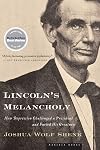
Lincoln’s Melancholy is subtitled: How Depression Challenged a President and Fuelled His Greatness. This book combines four of my favourite subjects: History, Psychology, Biography and Lincoln so I knew I would be fascinated and I wasn’t wrong.
“Based on seven years of research on Lincoln and the medical, intellectual, and political culture around him, Lincoln’s Melancholy also reflects Shenk’s longstanding interests in mental health, psychology, and spirituality in contemporary show more life.”
Shenk’s book is a remarkable achievement in that he has rescued Lincoln from the myths and false ideas about him in respect to the source of his depressive personality. Not only that but he reveals conclusively how Lincoln surmounted his depression and learned not only to cope with it but how it shaped his sensibilities and approach to his responsibilities as the Civil War leader.
This is a brilliant scholarly work that is both fascinating and sound. As a fellow sufferer my admiration for Lincoln, which was already high, has risen to new heights as a result of Shenk’s superb analysis.
I read the text straight through without referring to the notes but I intend a second reading with the notes. It is a book that deserves to be read again, marked and inwardly digested.
My Recommendation :
Cons:
This is not a quick read, but requires a measured, thoughtful, studious attitude.
Pros:
Scholarly, convincing, fascinating and a brilliant addition to Lincoln studies. show less
“Based on seven years of research on Lincoln and the medical, intellectual, and political culture around him, Lincoln’s Melancholy also reflects Shenk’s longstanding interests in mental health, psychology, and spirituality in contemporary show more life.”
Shenk’s book is a remarkable achievement in that he has rescued Lincoln from the myths and false ideas about him in respect to the source of his depressive personality. Not only that but he reveals conclusively how Lincoln surmounted his depression and learned not only to cope with it but how it shaped his sensibilities and approach to his responsibilities as the Civil War leader.
This is a brilliant scholarly work that is both fascinating and sound. As a fellow sufferer my admiration for Lincoln, which was already high, has risen to new heights as a result of Shenk’s superb analysis.
I read the text straight through without referring to the notes but I intend a second reading with the notes. It is a book that deserves to be read again, marked and inwardly digested.
My Recommendation :
Cons:
This is not a quick read, but requires a measured, thoughtful, studious attitude.
Pros:
Scholarly, convincing, fascinating and a brilliant addition to Lincoln studies. show less
Lincoln's Melancholy: How Depression Challenged a President and Fueled His Greatness by Joshua Wolf Shenk
I bought this book after seeing Joshua Shenk and Conan O'Brien (yes, the comedian) discuss Lincoln's humor at Ford's Theatre. Considering the subject of Shenk's book on Lincoln, I found that an odd discussion. But after reading the book, I understand better.
At almost 400 pages, I wondered if Shenk could sustain my interest in this subject to the end. He mostly succeeded, because while Lincoln's "melancholy," i.e., depression, is the central theme of the book, we are enlightened on many other show more aspects of his personality and character. This is where humor comes in; Lincoln had a wonderful sense of humor, sometimes dry and ironic. Shenk and others speculate that humor was a coping mechanism for the depression that always seemed present in Lincoln, sometimes completely overwhelming him.
Not all experts agree with Shenk's thesis that Lincoln suffered from clinical depression, which is mental illness, and there's plenty of room for debate on it. Shenk is pretty convincing, but I haven't studied the other side of the argument. So while this book did not absolutely convince me whether Lincoln suffered from this mental illness, I gained tremendous insight into his personality. Like nothing else I have read on Lincoln, I feel like I actually "know" him now. I also learned what drove him into politics and why he grappled with the institution of slavery. (He never owned slaves.)
You'll get to know some of Lincoln's closest friends, enemies, colleagues and rivals. And while you'll definitely gain more insight into the depressive side of Lincoln, you'll equally learn about his compassion, wit and formidable intellect. I said earlier that Shenk "mostly succeeded" in keeping my interest high throughout the book. There are times where he gets repetitive in supporting his thesis and sometimes makes a stretch. Overall, though, this is an excellent book. show less
At almost 400 pages, I wondered if Shenk could sustain my interest in this subject to the end. He mostly succeeded, because while Lincoln's "melancholy," i.e., depression, is the central theme of the book, we are enlightened on many other show more aspects of his personality and character. This is where humor comes in; Lincoln had a wonderful sense of humor, sometimes dry and ironic. Shenk and others speculate that humor was a coping mechanism for the depression that always seemed present in Lincoln, sometimes completely overwhelming him.
Not all experts agree with Shenk's thesis that Lincoln suffered from clinical depression, which is mental illness, and there's plenty of room for debate on it. Shenk is pretty convincing, but I haven't studied the other side of the argument. So while this book did not absolutely convince me whether Lincoln suffered from this mental illness, I gained tremendous insight into his personality. Like nothing else I have read on Lincoln, I feel like I actually "know" him now. I also learned what drove him into politics and why he grappled with the institution of slavery. (He never owned slaves.)
You'll get to know some of Lincoln's closest friends, enemies, colleagues and rivals. And while you'll definitely gain more insight into the depressive side of Lincoln, you'll equally learn about his compassion, wit and formidable intellect. I said earlier that Shenk "mostly succeeded" in keeping my interest high throughout the book. There are times where he gets repetitive in supporting his thesis and sometimes makes a stretch. Overall, though, this is an excellent book. show less
Lincoln's Melancholy: How Depression Challenged a President and Fueled His Greatness by Joshua Wolf Shenk
This is an important book, really the first contribution to the much-needed heroes for depressives’ canon. Abraham Lincoln, consider by most to be the greatest American president, suffered to major depressive episodes as a young adult and chronic depression throughout his life. Shenk traces Lincoln’s mental history and defends his thesis that the challenges Lincoln faced from depression actually fueled his greatness. The author examines modern psychological understandings of depression show more as well as the view of melancholy from Lincoln’s time (generally more favorable than today). I can’t say enough about how great this book was for understanding Lincoln as well as my own struggles with depression.
The Perspectives of Psychiatry – Paul R. McHugh & Phillip R. Slavney
Born Losers: A History of Failure in America – Scott Sandage
“It is common sense that some situations call for pessimism, but as a culture Americans have strangely decided to endow optomism with unqualified favor. Politicians today compete to be the most optimistic, and accuse their opponent of pessimism, as if it were a defect. This trend is visible in psychology as well. Whereas ‘melancholy’ in Lincoln’s time was understood to be a multifaceted phenomenon that conferred potential advantages along with grave dangers, today we tend to discount its complexities. Psychiatrists see only a biological brain disease. Psychologists see only errors in thinking. That is, if you don’t like yourself, or you feel hopeless, or you see life as fundamentally dissatisfying, you’ve fallen victim to what researchers call ‘learned helplessness.’” – p. 134
“Whatever greatness Lincoln achieved cannot be explained as a triumph over personal suffering. Rather, it must be accounted for as an outgrowth of the same system that produced suffering. This is not a story of transformation but one of integration. Lincoln didn’t do great work because he solved the problem of his melancholy. The problem of his melancholy was all the more fuel for the fire of his great work.” – p. 156
“I am now the most miserable man living. If what I felt were distribute to the whole human family there would not be one happy face on the earth. I must die or be better it appears to me. I awfully forebode I shall not. The matter you speak of on my account you may attend to as you see fit, as I fear I shall be unable to attend to business. If I could be myself, I would rather stay here with Judge Logan. I can write no more.” – Letter from Abraham Lincoln, January 23, 1841, p. 212-13 show less
The Perspectives of Psychiatry – Paul R. McHugh & Phillip R. Slavney
Born Losers: A History of Failure in America – Scott Sandage
“It is common sense that some situations call for pessimism, but as a culture Americans have strangely decided to endow optomism with unqualified favor. Politicians today compete to be the most optimistic, and accuse their opponent of pessimism, as if it were a defect. This trend is visible in psychology as well. Whereas ‘melancholy’ in Lincoln’s time was understood to be a multifaceted phenomenon that conferred potential advantages along with grave dangers, today we tend to discount its complexities. Psychiatrists see only a biological brain disease. Psychologists see only errors in thinking. That is, if you don’t like yourself, or you feel hopeless, or you see life as fundamentally dissatisfying, you’ve fallen victim to what researchers call ‘learned helplessness.’” – p. 134
“Whatever greatness Lincoln achieved cannot be explained as a triumph over personal suffering. Rather, it must be accounted for as an outgrowth of the same system that produced suffering. This is not a story of transformation but one of integration. Lincoln didn’t do great work because he solved the problem of his melancholy. The problem of his melancholy was all the more fuel for the fire of his great work.” – p. 156
“I am now the most miserable man living. If what I felt were distribute to the whole human family there would not be one happy face on the earth. I must die or be better it appears to me. I awfully forebode I shall not. The matter you speak of on my account you may attend to as you see fit, as I fear I shall be unable to attend to business. If I could be myself, I would rather stay here with Judge Logan. I can write no more.” – Letter from Abraham Lincoln, January 23, 1841, p. 212-13 show less
Lists
Awards


You May Also Like


Associated Authors
Statistics
- Works
- 4
- Also by
- 2
- Members
- 1,343
- Popularity
- #19,158
- Rating
- 4.0
- Reviews
- 32
- ISBNs
- 38
- Languages
- 1