
Bryce Courtenay (1933–2012)
Author of The Power of One
About the Author
Bryce Courtenay was born in Johannesburg, South Africa on August 14, 1933. He studied journalism in London and then settled in Australia in 1958. Instead of becoming a journalist, he went into advertising and became a successful creative director. He won most of the local and international show more advertising awards and a gold medal for Best Documentary at the 1984 New York Film Festival. He started writing after he turned 50. His first novel, The Power of One, was adapted into a 1992 film starring Morgan Freeman and Stephen Dorff. His other novels include Jessica, The Potato Factory, Tommo and Hawk, Solomon's Song, Tandia, and Jack of Diamonds. In 1993, he wrote the non-fiction book April Fool's Day, which is a personal account of the death of his son Damon after he contracted AIDs from a routine blood transfusion. Courtenay died of stomach cancer on November 22, 2012 at the age of 79. (Bowker Author Biography) show less
Series
Works by Bryce Courtenay
Silver Moon 1 copy
Sortune Cookie 1 copy
La Potencia de Uno 1 copy
The Power of One, Part 1 1 copy
Four Fires 1 copy
Associated Works
Yowies: Nap the Honeygum Yowie and the Fiery Flame-Fanning Grumkin (1997) — Illustrator, some editions — 19 copies
Tagged
Common Knowledge
- Birthdate
- 1933-08-14
- Date of death
- 2012-11-22
- Gender
- male
- Education
- King Edward VII School, Johannesburg
- Occupations
- novelist
advertising executive - Awards and honors
- British Book Award (Newcomer of the Year, 1990)
Order of Australia (Member, 1995)
University of Newcastle (Honorary Doctorate) - Nationality
- South Africa (birth)
Australia - Birthplace
- Johannesburg, South Africa
- Places of residence
- Sydney, New South Wales, Australia
Canberra, Australian Capital Territory, Australia
Lebombo Mountains, Limpopo Province, South Africa - Place of death
- Canberra, Australian Capital Territory, Australia
- Map Location
- Austràlia
- Associated Place (for map)
- Australia
Members
Reviews
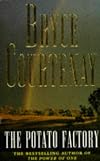
This book has the quality of a folk legend re-imagined. The characters loom larger than life and protagonists endure years of the worst kinds of suffering before triumphing over their oppressors. The first half of this novel, set in nineteenth century London, is slowly-paced, but packed with eccentric, Dickensian characters, complete with dialect. The very eventful second half takes place mostly in Australia during its penal colony days, as the feud that boils for over 700 pages comes to a show more head. The ambitious scope of the story is realized with solidly-crafted prose and compelling characters. Though some of these characters come uncomfortably close to stereotypes, the feeling that the story was being shared with me by an eccentric uncle made this feel okay somehow. show less

I first picked up this book by chance really. One of my older brother's teachers had assigned it for summer reading, and I happened to pick it up one day and started reading. And while I was young at the time (12 or 13sh), I immediately fell in love with this book.
For those unfamiliar with the book, it tells the tale of Peekay, a young English boy in a Boer South Africa. While suffering a brutal childhood at the hands of his classmates, he soon encounters the sport of boxing and becomes show more hooked for life. As he strives towards the goal of becoming boxing champion of the world, he encounters a multitude of teachers, from a German Pianist, to a Black Boxing coach to a Russian miner.
To be quite honest, this book is simply beautiful. The images of Africa are simply stunning and the lessons that Peekay learns are universal. 'First with the heart, and then with the head' becomes the mantra of our young hero. He learns lessons on racism, endurance and perhaps most importantly, self-respect. Though he is tortured by his fellow classmates and mercilessly picked on, he endures none the less, and in the end, turns out better for it.
While this book definitely deals with some more adult themes, I recommend this book to all ages, including those making the awkward transition into the teen years. It deals with the issues that will become more predominate as life goes on, including dealing with your fears and of never, ever giving up on your dream, no matter how hard life seems.
The fact of the matter is, this is without a doubt a modern classic. Its imagery stunning, its themes eternally relevant. This is much more than a boxing book, it is a masterpiece. show less
For those unfamiliar with the book, it tells the tale of Peekay, a young English boy in a Boer South Africa. While suffering a brutal childhood at the hands of his classmates, he soon encounters the sport of boxing and becomes show more hooked for life. As he strives towards the goal of becoming boxing champion of the world, he encounters a multitude of teachers, from a German Pianist, to a Black Boxing coach to a Russian miner.
To be quite honest, this book is simply beautiful. The images of Africa are simply stunning and the lessons that Peekay learns are universal. 'First with the heart, and then with the head' becomes the mantra of our young hero. He learns lessons on racism, endurance and perhaps most importantly, self-respect. Though he is tortured by his fellow classmates and mercilessly picked on, he endures none the less, and in the end, turns out better for it.
While this book definitely deals with some more adult themes, I recommend this book to all ages, including those making the awkward transition into the teen years. It deals with the issues that will become more predominate as life goes on, including dealing with your fears and of never, ever giving up on your dream, no matter how hard life seems.
The fact of the matter is, this is without a doubt a modern classic. Its imagery stunning, its themes eternally relevant. This is much more than a boxing book, it is a masterpiece. show less

"But I started to realise that it doesn't begin like this, that anybody can be the target for prejudice, all you have to be is 'too' something. Too short, too fat, too clever, too big, too small, too slow, too new, too different from what others think of as normal."
Tandia is the sequel to the author's The Power of One and in this novel Courtenay attempts to look at South African political situation during the 1950's and 1960's through the eyes of a teenage girl. Tandia is a mixed-race show more bastard, the result of an affair between her Indian father and his black house servant. Tandia is brutally and raped by a South African police man, tossed from her home by her father's jealous wife and finds herself having to take refuge in a brothel deep in the veldt under the watchful eye of Mama Tequila.
Meanwhile, Peekay, the young 'white' protagonist from The Power of One, is now at Oxford, reading law and furthering his boxing career as he endeavours to become the world boxing champion. As he matures he is compelled to explore not only himself but also his interactions with those around him.
When Peekay returns to his homeland he finds a country divided by racial segregation, where oppression of the non-white population is rife, but one that can rally behind their love of boxing. Peekay is fairly unusual in his country, he is not prejudiced by race, instead is willing not to look at the person inside rather than the colour of their skin and who, despite being 'white', is revered by the 'black' population as the 'Tadpole Angel'.
On his return to South Africa Peekay opens a legal practice, trying to defend the disenfranchised. With race relations at fever pitch, to do so he must lock horns with apartheid system. Tandia is extremely beautiful but also has an extraordinary mind, so when she too graduates from law school she joins Peekay at his practice. As they work ever closer together so they also become ever more emotionally attached, a big taboo in a country where mixed race relationships are outlawed.
In many respects the title of this novel is a bit of a misnomer as it actually features more of Peekay's life than it does Tandia's. It is also a pretty hefty tome, my own copy was 900 pages long, but this does at least allow the author to combine well-developed characters with a plot that is rich with detail allowing the reader to immerse themselves in the political events and police implementation of them as they come to life on the page. There is a long list of minor characters, who all add to the richness of the narrative. As the story builds the reader can see Tandia’s growth, personal and emotional, as she battles to find her place in South Africa’s repressive political system whilst also adding to Peekay's own life story leading the reader on two winding but gradually converging paths.
The story is full of twists and turns, there is a mixture of hope and despair, love and hatred, politics and witchcraft. One can only imagine South Africa during the 1950s and 60s, where the Afrikaner population is willing to defend their way of life at any cost, the subjugation of the black population and the brutality that is inflicted upon it. I have always been interested in history and in particular social history, so, not that I would ever condone it, found myself being drawn into the apartheid mentality and how the Afrikaners justified it. This makes it all the more remarkable that the country has managed to reform itself without imploding into sectarian retribution. You can only stand back and admire the willingness of people like Nelson Mandela and the other black leaders who have been willing to work with their oppressors, for the better good of the country, rather than simply drive them into the sea.
Due to it's length and scope I found this novel to be not quite up to the standard of it's predecessor and, as with the former, could have benefited from a little judicious pruning, as parts of it was excessive and repetitive. The ending came as a bit of a shock and overall I enjoyed reading it. show less
Tandia is the sequel to the author's The Power of One and in this novel Courtenay attempts to look at South African political situation during the 1950's and 1960's through the eyes of a teenage girl. Tandia is a mixed-race show more bastard, the result of an affair between her Indian father and his black house servant. Tandia is brutally and raped by a South African police man, tossed from her home by her father's jealous wife and finds herself having to take refuge in a brothel deep in the veldt under the watchful eye of Mama Tequila.
Meanwhile, Peekay, the young 'white' protagonist from The Power of One, is now at Oxford, reading law and furthering his boxing career as he endeavours to become the world boxing champion. As he matures he is compelled to explore not only himself but also his interactions with those around him.
When Peekay returns to his homeland he finds a country divided by racial segregation, where oppression of the non-white population is rife, but one that can rally behind their love of boxing. Peekay is fairly unusual in his country, he is not prejudiced by race, instead is willing not to look at the person inside rather than the colour of their skin and who, despite being 'white', is revered by the 'black' population as the 'Tadpole Angel'.
On his return to South Africa Peekay opens a legal practice, trying to defend the disenfranchised. With race relations at fever pitch, to do so he must lock horns with apartheid system. Tandia is extremely beautiful but also has an extraordinary mind, so when she too graduates from law school she joins Peekay at his practice. As they work ever closer together so they also become ever more emotionally attached, a big taboo in a country where mixed race relationships are outlawed.
In many respects the title of this novel is a bit of a misnomer as it actually features more of Peekay's life than it does Tandia's. It is also a pretty hefty tome, my own copy was 900 pages long, but this does at least allow the author to combine well-developed characters with a plot that is rich with detail allowing the reader to immerse themselves in the political events and police implementation of them as they come to life on the page. There is a long list of minor characters, who all add to the richness of the narrative. As the story builds the reader can see Tandia’s growth, personal and emotional, as she battles to find her place in South Africa’s repressive political system whilst also adding to Peekay's own life story leading the reader on two winding but gradually converging paths.
The story is full of twists and turns, there is a mixture of hope and despair, love and hatred, politics and witchcraft. One can only imagine South Africa during the 1950s and 60s, where the Afrikaner population is willing to defend their way of life at any cost, the subjugation of the black population and the brutality that is inflicted upon it. I have always been interested in history and in particular social history, so, not that I would ever condone it, found myself being drawn into the apartheid mentality and how the Afrikaners justified it. This makes it all the more remarkable that the country has managed to reform itself without imploding into sectarian retribution. You can only stand back and admire the willingness of people like Nelson Mandela and the other black leaders who have been willing to work with their oppressors, for the better good of the country, rather than simply drive them into the sea.
Due to it's length and scope I found this novel to be not quite up to the standard of it's predecessor and, as with the former, could have benefited from a little judicious pruning, as parts of it was excessive and repetitive. The ending came as a bit of a shock and overall I enjoyed reading it. show less

Audible audiobook performed by Humphrey Bower
How had I never heard of this book before? A challenge to travel the world combined with a challenge to read a book that “made-me-cry” brought this one to my attention, and am I ever glad it did!
Courtenay’s autobiographical novel tells the story of a small boy sent to boarding school because his mother has had a nervous breakdown. He’s bullied and terrorized, but learns how to get along with the help of a pet chicken and a native medicine show more man. Peekay (a nicer version of the nickname the bullies christen him with) is an intelligent, bookish kid and his reading ability helps him advance in school far beyond his chronological age. Just when he figures he’s gotten the hang of this boarding school, he’s advised that he’s leaving for a new home.
A six-year-old on a several-days-long train journey is pretty vulnerable, but the porter, conductor and other railway employees take Peekay under their wing. This is where he learns about boxing and sets a goal for himself that he pursues relentlessly.
I’m not the writer Courtenay is, so can’t really do justice to the plot of this coming-of-age story. But the writing grabbed me from page one and I was sorry to see it end. Peekay has more than his share of difficulties and tragedies befall many of the people he comes to love and rely on. He’s a great kid and I was cheering for Peekay throughout. And while I’m no fan of boxing, I even enjoyed the lessons on strategy and technique.
Humphrey Bower does a great job of performing the audiobook. He really brings the characters to life, though I did have some difficulties understanding the accent at times. show less
How had I never heard of this book before? A challenge to travel the world combined with a challenge to read a book that “made-me-cry” brought this one to my attention, and am I ever glad it did!
Courtenay’s autobiographical novel tells the story of a small boy sent to boarding school because his mother has had a nervous breakdown. He’s bullied and terrorized, but learns how to get along with the help of a pet chicken and a native medicine show more man. Peekay (a nicer version of the nickname the bullies christen him with) is an intelligent, bookish kid and his reading ability helps him advance in school far beyond his chronological age. Just when he figures he’s gotten the hang of this boarding school, he’s advised that he’s leaving for a new home.
A six-year-old on a several-days-long train journey is pretty vulnerable, but the porter, conductor and other railway employees take Peekay under their wing. This is where he learns about boxing and sets a goal for himself that he pursues relentlessly.
I’m not the writer Courtenay is, so can’t really do justice to the plot of this coming-of-age story. But the writing grabbed me from page one and I was sorry to see it end. Peekay has more than his share of difficulties and tragedies befall many of the people he comes to love and rely on. He’s a great kid and I was cheering for Peekay throughout. And while I’m no fan of boxing, I even enjoyed the lessons on strategy and technique.
Humphrey Bower does a great job of performing the audiobook. He really brings the characters to life, though I did have some difficulties understanding the accent at times. show less
Lists
Awards


You May Also Like


Associated Authors
Statistics
- Works
- 46
- Also by
- 1
- Members
- 14,349
- Popularity
- #1,598
- Rating
- 4.0
- Reviews
- 276
- ISBNs
- 604
- Languages
- 10
- Favorited
- 25