

Andrew Burstein
Author of Madison and Jefferson
About the Author
Andrew Burstein is a full professor and co-holder of the Mary Frances Barnard Chair in U.S. History at the University of Tulsa
Image credit: andburstein.com
Works by Andrew Burstein
The Problem of Democracy: The Presidents Adams Confront the Cult of Personality (2019) — Author — 132 copies
America's Jubilee: How in 1826 a generation remembered fifty years of independence (2001) 110 copies
Lincoln Dreamt He Died: The Midnight Visions of Remarkable Americans from Colonial Times to Freud (2013) 48 copies, 13 reviews
Associated Works
Journal of the Early Republic: Summer 1996 Vol.16, No.2 — Contributor — 1 copy
Tagged
Common Knowledge
- Other names
- BURSTEIN, Andrew
- Birthdate
- 1952
- Gender
- male
- Education
- University of Virginia
University of Michigan
Columbia University
Hackley School, Tarrytown, New York, USA - Occupations
- professor of history
- Organizations
- Louisiana State University
- Relationships
- Isenberg, Nancy (partner)
- Nationality
- USA
- Places of residence
- Baton Rouge, Louisiana, USA
Charlottesville, Virginia, USA - Associated Place (for map)
- USA
Members
Reviews
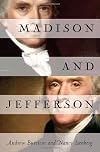
If you've read David McCullough's excellent John Adams, you're aware of the interesting friendship Adams had with Thomas Jefferson, both men dying within hours of each other on July 4, exactly fifty years after the signing of the Declaration of Independence. But even that relationship pales in comparison to the one between Jefferson and James Madison, the 4th president. And in this excellent dual political biography, Andrew Burstein and Nancy Isenberg have turned the order of the presidents show more around in their title in an effort to reassert the forgotten contributions of Madison. (Well, that and maybe the fact that Jefferson and Madison as a title had already been used.) Madison wasn't simply Jefferson's "junior," but more like the driving force behind Jefferson's reentry into politics in 1796.
As I've read and studied about the founding of our nation, in my mind George Washington perhaps stands closest to the ideal of a truly noble hero. John Adams is likewise admirable, although hampered by his vanity and having the misfortune to follow in Washington's very long shadow. By the time I get to Thomas Jefferson, though, things get ugly. The nastiness of party politics becomes intractable - and Jefferson was a natural at hardball politics.
Both Jefferson and Madison were Virginians first, which heavily influenced their politics. Jefferson, the idealist and philosopher, is quite frequently seen as a walking contradiction. His lofty ideals and eloquent way with words had a way of swaying opinion. His fear of monarchial tendencies in government drove his policies, and he sought to maintain states rights and limit the power of the federal government (even while, as president, he greatly enlarged federal power). Madison, credited as the "Father of the Constitution" for his monumental efforts in 1787, is seen wrongly as a continuation of the Jefferson presidency, and many assumed Jefferson was still pulling the strings. In spite of their close friendship, they frequently differed in opinions and the courses of action they took. And while Jefferson appears as cordial and pleasant, Madison is portrayed unfairly as cold and unemotional. And Burstein and Isenberg do a good job of highlighting the important role played by Madison in the history both had such a huge role in.
This is a lengthy book with the narrative being almost 650 pages long, with dense writing that requires careful attention. As such, it's probably directed at serious readers of history rather than casual ones. The focus is mostly on politics, although there's enough information on their personal lives to give it a good balance. With two authors it sometimes feels a little uneven, although the book doesn't suffer for it. The ending, however, seemed almost disconnected and I vaguely suspected the authors of inserting some of their own personal present-day politics into the story. But even this doesn't take away from the terrific work they've compiled, and in spite of the length and depth it kept my interest throughout. show less
As I've read and studied about the founding of our nation, in my mind George Washington perhaps stands closest to the ideal of a truly noble hero. John Adams is likewise admirable, although hampered by his vanity and having the misfortune to follow in Washington's very long shadow. By the time I get to Thomas Jefferson, though, things get ugly. The nastiness of party politics becomes intractable - and Jefferson was a natural at hardball politics.
Both Jefferson and Madison were Virginians first, which heavily influenced their politics. Jefferson, the idealist and philosopher, is quite frequently seen as a walking contradiction. His lofty ideals and eloquent way with words had a way of swaying opinion. His fear of monarchial tendencies in government drove his policies, and he sought to maintain states rights and limit the power of the federal government (even while, as president, he greatly enlarged federal power). Madison, credited as the "Father of the Constitution" for his monumental efforts in 1787, is seen wrongly as a continuation of the Jefferson presidency, and many assumed Jefferson was still pulling the strings. In spite of their close friendship, they frequently differed in opinions and the courses of action they took. And while Jefferson appears as cordial and pleasant, Madison is portrayed unfairly as cold and unemotional. And Burstein and Isenberg do a good job of highlighting the important role played by Madison in the history both had such a huge role in.
This is a lengthy book with the narrative being almost 650 pages long, with dense writing that requires careful attention. As such, it's probably directed at serious readers of history rather than casual ones. The focus is mostly on politics, although there's enough information on their personal lives to give it a good balance. With two authors it sometimes feels a little uneven, although the book doesn't suffer for it. The ending, however, seemed almost disconnected and I vaguely suspected the authors of inserting some of their own personal present-day politics into the story. But even this doesn't take away from the terrific work they've compiled, and in spite of the length and depth it kept my interest throughout. show less
Lincoln Dreamt He Died: The Midnight Visions of Remarkable Americans from Colonial Times to Freud by Andrew Burstein
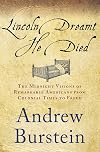
"Lincoln Dreamt He Died" is a smorgasbord of compelling and seldom-seen examples of very personal dream accounts reaching far back into our country's past. However, it stretches much further than that by tying those dreams into the very fabric of early American history.
What makes this book stand out from other dream books I've read (such as Brian Hill's "Gates of Horn and Ivory") is that it is not an anthology. Instead, it is an intense and in-depth look at how Americans perceived their show more dreams, and how that viewpoint changed over the years as the country grew and matured.
Drawing from journals, letters, and various publications either recounting dreams or discussing opinions about dreams, author Andrew Burstein excerpts and synthesizes the widely varied material into a thread which follows the life of dreams in the minds of early American women and men.
How did early Americans respond to dreams? Did they dream, overall, similarly to how we dream today? Did dreams have real effects on their world?
As an amateur historian and folklorist I found this book absorbing. It represents a refreshing new outlook on the roots of the American viewpoint. You can tell how deeply Burstein immersed himself in the project by the way he occasionally refers to themes and patterns that aren't obvious on reading chapters for the first time -- and speaking personally this is not a drawback, as I'd rather go back and reread sections to really get a grasp on what the author’s point is, than to read the book once-through on a surface level only (which so many of those dream anthologies are delightfully geared to allow).
If you are interested in early American social history, and curious about how the internal world of dreams tied into and reflected the external world of centuries past, by all means, pick this book up. It is a fascinating window on the tandem worlds of the inner and outer lives of our predecessors. show less
What makes this book stand out from other dream books I've read (such as Brian Hill's "Gates of Horn and Ivory") is that it is not an anthology. Instead, it is an intense and in-depth look at how Americans perceived their show more dreams, and how that viewpoint changed over the years as the country grew and matured.
Drawing from journals, letters, and various publications either recounting dreams or discussing opinions about dreams, author Andrew Burstein excerpts and synthesizes the widely varied material into a thread which follows the life of dreams in the minds of early American women and men.
How did early Americans respond to dreams? Did they dream, overall, similarly to how we dream today? Did dreams have real effects on their world?
As an amateur historian and folklorist I found this book absorbing. It represents a refreshing new outlook on the roots of the American viewpoint. You can tell how deeply Burstein immersed himself in the project by the way he occasionally refers to themes and patterns that aren't obvious on reading chapters for the first time -- and speaking personally this is not a drawback, as I'd rather go back and reread sections to really get a grasp on what the author’s point is, than to read the book once-through on a surface level only (which so many of those dream anthologies are delightfully geared to allow).
If you are interested in early American social history, and curious about how the internal world of dreams tied into and reflected the external world of centuries past, by all means, pick this book up. It is a fascinating window on the tandem worlds of the inner and outer lives of our predecessors. show less
 This review was written for LibraryThing Early Reviewers.
If you've read David McCullough's excellent John Adams, you're aware of the interesting friendship Adams had with Thomas Jefferson, both men dying within hours of each other on July 4, exactly fifty years after the signing of the Declaration of Independence. But even that relationship pales in comparison to the one between Jefferson and James Madison, the 4th president. And in this excellent dual political biography, Andrew Burstein and Nancy Isenberg have turned the order of the presidents show more around in their title in an effort to reassert the forgotten contributions of Madison. (Well, that and maybe the fact that Jefferson and Madison as a title had already been used.) Madison wasn't simply Jefferson's "junior," but more like the driving force behind Jefferson's reentry into politics in 1796.
As I've read and studied about the founding of our nation, in my mind George Washington perhaps stands closest to the ideal of a truly noble hero. John Adams is likewise admirable, although hampered by his vanity and having the misfortune to follow in Washington's very long shadow. By the time I get to Thomas Jefferson, though, things get ugly. The nastiness of party politics becomes intractable - and Jefferson was a natural at hardball politics.
Both Jefferson and Madison were Virginians first, which heavily influenced their politics. Jefferson, the idealist and philosopher, is quite frequently seen as a walking contradiction. His lofty ideals and eloquent way with words had a way of swaying opinion. His fear of monarchial tendencies in government drove his policies, and he sought to maintain states rights and limit the power of the federal government (even while, as president, he greatly enlarged federal power). Madison, credited as the "Father of the Constitution" for his monumental efforts in 1787, is seen wrongly as a continuation of the Jefferson presidency, and many assumed Jefferson was still pulling the strings. In spite of their close friendship, they frequently differed in opinions and the courses of action they took. And while Jefferson appears as cordial and pleasant, Madison is portrayed unfairly as cold and unemotional. And Burstein and Isenberg do a good job of highlighting the important role played by Madison in the history both had such a huge role in.
This is a lengthy book with the narrative being almost 650 pages long, with dense writing that requires careful attention. As such, it's probably directed at serious readers of history rather than casual ones. The focus is mostly on politics, although there's enough information on their personal lives to give it a good balance. With two authors it sometimes feels a little uneven, although the book doesn't suffer for it. The ending, however, seemed almost disconnected and I vaguely suspected the authors of inserting some of their own personal present-day politics into the story. But even this doesn't take away from the terrific work they've compiled, and in spite of the length and depth it kept my interest throughout. show less
As I've read and studied about the founding of our nation, in my mind George Washington perhaps stands closest to the ideal of a truly noble hero. John Adams is likewise admirable, although hampered by his vanity and having the misfortune to follow in Washington's very long shadow. By the time I get to Thomas Jefferson, though, things get ugly. The nastiness of party politics becomes intractable - and Jefferson was a natural at hardball politics.
Both Jefferson and Madison were Virginians first, which heavily influenced their politics. Jefferson, the idealist and philosopher, is quite frequently seen as a walking contradiction. His lofty ideals and eloquent way with words had a way of swaying opinion. His fear of monarchial tendencies in government drove his policies, and he sought to maintain states rights and limit the power of the federal government (even while, as president, he greatly enlarged federal power). Madison, credited as the "Father of the Constitution" for his monumental efforts in 1787, is seen wrongly as a continuation of the Jefferson presidency, and many assumed Jefferson was still pulling the strings. In spite of their close friendship, they frequently differed in opinions and the courses of action they took. And while Jefferson appears as cordial and pleasant, Madison is portrayed unfairly as cold and unemotional. And Burstein and Isenberg do a good job of highlighting the important role played by Madison in the history both had such a huge role in.
This is a lengthy book with the narrative being almost 650 pages long, with dense writing that requires careful attention. As such, it's probably directed at serious readers of history rather than casual ones. The focus is mostly on politics, although there's enough information on their personal lives to give it a good balance. With two authors it sometimes feels a little uneven, although the book doesn't suffer for it. The ending, however, seemed almost disconnected and I vaguely suspected the authors of inserting some of their own personal present-day politics into the story. But even this doesn't take away from the terrific work they've compiled, and in spite of the length and depth it kept my interest throughout. show less
This book exposes and explores what could easily be considered one of the most important political friendships in all of American history. 'Madison and Jefferson' does a splendid job of showing how these two gentlemen worked closely together throughout the beginnings of the United States, from the revolutionary days to the War of 1812.
To start with, the title of the book intentionally lists Madison first and throughout the book does much to bring to light this often misunderstood founder who show more many think of as uninteresting. Nothing could be further from the truth. The authors show that Madison did indeed have a rather interesting personality that is often ignored. But, the authors spend equal time on Jefferson, discussing the often touted intellect as well as his less talked about weaknesses. The friendship between these two is almost unbreakable throughout their history, but it is not without disagreements between the two.
The narrative that goes through the timeline of Madison and Jefferson is very engaging; at no point was I ever bored with it as can sometimes be the case with more dryly written biographies. And because the book is split up into very distinct periods, it was easy to pick back up if I had to put it down for a while.
I highly recommend this book to anyone who studies or has an interest in the founding of our nation, particularly these two individuals. You'll also find plenty of information about other founding fathers and the perspective that Madison and Jefferson held on them; I think I found this to be the most interesting part of this dual biography. show less
To start with, the title of the book intentionally lists Madison first and throughout the book does much to bring to light this often misunderstood founder who show more many think of as uninteresting. Nothing could be further from the truth. The authors show that Madison did indeed have a rather interesting personality that is often ignored. But, the authors spend equal time on Jefferson, discussing the often touted intellect as well as his less talked about weaknesses. The friendship between these two is almost unbreakable throughout their history, but it is not without disagreements between the two.
The narrative that goes through the timeline of Madison and Jefferson is very engaging; at no point was I ever bored with it as can sometimes be the case with more dryly written biographies. And because the book is split up into very distinct periods, it was easy to pick back up if I had to put it down for a while.
I highly recommend this book to anyone who studies or has an interest in the founding of our nation, particularly these two individuals. You'll also find plenty of information about other founding fathers and the perspective that Madison and Jefferson held on them; I think I found this to be the most interesting part of this dual biography. show less
Lists
Awards

You May Also Like


Associated Authors
Statistics
- Works
- 15
- Also by
- 2
- Members
- 1,522
- Popularity
- #16,892
- Rating
- 3.7
- Reviews
- 25
- ISBNs
- 47
- Languages
- 1
- Favorited
- 2
