
Lord Kinross (1904–1976)
Author of The Ottoman Centuries
About the Author
Image credit: Allan warren
Works by Lord Kinross
Associated Works
Tagged
Common Knowledge
- Legal name
- Kinross, John Patrick Douglas Balfour, 3rd Baron
- Other names
- Kinross, Patrick
Balfour, John Patrick - Birthdate
- 1904-06-25
- Date of death
- 1976-06-04
- Gender
- male
- Education
- University of Oxford (Balliol College)
Winchester College, Winchester, Hampshire, England, UK - Occupations
- journalist
First Secretary, British Embassy Cairo
historian - Organizations
- Royal Air Force (WWII)
British Foreign Office - Relationships
- Culme-Seymour, Angela Mary (wife)
Kinross, Patrick Balfour, 2nd Baron (father)
Johnstone-Douglas, Caroline Elsie (mother) - Nationality
- UK
- Places of residence
- England, UK
Scotland, UK
Cairo, Egypt - Burial location
- Dean Cemetery, Edinburgh, Scotland, UK
- Associated Place (for map)
- UK
Members
Reviews
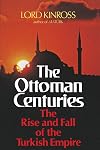
Kinross' book, of course, is extremely well written and convincing. But reading through it all, you realize he has essentially composed an Ottoman apologia, aimed at elevating his hero, Atatürk, to the position of enlightened liberator of modern Turkey. So he may be to some. But in order to get there, Kinross had to conduct a sly campaign of turning Ottoman history itself into an unappreciated successor to Rome as a fountainhead of tolerance and statecraft, with this version of empire show more having its origins in Islam.
And so he then goes, applying his quite substantial skills as a biographer in sketching one imposing Sultan's life after another on the reader's mind. It's especially persuasive for the first ten Sultans. Thereafter, it quickly descends into tragedy and the weakening and dismemberment of the empire. Until, that is, Kinross gets to his villain, Abdul Hamid II. It is on Abdul Hamid, the Sultan of the late nineteenth and early twentieth centuries, that the blame is placed--he is autocratic, despotic, devious, cruel, and manipulative. It is he who brought about the destruction of the empire. Never mind that the Sultan, through his constant strategy of playing off one great power against the other, managed to preserve the Ottoman dynasty from an even earlier grave.
Then, Kinross' craftiness becomes most apparent. It applies to his treatment of the Armenian genocide. Kinross spends several pages outlining the Armenian massacres of 1894-1896, giving full weight to the atrocities in his description. He also ascribes it all to the background maneuvering of Abdul Hamid. All very true, it is. But in emphasizing the massacres, it is as if Kinross is trying to indemnify himself against his rather lackluster exploration of the much more terrible, thorough, and systematic Armenian Genocide of 1914-1922/23. Why? Because the people responsible for the greater genocide were Kinross' heroes, the Young Turks directly, and, indirectly, Atatürk, a member of this revolutionary group who seized control of the government from the sultans and led the empire into a catastrophic alliance with Germany during World War I, which eventually saw the destruction of the empire as a result. Proof? Kinross writes only two sentences about the Genocide. Ah, but those Young Turks. They revitalized the administration, the bureaucracy, and they modernized Turkey. Yes, they made the trains run on time.
The dismissive analysis of the genocide, of course, is what most sticks out to modern readers. But if you go through the entire history Kinross has written, you will see a pattern of excusing or belittling Ottoman massacres, enslavement of other peoples, and terror. In its place, he erects a benevolent multiracial, universal empire, welcoming to all and seeking world betterment. But for a few bad apples. show less
And so he then goes, applying his quite substantial skills as a biographer in sketching one imposing Sultan's life after another on the reader's mind. It's especially persuasive for the first ten Sultans. Thereafter, it quickly descends into tragedy and the weakening and dismemberment of the empire. Until, that is, Kinross gets to his villain, Abdul Hamid II. It is on Abdul Hamid, the Sultan of the late nineteenth and early twentieth centuries, that the blame is placed--he is autocratic, despotic, devious, cruel, and manipulative. It is he who brought about the destruction of the empire. Never mind that the Sultan, through his constant strategy of playing off one great power against the other, managed to preserve the Ottoman dynasty from an even earlier grave.
Then, Kinross' craftiness becomes most apparent. It applies to his treatment of the Armenian genocide. Kinross spends several pages outlining the Armenian massacres of 1894-1896, giving full weight to the atrocities in his description. He also ascribes it all to the background maneuvering of Abdul Hamid. All very true, it is. But in emphasizing the massacres, it is as if Kinross is trying to indemnify himself against his rather lackluster exploration of the much more terrible, thorough, and systematic Armenian Genocide of 1914-1922/23. Why? Because the people responsible for the greater genocide were Kinross' heroes, the Young Turks directly, and, indirectly, Atatürk, a member of this revolutionary group who seized control of the government from the sultans and led the empire into a catastrophic alliance with Germany during World War I, which eventually saw the destruction of the empire as a result. Proof? Kinross writes only two sentences about the Genocide. Ah, but those Young Turks. They revitalized the administration, the bureaucracy, and they modernized Turkey. Yes, they made the trains run on time.
The dismissive analysis of the genocide, of course, is what most sticks out to modern readers. But if you go through the entire history Kinross has written, you will see a pattern of excusing or belittling Ottoman massacres, enslavement of other peoples, and terror. In its place, he erects a benevolent multiracial, universal empire, welcoming to all and seeking world betterment. But for a few bad apples. show less

Lord Kinross's style of relating history was excellent, albeit from very much a 'British Empire' point of view. Despite that perspective, the biography portrays a sympathetic sketch of a Young Turk rising through the military to lead his country. I recommend the book as eminently readable and astonishingly relevant in today's Near Eastern situation as Turkey teeters on the brink of regressing to an Ottoman-like empire, ruled without concern for its citizens' rights. Even though Istanbul is a show more sophisticated city straddling the Bosphorus, I had very little perception of how the rest of the country was operated. The author brings much of that aspect to life. This biography was my introduction to Kinross's writing and has certainly directed my attention to some of his other historical works. show less

A massive effort, but well worth the read. Mustafa Kemal made a titanic effort to drag Turkey from the ashes of the Ottoman Empire into a modern European Nation state. While currently Turkey appears to be flagging in this effort, Kinross details the effort of the first of Turkey's two generations of efforts to gain this goal. Along with Shaka of the Zulu's this Turkish soldier was a man who truly tried to recast his country in the space of a single generation. It is a book filled with show more insights for those interested in the problems of the second and third worlds even now. show less

Turkey is a country that is neither here nor there. Geographically it belongs to both Europe and Asia. Historically it is an empire that straddles both Middle East and European history. Theologically it is Islamic but it is also a secular state. It is a democracy but is unlike most western democracies. Ethnically its people are more like the people of the central steppes of Russia than they are the Semitic peoples of the Middle East. Historically there is a large Christian population located show more within the Turkish borders, and the country was forced to make some great changes due to the great misfortune of being on the losing side in World War I. Even so Turkey has more often than not turned towards Europe and the other Western countries for inspiration and today is trying to gain a spot in the EU. Because Turkey is one of the great conundrums of Europe thought I needed to know more about the formation of modern Turkey and the man who founded it.
The book was published back in 1965 and for being so old it was a surprisingly good read. Kemal was a fascinating man who dragged his country into the modern age kicking and screaming. In the end he may have failed as he acted more and more like a potentate himself than he did a democratic leader. However, for the last 70 years Turkey has had one of the few semi democratic governments found in an Islamic country so he did not complete fail. This is a must read for anybody interested in the modern Middle East and how it got to be the way it is. show less
The book was published back in 1965 and for being so old it was a surprisingly good read. Kemal was a fascinating man who dragged his country into the modern age kicking and screaming. In the end he may have failed as he acted more and more like a potentate himself than he did a democratic leader. However, for the last 70 years Turkey has had one of the few semi democratic governments found in an Islamic country so he did not complete fail. This is a must read for anybody interested in the modern Middle East and how it got to be the way it is. show less
Lists
You May Also Like


Associated Authors
Statistics
- Works
- 24
- Also by
- 1
- Members
- 1,492
- Popularity
- #17,223
- Rating
- 3.7
- Reviews
- 19
- ISBNs
- 31
- Languages
- 4