
Brad Gooch
Author of Flannery: A Life of Flannery O'Connor
About the Author
Brad Gooch is the author of the acclaimed biographies City Poet and Flannery: A Life of Flannery O'Connor, as well as other non-fiction and three novels. The recipient of the National Endowment for the Humanities and Guggenheim Fellowships, he earned his PhD at Columbia University and is a show more professor of English at William Paterson University in New Jersey. show less
Image credit: Larry D. Moore
Works by Brad Gooch
Associated Works
Boys Like Us: Gay Writers Tell Their Coming Out Stories (1996) — Contributor — 426 copies, 2 reviews
Coming Attractions: An Anthology of American Poets in Their Twenties (1980) — Contributor — 8 copies
Tagged
Common Knowledge
- Canonical name
- Gooch, Brad
- Birthdate
- 1952
- Gender
- male
- Education
- Columbia University
- Occupations
- writer
professor - Organizations
- William Paterson University
- Nationality
- USA
- Birthplace
- Kingston, Pennsylvania, USA
- Places of residence
- Kingston, Pennsylvania, USA
New York, New York, USA - Associated Place (for map)
- USA
Members
Reviews
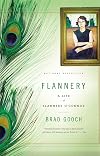
I remember reading WISE BLOOD and some of O'Connor's stories when I was in grad school, back in 1969-70. I can't remember if I knew then that O'Connor had only died about five years earlier. What I do remember is how taken I was with her odd characters in that "grotesque" southern literature she became so famous for. Brad Gooch's biography, FLANNERY, answered a lot of questions about O'Connor's short, mostly cloistered sort of life. There is so much information here, about her early show more schooling in Savannah, her family's devout Catholicism, her college days in Georgia and Iowa, her fascination with birds (chickens, pheasants, and especially peacocks). I mean, geeze, there's a LOT of stuff in here, most of which I found pretty damn interesting.
The thing is, O'Connor only wrote a couple of books. And there's a collection of about thirty stories she wrote over her short career, before she died of complications from lupus at the age of 39 in 1964. Apart from her grad school days in Iowa and a short stay in NYC, O'Connor spent most of her life on the family farm in Milledgeville, Georgia, living with her mother. There are indications here that she may have been 'gay,' but Gooch never asserts this straight out, since it can't be proven. But her relationships with men always seemed chaste and/or problematic in some way; and there were a couple of close friendships with women (Betty Hester and Maryat Lee) that remained 'unrequited,' probably because of O'Connor's very strong sense of 'sin' - from her very Catholic upbringing. She was also a student of theology and divinity, which showed up so darkly in her quirky stories.
What I perhaps enjoyed most of all in Gooch's narrative were all the literary 'connections' in O'Connor's life, with the mentions of such luminary lights as: Elizabeth Hardwick, Caroline Gordon, Alfred Kazin, Robert Lowell, Robie Macauley (who later became the fiction editor for Playboy), Robert Penn Warren, Katherine Anne Porter, James Dickey (and his son, Christopher), Pete Dexter and many others. Because traveling was distasteful and often physically problematic for O'Connor, many of these folks admired her work enough to come to her.
So, given that most of O'Connor's life was spent in rural Georgia, how in the hell did Gooch manage to make this book so interesting? Well he relied heavily on O'Connor's voluminous correspondence and personal papers, and he used these sources very well. He must have, because I was fascinated by this bio of the somewhat reclusive O'Connor. I need to get hold of her Collected Stories to reacquaint myself first hand with her work. If you are a devotee of Flannery O'Connor, then this book is a must-read. Highly recommended. show less
The thing is, O'Connor only wrote a couple of books. And there's a collection of about thirty stories she wrote over her short career, before she died of complications from lupus at the age of 39 in 1964. Apart from her grad school days in Iowa and a short stay in NYC, O'Connor spent most of her life on the family farm in Milledgeville, Georgia, living with her mother. There are indications here that she may have been 'gay,' but Gooch never asserts this straight out, since it can't be proven. But her relationships with men always seemed chaste and/or problematic in some way; and there were a couple of close friendships with women (Betty Hester and Maryat Lee) that remained 'unrequited,' probably because of O'Connor's very strong sense of 'sin' - from her very Catholic upbringing. She was also a student of theology and divinity, which showed up so darkly in her quirky stories.
What I perhaps enjoyed most of all in Gooch's narrative were all the literary 'connections' in O'Connor's life, with the mentions of such luminary lights as: Elizabeth Hardwick, Caroline Gordon, Alfred Kazin, Robert Lowell, Robie Macauley (who later became the fiction editor for Playboy), Robert Penn Warren, Katherine Anne Porter, James Dickey (and his son, Christopher), Pete Dexter and many others. Because traveling was distasteful and often physically problematic for O'Connor, many of these folks admired her work enough to come to her.
So, given that most of O'Connor's life was spent in rural Georgia, how in the hell did Gooch manage to make this book so interesting? Well he relied heavily on O'Connor's voluminous correspondence and personal papers, and he used these sources very well. He must have, because I was fascinated by this bio of the somewhat reclusive O'Connor. I need to get hold of her Collected Stories to reacquaint myself first hand with her work. If you are a devotee of Flannery O'Connor, then this book is a must-read. Highly recommended. show less
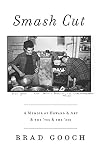
In his new memoir Smash Cut, novelist (Scary Kisses) and biographer (City Poet: The Life and Times of Frank O’Hara) Brad Gooch recounts his experiences in New York City during the turbulent ’70s and ’80s. With his relationship with filmmaker Howard Brookner as the focus, Gooch covers a dizzying array of events and a constellation of notable characters in retelling his life with Brookner, from their first date in 1978 to Howard’s death at age 34 in 1989. Interspersed with photos, show more drawings and other documents, the memoir uses the titular “smash cut” film device of “splicing one image or event up against another totally unrelated image or event” to tell its story. At times, Gooch hesitates, puts off telling a detail or a story, most often about some sexual or drug-related transgression, as exploring the “wild side” in the ‘70s and ‘80s meant trips to the infamous Mineshaft bar, speed, cocaine and heroin as well as clubbing at the Paradise Garage and visiting with Chelsea Hotel neighbor Virgil Thompson. Gooch gets over these hesitations and presses on, telling almost all. Oddly, however, what’s often missing in Smash Cut is not detail, for there is a good deal of that, but the difficult to put ones finger on ‘flavor’ of the times. What did it feel like to be in these places, live at these times? However, if, as Tolstoy famously wrote “All happy families are alike; each unhappy family is unhappy in its own way,” Brad Gooch has given us a fine example of what a happy gay couple holding onto each other through tumultuous and finally tragic times looks like.
http://www.lambdaliterary.org/reviews/05/03/smash-cut-a-memoir-of-howard-art-the... show less
http://www.lambdaliterary.org/reviews/05/03/smash-cut-a-memoir-of-howard-art-the... show less

Not knowing anything about Flannery O'Connor's life but having read some of her stories, I expected her to have a dark and twisted childhood; I'm happy to be wrong.
Gooch uses mountains of letters and interviews to get into O'Connor's short life from her birth and death in Georgia and all the other places in between. His approach is very "here are the facts--do with them as you will," and I liked how he didn't try to interpret the meaning behind her works as there seem to be enough other show more tomes that do that.
I now want to read the O'Connor novels I've missed and reread her stories and also delve into her prose and all the letters she wrote. Flannery O'Connor's story doesn't just end with this biography--it keeps on, and I think Gooch did an excellent job of telling it all while making the reader thirst for more. show less
Gooch uses mountains of letters and interviews to get into O'Connor's short life from her birth and death in Georgia and all the other places in between. His approach is very "here are the facts--do with them as you will," and I liked how he didn't try to interpret the meaning behind her works as there seem to be enough other show more tomes that do that.
I now want to read the O'Connor novels I've missed and reread her stories and also delve into her prose and all the letters she wrote. Flannery O'Connor's story doesn't just end with this biography--it keeps on, and I think Gooch did an excellent job of telling it all while making the reader thirst for more. show less
This book is a must for anyone, like me, who loves Flannery O'Connor's work. Her story is remarkable in that someone who lived such a circumscribed life was able to have such a lasting impact on literature. Because of the lupus that killed her at 36, Flannery lived most of her adult life as isolated as Emily Dickinson. Since she has a small body of work and her stories are often grotesque, she was a mysterious figure to me until I read this biography. Now I can read her stories and show more understand where they come from. Her devout Catholicism and her physical and mental isolation account in large part for the world of her stories. My only quibble with the biography is that it ends rather abruptly, with little discussion about how and why she is more important writer in death than she was in life. It occurred to me while reading this that first, I have been reading Flannery O'Connor for almost as long as she was alive and secondly, were she still alive she would be about the same age as the current greatest living short story writer, William Trevor. What wonders might she have produced had she lived! show less
Lists
Awards


You May Also Like


Associated Authors
Statistics
- Works
- 20
- Also by
- 5
- Members
- 1,786
- Popularity
- #14,415
- Rating
- 3.8
- Reviews
- 32
- ISBNs
- 46
- Languages
- 2