
Rosellen Brown
Author of Before and After
About the Author
Rosellen Brown is the author of the best-selling novel "Before & After" as well as "Half a Heart", "Civil Wars", & others. She lives in Chicago. (Bowker Author Biography)
Image credit: Rosellen Brown. UH Photographs Collection.
Works by Rosellen Brown
Associated Works
Writers on Writing: Collected Essays from the New York Times (2001) — Contributor — 477 copies, 5 reviews
Points of View: An Anthology of Short Stories, Revised & Updated Edition (1995) — Contributor — 442 copies, 7 reviews
Mirror, Mirror on the Wall: Women Writers Explore Their Favorite Fairy Tales (1998) — Contributor — 314 copies, 4 reviews
Poetry Speaks Expanded: Hear Poets Read Their Own Work from Tennyson to Plath (2007) — Contributor — 157 copies, 2 reviews
Who's Writing This? Notations on the Authorial I, with Self-Portraits {not Antæus} (1995) — Contributor — 75 copies
Rediscoveries II: Important Writers Select Their Favorite Works of Neglected Fiction (1988) — Contributor — 31 copies, 1 review
Antaeus No. 73/74, Spring 1994 - Who’s Writing This: Notations on the Authorial I {magazine} (1994) — Contributor — 5 copies
Tagged
Common Knowledge
- Birthdate
- 1939-05-12
- Gender
- female
- Education
- Barnard College
Brandeis University - Occupations
- instructor
author - Awards and honors
- American Academy of Arts and Letters Academy Award (Literature, 1988)
- Nationality
- USA
- Birthplace
- Philadelphia, Pennsylvania, USA
- Associated Place (for map)
- Pennsylvania, USA
Members
Reviews
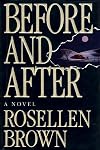
“[S]crew what really happened! What’s it going to take for you to get this? ‘The truth’ in a courtroom is just a construction of effects. It’s theater. There is no such thing as simple truth, as long as its presentation can be shaped, or perverted, or invented, even. Not the facts, mind you. I’m talking presentation. Either side can skew the way things appear, and how they appear is all that matters.”
[Before and After], by Rosellen Brown, is not about what really happened. But show more life is rarely about what really happened. What really happened, the event that creates the plot of the book, is in doubt until the closing section of the book. What Brown focuses on throughout the story is how everyone is affected – the lives of the characters [Before and After].
Rosellen Brown captures this transformation vividly through the eyes of three people – the mother, father, and sister of an accused murderer, Jacob, an otherwise typically rebellious and angry American teenager. Carolyn, Jacob’s mother and a doctor in their small town, is the first to feel the ugly caress of violence when she is summoned to the Emergency Room to attend the body of a teen-aged girl who was brutally and fatally beaten. The girls head is caved in and her, her sad, lifeless body is laid out on a gurney. There are few things more offensive than the view of a human body so recently departed of its quickening force, its soul, if you believe in such a thing. No matter the severity of the wounds – they can be gruesome or invisible altogether – there is a shameful absurdity in looking at what was recently a breathing, thinking, and feeling human and is now nothing more than a sack of meat. Carolyn, without knowing about Jacob’s involvement, views the victim’s body and detaches herself from the emotion of it, a luxury she soon loses. Jacob’s father, Ben, a sculptor and angry man himself, next feels the transformative genius of violence, finding in the trunk of Jacob’s car a jack covered in blood and hair. Ben embraces the emotion of the discovery, protecting Jacob, who he assumes is guilty, by hiding and destroying the evidence. Finally, Judith, Jacob’s younger sister, an almost forgotten casualty of the crime, realizes that the behavior she found frightening in her brother might be the tip of a much more disturbing iceberg.
Superman, one of America’s oldest and most iconic superheroes, fights for “Truth, Justice, and the American Way.” That belief in a satisfying and rehabilitative closure in seeing bad men brought law in justice, while appealing, is a whole-cloth myth. The courts are full to bursting with the wronged and the evil, the innocent and the culpable. What so few people understand is that there is little justice and even less truth once you push through the over-sized wooden doors of a courtroom. What resides there is made up of what people can be made to believe, what people are willing to believe, or what people want to believe – not what can be proven. What does it matter if proof exists but no one can be convinced of its validity and worth?
This construct, the very bedrock of our system of justice, bleeds into everyday life. Victims and accused find that their lives outside those cruel doors have the same surreal quality. Family, life-long friends, casual acquaintances, and even strangers treat them differently, whether they are the ones who suffered the crime or are accused of committing it – they are perceived differently by everyone once they are caught in the net of violence. Perception has shifted, in their minds and all around them. And it will never retrieve the same angle as it had before.
What makes Brown’s examination of this transformation in Jacob’s family so evocative is that she writes about it from their own personal perspective rather than from a neutral, all-knowing narrator’s perspective. Carolyn views the events through her detached and impersonal doctor’s eyes, and her narrative is the coldest, but appropriately so. Ben, immediately awash in every emotion that surfaces, is the most vital, and Brown tells it from the first-person, as though Ben was sitting next to you, relaying the events of a few hours or minutes past. And Judith, tells her story almost as she might in a diary, chronicling the personal events of her days as she sees them, forgotten by her family and left to process everything without the necessary experience that a few more years of life would give her.
Bottom Line: A realistic and personal look at the loss of innocence at the hands of justice – much more provocative than a mystery for its perspective.
4 1/2 bones!!!!! show less
[Before and After], by Rosellen Brown, is not about what really happened. But show more life is rarely about what really happened. What really happened, the event that creates the plot of the book, is in doubt until the closing section of the book. What Brown focuses on throughout the story is how everyone is affected – the lives of the characters [Before and After].
Rosellen Brown captures this transformation vividly through the eyes of three people – the mother, father, and sister of an accused murderer, Jacob, an otherwise typically rebellious and angry American teenager. Carolyn, Jacob’s mother and a doctor in their small town, is the first to feel the ugly caress of violence when she is summoned to the Emergency Room to attend the body of a teen-aged girl who was brutally and fatally beaten. The girls head is caved in and her, her sad, lifeless body is laid out on a gurney. There are few things more offensive than the view of a human body so recently departed of its quickening force, its soul, if you believe in such a thing. No matter the severity of the wounds – they can be gruesome or invisible altogether – there is a shameful absurdity in looking at what was recently a breathing, thinking, and feeling human and is now nothing more than a sack of meat. Carolyn, without knowing about Jacob’s involvement, views the victim’s body and detaches herself from the emotion of it, a luxury she soon loses. Jacob’s father, Ben, a sculptor and angry man himself, next feels the transformative genius of violence, finding in the trunk of Jacob’s car a jack covered in blood and hair. Ben embraces the emotion of the discovery, protecting Jacob, who he assumes is guilty, by hiding and destroying the evidence. Finally, Judith, Jacob’s younger sister, an almost forgotten casualty of the crime, realizes that the behavior she found frightening in her brother might be the tip of a much more disturbing iceberg.
Superman, one of America’s oldest and most iconic superheroes, fights for “Truth, Justice, and the American Way.” That belief in a satisfying and rehabilitative closure in seeing bad men brought law in justice, while appealing, is a whole-cloth myth. The courts are full to bursting with the wronged and the evil, the innocent and the culpable. What so few people understand is that there is little justice and even less truth once you push through the over-sized wooden doors of a courtroom. What resides there is made up of what people can be made to believe, what people are willing to believe, or what people want to believe – not what can be proven. What does it matter if proof exists but no one can be convinced of its validity and worth?
This construct, the very bedrock of our system of justice, bleeds into everyday life. Victims and accused find that their lives outside those cruel doors have the same surreal quality. Family, life-long friends, casual acquaintances, and even strangers treat them differently, whether they are the ones who suffered the crime or are accused of committing it – they are perceived differently by everyone once they are caught in the net of violence. Perception has shifted, in their minds and all around them. And it will never retrieve the same angle as it had before.
What makes Brown’s examination of this transformation in Jacob’s family so evocative is that she writes about it from their own personal perspective rather than from a neutral, all-knowing narrator’s perspective. Carolyn views the events through her detached and impersonal doctor’s eyes, and her narrative is the coldest, but appropriately so. Ben, immediately awash in every emotion that surfaces, is the most vital, and Brown tells it from the first-person, as though Ben was sitting next to you, relaying the events of a few hours or minutes past. And Judith, tells her story almost as she might in a diary, chronicling the personal events of her days as she sees them, forgotten by her family and left to process everything without the necessary experience that a few more years of life would give her.
Bottom Line: A realistic and personal look at the loss of innocence at the hands of justice – much more provocative than a mystery for its perspective.
4 1/2 bones!!!!! show less
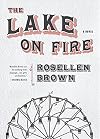
I just finished The Lake on Fire by Rosellen Brown last night, so am still mulling over this richly rendered novel of 1875 Chicago. The World's Fair is transforming the city's landscape with its huge Ferris wheel, but beneath the gleaming white facades is naught but flimsy lath and cardboard. A metaphor for the city itself, in which the very rich enjoy luxuries while thousands starve in the streets. Chaya and her odd, genius brother flee to the city but find it difficult to do more than show more survive, he as a child pickpocket, she at two jobs, rolling cigars. Like Cinderella, a wealthy man might rescue her from her drudgery, but she can barely stand the inequity of leaving everyone else behind. A novel written by a poet, who clearly loves language. show less
First of, I do not know why Rosellen Brown is not more well known. To me, she is in line with writers like Margaret Atwood and Toni Morrison - a new novel from her is a major cause of celebration. nothing against Sarabande but this should have come out on a major house imprint and with some publicity muscle behind it. It hurts my heart a little.
That said, this is a beautifully written novel about a Jewish family who immigrate to a farming cooperative in Wisconsin and the son and daughter show more who break away and move to Chicago in the mid 1890s. It is well researched and emotionally resonant. As with all of her novels, there are some scenes that I will never forget.
I know comparisons are odious but I can't help but think of another big Chicago novel that came out this year with the FULL power of a publicity machine behind it. Frankly, this is a better and more well constructed novel and one that should have been up for all the major awards. I have nothing against The Great Believers which was very well intended and thoughtful and frankly, a bit of a miss.
Long live Rosellen Brown. show less
That said, this is a beautifully written novel about a Jewish family who immigrate to a farming cooperative in Wisconsin and the son and daughter show more who break away and move to Chicago in the mid 1890s. It is well researched and emotionally resonant. As with all of her novels, there are some scenes that I will never forget.
I know comparisons are odious but I can't help but think of another big Chicago novel that came out this year with the FULL power of a publicity machine behind it. Frankly, this is a better and more well constructed novel and one that should have been up for all the major awards. I have nothing against The Great Believers which was very well intended and thoughtful and frankly, a bit of a miss.
Long live Rosellen Brown. show less
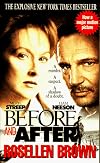
this was not a believable story in the least, but I was interested in the characters. Brown wrote good descriptions and presented interesting analogies. She also made me think about possibilities in difficult situations. I appreciated how she ended the book considering how many paths she could have taken. This was about a middle class family whose mother is a pediatrician, father is a sculptor, and the son is 16 and daughter 11. Many times people acted either older or younger than they were, show more but that also fiut the story. And this is another story that shows the importance of theatre in the court of law, which also is quite sad. show less
Lists
Awards


You May Also Like


Associated Authors
Statistics
- Works
- 16
- Also by
- 21
- Members
- 894
- Popularity
- #28,652
- Rating
- 3.9
- Reviews
- 11
- ISBNs
- 89
- Languages
- 9