

Judith Guest
Author of Ordinary People
About the Author
Judith Guest was born in Detroit in 1936. She earned a degree in Education from the University of Michigan. She has been a schoolteacher in Detroit. With no formal training in fiction writing, novelist Judith Guest began to write fiction and poetry when her youngest son started school. Her highly show more acclaimed first novel, Ordinary People, was published in 1976 and has since been published in 13 languages. It was made into a film, directed by Robert Redford, which received the Academy Award for best picture in 1980. Guest's subsequent works include Second Heaven (1982), Killing Time in St. Cloud (1988), Errands (1997) and The Tarnished Eye (2004). (Bowker Author Biography) show less
Works by Judith Guest
The Gates 1 copy
Obyčajní ľudia 1 copy
Associated Works
The Silence of the Loons: Thirteen Tales of Mystery by Minnesota's Premier Crime Writers (2005) — Contributor — 58 copies, 1 review
Tagged
Common Knowledge
- Legal name
- LaVercombe, Judith Ann Guest
- Other names
- Guest, Judith Ann (birth)
- Birthdate
- 1936-03-29
- Gender
- female
- Education
- University of Michigan (BA, Education)
- Occupations
- teacher
- Organizations
- Authors Guild
Authors League of America
PEN American Center
Detroit Women Writers - Awards and honors
- Royal Oak High School Hall of Fame
- Relationships
- Guest, Edgar A. (great-uncle)
- Nationality
- USA
- Birthplace
- Detroit, Michigan, USA
- Places of residence
- Detroit, Michigan, USA
Royal Oak, Michigan, USA
Edina, Minnesota, USA
Garden City, Michigan, USA - Associated Place (for map)
- Michigan, USA
Members
Reviews
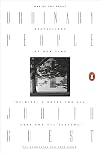
A deeply moving, thoughtful book, Ordinary People takes a brutally close look at the dynamics of a family coping with the loss of a child. Conrad, the surviving child, struggles with his own guilt and pain by attempting suicide and has just been released from a mental hospital. Calvin, the father, feels as if he has let down both his sons and suddenly feels uncertain, reeling from the fact that he could not protect his own family. Finally, there is Beth, the mother, who comes across as cold show more and aloof to even her own family, and struggles with finding out that not everything in the world can be perfect and controlled.
Richly drawn, each of the characters feels real and three-dimensional. Conrad is by turns a normal, sarcastic teenager, a kid wracked with guilt over his brother's death, and a little boy who doesn't know where to go from here. His grief can be heartbreaking to read, but his desperate attempts to hide it are even more so.
The true stand-out, however, is the mother. Beth is a mystery. While Guest often allows us into Cal's and Conrad's minds, we never see Beth's thoughts, only the perceptions filtered through others' eyes. Much of what she does is up to interpretation: is she truly cold and emotionally unavailable? Or is she simply coping with her loss by trying to ignore it?
If you have ever seen the equally astounding film directed by Robert Redford and starring Timothy Hutton, then you'll find that the screenplay was remarkably faithful to the book; however, I would argue that the book has slightly more nuances with regard to Beth's character.
I am not normally a fan of dramas, but this is one of the most engrossing, oftentimes painful, books I have ever read. show less
Richly drawn, each of the characters feels real and three-dimensional. Conrad is by turns a normal, sarcastic teenager, a kid wracked with guilt over his brother's death, and a little boy who doesn't know where to go from here. His grief can be heartbreaking to read, but his desperate attempts to hide it are even more so.
The true stand-out, however, is the mother. Beth is a mystery. While Guest often allows us into Cal's and Conrad's minds, we never see Beth's thoughts, only the perceptions filtered through others' eyes. Much of what she does is up to interpretation: is she truly cold and emotionally unavailable? Or is she simply coping with her loss by trying to ignore it?
If you have ever seen the equally astounding film directed by Robert Redford and starring Timothy Hutton, then you'll find that the screenplay was remarkably faithful to the book; however, I would argue that the book has slightly more nuances with regard to Beth's character.
I am not normally a fan of dramas, but this is one of the most engrossing, oftentimes painful, books I have ever read. show less
I watched the movie when it came out, and loved it. I particularly admired the performances of Mary Tyler Moore and Timothy Hutton. I had the book for a few years and finally decided I'd read it. Honestly, I thought I'd run through it quickly because it isn't large, and I could release one more book into the wild.
It's a modern classic. The story of 17-year-old Conrad Jarret coming to grips with the sudden death of his older brother is, in a way, a coming-of-age story. He isn't the only one show more growing, however.
Conrad is home from a stay at a psychiatric hospital, where he'd been taken after trying to commit suicide. He is far from "cured", and both of his parents are aware that he's not the same boy he was before his brother's death. While his father struggles to find a way to help him, his mother doesn't seem able to grasp that he even needs help. She thinks her husband coddles him. She is uptight and concerned with appearances. Having a child in psychiatric care is not seemly and should not be discussed with others.
Conrad is a good kid. He wants to do the right things, get those straight As again, do well on the swim team, but he finds it hard to care. He becomes more and more withdrawn, until he follows his father's suggestion to see a psychiatrist, Dr. Berger.
The psychiatrist is a laid-back guy who relies on instinct, which seems to be what Con needs. Gradually he helps Con see himself differently, see others differently. The strain of having this troubled teen in the house, however, pulls at the fabric of the marriage.
I think what makes this book a success is the truth in it. Truth that many of us recognize. I could relate to this boy's feelings about himself because I've had them too. I could also relate to his father's sense of loss and lack of control. Even the hard-hearted mother deserves a little attention.
Am I too much a child of the sixties and seventies? Is the shrink savior an outmoded character now? I don't personally think so but I wonder if others do. I am too close to it. I can't help thinking of Good Will Hunting, though. There is much of the same atmosphere here. show less
It's a modern classic. The story of 17-year-old Conrad Jarret coming to grips with the sudden death of his older brother is, in a way, a coming-of-age story. He isn't the only one show more growing, however.
Conrad is home from a stay at a psychiatric hospital, where he'd been taken after trying to commit suicide. He is far from "cured", and both of his parents are aware that he's not the same boy he was before his brother's death. While his father struggles to find a way to help him, his mother doesn't seem able to grasp that he even needs help. She thinks her husband coddles him. She is uptight and concerned with appearances. Having a child in psychiatric care is not seemly and should not be discussed with others.
Conrad is a good kid. He wants to do the right things, get those straight As again, do well on the swim team, but he finds it hard to care. He becomes more and more withdrawn, until he follows his father's suggestion to see a psychiatrist, Dr. Berger.
The psychiatrist is a laid-back guy who relies on instinct, which seems to be what Con needs. Gradually he helps Con see himself differently, see others differently. The strain of having this troubled teen in the house, however, pulls at the fabric of the marriage.
I think what makes this book a success is the truth in it. Truth that many of us recognize. I could relate to this boy's feelings about himself because I've had them too. I could also relate to his father's sense of loss and lack of control. Even the hard-hearted mother deserves a little attention.
Am I too much a child of the sixties and seventies? Is the shrink savior an outmoded character now? I don't personally think so but I wonder if others do. I am too close to it. I can't help thinking of Good Will Hunting, though. There is much of the same atmosphere here. show less

A profoundly moving, thoughtful book, Ordinary People takes a brutally close look at the dynamics of a family coping with the loss of a child. Conrad, the surviving child, struggles with his guilt and pain by attempting suicide and has just been released from a mental hospital. Calvin, the father, feels as if he has let down both his sons and suddenly feels uncertain, reeling from the fact that he could not protect his family. Finally, Beth, the mother, comes across as cold and aloof to her show more family and struggles to discover that not everything can be perfect and controlled.
Richly drawn, each of the characters feels real and three-dimensional. Conrad is, by turn, a typical, sarcastic teenager, a kid wracked with guilt over his brother's death, and a little boy who doesn't know where to go from here. His grief can be heartbreaking to read, but his desperate attempts to hide it are even more so.
The true stand-out, however, is the mother. Beth is a mystery. While Guest often allows us into Cal's and Conrad's minds, we never see Beth's thoughts; only the perceptions are filtered through others' eyes. Much of what she does is up to interpretation: is she truly cold and emotionally unavailable? Or is she simply coping with her loss by trying to ignore it?
If you have ever seen the equally astounding film directed by Robert Redford and starring Timothy Hutton, then you'll find that the screenplay was remarkably faithful to the book; however, the book has slightly more nuances about Beth's character.
I am not usually a fan of dramas, but this is one of the most fascinating, often painful, books I have ever. show less
Richly drawn, each of the characters feels real and three-dimensional. Conrad is, by turn, a typical, sarcastic teenager, a kid wracked with guilt over his brother's death, and a little boy who doesn't know where to go from here. His grief can be heartbreaking to read, but his desperate attempts to hide it are even more so.
The true stand-out, however, is the mother. Beth is a mystery. While Guest often allows us into Cal's and Conrad's minds, we never see Beth's thoughts; only the perceptions are filtered through others' eyes. Much of what she does is up to interpretation: is she truly cold and emotionally unavailable? Or is she simply coping with her loss by trying to ignore it?
If you have ever seen the equally astounding film directed by Robert Redford and starring Timothy Hutton, then you'll find that the screenplay was remarkably faithful to the book; however, the book has slightly more nuances about Beth's character.
I am not usually a fan of dramas, but this is one of the most fascinating, often painful, books I have ever. show less

I wish I had the skill to truly analyze what makes the difference between a book where the author tries to manipulate the reader’s emotions and only gets an “hmm how sad” from me, or worse, eyerolls, and a book that has me glued to the pages and leaking tears. All I know is that this is one of the latter.
In spite of a story that is almost all character, with almost all events taking place within those characters’ thoughts and emotions and in their interactions with one another, and show more in spite of a present-tense, stream of consciousness writing style that might have annoyed me in another author’s hands, this story of a family fragmenting and reforming in the aftermath of tragedy absorbed me completely and wrung my emotions inside out. It’s been a while since I had a good cry over a book, and it was deeply satisfying.
Vintage paperback, picked up from my public library’s gimme shelves, where they make unusable donated books and culled books available to the public in return for a suggested monetary donation.
I read this for The 16 Tasks of the Festive Season, square 4: Book themes for Penance Day: Read a book that has a monk, nun, pastor / preacher or priest as a protagonist, or where someone is struggling with feelings of guilt or with their conscience (regardless over what). In this book, members of a family are struggling with their sense of guilt or failed responsibility in the aftermath of tragedy(Con over surviving when his stronger brother drowned and Cal over somehow failing his son when he attempted suicide). show less
In spite of a story that is almost all character, with almost all events taking place within those characters’ thoughts and emotions and in their interactions with one another, and show more in spite of a present-tense, stream of consciousness writing style that might have annoyed me in another author’s hands, this story of a family fragmenting and reforming in the aftermath of tragedy absorbed me completely and wrung my emotions inside out. It’s been a while since I had a good cry over a book, and it was deeply satisfying.
Vintage paperback, picked up from my public library’s gimme shelves, where they make unusable donated books and culled books available to the public in return for a suggested monetary donation.
I read this for The 16 Tasks of the Festive Season, square 4: Book themes for Penance Day: Read a book that has a monk, nun, pastor / preacher or priest as a protagonist, or where someone is struggling with feelings of guilt or with their conscience (regardless over what). In this book, members of a family are struggling with their sense of guilt or failed responsibility in the aftermath of tragedy
Lists
Awards


You May Also Like


Associated Authors
Statistics
- Works
- 8
- Also by
- 4
- Members
- 3,089
- Popularity
- #8,263
- Rating
- 3.8
- Reviews
- 51
- ISBNs
- 82
- Languages
- 7
- Favorited
- 3