
Dave Boling
Author of Guernica
About the Author
Works by Dave Boling
Tagged
Common Knowledge
- Birthdate
- 20th Century
- Gender
- male
- Occupations
- journalist
- Nationality
- USA
- Places of residence
- Washington, USA
- Associated Place (for map)
- Washington, USA
Members
Reviews
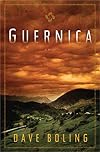
GUERNICA by Dave Boling
Bloomsbury, Publisher
ISBN: 978-1-59691-563-3
One of the things that I love about books is their ability to change my perception of the world. This book is no exception to the rule. I will forever be changed because of the journey through its pages. The writing took me to this place in spirit.
The book starts out with a view of the town “Guernica” shortly after a terrible event has occurred. You see the broken remains of many of the people but mostly the pain and show more sorrow of Justo (WHO-stow) who is the character that much of the book’s story revolves around if at times only remotely. Now that the book has set up the future it returns to the past to give you a much better picture of the people of the village of Guernica and the Ansotegui family.
Justo is the strong man of the town and also oldest of three brothers who has to care for them and the family’s farm. Becoming the “father figure” at such a young age in many ways made him the boy that never quite grew up having to bypass his boyhood to become a man to young. As the story progresses you see the story of his family and the joy that is what being Basque is all about. If there is a culture that can find an excuse to be happy any time and anywhere it is the Basques.
The book takes a fictional family and places it during a very real, very deadly, and horrific act that was perpetuated against them in the name of the Spanish Civil War. The bombing of this town was done by Nazi planes using it mainly as a training mission of young flyers to prepare for the impending WWII. The town had more bombs dropped on it in one afternoon than were dropped during the entirety of WWI.
This bombing is one portion of what this book is about. Unfortunately history books often only tell us the statistics of war. This book beautifully tells you about the people of war, especially a very proud people who refused to be victims of war.
I fell in love with all of the characters in the book. They were not perfect people, they had troubles, and they had flaws. But they did their best to overcome and maintain who they were as people and as a culture.
To be honest I could not read any other books for awhile after I read this one. I just did not want to let go of the characters. I even went out and got some books on Basque cooking and made a Basque meal for my birthday. The Basque people like to celebrate and if you would like to read about the celebration of life even under the shadow of adversity you will love this book. show less
Bloomsbury, Publisher
ISBN: 978-1-59691-563-3
One of the things that I love about books is their ability to change my perception of the world. This book is no exception to the rule. I will forever be changed because of the journey through its pages. The writing took me to this place in spirit.
The book starts out with a view of the town “Guernica” shortly after a terrible event has occurred. You see the broken remains of many of the people but mostly the pain and show more sorrow of Justo (WHO-stow) who is the character that much of the book’s story revolves around if at times only remotely. Now that the book has set up the future it returns to the past to give you a much better picture of the people of the village of Guernica and the Ansotegui family.
Justo is the strong man of the town and also oldest of three brothers who has to care for them and the family’s farm. Becoming the “father figure” at such a young age in many ways made him the boy that never quite grew up having to bypass his boyhood to become a man to young. As the story progresses you see the story of his family and the joy that is what being Basque is all about. If there is a culture that can find an excuse to be happy any time and anywhere it is the Basques.
The book takes a fictional family and places it during a very real, very deadly, and horrific act that was perpetuated against them in the name of the Spanish Civil War. The bombing of this town was done by Nazi planes using it mainly as a training mission of young flyers to prepare for the impending WWII. The town had more bombs dropped on it in one afternoon than were dropped during the entirety of WWI.
This bombing is one portion of what this book is about. Unfortunately history books often only tell us the statistics of war. This book beautifully tells you about the people of war, especially a very proud people who refused to be victims of war.
I fell in love with all of the characters in the book. They were not perfect people, they had troubles, and they had flaws. But they did their best to overcome and maintain who they were as people and as a culture.
To be honest I could not read any other books for awhile after I read this one. I just did not want to let go of the characters. I even went out and got some books on Basque cooking and made a Basque meal for my birthday. The Basque people like to celebrate and if you would like to read about the celebration of life even under the shadow of adversity you will love this book. show less
This novel is set in South Africa during the Anglo-Boer War of 1899-1902. Fourteen-year-old Lettie Venter is the narrator. Her Oupa Gideon, Vader, and older brother (Schalk) are off fighting when the British arrive and burn down their farm. Lettie, her Moeder, younger brother (Willem), and baby sister (Cecilia) are taken to an internment camp where they are housed in crowded tents. Lettie describes the deplorable conditions in which they live; people die of disease because of poor sanitation show more and malnutrition. One of the only positive aspects of Lettie’s time in the camp is the friendship she has with a young British guard, Thomas Maples.
In some ways, this is a coming-of-age novel. Lettie is an intelligent, curious child, always asking questions: “others thought me a pest with my questions.” Her mother describes her as “’helping with the chores when she can get away from her reading and studies. . . . Her mind works so hard you can watch it from the outside’” and her father teases her about her “’dozen questions and then silence.’” Her experiences cause her to question what she has been taught. In the camp, she often thinks about her grandfather and father “speaking their favorite phrases, repeating their themes, the ones I’d heard for years, the ones I accepted without question.” Now she asks, “But if we have no dominion over our lives, Oupa, why strive to be righteous? If we have no part in our fate, what is the point?”
Her friendship with Maples has her learning more about the enemy. Maples forces Lettie to see the British as individuals who are not all like those who destroyed her home. Maples gifts her a copy of David Copperfield and she starts to think of the protagonist as a real person: “He was British, but the war had not been his fault.” She realizes she and David share similarities: “I liked David and felt . . . what? Akin. That’s the word” and “Our lives on the farm were hard in many ways. But not like David’s. And he seemed such a goodhearted little, doing his best, trying to see the good in people. I did not see how David could be an enemy of my country.” And she learns that Maples is as unhappy in the camp as she is; she comes to realize his “desire to back away from the savagery of the war.” The two years Lettie spends in the camp force her to grow up; at the end, she realizes she is “a different person – far closer to the woman I would become than to the little girl I had been.”
Because the narrator is young, there is much that she does not understand. The reader often sees the significance of statements that she does not. For instance, Lettie does not understand about her mother’s pregnancy. Comments that an adult might question, she dismisses; for example, Schalk comments that “’Oupa is hard on [Oom Sarel]. Never lets up. Doesn’t seem to matter what he does.’” This suggests an underlying animosity that explains much about Oom Sarel’s behaviour though Lettie does not come to understand until much later. Of course, having a young person as a narrator serves to emphasize the horrors of life in the camp.
I enjoy books that shed light on historical events. This one shines a spotlight on the Anglo-Boer war and the mistreatment of women and children during the conflict: “twenty-two thousand Boer children died in British concentration camps – more than the combined fatalities among soldiers on both sides. It wasn’t on the scale of the Holocaust, nor was it of genocidal intent, but it was nevertheless a twentieth-century atrocity – a war against children – that has been largely forgotten.”
The portrayal of the Boers is sometimes idealized. Arthur Conan Doyle is quoted at the beginning: “[The Boers] must obviously be one of the most rugged, virile, unconquerable races ever seen upon earth” and it seems that Boling shares this opinion. Conan Doyle wrote about the Boers’ “dour fatalistic Old Testament religion and an ardent and consuming patriotism”; in the novel, Oupa, with his “immense faith” is the former and Vader, with his unrelenting behaviour even in defeat, is the latter. I appreciated that Maples tries to show Lettie that the Boers are not guiltless; they took land from the Zulus and fought wars: “’Oh . . . were [the natives] happy you showed up? Did they welcome you? I doubt it. See, we’re not so different.’” And anyone with knowledge of future events in South Africa will note the very telling comment at the end when a native woman is asked about her people and she replies, “’I don’t know . . . A beaten dog will someday bare its teeth.’”
This is a book I would recommend. It includes a young narrator (who may remind readers of Anne Frank, another intelligent writer-in-the-making) and shows her growing into an admirable woman. There are also other well-developed and memorable characters, Tante Hannah being one of my favourites. The book also highlights historical events probably not known to many people but events that should not be hidden.
Note: I received an eARC of this book from the publisher via NetGalley.
Please check out my reader's blog (http://schatjesshelves.blogspot.ca/) and follow me on Twitter (@DCYakabuski). show less
In some ways, this is a coming-of-age novel. Lettie is an intelligent, curious child, always asking questions: “others thought me a pest with my questions.” Her mother describes her as “’helping with the chores when she can get away from her reading and studies. . . . Her mind works so hard you can watch it from the outside’” and her father teases her about her “’dozen questions and then silence.’” Her experiences cause her to question what she has been taught. In the camp, she often thinks about her grandfather and father “speaking their favorite phrases, repeating their themes, the ones I’d heard for years, the ones I accepted without question.” Now she asks, “But if we have no dominion over our lives, Oupa, why strive to be righteous? If we have no part in our fate, what is the point?”
Her friendship with Maples has her learning more about the enemy. Maples forces Lettie to see the British as individuals who are not all like those who destroyed her home. Maples gifts her a copy of David Copperfield and she starts to think of the protagonist as a real person: “He was British, but the war had not been his fault.” She realizes she and David share similarities: “I liked David and felt . . . what? Akin. That’s the word” and “Our lives on the farm were hard in many ways. But not like David’s. And he seemed such a goodhearted little, doing his best, trying to see the good in people. I did not see how David could be an enemy of my country.” And she learns that Maples is as unhappy in the camp as she is; she comes to realize his “desire to back away from the savagery of the war.” The two years Lettie spends in the camp force her to grow up; at the end, she realizes she is “a different person – far closer to the woman I would become than to the little girl I had been.”
Because the narrator is young, there is much that she does not understand. The reader often sees the significance of statements that she does not. For instance, Lettie does not understand about her mother’s pregnancy. Comments that an adult might question, she dismisses; for example, Schalk comments that “’Oupa is hard on [Oom Sarel]. Never lets up. Doesn’t seem to matter what he does.’” This suggests an underlying animosity that explains much about Oom Sarel’s behaviour though Lettie does not come to understand until much later. Of course, having a young person as a narrator serves to emphasize the horrors of life in the camp.
I enjoy books that shed light on historical events. This one shines a spotlight on the Anglo-Boer war and the mistreatment of women and children during the conflict: “twenty-two thousand Boer children died in British concentration camps – more than the combined fatalities among soldiers on both sides. It wasn’t on the scale of the Holocaust, nor was it of genocidal intent, but it was nevertheless a twentieth-century atrocity – a war against children – that has been largely forgotten.”
The portrayal of the Boers is sometimes idealized. Arthur Conan Doyle is quoted at the beginning: “[The Boers] must obviously be one of the most rugged, virile, unconquerable races ever seen upon earth” and it seems that Boling shares this opinion. Conan Doyle wrote about the Boers’ “dour fatalistic Old Testament religion and an ardent and consuming patriotism”; in the novel, Oupa, with his “immense faith” is the former and Vader, with his unrelenting behaviour even in defeat, is the latter. I appreciated that Maples tries to show Lettie that the Boers are not guiltless; they took land from the Zulus and fought wars: “’Oh . . . were [the natives] happy you showed up? Did they welcome you? I doubt it. See, we’re not so different.’” And anyone with knowledge of future events in South Africa will note the very telling comment at the end when a native woman is asked about her people and she replies, “’I don’t know . . . A beaten dog will someday bare its teeth.’”
This is a book I would recommend. It includes a young narrator (who may remind readers of Anne Frank, another intelligent writer-in-the-making) and shows her growing into an admirable woman. There are also other well-developed and memorable characters, Tante Hannah being one of my favourites. The book also highlights historical events probably not known to many people but events that should not be hidden.
Note: I received an eARC of this book from the publisher via NetGalley.
Please check out my reader's blog (http://schatjesshelves.blogspot.ca/) and follow me on Twitter (@DCYakabuski). show less
"Guernica", by first time novelist Dave Boling, tells the story of the town of Guernica before, during, and after it was bombed by the German Luftwaffe on April 26, 1937. It is also the story of the Basque residents, who remained strong and resilient even though hundreds of civilians were killed or displaced on this horrific day.
Mr. Boling does a wonderful job weaving together historical accuracy with well written fiction. He is as equally adept at describing the love story between Miren and show more Miguel, as he is in describing the devastating aerial attack on this town. It is unusual to find an author, especially a first time novelist, who can write so effectively about both love and war.
I would recommend this novel highly to anyone who wants to learn more about the Spanish Civil War, the Basque nation, or World War II. Additionally, I would encourage anyone who enjoys a good old fashioned love story to pick up this novel. I enjoyed this book immensely and will look forward to Mr. Boling's next offering. show less
Mr. Boling does a wonderful job weaving together historical accuracy with well written fiction. He is as equally adept at describing the love story between Miren and show more Miguel, as he is in describing the devastating aerial attack on this town. It is unusual to find an author, especially a first time novelist, who can write so effectively about both love and war.
I would recommend this novel highly to anyone who wants to learn more about the Spanish Civil War, the Basque nation, or World War II. Additionally, I would encourage anyone who enjoys a good old fashioned love story to pick up this novel. I enjoyed this book immensely and will look forward to Mr. Boling's next offering. show less
The Lost History of the Stars by Dave Boling is set in turn-of-the-century South Africa and follows a Boer family through the trials of the 1899 - 1902 war with the British. Fourteen year old Lettie, her stern and duty-bound mother, a younger brother and sister are Dutch Afrikaner settlers who are forcibly moved to a concentration camp after their farm was burned. Lettie’s father, grandfather and older brother are off fighting. Thousands of Afrikaner women and children were placed in these show more cramped and disease ridden camps for the duration.
We are given a detailed view of this family’s life, both before and during the war. Conditions in the camp are horrific and while Lettie tries to be brave and defiant, she yearns for her old life and quieter times. Her mother hates the British but Lettie has come to realize that they are not all bad, some are much more understanding and compassionate that she has been led to believe.
The Lost History of the Stars is a good novel of historical fiction and paints a vivid picture of people caught up in the shadow of a brutal war. I found it both interesting and educational but although it is beautifully written, I never quite felt that the characters were developed to the point where they became real.
Written as a testament to family, love and the will to survive, the author has based this novel on his grandfather’s experience during the Boer War. show less
We are given a detailed view of this family’s life, both before and during the war. Conditions in the camp are horrific and while Lettie tries to be brave and defiant, she yearns for her old life and quieter times. Her mother hates the British but Lettie has come to realize that they are not all bad, some are much more understanding and compassionate that she has been led to believe.
The Lost History of the Stars is a good novel of historical fiction and paints a vivid picture of people caught up in the shadow of a brutal war. I found it both interesting and educational but although it is beautifully written, I never quite felt that the characters were developed to the point where they became real.
Written as a testament to family, love and the will to survive, the author has based this novel on his grandfather’s experience during the Boer War. show less
Lists
THE WAR ROOM (1)
Awards


You May Also Like


Associated Authors
Statistics
- Works
- 7
- Members
- 978
- Popularity
- #26,341
- Rating
- 3.7
- Reviews
- 90
- ISBNs
- 51
- Languages
- 9
- Favorited
- 2

